Like most in the West, I didn’t know Metal Gear 2: Solid Snake even existed for the longest time. Instead, we had the NES exclusive Snake’s Revenge. It comes up in just about every piece about the game these days, but there’s a fun anecdote about how Snake’s Revenge actually led directly to the development of Metal Gear 2. In brief, Kojima was not involved with or apparently even aware of the development of Snake’s Revenge until he had a chance run-in with a former teammate who mentioned being assigned to the team working on it. Learning of its existence inspired Kojima to immediately start thinking about how he’d design a true Metal Gear sequel. This quickly escalated, with Kojima seeking and being given the greenlight from Konami to actually make it. While amusing, if even a little true, it’s quite revealing about the development of both titles.
“Metal Gear 2 – bigger and badder.”
And that’s about it for me talking about Snake’s Revenge. Beyond Kojima not being involved in its development and it being in no way canon, Snake’s Revenge being the potential second game in what would become a long running series brings its entire status as a Metal Gear game into question. That is, regardless of whatever merits it might have had, it’s clearly not the direction that Kojima would have taken the series, making it a bit more of an evolutionary dead end than even later non-canon entries in the series would be, in my opinion. While I admit that I’m a little curious about the game, I have to trim the fat somewhere. Apologies, Snake’s Revenge fans!
As for the actual Metal Gear 2, after its Japanese release in 1990 it stayed an MSX exclusive without even so much of an official English translation. Like the MSX version of the first game, a port of Metal Gear 2: Solid Snake eventually made it to the West in 2006 as bonus content for Metal Gear Solid 3: Subsistence. This was later included with the HD Collection and that version is included with the recently released Metal Gear Solid: Master Collection Vol. 1, which is how I played it. Like the first game, this is actually a port of an older mobile port, but looking at a list of the differences between this and the original version, I mostly see improvements, so here’s hoping this is a decent enough representation of the original game to base my impressions off of.
“The new radio interface, the new boss, and the new assignment.”
Loading it up, MG2 immediately feels like a substantial upgrade from Metal Gear. The game opens with a lengthy intro sequence showing some really nice, colorful artwork and setting up the plot of the game, all while a banging chiptune track that is far more intricate and varied than anything in the first game blasts away. This continues as you enter the game, with better sprites, animations, sound effects, and a continuation of the excellent soundtrack. You’ll also instantly recognize that the UI is more complex, hinting at what is overall a much more complex game with more items, more dialog, a bigger and more varied map, and more interesting puzzles and other gameplay systems. Not unlike something like the leap between Super Mario Bros and Super Mario Bros 3 on the NES, despite both being MSX2 games, MG2 feels like a full generation beyond its predecessor. Kojima and his team were clearly swinging for the fences here.
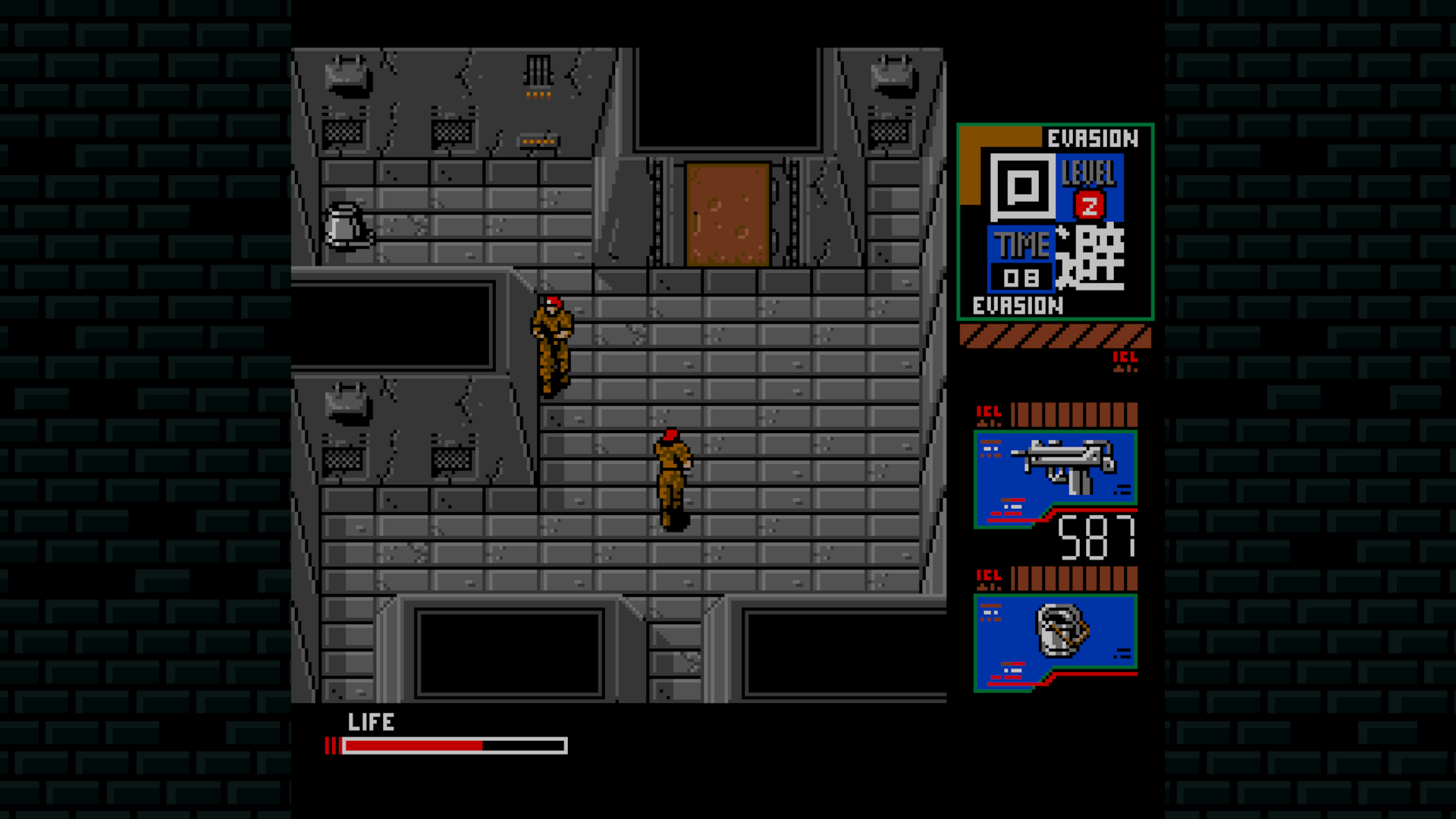
At the top of the expanded features list is stealth. Guards now have a cone of vision and will move their heads to look around when stationary. Their patrol paths also seem to be a little less simple, making avoiding guards a bit trickier than in Metal Gear. The alert and evasion phases are distinct now, too. If you’re spotted, guards will enter alert mode during which they’ll aggressively hunt you, with additional guards popping out of every available door. Seriously, I groaned every time they came out of the back of a cargo truck that was empty just moments ago! When in this mode, it’s almost impossible to hide, rather you need to lose the guards or otherwise get rid of enough of them first. Oh, and alerts are no longer room-based, either, so simply leaving the screen isn’t going to cut it. This new alert mode was probably my biggest source of frustration with MG2. That is, practically every alert, no matter where you are, how many guards are in the room, or the manner in which you were spotted, results in the same ridiculous swarm of guards, and by the end of the game, this was damn tedious to deal with. When you finally do, you’ll enter evasion mode in which guards will carefully search for a bit. A handy display in the UI shows the phase and a countdown timer, with a design seemingly swiped from one of my favorite animes, Gunbuster, incidentally. Assuming you can stay hidden and outlast the timer, they’ll give up and you’ll be back in the default infiltration mode.
“Step aside cardboard box, the bucket is peak stealth action gameplay!”
There’s also a mode similar to evasion mode that is triggered by a guard hearing a suspicious sound, during which they’ll go to its source to try to figure out what made it. Yes, that means there is a more developed sound component to stealth now, with certain types of ground surfaces making noise when you walk on them. You can also purposely make noise by, for instance, punching a wall, which lets you manipulate the guard positions to more easily sneak by them or take them out. To avoid making noise on accident, there’s a new crouching and crawling mechanic. This is an extremely important addition to Snake’s repertoire, and utilized everywhere, with just about every room having multiple places you can crouch behind or crawl into or under to conceal yourself. You also have some familiar tools returning from Metal Gear like the suppressor and your old friend the cardboard box. The box is now slightly riskier though, as guards will pop a few shots off at it if they walk up on it. Then there is perhaps my favorite new item, the bucket, which works the same as the cardboard box but it’s bulletproof, though it does come with the tradeoff of making noise if you walk while wearing it. Given how utterly silly the animation of Snake walking around almost entirely covered by a giant metal bucket is, I’d say it’s worth it though. Finally, there’s the camouflage mat, which lets you deploy a piece of hidden cover to hide under just about anywhere you want.
Last but not least, I can’t talk about all of that without bringing up what is perhaps the biggest addition to both the overall stealth system and the UI, the mini-map. This is the obvious predecessor to the “Soliton Radar” that appears in a lot of the later entries in the series, showing a top down view of the screen Snake is on as well as the 8 screens around him, complete with enemy and other character positions and live moment updates. Incredibly useful when planning your routes, I got used to using it almost immediately, as if I’d also had it throughout my run of the first game too. The only real downside to having such a powerful new item in your toolkit is that you don’t have it all the time – it gets jammed during alert modes, with the neat little alert phase display temporarily replacing it. Honestly, I was usually too busy frantically murdering tons of guards during alerts to worry about it that, though.
“The Metal Gear D is, appropriately, highly vulnerable to a grenade to the dick.”
MG2 retains the Zelda like item gating gameplay of the first game, but with more items and more complexity all around, I personally got a lot less of that Metroidvania vibe this time around. It just feels a bit less intentionally designed, and I think the game suffers just a little as a result, despite just about every individual element being improved. For instance, while keycards are still an annoyance, you can now trade them up for combined versions, reducing the 9 you have by the end of the game to 3, and they also feel a bit less randomly assigned to doors to boot. Fast travel has undergone some improvements, whether you’re hiding in a box and hitching a ride on a conveyor belt, into a cargo truck, or floating through the sewers, it all works so much better. It also seems that using weapons as a gate around boss fights is mostly eliminated. There are some bosses that are easier with certain weapons, sure, but aside from the Hind D fight (yes, another one) I’m struggling to think of another example. Speaking of weapons, I found myself using melee a lot less this time, as I really didn’t want to risk triggering the aforementioned annoying guard swarms. In fact, by the end of the game I was taking full advantage of the slow projectiles (also making a return from the first game) to “pre-fire” shots at guards before they’d round corners or otherwise enter my field of view. Cheesy but kind of satisfying.
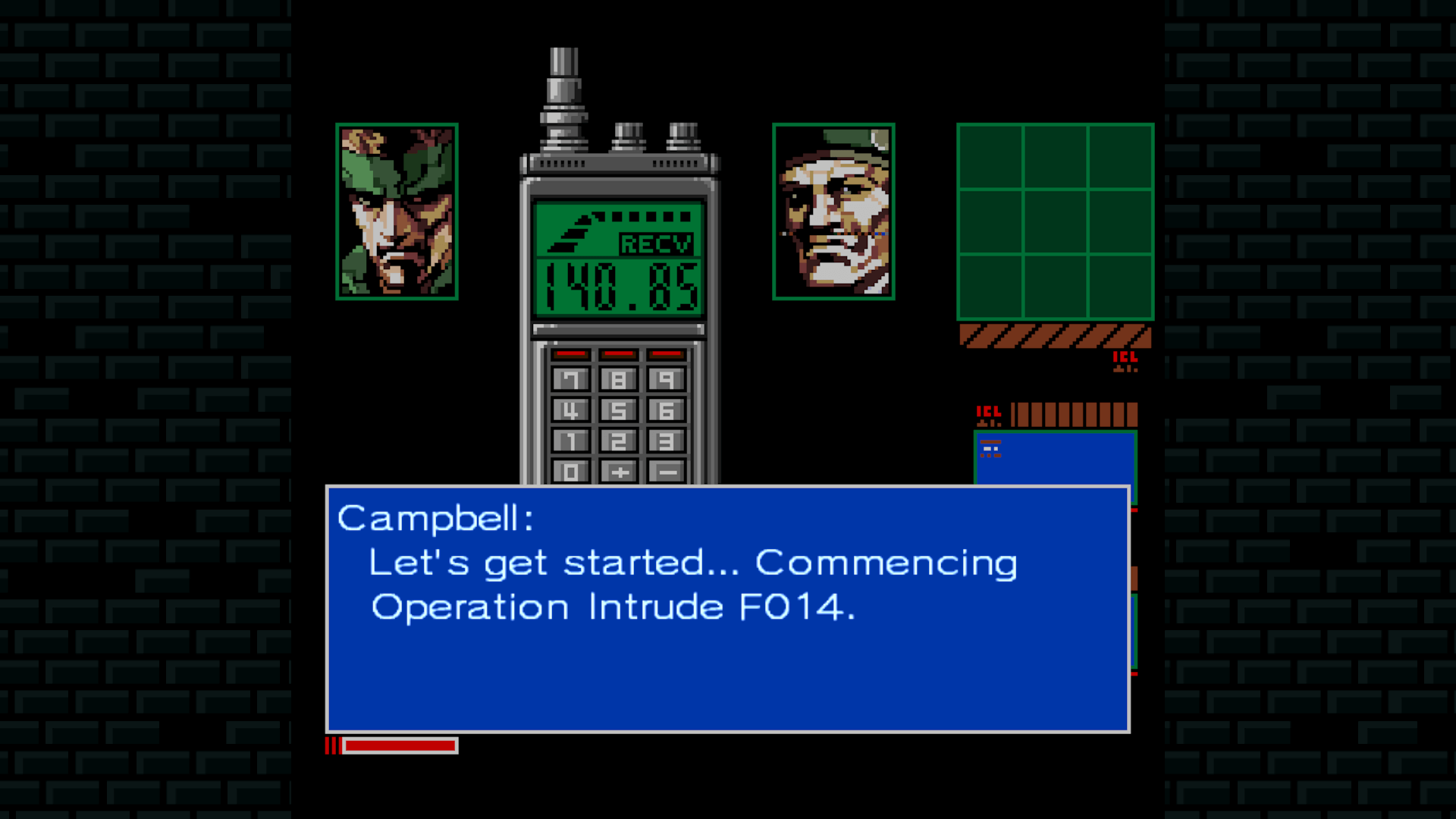
Another massive upgrade comes with the radio, which much more closely resembles the codec calls found in later Metal Gear games. Radio conversations happen more often, between more people, are much lengthier and better written. Hey, they’re also two-way now, so Snake finally has a little bit of a personality! People also actually answer their damn calls now too, making the radio much more useful in general. While there are a few little non-radio conversations, and you occasionally run into war orphans wandering around Zanzibar Land who impart similar one-liners, there are no more POWs to give you clues, so the majority of your hints and other guidance will come from these calls. I do wish more of those conversations were more useful, though. Master Miller almost exclusively says generic stuff and I swear I missed Kasler’s initial call or something, as I didn’t know his frequency until later in the game. The radio has one more function exclusive to the modern port – they replaced the original character portraits (hilariously swiped from stills of famous actors) with more stylized artwork by Yoji Shinkawa. While the intent was more likely to avoid legal trouble, the effect is that the game now looks more like a cohesive part of the greater series beyond.
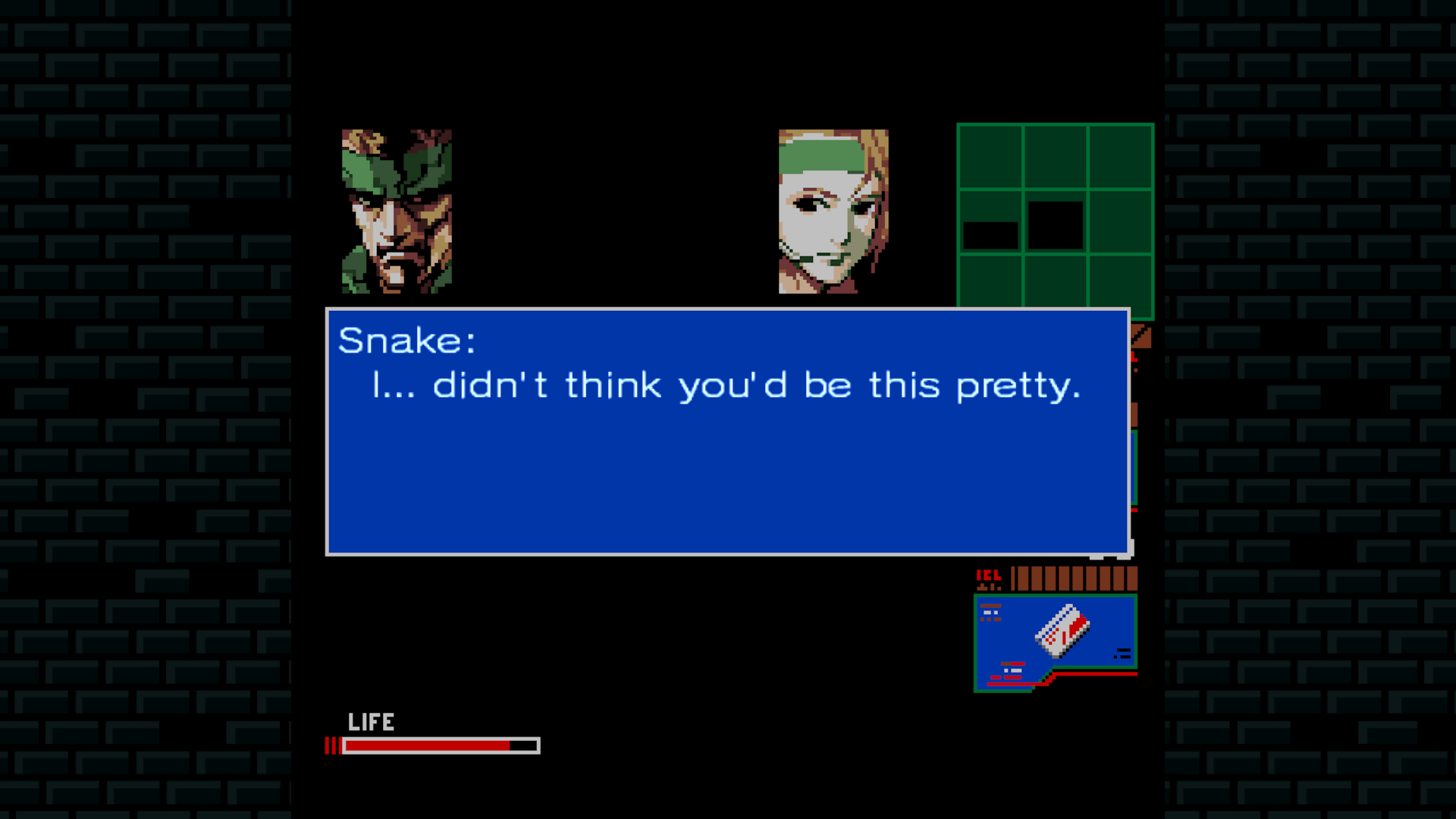
“Snake, if you need a cold shower, you already know where the women’s restroom is.”
This feels like a good time to talk about the story. Expand the box below for a spoilerific though fairly terse synopsis of the game’s plot.
Story Synopsis - Spoilers!
1999. On the verge of a global energy crisis, biologist Dr. Kio Marv develops OILIX, a new way to synthesize high-grade petroleum. Soon after his discovery is publicized, Dr. Marv is kidnapped by agents of Zanzibar Land, a small nation that has recently gained attention on the international stage due to aggressively seizing nuclear weapons from neighboring countries, attempting to gain unmatched power as the rest of the world dismantles its nuclear programs to enter a new era of peace. Colonel Roy Campbell, FOXHOUND’s new commander, brings Solid Snake out of retirement for Operation Intrude F014, a daring covert operation to infiltrate Zanzibar Land and rescue Dr. Marv, and with him the secret of OILIX. Once on the ground, Solid Snake gains the assistance of Holly White, a CIA agent posing as a journalist. During the course of the mission, Snake rescues Dr. Madnar, the scientist behind Outer Heaven’s robotics programs. Dr. Madnar had been forced to resume his work and is well underway with mass producing a new model of the Metal Gear walking tank for Zanzibar Land. Snake also learns that his former commanding officer turned mercenary leader of Outer Heaven, Big Boss, is leading Zanzibar Land. While Snake continues his search for Dr. Marv, the group encounters ex-FOXHOUND agent Gray Fox, now loyal to Big Boss, who recaptures Dr. Madnar and blocks Snake’s pursuit. Eventually reaching the base’s main prison complex a different way, Snake locates Dr. Marv’s cell but finds him deceased, having succumbed to torture. Holly radios Snake to let him know that not all is as it seems with Dr. Madnar, who is also being held here, and that he actually returned to Big Boss’s side voluntarily. As Snake turns to confront Dr. Madnar, Dr. Madnar attacks him from behind, forcing Snake to incapacitate him. Assembling clues that Dr. Marv left, Snake recovers the OILIX data from a clever hiding spot and begins his exfiltration. Snake once again encounters Gray Fox, and after an explosive showdown, disables Gray Fox’s Metal Gear D, leaving the two to have a final hand-to-hand fight to the death. Having just defeated his former comrade, Snake is taunted by Big Boss, who he quickly tracks down. Big Boss tries to convince Solid Snake to join his cause, explaining his goals for Outer Heaven and Zanzibar Land – to give soldiers like him a means to survive on their own terms rather than be used as pawns by uncaring governments. Snake refuses the offer, and Big Boss attacks him. Unarmed, Snake moves from hiding place to hiding place, but is able to cobble together an improvised weapon, eventually catching Big Boss by surprise. With Big Boss dead and the OILIX data in hand, Snake rendezvous with Holly and the two are airlifted out of Zanzibar Land.
Certainly, themes of nuclear disarmament and a crisis around fossil fuel shortages were reasonable to speculate on in the late 1980s, and the game as a whole feels a bit more “near-future” than the first did. Beyond that, it’s hard not to feel like MG2 is something of a remake of the first game. Sure, some of the story details are different, but the structure is very, very similar, and a lot of specific gameplay elements return as well. There are also returning characters, starting off with the seemingly random addition of Outer Heaven resistance leader Schneider, who I’d assumed was dead. It all feels like a bit of a soap opera, but I know that’s just the tip of the iceberg for this series. Despite how Zanzibar Land might just be Outer Heaven v2.0, I did appreciate that MG2’s vastly expanded script gave our main antagonist a chance to actually explain his motives a little bit more. It frames the whole “mercenary state” thing much more clearly. On the other hand, Snake’s attempts to hit on women, particularly Holly, felt awkwardly out of place to the point where I actually found myself laughing at them. Really, while there are still some silly bosses with silly names, other than some fun references to video games and the MSX in particular, there are no fourth wall breaks and most attempts at humor are somewhat subdued to the point where it wasn’t always obvious if the writing was intentionally quirky, or genuinely kind of weird. I mean, you can’t tell me Running Man doing a mad sprint around a building to prove how amazingly fast he is, only to come back panting after a single lap isn’t damn funny. 😂
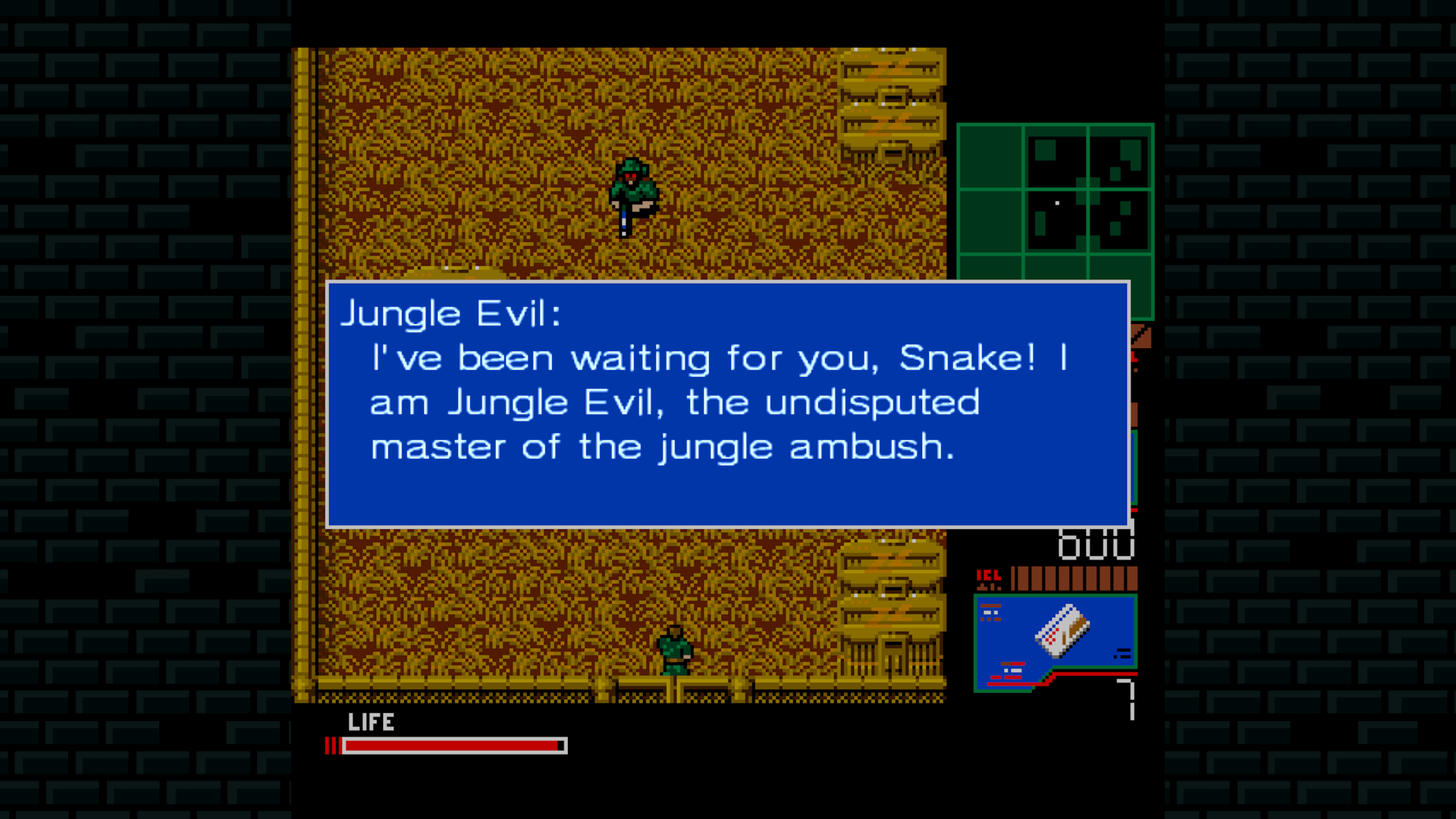
“Honestly, I *do* dispute his ability to ambush given that he announced his presence.”
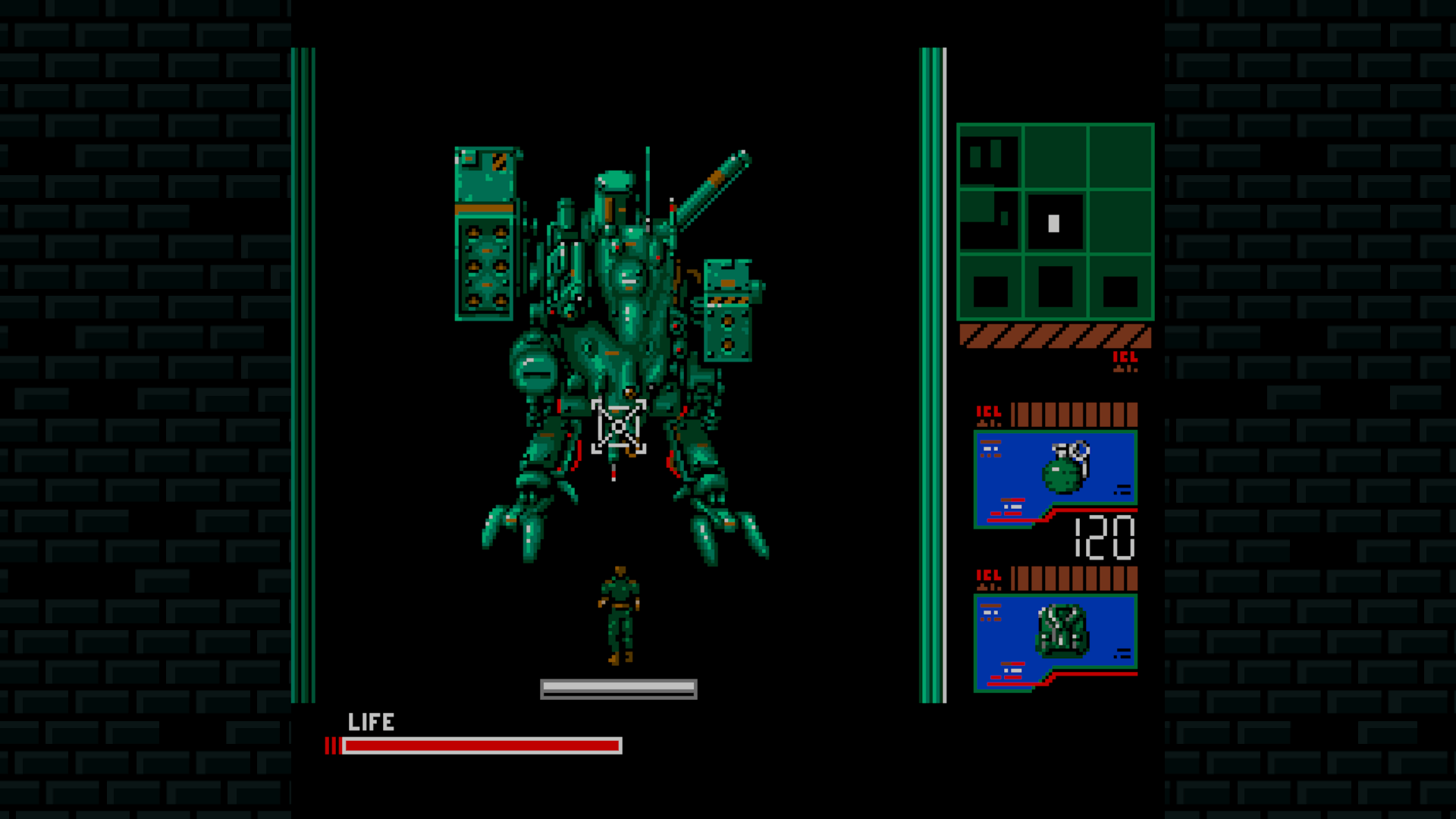
With boss fights being less about gating progress around certain weapons, they now have more traditional boss fight mechanics. Nothing all that tricky, but more varied and funner than what we got in Metal Gear, certainly. Besides my aforementioned burnout with alerts, I think the most difficult aspect of the game is its structure. As mentioned, that satisfying Metroidvania-like formula is just a little off. Hints given via the radio or by the occasional war orphan are usually less direct than those in Metal Gear, which isn’t necessarily a bad thing, but it does make the game feel less linear and more prone to trial and error and arduous backtracking. There is also a lot more light puzzle solving this time around, and some of the puzzles get pretty wacky. How about finding and hatching an egg that turns into an owl, which you’ll need to equip so it hoots, fooling a guard into thinking it’s night time, and for some reason they turn off a perimeter security in this particular area at night? Nope, none of that makes any goddamn sense, does it? There are also rather wickedly designed areas, like the infamous jungle which requires tailing a guard who is constantly checking behind him, and if you lose him for even a second the jungle turns impassable and you’ll need to go back to the beginning and try all over again. The swamp is perhaps an even worse offender, as it’ll outright kill you if you stray too far off the hidden path for more than a few seconds, and the path is long and windy, but of course!
If you do die, save game checkpoints are aligned to specific areas, but it’s perhaps even less clear where those checkpoints actually are. In Metal Gear they were usually the last elevator you entered, but in MG2 they seem to be tied to loading screens… except for when they aren’t. Honestly, after I got further into the game I just avoided the issue altogether by abusing my Xbox’s Quick Resume feature and trying my damnedest not to die. Sometimes easier said than done, as you can no longer stock up on endless rations and ammo by leaving and reentering rooms like you did in Metal Gear, and if you trigger alerts way too often like I did, you’ll end up needing those rations. I played on “easy” difficulty again and discovered one big advantage of it – if you die too many times in a row, you’ll respawn with full ammo and rations on your next continue. I got into at least one situation near the beginning of the game when I was still figuring things out where this really helped me. Overall, it’s not a hard game, but it has potential to be longer and more taxing than Metal Gear was. Unless you get a particular amount of joy from playing this old school, draw your own maps and trial and error your way through puzzles style of game design, I’d recommend you at least use some notated maps, as with the first game. Unlike the first game, however, I might also throw in a walkthrough too. I used a spoiler free walkthrough as a reference here and there, but I absolutely abused the hell out of the maps themselves. While I know I would have gotten more satisfaction from figuring everything out myself, I’m sure it would have also taken twice as long and been a lot more frustrating along the way.
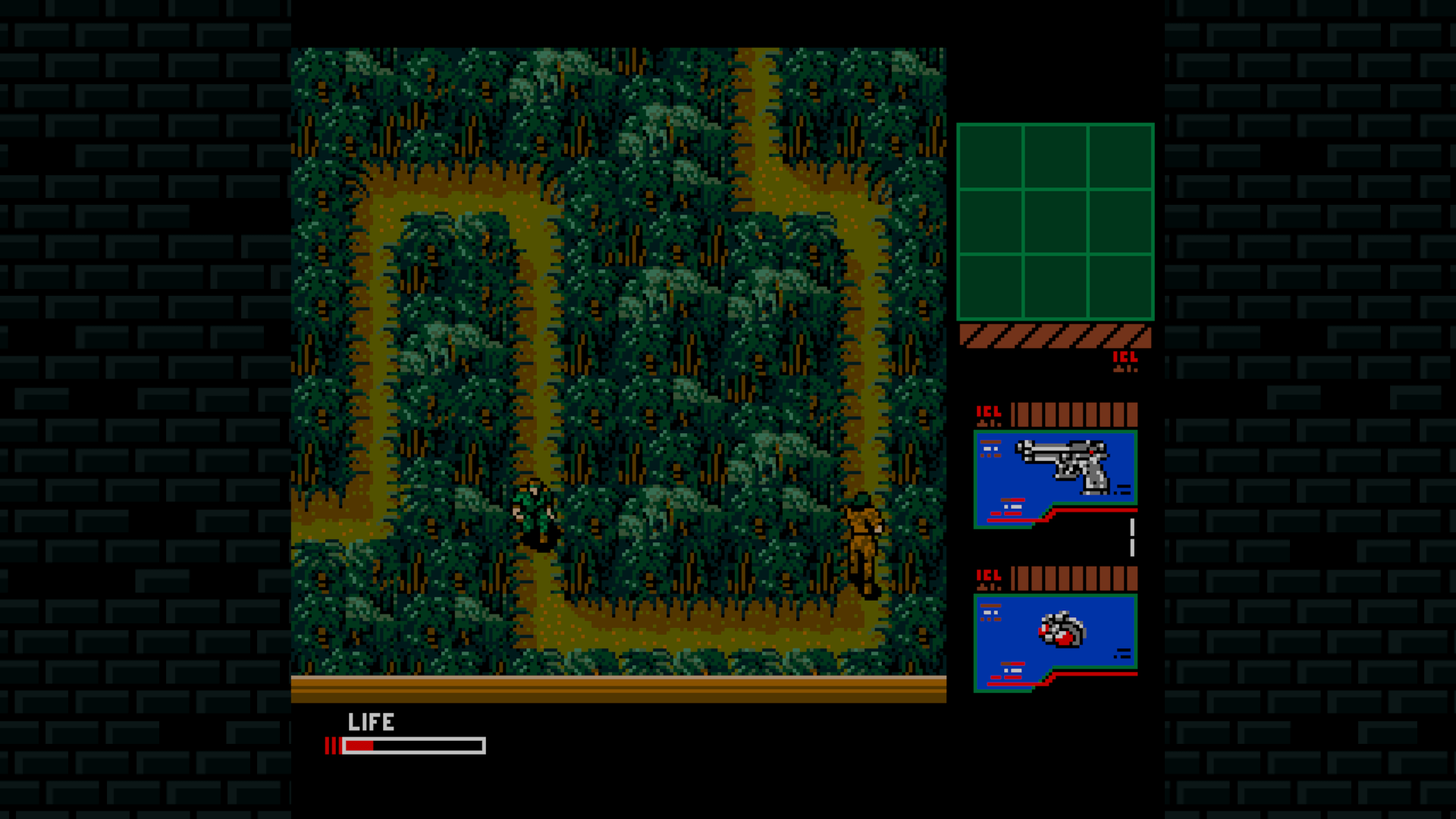
“Fuck this fucking jungle section!”
I think the biggest advantage of the more complex and varied gameplay of MG2 is the possibility for the kind of emergent moments you’d expect out of a more open game. As an example, there was one section of the map that I kept going back to where there was no way to get past a guard without getting spotted. After just dealing with triggering an alert several times, I figured out that I could knock on the outside of a wall he was near and he’d walk over to it. He could still just barely see me if I tried to creep by him, but I could then blast the Zanzibar Land national anthem cassette tape to make him spring to attention, facing straight ahead, letting me get by him unseen. For an example of a funnier emergent moment, I almost fell off of my couch when I accidentally killed a war orphan while attempting to blow up a wall with C4 – I just assumed children would be invulnerable so I wasn’t too concerned when he wandered up, but… hey, 1990 was a more innocent time! 😅
While I had some mixed feelings on Metal Gear 2, all in all, there’s no denying that it is a much more impressive game than its predecessor. It really improves on virtually every aspect of the first game, and while it might have taken me a bit of time to adjust to the added complexity, in the end I had a lot of fun with it. I’ll have to get further into these playthroughs to be able to really judge MG2’s place in the series, but at this early point I’d definitely recommend Metal Gear fans give it a go.
Next, we move on to the game that kicked off a love of the franchise for so many people, Metal Gear Solid…