Tag Archives: Metal Gear Series

Metal Gear Mania 2025 – Metal Gear Solid (Bonus)

I’d actually been tossing around the idea of a Metal Gear Solid series playthrough for quite a few years now. I came to love other series in the genre, like Splinter Cell and Hitman, and suspected I’d really enjoy these games as well. It also felt a little odd to have zero experience with such a highly influential series, and one that a few friends of mine absolutely loved as well. Having picked up the HD collection for the Xbox 360 at release, something like 15 years ago now, my only problem was that it omitted the first Metal Gear Solid. As followers of this blog are no doubt well aware, I’ve been a long time Xbox devotee and until relatively recently, didn’t own a single PlayStation console. It might sound silly, but not having a good way to start such a narrative heavy series from the beginning felt like a real barrier to entry.

So, what options did I have? Well, I could obviously buy an original PlayStation or maybe even luck out and find a fat PlayStation 2 with its highly sought after backwards compatibility, but I’d been downsizing my vintage console collection and didn’t really want to buy another old console, especially for a single game. Another possibility was emulation, but way back when I first started seriously considering a series playthrough my PC was pretty old and I worried about being able to emulate the game smoothly, the accuracy of the PlayStation emulators available at the time, and my lack of an actual PlayStation controller to play with. Another option was the PC port of the game, but it always sounded just a little compromised to me, though opinions on it did eventually change and I decided that would be my path forward.

A little later, I learned of the existence of the PlayStation Classic which I’d somehow totally missed. A cheap dedicated emulation machine that I could plug into a modern TV, complete with a couple of apparently good quality recreations of the original controllers? It even included Metal Gear Solid in its selection of out-of-the-box games! For a fleeting moment this seemed like an even better solution, but sadly, the more I read about the PSC and its heap of emulation issues, the more I talked myself out of the idea. On the plus side, this did lead me to learn that the PlayStation 3’s backwards compatibility was actually one of the better ways to play the original MGS. A PS3 also meant I could play an even more exclusive Metal Gear game, Metal Gear Solid 4. Sold!

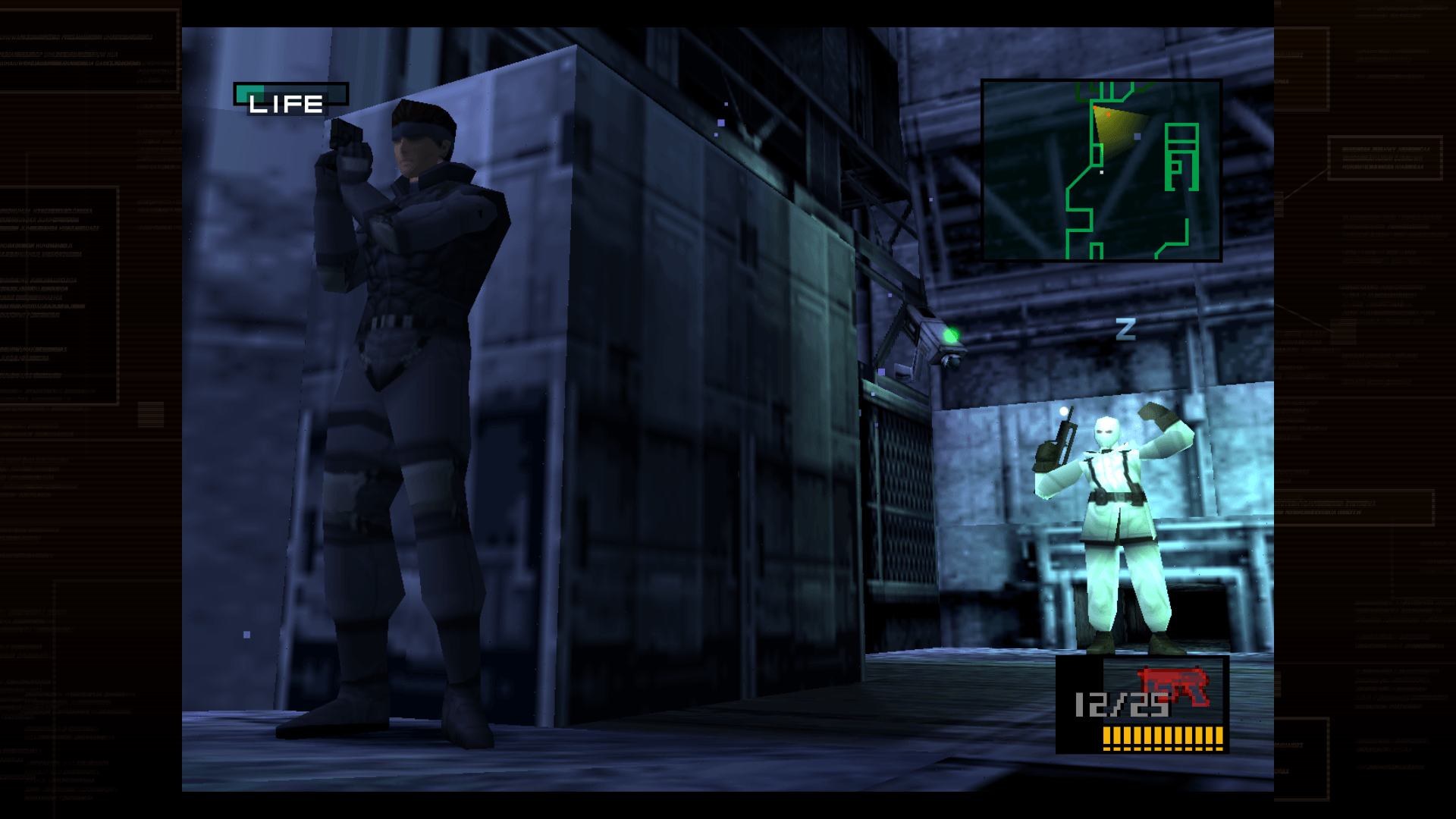
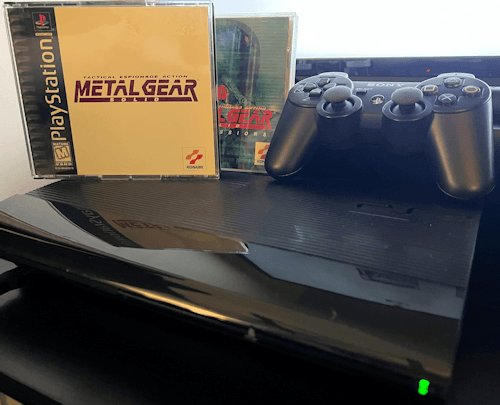
MGS on the PS3: Ready for action.
“MGS on the PS3: Ready for action.”

I acquired an almost brand new PlayStation 3 Super Slim along with the original PlayStation versions of Metal Gear Solid and Metal Gear Solid: VR Missions, and the PS3 versions of Metal Gear Solid: The Legacy Collection and Metal Gear Solid 4. This also led me to embark on a fun little journey to build a library of many of the other most interesting PS3 exclusives I missed out on during the era, though that’s another story. Of course, as luck would have it, the Metal Gear Solid: Master Collection Vol. 1, which includes Metal Gear Solid, was announced shortly after this, and now Metal Gear Solid: Master Collection Vol. 2, which includes Metal Gear Solid 4, is due to be released this year. Talk about winning…

Still, I thought it might be fun to give those two runner-up methods a shot to compare them to my time playing through the emulated game on my Xbox Series X via Master Collection Vol. 1.

Starting with the PlayStation 3, there are actually two distinct options. The digital PlayStation Store release (which is the version that came with the The Legacy Collection) was probably the most widely played of the two. Believe it or not, my used copy of the Legacy Collection actually came with an unused code which I was able to redeem for it. Yes, in 2026! The big advantage of this version is that, of course, it doesn’t need to load from disc which means much faster load times and none of the nostalgic noise of the disc spinning and the optical pickup unit moving around. Some claim it runs a bit better than the disc version, though whether this is simply due to the faster load times is unclear to me. I’ve also seen claims that it has some minor visual issues, but again, nothing I noticed. The disc version, on the other hand, is often claimed to be the more “authentic” experience of the two.

In the brief time I ran through the cargo dock and heliport areas, I didn’t notice any notable visual differences between these two versions. In fact, the only thing I noticed is that the disc version, by default, has no smoothing whatsoever, which makes the stereotypical PS1 jaggies and particularly the dithering look absolutely atrocious. While true to the image output back in the day, a CRT TV would have smoothed the entire picture over considerably. To remedy this, the PS3’s emulator does include a “Smoothing” filter you can turn on which really helps. The digital version, on the other hand, already seems to have some light smoothing effect enabled from the get go and enabling “Smoothing” ends up smoothing it even more than the disc version. This is especially noticeable when looking at the font whenever text is displayed – you almost can’t tell the font wasn’t originally so nice on the digital version.

In any case, I concluded that I would have been quite happy to have played through this way, only losing some of the relatively minor conveniences provided by the Master Collection Vol. 1 version. Plus, the added authenticity of playing with a DualShock pad isn’t insignificant.

The PC version running in widescreen with no filtering. Mind the mess!
“The PC version running in widescreen with no filtering. Mind the mess!”

I also wanted to try out the PC port. Watching this excellent video by Retro Renew, I more or less followed their recommendations for setting up the GOG version and the excellent MGS Launcher. This allowed me to run the game in higher resolution, in real widescreen, with fixed sound and lots of other useful options exposed, and with great controller support. I’m not sure if running this version or running DuckStation or some other emulator with all of the bells and whistles cranked up will get you closer to a modern experience, but in any case, this was surprisingly nice. The game looks great running on my system at 1440p, and while it could be my imagination or just my fondness for the hall effect sticks on my lovely 8bitdo controller, I’d swear the modded analog controller support feels even better than playing the game on my Series X. This PC version also brings some interesting out-of-the-box features included in this unique take on the “Integral” version of the game such as the ability to play entirely in third person and the ability to save anywhere, and without going through Mei Ling to boot. Of course, there are some downsides; namely Psycho Mantis’s fourth wall breaking antics being nerfed.

As with playing the original version on the PlayStation 3 as above, I really only played around in the beginning few areas, but if that was anything to go on, I think I would have been quite satisfied with playing through the game this way. I actually liked it so much I decided to leave it installed for next time I fancy a jaunt around Shadow Moses Island.

The master collection version running in High Resolution mode.
“The master collection version running in High Resolution mode.”

As mentioned in my main Metal Gear Solid post, the emulated version that is included in the Master Collection Vol. 1 does include some tweaks and neat features of its own. You don’t get save-states, but you do get the ability to manage your virtual memory cards, including adding dummy saves for other games for Psycho Mantis to taunt you with. You can add in image smoothing, a CRT scanline filter, and going the opposite direction, the ability to run the game at HD or 4k resolutions, which looks quite nice, though it does appear to apply some sort of automatic smoothing/filtering, which I know some people will hate. There’s also no option for true widescreen or even a non-linearly stretched widescreen, which is a big bummer. Of course, there are mods and fixes to address some of these limitations on the PC version of the collection. Overall, given its availability, the other included contents, and Konami’s shockingly decent post-release support, I think the Master Collection is probably the best option for most players.

I could go much deeper into this topic by installing DuckStation and/or acquiring a PlayStation Classic, but alas, I’m really itching to move on to Metal Gear Solid 2.

Metal Gear Mania 2025 – Metal Gear Solid

At long last we make it to the first game of the modern series, 1998’s highly influential Metal Gear Solid. From everything I’ve seen on the subject, Hideo Kojima’s plans for the game seemed to mostly revolve around adapting the series’ existing gameplay to a 3D engine. Given that few outside of Japan had ever played the game MGS shares most of its DNA with, Metal Gear 2: Solid Snake, and that the results of this technical overhaul were quite impressive for the time, there’s little wonder why it’s an absolute classic to this day.
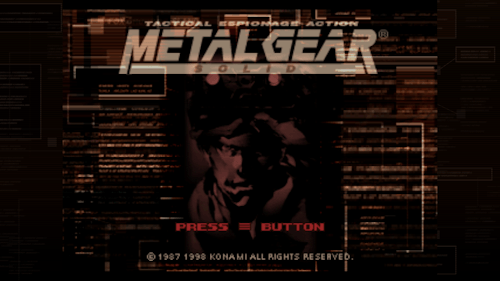
Metal Gear Solid - Tactical Espionage Action!
“Metal Gear Solid – Tactical Espionage Action!”

As for me, I sided with Nintendo in the 5th gen console war and the only exposure I had to PlayStation games was what I played at friends’ houses. Word about Metal Gear Solid must have caught up to me though, as I distinctly remember almost buying a copy to play with “Bleemcast!” on my Dreamcast a little later. It wasn’t until the release of the Metal Gear Solid: Master Collection Vol. 1 in 2023 that I had a legitimate way to go back and play the first Metal Gear Solid on a console I actually owned. Yes, I’m sure a lot of people will be reading this thinking of all the other ways I could have played it before then, and I’ll be addressing all of that in a separate bonus post. In any case, for this playthrough I played that version, which is actually the original PlayStation version running in some kind of proprietary emulator, on my Xbox Series X. It’s fairly no-frills compared to what you can do with emulation on a PC, but alas, it’s definitely sufficient… plus, achievements! I’m running the game in the original 4:3 aspect ratio with both smoothing and the CRT screen filter enabled, which is an okay approximation of what the game looked like back in the day, and also why my screenshots look a little dark. Unbeknownst to me they added the ability to run the game upscaled in its final 3.0 patch, released after I started this playthrough. It looks quite good, though definitely a departure from the 1990s experience.

While comparing Metal Gear Solid to its predecessor will be a running theme here, from a presentation standpoint, it’s such a massive upgrade that it’s almost beyond comparison. Starting the game launches into a slick, fully voiced introductory cutscene depicting series protagonist Solid Snake being launched from a submarine while being briefed on the mission. It’s all very cinematic and absolutely brimming with flavor pulled straight from the best political espionage thrillers. If you want to get extra nerdy, you can launch a separate briefing menu from the title screen that goes much deeper into the context. Watching that, I found myself being a bit surprised by how impressed I was with the voice acting. Once I got into the game proper, I continued to be impressed with how fluid the animation, camera, and controls all felt. The music was also great, and a perfect moody fit for the cold lighting and even colder Alaskan setting. A great first impression for a game that is almost 30 years old. It stays consistently excellent as it goes along too – I found myself particularly sucked into the snowy outside areas. it’s definitely a vibe and quite immersive.
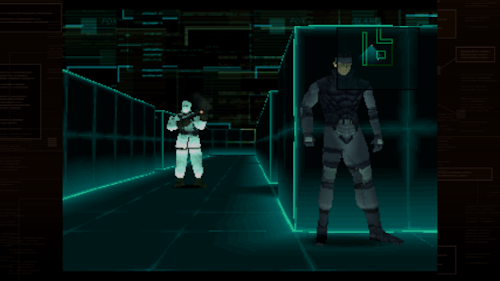
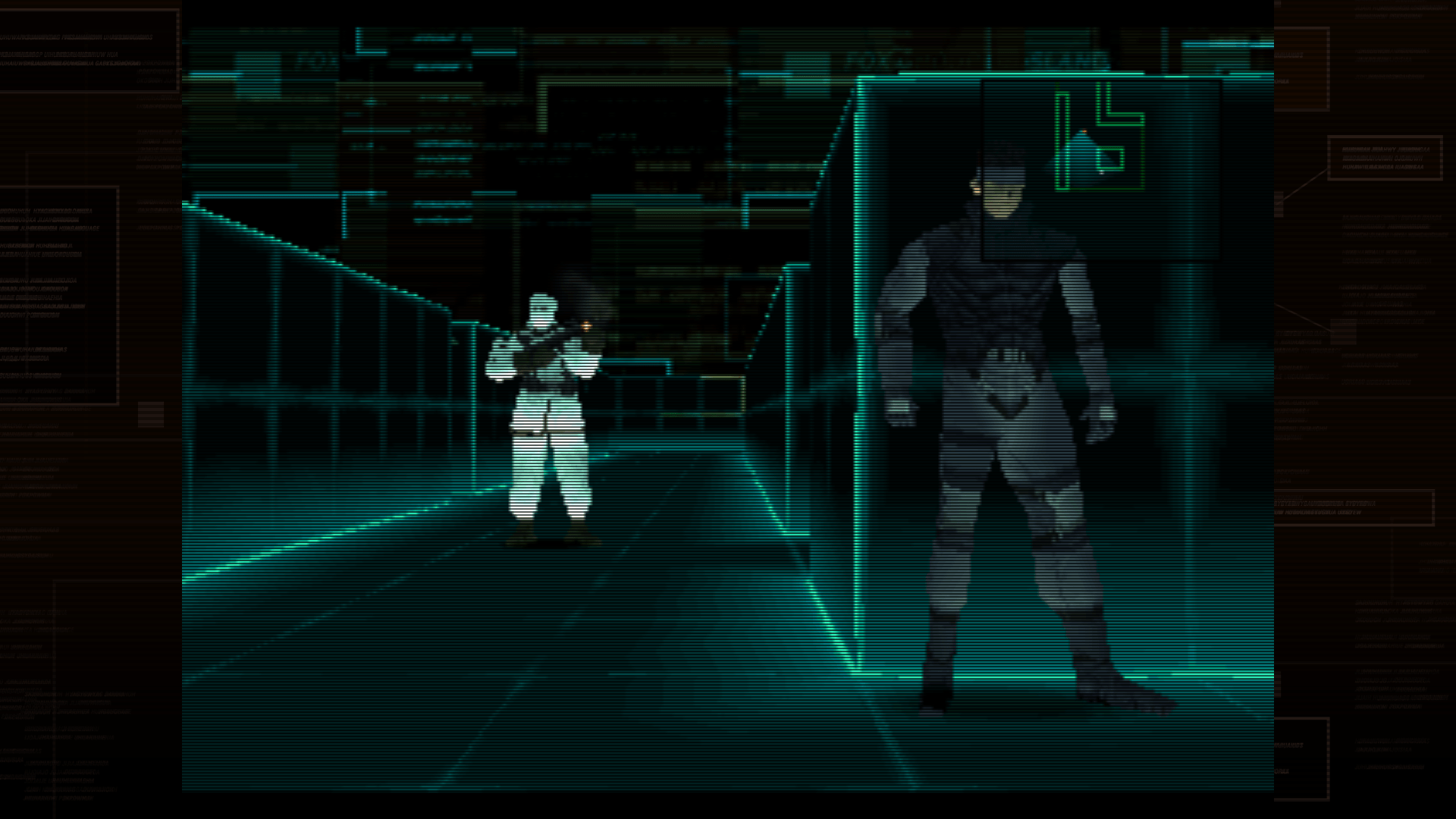
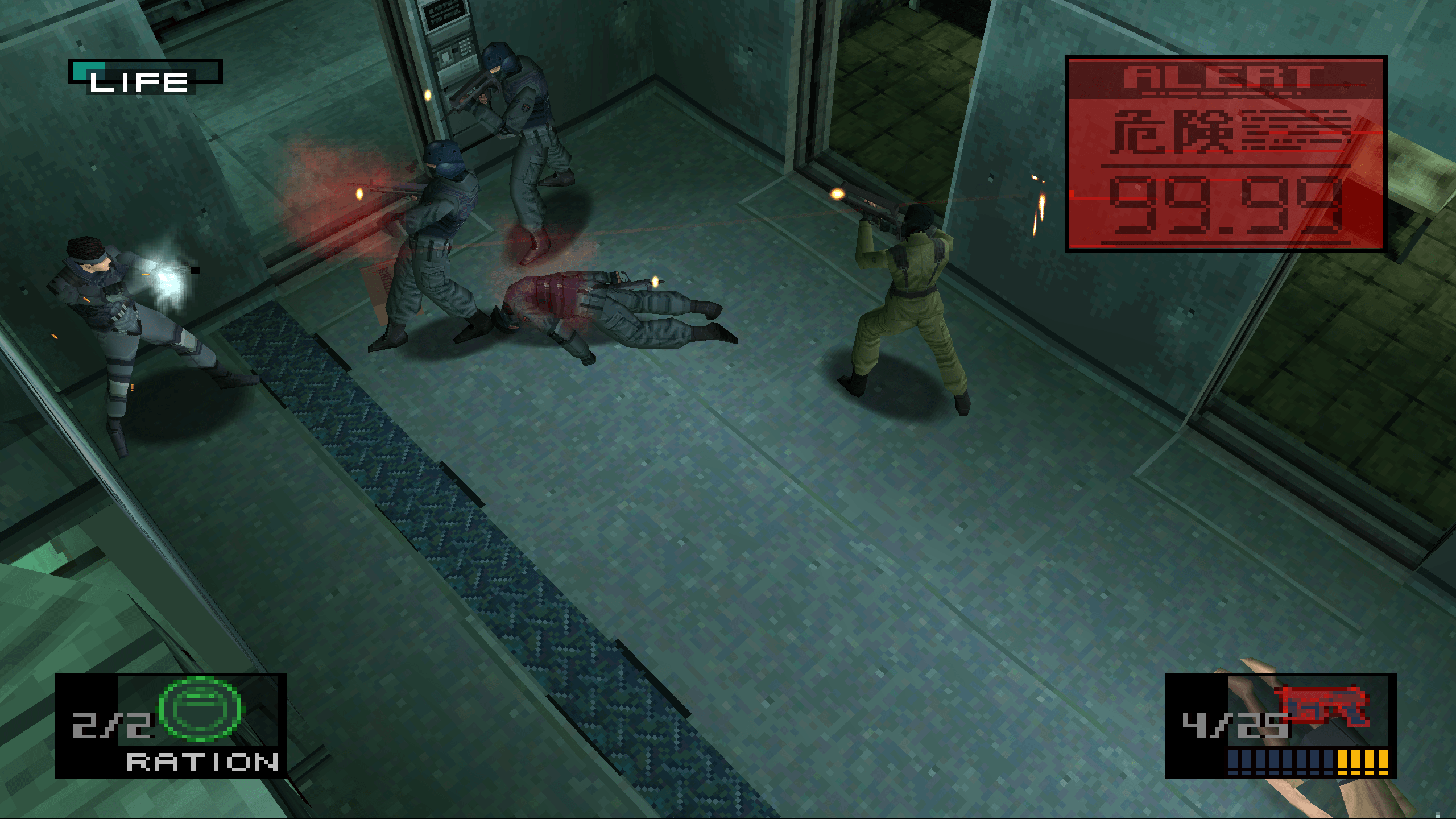
Virtually hiding around a virtual corner from a virtual guard.
“Virtually hiding around a virtual corner from a virtual guard.”

The user interface and control scheme are both very familiar, with gear selection associated with the left trigger and weapons being accessed and equipped using the right, for example, though I realize a large part of that is due to the console ports of the first two games being retroactively influenced by the later MGS games. Regardless, I found it to be pretty easy to pick up. Despite being 3D, the game largely confines you to fixed overhead camera angles. While similar to its predecessors, this feels oddly restrictive since the camera is otherwise quite dynamic. It’s also a bit more zoomed in, sometimes annoyingly hindering your ability to see the items, enemies, and other obstacles around you. Two new features help with this, though: the ability to back up to and look around corners, which besides looking pretty damn cool, moves the camera down to a more typical third person perspective, and the addition of a dedicated button to look around in first person. You can’t really move or shoot in either mode, but in terms of getting your bearings, they work.

The stealth gameplay mechanics are all quite iterative of what we got in Metal Gear 2. Guards are a bit more intelligent, responding to more varied conditions, even bodies on the ground. On the other hand, recalling the first Metal Gear, their patrol paths and sight lines feel more predictable so it’s quite easy to sneak around or up behind them. I find that to be more fun, personally, though a less positive step back is the lack of the sometimes hilarious overabundance of hiding places to crawl into that most areas of MG2 had, making it a bit more challenging to run and hide or to quietly wait for guards to pass. Another mechanic that was nerfed a bit was that of my beloved cardboard box; guards are now much more likely to be suspicious of it, especially if it’s too close to their patrol route. Because of the much greater risk involved, I barely used it. Conversely, MGS’s mini-map has been upgraded to the “Soliton Radar” which shows the enemy cones of vision in addition to movement, making it vastly more useful for avoiding detection and planning your routes. The alert system is almost identical to MG2’s, but addressing one of the major gripes I had with that game, guards are way less annoying when triggered, appearing in smaller numbers and less often, and once you lose them, it feels like the alert phase ends and things get back to normal much more quickly.
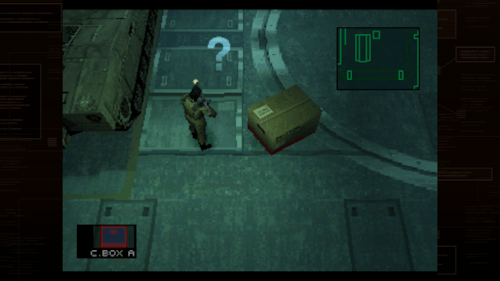
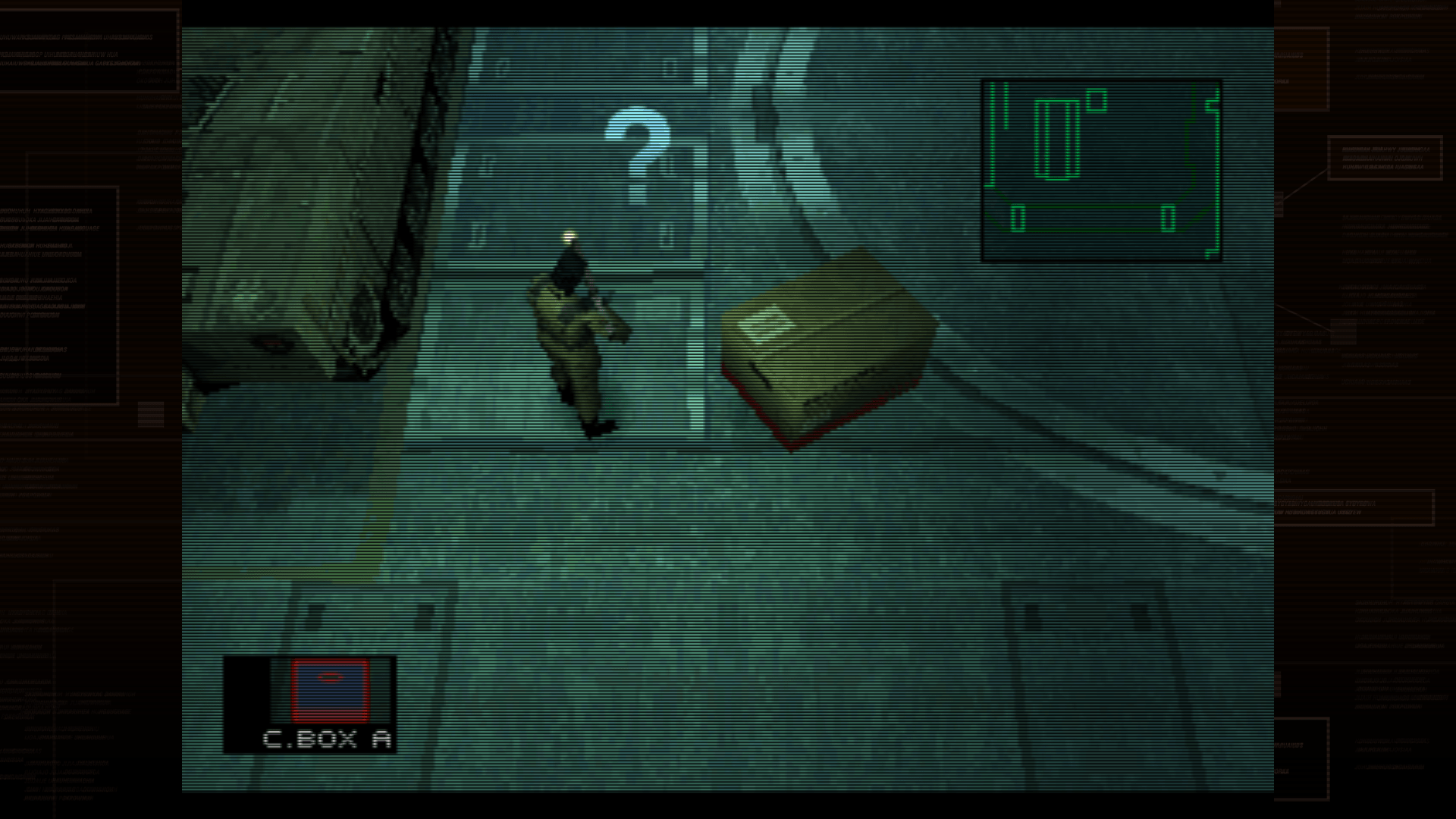
Huh? It's just a box...
“Huh? It’s just a box…”

One of the biggest departures from the first two games is that combat feels way less viable. While Snake’s repertoire of hand-to-hand moves is larger – you can now grab, throw, and choke enemies – I never developed anything resembling “accuracy” when lining up attacks. This is even more pronounced with shooting; I could always take out my targets, sure, but whether I could do so without setting off an alert was a total crapshoot. I’d rather avoid guards entirely than try to take one out given the high chance of failure. If I had been able to line up a perfect head shot and/or consistently knock out guards, this game would have played very differently. This is fine, and perhaps even intentional, but from playing more modern stealth action games, I couldn’t help but feel like I had a lack of tools at my disposal for handling the more routine encounters in a reasonably stealthy way.

Structurally, MGS is a lot more linear than the first two, more Metrovania styled games, with “gates” typically tied to plot progression. You still have a ton of cool items to collect but they’re not really used as overt “keys” into new areas. Instead, new gear usually provides you with more options for handling different scenarios, but aren’t necessarily required. There are still actual key cards, of course, but placement of areas that require them seems much more intentional. That’s not at all to say there is no backtracking in MGS; even if playing the critical path, you’ll be revisiting the armory multiple times, and there are at least two sections where backtracking was added as what feels like a blatant attempt to pad out the playtime. At one point Snake even complains about it, much to my amusement. Thankfully, Shadow Moses is a lot smaller than it feels so these sections aren’t as painful as they sound. As an aside, there has been a notable “quality of life” improvement with key cards in that you only keep one in your inventory now. I still wish it didn’t need to be manually equipped, but I’ll take what I can get!
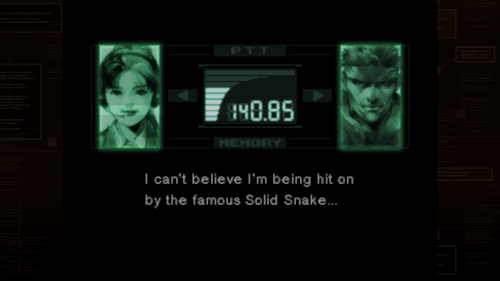
Trust me, Mei Ling, that doesn't make you special.
“Trust me, Mei Ling, that doesn’t make you special.”

Gone are the characters you could talk to in-game for hints and background details, being almost entirely replaced by codec calls and cutscenes. Codec calls are a perfect evolution of MG2’s radio conversations; they’re lengthy and detailed, two-way, often involving multiple people, and most importantly, fully voiced. Just about every one of your contacts has something relevant to say at any time, and they are even context sensitive to some degree. The interface isn’t too different either, though I really love the character portraits by Yoji Shinkawa. MGS’s use of cutscenes actually feels pretty modern, existing mostly to set up a scene or show events outside of player control. Between being rendered seamlessly in-engine and their often creative camera work, they’re a key component to the cinematic quality I mentioned, which itself is definitely an important ingredient in MGS’s special sauce. They’re also mostly relatively quick; the series certainly hadn’t reached total insanity when it comes to long cutscenes yet, and with the exception of Nastasha’s preachy diatribes on nuclear weapons, even the longer codec calls feel pretty quick the first time around.

With that, let’s jump into our story re-cap. Expand the box below for a short but spoiler-filled synopsis of the game’s plot. When I say “short” this is by far the longest one of these I’ve ever written, and I left so much out too!

Story Synopsis - Spoilers!2005. FOXHOUND takes over a secret nuclear weapons facility on Shadow Moses island, Alaska, demanding the US government give them $1 billion dollars and the remains of Big Boss or face a nuclear strike. Solid Snake is forced out of retirement to infiltrate the island and rescue two of the hostages being held there, DARPA Chief Donald Anderson and ArmsTech President Kenneth Baker, as well as assess the threat. Colonel Roy Campbell returns to lead the operation, revealing that he has a personal stake in that his niece Meryl Silverburgh is on-site. Once inside Solid Snake quickly locates the DARPA Chief who reports that FOXHOUND has seized a new model of the nuclear armed Metal Gear, codenamed REX, being covertly tested there, then suddenly dies of a heart attack. Moving deeper into the facility, Snake locates the ArmsTech President being held by FOXHOUND’s Revolver Ocelot. During a tense shootout in which Ocelot seems to have the advantage, a mysterious cyborg ninja appears, slicing off Ocelot’s hand, forcing him to withdrawl. Snake interrogates Baker who tells him to contact Meryl, as she has the PAL cards needed to disarm REX’s warheads, along with Dr. Hal “Otacon” Emmerich, REX’s designer. Baker then too suddenly dies. On his way to meet Otacon, Snake is ambushed by the cyborg ninja, leading to an intense close quarters fight. As the ninja retreats, Snake realizes that it is none other than his old FOXHOUND colleague Gray Fox, who he believed he had killed at Zanzibar Land. With Otacon providing directions to REX’s hanger, Snake and Meryl team up, but the pair soon find themselves under fire from FOXHOUND’s Sniper Wolf. Wolf hits Meryl multiple times, incapacitating her. Snake moves in only to be surrounded and knocked out. He awakens to find himself strapped to a table, face to face with Revolver Ocelot and the leader of FOXHOUND, Liquid Snake. Liquid confirms suspicions that he and Solid Snake are brothers and that they are the sons of Big Boss. Ocelot then brutally tortures Snake. Somehow holding out, Snake is taken to a cell where Octacon is able to help him escape. Upon reaching Metal Gear REX’s hanger, Snake overhears Ocelot and Liquid discussing their final preparation for their nuclear strike and Liquid’s plans to turn Shadow Moses into a new version of Outer Heaven. After the two depart, Snake attempts to deactivate REX’s weapons but is shocked to discover that FOXHOUND never had the means to activate REX’s warheads, and he has inadvertently done it for them. Snake runs to confront Liquid, who reveals that Snake’s handlers have been lying to him, and that he was actually sent to Shadow Moses to serve as a vector to spread a genetically engineered virus called FOXDIE, designed to kill specific people based on their DNA. The US government wanted to eliminate FOXHOUND and hide all evidence of their attempted takeover, while also acquiring Metal Gear REX for themselves. Liquid jumps into REX and targets Snake. Gray Fox appears, blocking the attack and disabling REX’s radar. Fox reveals that he is there for a final showdown with Snake, but Liquid catches Gray Fox off guard, killing him. Liquid then challenges Snake to a final fistfight atop the hulking Metal Gear, baiting him with Meryl, who he has tied up nearby. During the melee, Liquid tells Snake about “Les Enfants Terrible”, the cold war era project that birthed them in an attempt to create the ultimate super soldier from the legendary Big Boss’s DNA. Snake throws Liquid off of REX and frees Meryl. Racing out of the facility, the two are confronted by Liquid Snake yet again, though he suddenly dies from the effects of FOXDIE. Colonel Campbell vows to keep Snake’s survival secret, though it’s unclear how long it will be before he, like his brother, succumbs to the virus. In an epilogue, Revolver Ocelot calls the President of the United States, who is revealed to be a secret third clone of Big Boss, Solidus Snake.


Whew!
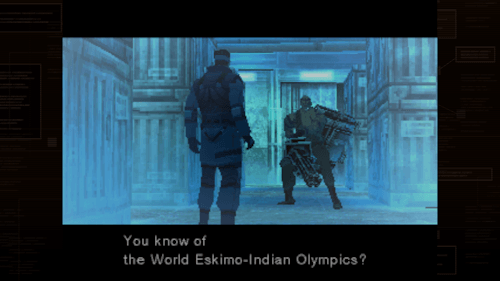
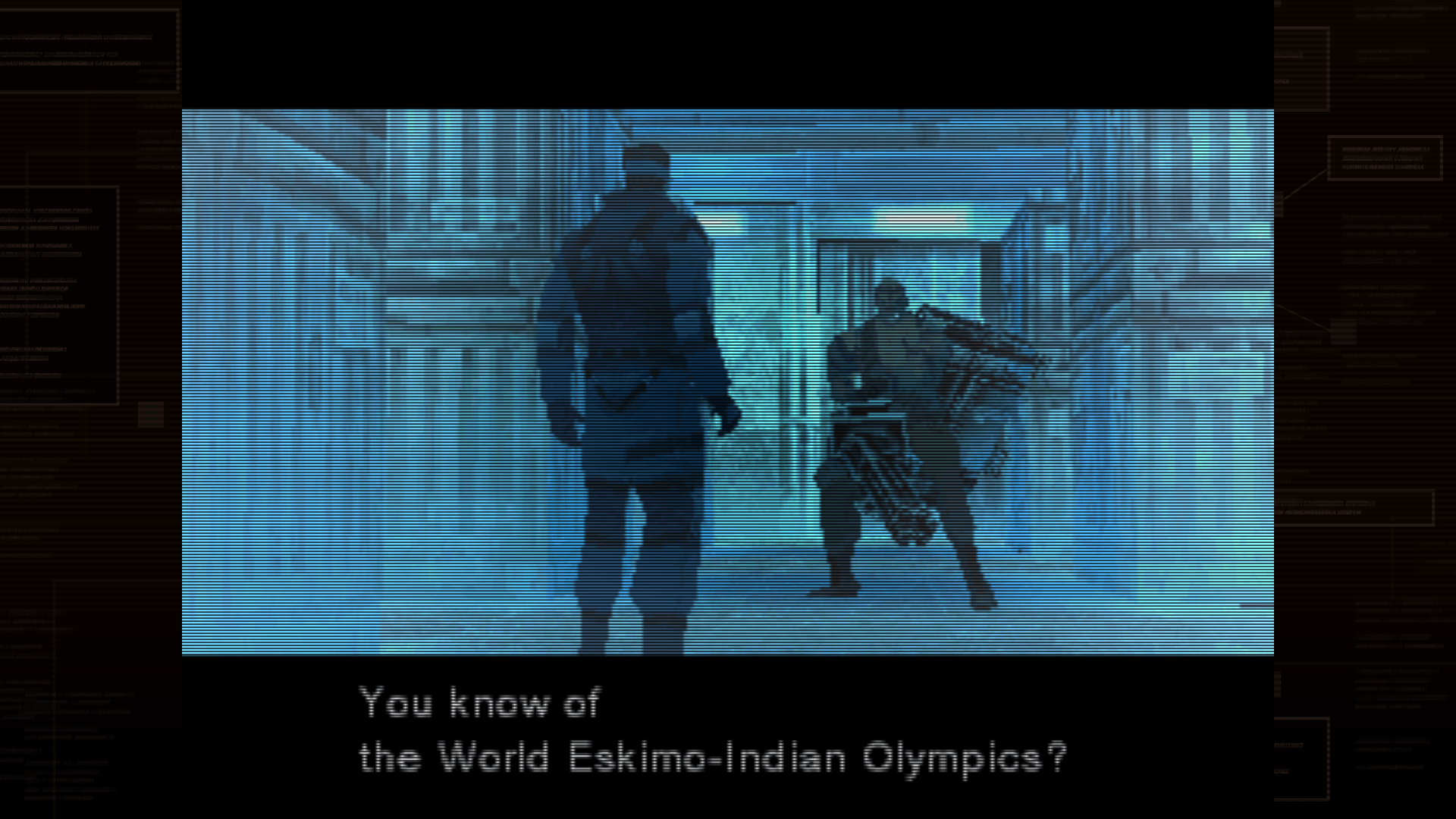
You must be a real threat in the Muk-Tuk eating contest.
“Yeah, I know it. You must be a real threat in the Muk-Tuk eating contest.”

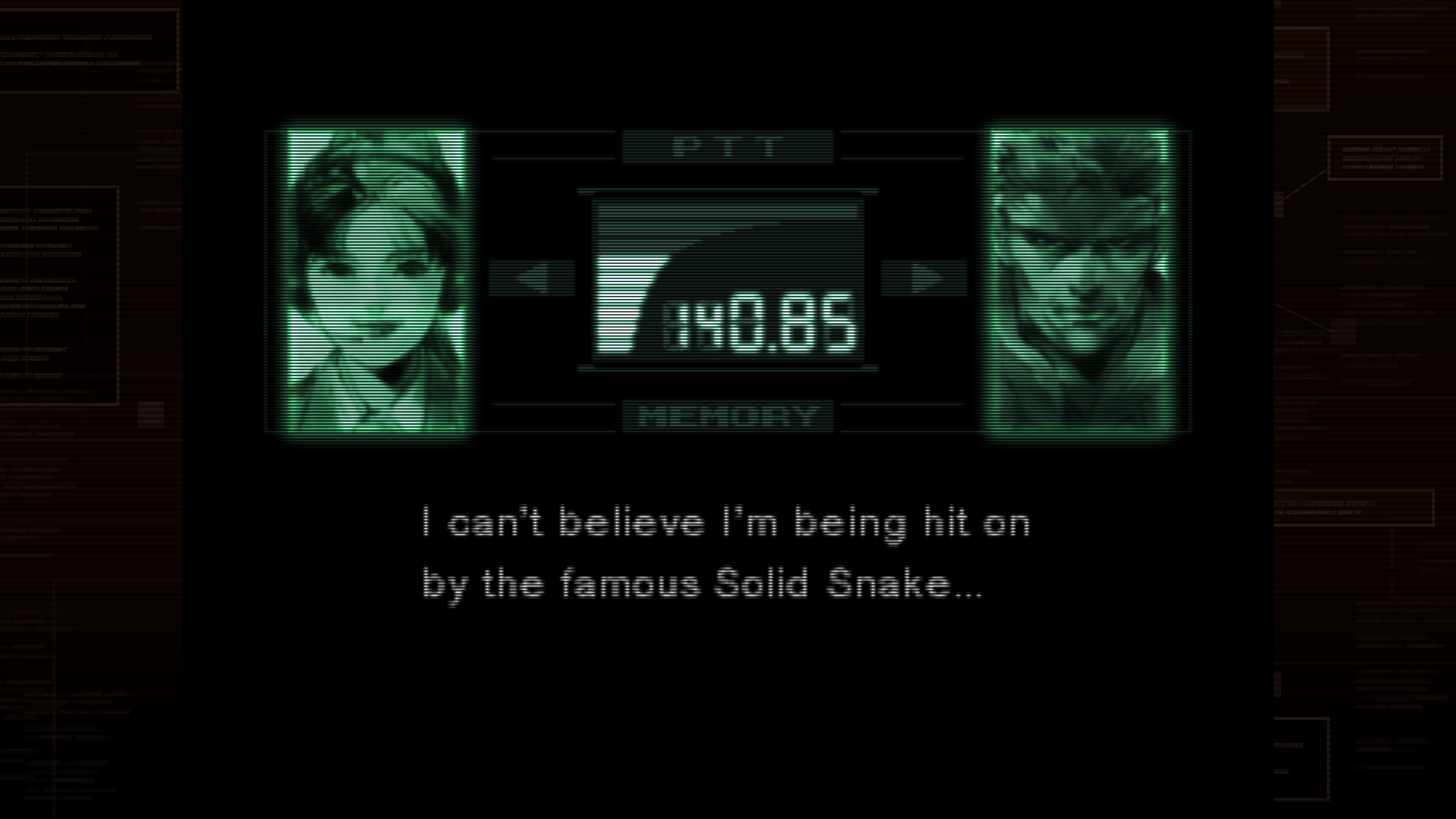
Compared to the previous games, the writing in Metal Gear Solid is on another level. Much more of a soap opera, there are so many twists and turns, double-crosses, surprise reveals, and weird references that I’d be surprised if most kids playing this in the 90s came anywhere close to fully understanding it. There is so much of this stuff that I’ve been hearing spoilers for this game for almost 30 years and was still surprised by some of the plot twists. There are the occasional clumsy exposition dumps and needless overexplanations, though they’re kind of endearing in a way. Likewise, the frequent insertion of references to real-world military technology, science, and politics comes across a little more like a geeky obsession than anything close to realistic, and yet, this is a fun video game about a dude who is practically a martini and an English accent away from being James Bond, so hey, it works for me. Speaking of, Snake’s penchant for hitting on every female he comes across is even worse than in MG2. There are some other slightly pervy moments too, like Meryl’s ass being a significant part of the plot, but I think it mostly keeps it together. The first Metal Gear had some hints of the quirky humor often associated with the series, but MG2 was quite a bit more buttoned up. With MGS, it’s out in full-force. Personally, I think this is all pretty amusing, somehow managing to strike the balance of injecting moments of silliness into an otherwise very serious story without throwing off the tone. Unsurprisingly, there is some stuff that just comes across as more cheesy than quirky, though. A lot of the dialog around the whole “love blooming on the battlefield” theme, for example, just didn’t land with me. It’s sometimes hard to tell if it’s knowingly a little dumb or legitimately a bit hamfisted in its execution, but really, I’m not sure it matters.

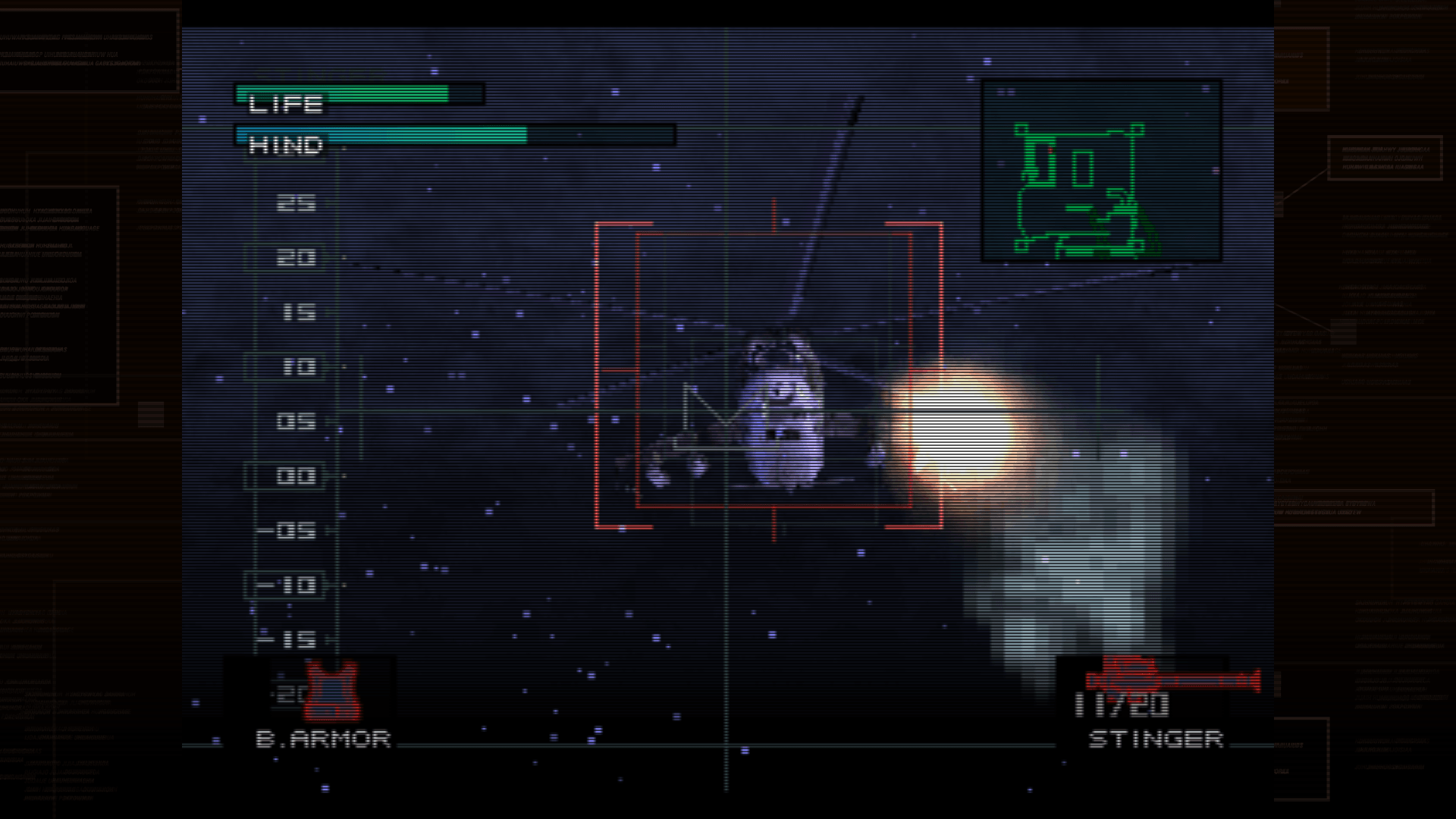
When it comes to a lack of realism, the game’s numerous bosses, which are now a much bigger part of the plot, are where we go from a semi-plausible espionage story with some questionable stuff about genetics and a bit of deep state conspiracy theory to complete nutso fantasy. I don’t remember FOXHOUND being some kind of rogues gallery of super-villains when Snake was a member of the unit, but then again, I guess we were never shown too much about them. Among our bosses we have a cyborg ninja, a mustache twirling Russian gunslinger, a telepathic psychokinetic flying fetishist, a hulking Inuit shaman who wields a massive Vulcan cannon and has some kind of a magical connection to ravens, a master sniper femme fatale who rocks the cleavage even when laying prone in snow, and of course, the series namesake, a badass mech “like one of my Japanese animes!” A huge positive for having this weird cast of characters is the varied mechanics around each one. Everyone has heard of Psycho Mantis and his fourth wall shattering attempts to mess with the player, but practically every boss fight in the game is unique and memorable. Even the Hind D fight (yes, another one…) was really cool, blowing away those in earlier games. Speaking of fourth wall breaks, yeah, MGS has those in full-force too. They’re everywhere, not just with Psycho Mantis; you’ll have some of your crew telling you what buttons to hit on your controller, friends and enemies alike discussing your saving habits, weird rumble shenanigans, etc. It’s fun!
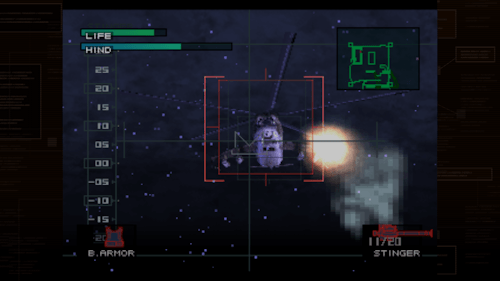

“Another Metal Gear game, another Hind D fight…”

I played the game on “easy” difficulty after learning that it was the normal difficulty in the original Japanese release, and I definitely think it was a bit easier than the earlier games. I didn’t use a map at for this playthrough and only glanced at a walkthrough from time to time to get my bearings when it had been a long time between play sessions. That said, you’ll need to do a lot of exploring if you want to find every item and have a good amount of supplies, and as mentioned, anything besides a strategy of avoiding guards is going to be challenging. One tip I’ll impart to anyone planning on playing is to not be an idiot like me and use your damn grenades! Stun and especially chaff grenades are kind of an easy button in many situations. Despite the variety of mechanics, none of the boss fights are that obtuse either, and a quick codec call during a fight will often tell you exactly what you need to know. That doesn’t mean there aren’t still some really frustrating moments. For example, my first attempt or two at counter-sniping Sniper Wolf was aggravating as she kept hitting me, interrupting my aim before I could get a bead on her, and I absolutely hated the final jeep sequence where it seemed almost impossible to hit Liquid. Also, my checkpoint before the Ocelot fight had me low on both rations and ammo, which made it incredibly challenging. Speaking of, saving in MGS is another case of a positive iteration over what MG2 did. This time we have modern checkpoints which you can usually resume from any time you die. However, you need to use your codec to actually save your game between sessions, though its pretty quick if you can resist chatting with Mei Ling. As an added bonus, there’s also a cool “mission logs” feature that dynamically describes the previous events from your playthrough every time you load a save game from the main menu. I love this kind of thing, though as I heavily leaned on my Xbox’s “Quick Resume”’ feature, loading a save was a rarity for me.
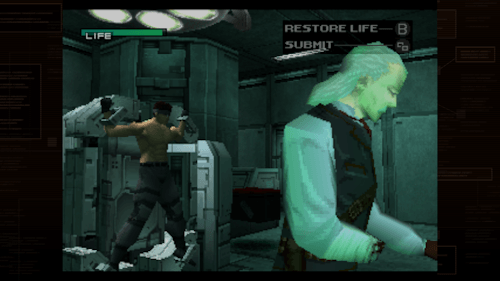
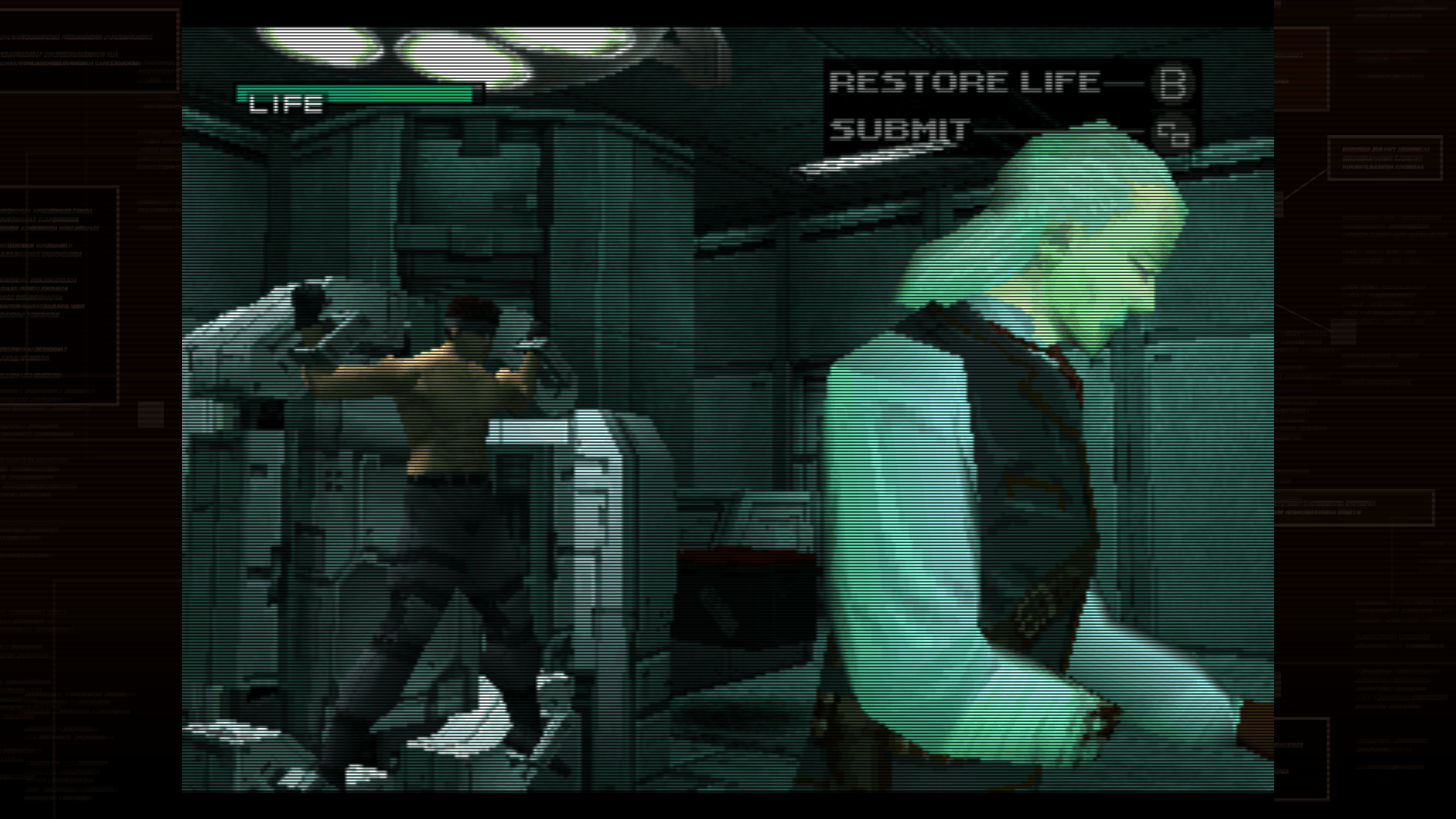
Tap for your life! Err, well, Meryl's life...
“Tap for your life! Err, well, Meryl’s life…”

There’s so much more I could go into about the game, though the most important thing I haven’t mentioned yet is the unusual level of detail here. MGS is full of little one-off mechanics that don’t really feel necessary, seemingly just because Kojima thought they were cool. There’s also a ton of easily missed codec conversations, weird interactions, and secrets sprinkled throughout. Toss that in with reasonably open gameplay in which almost every scenario has multiple solutions and this leads to some unique emergent, or at the very least highly memorable, moments. This all goes to make the game feel deeper, letting players’ minds run wild imagining the possibilities, which is surely an important factor in why MGS resonated with so many people.

Wrapping up, I think if I hadn’t just played Metal Gear 2: Solid Snake I’d have a lot more to say about the gameplay and systems of Metal Gear Solid, as frankly I’m a bit surprised by how similar the games are in so many respects. Yet, I’m glad I did given how much MGS references it, and I definitely think MGS is the better game, having improved just about everything, and upping the ante on the presentation to the point that it’s easily one of the standout games of its generation. I’m absolutely positive that if I’d owned a PlayStation and played the game back in the day, I would have loved it, and I’m quite happy to have finally experienced it. It’s a damn good thing too, as I still have a lot of Metal Gear games to get through… 😅
I suspect this isn't the last time we'll hear about that place.
“I suspect this isn’t the last time we’ll hear about that place.”

I should quickly mention a couple of other related releases. Metal Gear Solid: VR Missions is something of a standalone expansion that greatly expands on the VR training missions that served as an optional tutorial in the main game. While I’m sure I would have tried to complete all 300 of these back in the day, a handful of more interesting missions aside, they’re mostly a test of the player’s mastery of the mechanics, and the mechanics, particularly the combat, weren’t really my favorite part of MGS. Once I got to some slightly more challenging missions, I found them more frustrating than fun and made the hard call to bail. I’m still tempted to go back and finish them, honestly. The other would be Metal Gear Solid: The Twin Snakes, which is the 2004 remake of MGS for the GameCube. That game will be getting its own article when we get to it.

By release date, Metal Gear Solid for the Game Boy Color (AKA Metal Gear: Ghost Babel) should be next, but considering it is going to be included in the upcoming Metal Gear Solid: Master Collection Vol. 2, I’ve decided to wait and play that version. Barring any delays, it should be released by the time I make it through my next game, Metal Gear Solid 2: Sons of Liberty.
Metal Gear Mania 2025 – Metal Gear 2: Solid Snake

Like most in the West, I didn’t know Metal Gear 2: Solid Snake even existed for the longest time. Instead, we had the NES exclusive Snake’s Revenge. It comes up in just about every piece about the game these days, but there’s a fun anecdote about how Snake’s Revenge actually led directly to the development of Metal Gear 2. In brief, Kojima was not involved with or apparently even aware of the development of Snake’s Revenge until he had a chance run-in with a former teammate who mentioned being assigned to the team working on it. Learning of its existence inspired Kojima to immediately start thinking about how he’d design a true Metal Gear sequel. This quickly escalated, with Kojima seeking and being given the greenlight from Konami to actually make it. While amusing, if even a little true, it’s quite revealing about the development of both titles.

Metal Gear 2 - bigger and badder.
“Metal Gear 2 – bigger and badder.”

And that’s about it for me talking about Snake’s Revenge. Beyond Kojima not being involved in its development and it being in no way canon, Snake’s Revenge being the potential second game in what would become a long running series brings its entire status as a Metal Gear game into question. That is, regardless of whatever merits it might have had, it’s clearly not the direction that Kojima would have taken the series, making it a bit more of an evolutionary dead end than even later non-canon entries in the series would be, in my opinion. While I admit that I’m a little curious about the game, I have to trim the fat somewhere. Apologies, Snake’s Revenge fans!

As for the actual Metal Gear 2, after its Japanese release in 1990 it stayed an MSX exclusive without even so much of an official English translation. Like the MSX version of the first game, a port of Metal Gear 2: Solid Snake eventually made it to the West in 2006 as bonus content for Metal Gear Solid 3: Subsistence. This was later included with the HD Collection and that version is included with the recently released Metal Gear Solid: Master Collection Vol. 1, which is how I played it. Like the first game, this is actually a port of an older mobile port, but looking at a list of the differences between this and the original version, I mostly see improvements, so here’s hoping this is a decent enough representation of the original game to base my impressions off of.

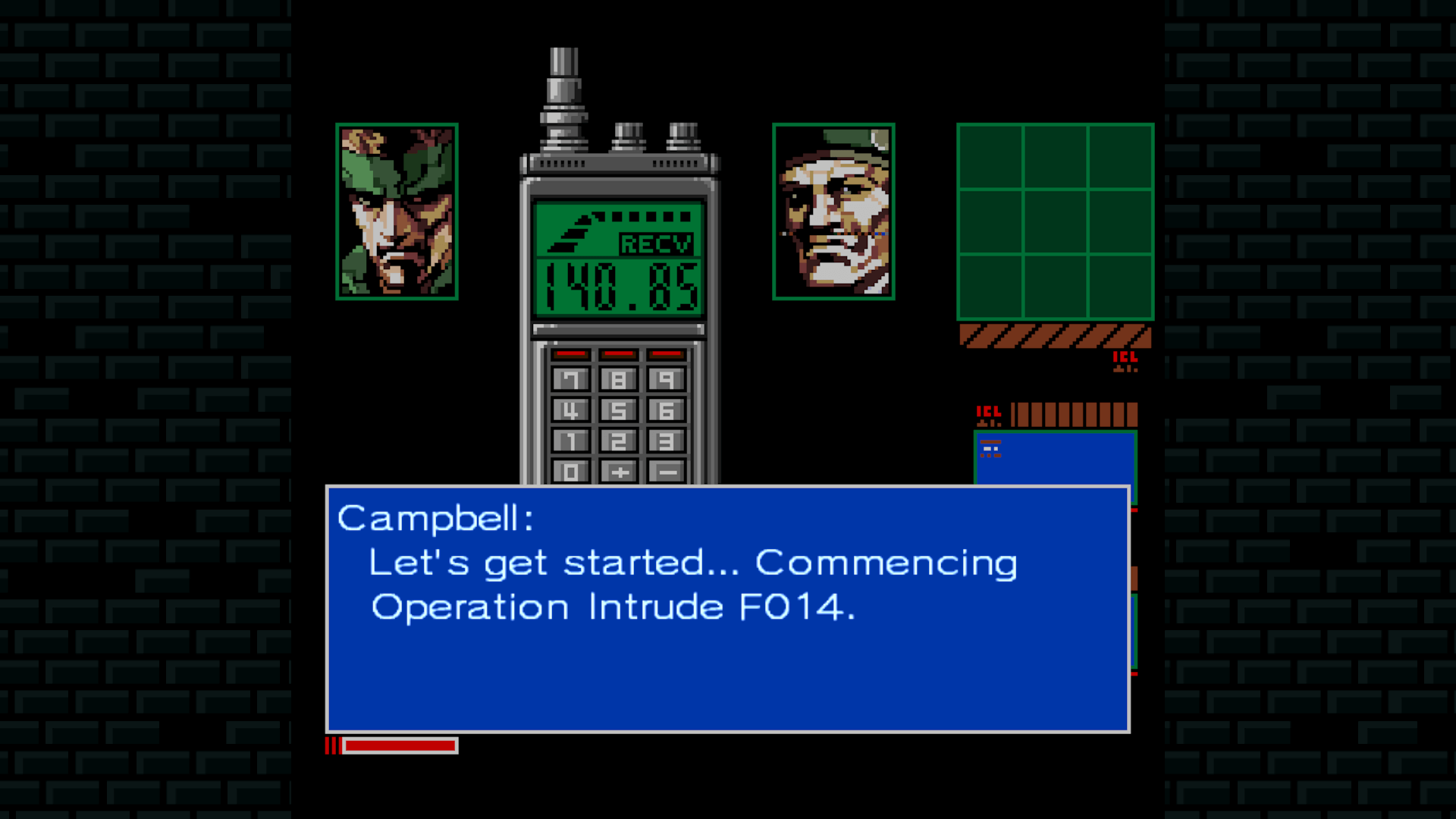
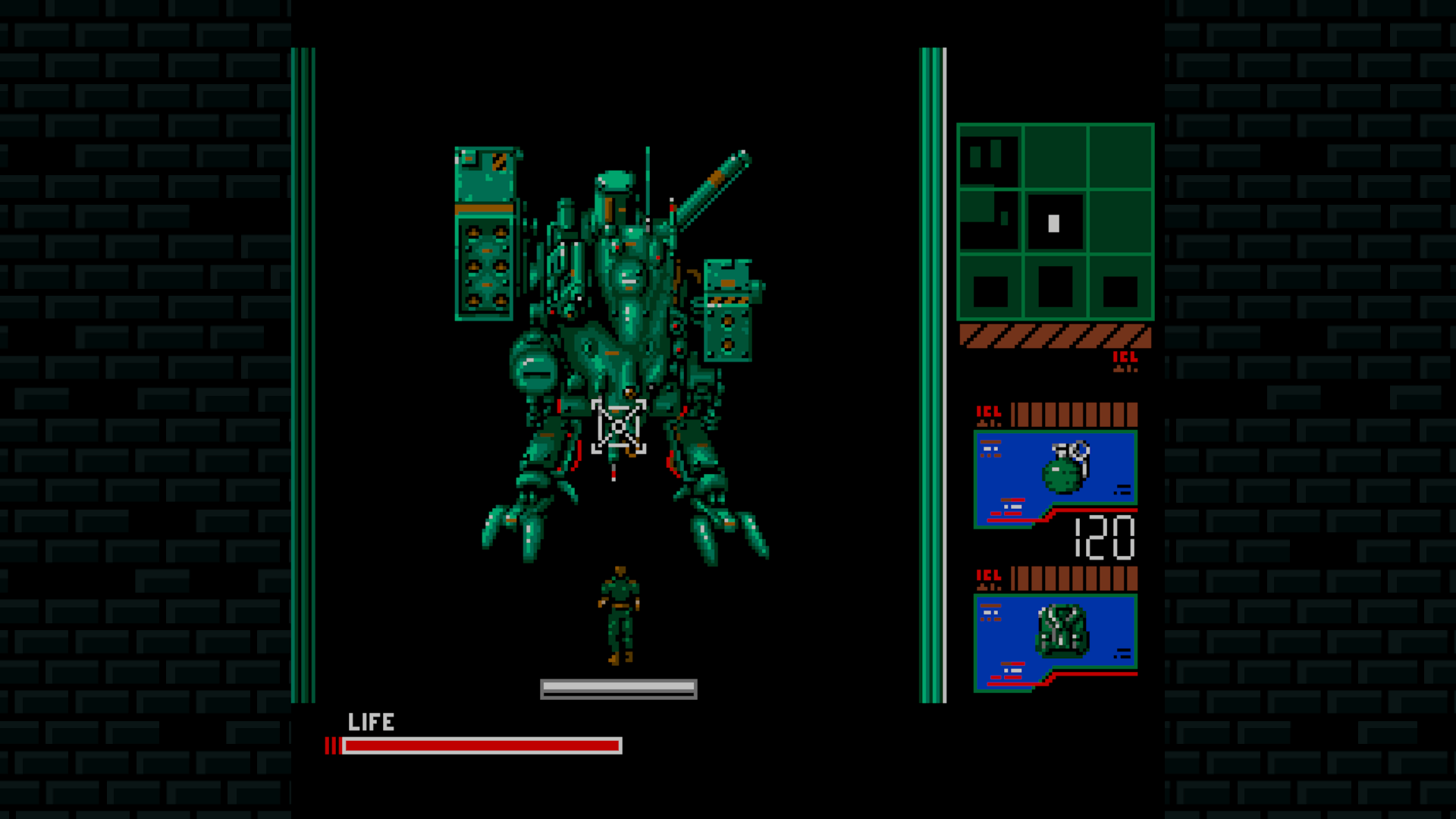
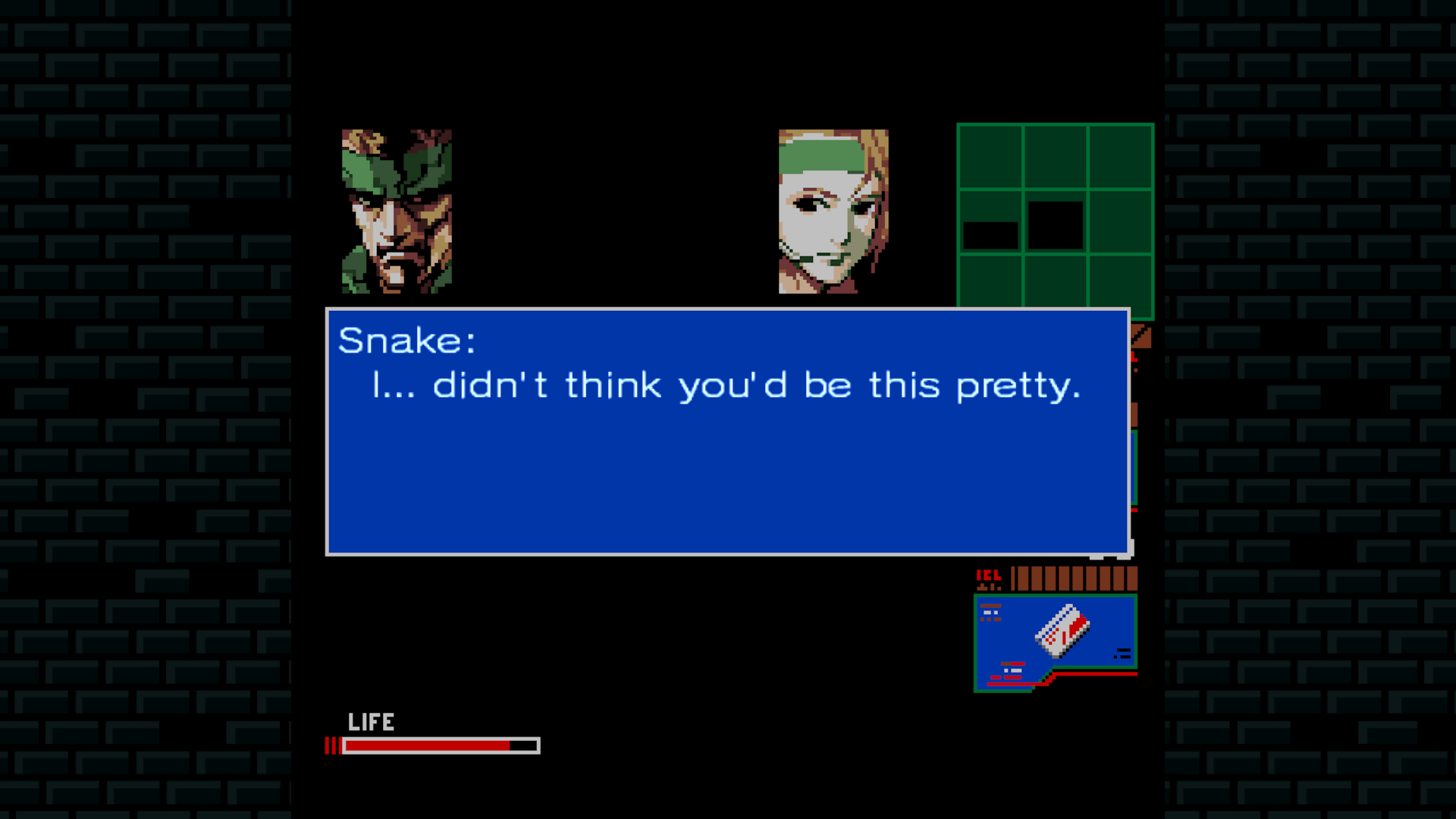
The new radio interface, the new boss, and the new assignment.
“The new radio interface, the new boss, and the new assignment.”

Loading it up, MG2 immediately feels like a substantial upgrade from Metal Gear. The game opens with a lengthy intro sequence showing some really nice, colorful artwork and setting up the plot of the game, all while a banging chiptune track that is far more intricate and varied than anything in the first game blasts away. This continues as you enter the game, with better sprites, animations, sound effects, and a continuation of the excellent soundtrack. You’ll also instantly recognize that the UI is more complex, hinting at what is overall a much more complex game with more items, more dialog, a bigger and more varied map, and more interesting puzzles and other gameplay systems. Not unlike something like the leap between Super Mario Bros and Super Mario Bros 3 on the NES, despite both being MSX2 games, MG2 feels like a full generation beyond its predecessor. Kojima and his team were clearly swinging for the fences here.

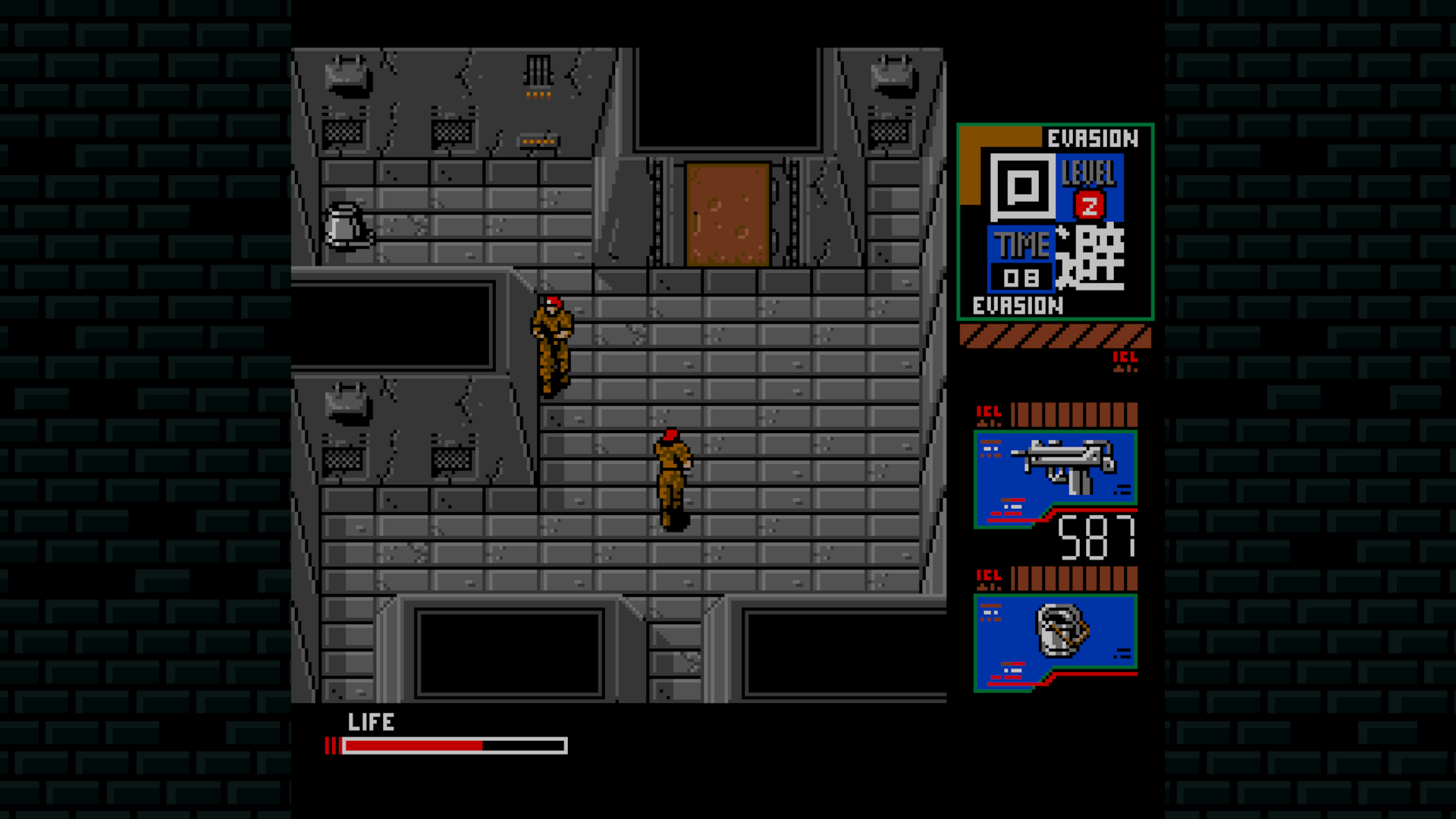
At the top of the expanded features list is stealth. Guards now have a cone of vision and will move their heads to look around when stationary. Their patrol paths also seem to be a little less simple, making avoiding guards a bit trickier than in Metal Gear. The alert and evasion phases are distinct now, too. If you’re spotted, guards will enter alert mode during which they’ll aggressively hunt you, with additional guards popping out of every available door. Seriously, I groaned every time they came out of the back of a cargo truck that was empty just moments ago! When in this mode, it’s almost impossible to hide, rather you need to lose the guards or otherwise get rid of enough of them first. Oh, and alerts are no longer room-based, either, so simply leaving the screen isn’t going to cut it. This new alert mode was probably my biggest source of frustration with MG2. That is, practically every alert, no matter where you are, how many guards are in the room, or the manner in which you were spotted, results in the same ridiculous swarm of guards, and by the end of the game, this was damn tedious to deal with. When you finally do, you’ll enter evasion mode in which guards will carefully search for a bit. A handy display in the UI shows the phase and a countdown timer, with a design seemingly swiped from one of my favorite animes, Gunbuster, incidentally. Assuming you can stay hidden and outlast the timer, they’ll give up and you’ll be back in the default infiltration mode.

Step aside cardboard box, the bucket is peak stealth action gameplay!
“Step aside cardboard box, the bucket is peak stealth action gameplay!”

There’s also a mode similar to evasion mode that is triggered by a guard hearing a suspicious sound, during which they’ll go to its source to try to figure out what made it. Yes, that means there is a more developed sound component to stealth now, with certain types of ground surfaces making noise when you walk on them. You can also purposely make noise by, for instance, punching a wall, which lets you manipulate the guard positions to more easily sneak by them or take them out. To avoid making noise on accident, there’s a new crouching and crawling mechanic. This is an extremely important addition to Snake’s repertoire, and utilized everywhere, with just about every room having multiple places you can crouch behind or crawl into or under to conceal yourself. You also have some familiar tools returning from Metal Gear like the suppressor and your old friend the cardboard box. The box is now slightly riskier though, as guards will pop a few shots off at it if they walk up on it. Then there is perhaps my favorite new item, the bucket, which works the same as the cardboard box but it’s bulletproof, though it does come with the tradeoff of making noise if you walk while wearing it. Given how utterly silly the animation of Snake walking around almost entirely covered by a giant metal bucket is, I’d say it’s worth it though. Finally, there’s the camouflage mat, which lets you deploy a piece of hidden cover to hide under just about anywhere you want.

Last but not least, I can’t talk about all of that without bringing up what is perhaps the biggest addition to both the overall stealth system and the UI, the mini-map. This is the obvious predecessor to the “Soliton Radar” that appears in a lot of the later entries in the series, showing a top down view of the screen Snake is on as well as the 8 screens around him, complete with enemy and other character positions and live moment updates. Incredibly useful when planning your routes, I got used to using it almost immediately, as if I’d also had it throughout my run of the first game too. The only real downside to having such a powerful new item in your toolkit is that you don’t have it all the time – it gets jammed during alert modes, with the neat little alert phase display temporarily replacing it. Honestly, I was usually too busy frantically murdering tons of guards during alerts to worry about it that, though.

The Metal Gear D is, appropriately, highly vulnerable to a grenade to the dick.
“The Metal Gear D is, appropriately, highly vulnerable to a grenade to the dick.”

MG2 retains the Zelda like item gating gameplay of the first game, but with more items and more complexity all around, I personally got a lot less of that Metroidvania vibe this time around. It just feels a bit less intentionally designed, and I think the game suffers just a little as a result, despite just about every individual element being improved. For instance, while keycards are still an annoyance, you can now trade them up for combined versions, reducing the 9 you have by the end of the game to 3, and they also feel a bit less randomly assigned to doors to boot. Fast travel has undergone some improvements, whether you’re hiding in a box and hitching a ride on a conveyor belt, into a cargo truck, or floating through the sewers, it all works so much better. It also seems that using weapons as a gate around boss fights is mostly eliminated. There are some bosses that are easier with certain weapons, sure, but aside from the Hind D fight (yes, another one) I’m struggling to think of another example. Speaking of weapons, I found myself using melee a lot less this time, as I really didn’t want to risk triggering the aforementioned annoying guard swarms. In fact, by the end of the game I was taking full advantage of the slow projectiles (also making a return from the first game) to “pre-fire” shots at guards before they’d round corners or otherwise enter my field of view. Cheesy but kind of satisfying.

Another massive upgrade comes with the radio, which much more closely resembles the codec calls found in later Metal Gear games. Radio conversations happen more often, between more people, are much lengthier and better written. Hey, they’re also two-way now, so Snake finally has a little bit of a personality! People also actually answer their damn calls now too, making the radio much more useful in general. While there are a few little non-radio conversations, and you occasionally run into war orphans wandering around Zanzibar Land who impart similar one-liners, there are no more POWs to give you clues, so the majority of your hints and other guidance will come from these calls. I do wish more of those conversations were more useful, though. Master Miller almost exclusively says generic stuff and I swear I missed Kasler’s initial call or something, as I didn’t know his frequency until later in the game. The radio has one more function exclusive to the modern port – they replaced the original character portraits (hilariously swiped from stills of famous actors) with more stylized artwork by Yoji Shinkawa. While the intent was more likely to avoid legal trouble, the effect is that the game now looks more like a cohesive part of the greater series beyond.

Snake, if you need a cold shower, you already know where the women's restroom is.
“Snake, if you need a cold shower, you already know where the women’s restroom is.”

This feels like a good time to talk about the story. Expand the box below for a spoilerific though fairly terse synopsis of the game’s plot.

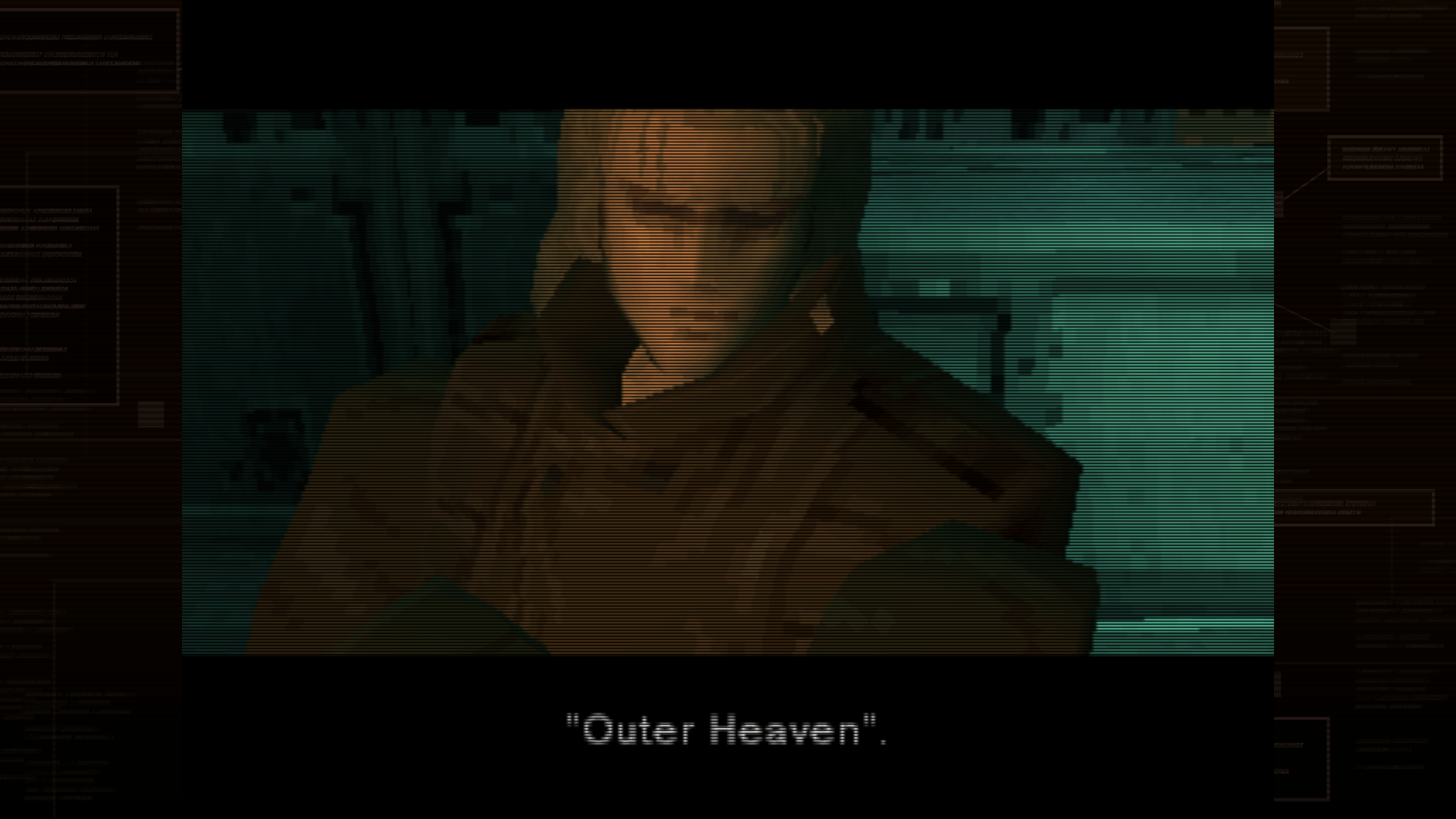
Story Synopsis - Spoilers!1999. On the verge of a global energy crisis, biologist Dr. Kio Marv develops OILIX, a new way to synthesize high-grade petroleum. Soon after his discovery is publicized, Dr. Marv is kidnapped by agents of Zanzibar Land, a small nation that has recently gained attention on the international stage due to aggressively seizing nuclear weapons from neighboring countries, attempting to gain unmatched power as the rest of the world dismantles its nuclear programs to enter a new era of peace. Colonel Roy Campbell, FOXHOUND’s new commander, brings Solid Snake out of retirement for Operation Intrude F014, a daring covert operation to infiltrate Zanzibar Land and rescue Dr. Marv, and with him the secret of OILIX. Once on the ground, Solid Snake gains the assistance of Holly White, a CIA agent posing as a journalist. During the course of the mission, Snake rescues Dr. Madnar, the scientist behind Outer Heaven’s robotics programs. Dr. Madnar had been forced to resume his work and is well underway with mass producing a new model of the Metal Gear walking tank for Zanzibar Land. Snake also learns that his former commanding officer turned mercenary leader of Outer Heaven, Big Boss, is leading Zanzibar Land. While Snake continues his search for Dr. Marv, the group encounters ex-FOXHOUND agent Gray Fox, now loyal to Big Boss, who recaptures Dr. Madnar and blocks Snake’s pursuit. Eventually reaching the base’s main prison complex a different way, Snake locates Dr. Marv’s cell but finds him deceased, having succumbed to torture. Holly radios Snake to let him know that not all is as it seems with Dr. Madnar, who is also being held here, and that he actually returned to Big Boss’s side voluntarily. As Snake turns to confront Dr. Madnar, Dr. Madnar attacks him from behind, forcing Snake to incapacitate him. Assembling clues that Dr. Marv left, Snake recovers the OILIX data from a clever hiding spot and begins his exfiltration. Snake once again encounters Gray Fox, and after an explosive showdown, disables Gray Fox’s Metal Gear D, leaving the two to have a final hand-to-hand fight to the death. Having just defeated his former comrade, Snake is taunted by Big Boss, who he quickly tracks down. Big Boss tries to convince Solid Snake to join his cause, explaining his goals for Outer Heaven and Zanzibar Land – to give soldiers like him a means to survive on their own terms rather than be used as pawns by uncaring governments. Snake refuses the offer, and Big Boss attacks him. Unarmed, Snake moves from hiding place to hiding place, but is able to cobble together an improvised weapon, eventually catching Big Boss by surprise. With Big Boss dead and the OILIX data in hand, Snake rendezvous with Holly and the two are airlifted out of Zanzibar Land.


Certainly, themes of nuclear disarmament and a crisis around fossil fuel shortages were reasonable to speculate on in the late 1980s, and the game as a whole feels a bit more “near-future” than the first did. Beyond that, it’s hard not to feel like MG2 is something of a remake of the first game. Sure, some of the story details are different, but the structure is very, very similar, and a lot of specific gameplay elements return as well. There are also returning characters, starting off with the seemingly random addition of Outer Heaven resistance leader Schneider, who I’d assumed was dead. It all feels like a bit of a soap opera, but I know that’s just the tip of the iceberg for this series. Despite how Zanzibar Land might just be Outer Heaven v2.0, I did appreciate that MG2’s vastly expanded script gave our main antagonist a chance to actually explain his motives a little bit more. It frames the whole “mercenary state” thing much more clearly. On the other hand, Snake’s attempts to hit on women, particularly Holly, felt awkwardly out of place to the point where I actually found myself laughing at them. Really, while there are still some silly bosses with silly names, other than some fun references to video games and the MSX in particular, there are no fourth wall breaks and most attempts at humor are somewhat subdued to the point where it wasn’t always obvious if the writing was intentionally quirky, or genuinely kind of weird. I mean, you can’t tell me Running Man doing a mad sprint around a building to prove how amazingly fast he is, only to come back panting after a single lap isn’t damn funny. 😂

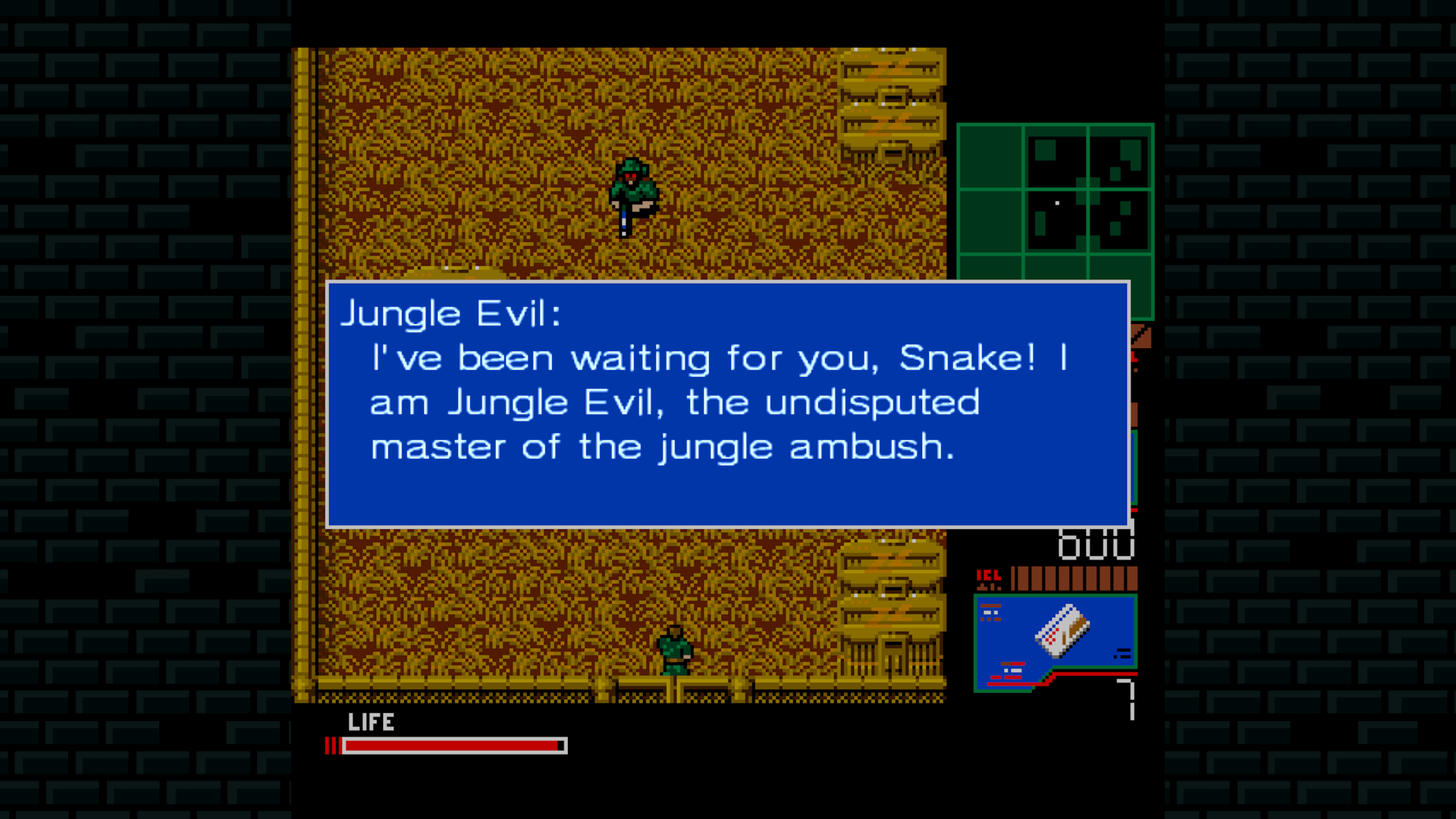
Honestly, I *do* dispute his ability to ambush given that he announced his presence.
“Honestly, I *do* dispute his ability to ambush given that he announced his presence.”

With boss fights being less about gating progress around certain weapons, they now have more traditional boss fight mechanics. Nothing all that tricky, but more varied and funner than what we got in Metal Gear, certainly. Besides my aforementioned burnout with alerts, I think the most difficult aspect of the game is its structure. As mentioned, that satisfying Metroidvania-like formula is just a little off. Hints given via the radio or by the occasional war orphan are usually less direct than those in Metal Gear, which isn’t necessarily a bad thing, but it does make the game feel less linear and more prone to trial and error and arduous backtracking. There is also a lot more light puzzle solving this time around, and some of the puzzles get pretty wacky. How about finding and hatching an egg that turns into an owl, which you’ll need to equip so it hoots, fooling a guard into thinking it’s night time, and for some reason they turn off a perimeter security in this particular area at night? Nope, none of that makes any goddamn sense, does it? There are also rather wickedly designed areas, like the infamous jungle which requires tailing a guard who is constantly checking behind him, and if you lose him for even a second the jungle turns impassable and you’ll need to go back to the beginning and try all over again. The swamp is perhaps an even worse offender, as it’ll outright kill you if you stray too far off the hidden path for more than a few seconds, and the path is long and windy, but of course!

If you do die, save game checkpoints are aligned to specific areas, but it’s perhaps even less clear where those checkpoints actually are. In Metal Gear they were usually the last elevator you entered, but in MG2 they seem to be tied to loading screens… except for when they aren’t. Honestly, after I got further into the game I just avoided the issue altogether by abusing my Xbox’s Quick Resume feature and trying my damnedest not to die. Sometimes easier said than done, as you can no longer stock up on endless rations and ammo by leaving and reentering rooms like you did in Metal Gear, and if you trigger alerts way too often like I did, you’ll end up needing those rations. I played on “easy” difficulty again and discovered one big advantage of it – if you die too many times in a row, you’ll respawn with full ammo and rations on your next continue. I got into at least one situation near the beginning of the game when I was still figuring things out where this really helped me. Overall, it’s not a hard game, but it has potential to be longer and more taxing than Metal Gear was. Unless you get a particular amount of joy from playing this old school, draw your own maps and trial and error your way through puzzles style of game design, I’d recommend you at least use some notated maps, as with the first game. Unlike the first game, however, I might also throw in a walkthrough too. I used a spoiler free walkthrough as a reference here and there, but I absolutely abused the hell out of the maps themselves. While I know I would have gotten more satisfaction from figuring everything out myself, I’m sure it would have also taken twice as long and been a lot more frustrating along the way.

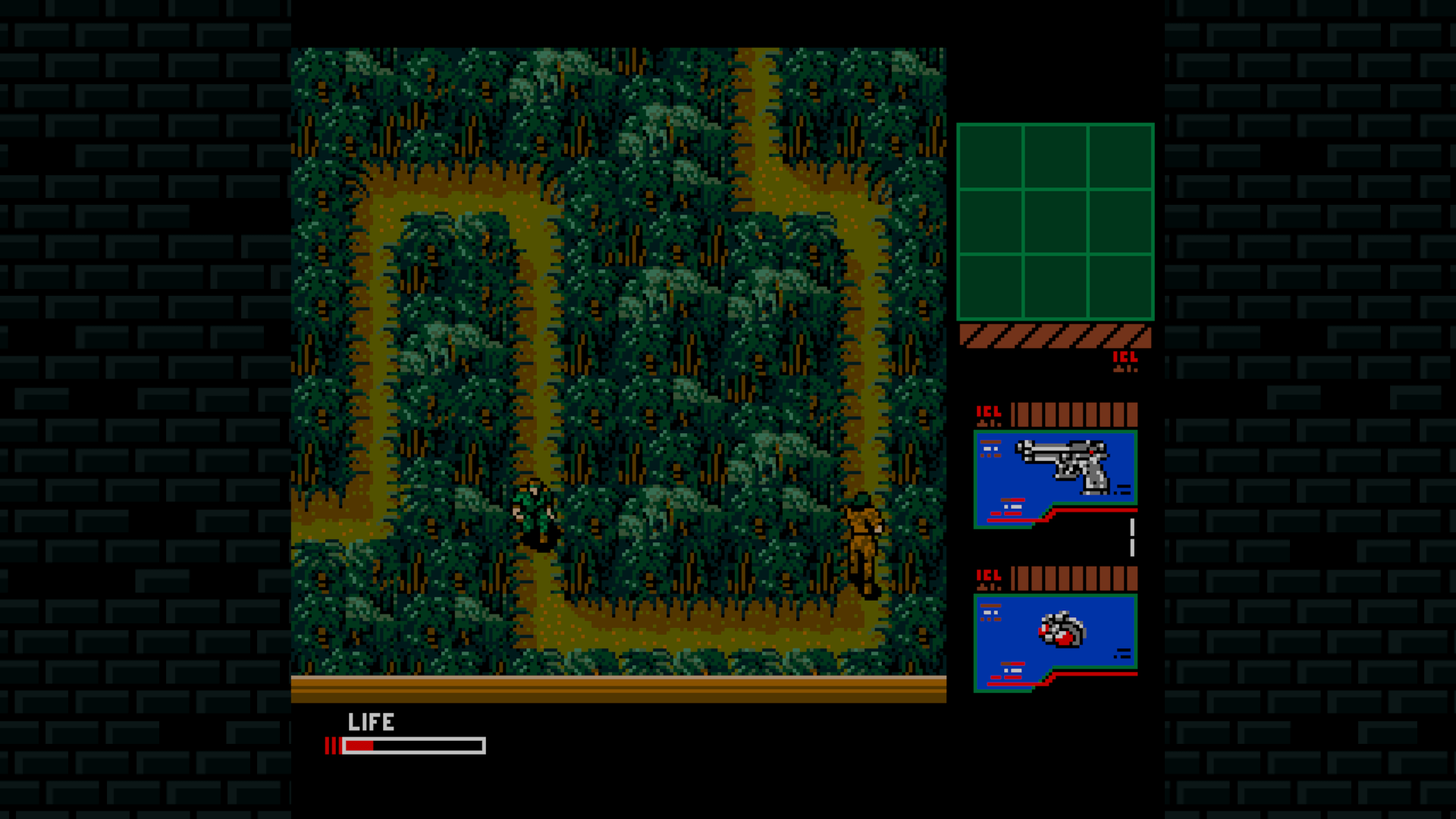
Fuck this fucking jungle section!
“Fuck this fucking jungle section!”

I think the biggest advantage of the more complex and varied gameplay of MG2 is the possibility for the kind of emergent moments you’d expect out of a more open game. As an example, there was one section of the map that I kept going back to where there was no way to get past a guard without getting spotted. After just dealing with triggering an alert several times, I figured out that I could knock on the outside of a wall he was near and he’d walk over to it. He could still just barely see me if I tried to creep by him, but I could then blast the Zanzibar Land national anthem cassette tape to make him spring to attention, facing straight ahead, letting me get by him unseen. For an example of a funnier emergent moment, I almost fell off of my couch when I accidentally killed a war orphan while attempting to blow up a wall with C4 – I just assumed children would be invulnerable so I wasn’t too concerned when he wandered up, but… hey, 1990 was a more innocent time! 😅

While I had some mixed feelings on Metal Gear 2, all in all, there’s no denying that it is a much more impressive game than its predecessor. It really improves on virtually every aspect of the first game, and while it might have taken me a bit of time to adjust to the added complexity, in the end I had a lot of fun with it. I’ll have to get further into these playthroughs to be able to really judge MG2’s place in the series, but at this early point I’d definitely recommend Metal Gear fans give it a go.

Next, we move on to the game that kicked off a love of the franchise for so many people, Metal Gear Solid