Category Archives: Ancient History

Planetside (Part 1)

I’d been in the MMO mood again recently and while looking for an appropriate new diversion I ended up jumping back into Planetside 2, this time with the goal of joining an outfit and coordinating with other players again. Just like the good old days!

It’s actually those “old days” I want to write about today. I’ve written about Planetside a couple of times before now, but thinking a lot about the differences between Planetside and Planetside 2 since diving back into it led me to realize I’ve forgotten quite a lot of the specifics about how the first Planetside actually worked. For a game that was so important to me, this simply won’t do! When I wrote this little tribute to the game years ago, I was actively avoiding going into the gameplay too much, but now, for posterity’s sake, that’s exactly what I aim to do. That said, having mostly only played it hardcore for its first year, I’ll be focusing on the state of the game at that point in its existence.

Planetside! I always thought it was odd that the logo from the title screen isn't the same logo used on the box and everywhere else.
“Planetside! I always thought it was odd that the logo from the title screen isn’t the same logo used on the box and everywhere else.”

Planetside was a 2003 MMOFPS released by Sony Online Entertainment (SOE) who were most well-known at the time for their landmark MMORPG, Everquest. They’d follow Planetside up in short order with Star Wars Galaxies, a game that has achieved something of a legendary status amongst MMORPG aficionados, and yet Planetside is rarely part of the conversation. I believe I first found out about Planetside via a news blurb about the game going into beta testing in the pages of a PC Gamer or Computer Gaming World magazine. Already a fan of MMOs thanks to games like Ultima Online, Dark Age of Camelot, and Asheron’s Call 2, and of “combined arms” competitive FPS games thanks in large part to Battlefield 1942 (which I spent an absolute shit ton of time playing in 2002) Planetside sounded right up my alley and I managed to nab a copy on release day.

Far less notable back then than today, still not far removed from the original crop of MMORPGs, Planetside required both a full-priced retail purchase and a monthly subscription to play. I don’t think many people would argue with me when I say that the subscription was likely one of the main reasons Planetside wasn’t a lot more popular. It seemed to me, even at the time, that the Venn diagram of players who loved online, competitive first person shooters and those who wouldn’t mind paying a monthly subscription to play one had to have a fairly narrow overlap indeed. Hey, at least SOE wasn’t bilking us for microtransactions, right?
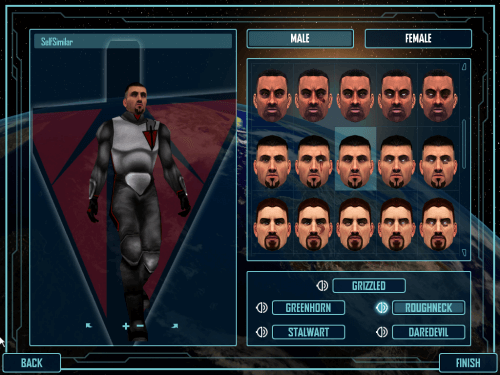
Creating a new character. Ahhh, these were simpler times...
“Creating a new character. Ahhh, these were simpler times…”

In typical MMORPG form, your first steps into Planetside involved picking a server and creating a character. Customization options were limited to picking a gender, a face, and a voice, but the most important thing was selecting a faction. Planetside featured three factions (or “empires”) all fighting for the domination of the planet Auraxis:

  • The Terran Republic (TR) represented what was left of Earth’s original occupying force and its remnant government was portrayed as an oppressive militaristic regime. They favored high rate of fire weapons and were identified by a red and black/gray color scheme.
  • The New Conglomerate (NC) were a rebel faction fighting for freedom from the Terran Republic’s tyranny. They favored slower but harder hitting weapons and had a particular affinity for shotguns. They were identified by a blue and yellow/gold color scheme.
  • The Vanu Sovereignty (VS) were a faction who believed in embracing the technology of the Vanu – the ancient aliens who once inhabited Auraxis. They used energy weapons and “MagLev” hover vehicles. They used a purple and teal/cyan color scheme.

I won’t go any further in talking about the story of Planetside as, let’s face it, it didn’t matter. In real terms, apart from some empire specific weapons and vehicles, there was no practical difference between the three factions. This of course meant that balance issues were limited to only those empire specific items, with everything else being shared between all three groups. The forums were filled with complaints about the NC’s “Jackhammer” and the VS’s “Lasher” (a couple of notable examples) all the same. I originally chose (and stuck with) the New Conglomerate because I liked the idea of being a rebel fighting against an oppressive regime, and I dug their more rugged, sci-fi militarist aesthetic, which was something like the UNSC marines from Halo but rocking a far less practical color scheme. That said, I was always a little jealous of the TR as their faction specific equipment always appealed to me.
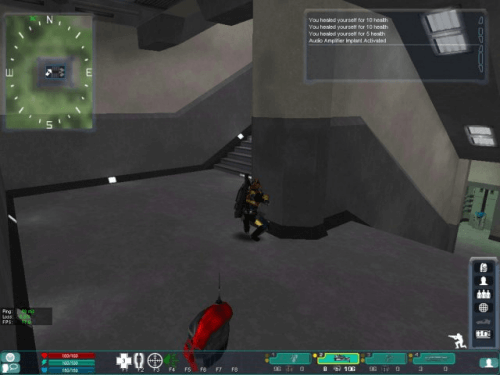
Me cheesing the third person camera. Apparently it was working too, judging by the enemy backpack on the ground.
“Me cheesing the third person camera. Apparently it was working too, judging by the enemy backpack on the ground.”

Once you finished that up there were some basic tutorials to complete. I have to say, the combat itself was fairly bad compared to a lot of its contemporaries in the FPS genre. I never loved the way weapons, especially vehicle weapons, felt. I think for most of us the tradeoff was worth it for Planetside’s uniquely huge battles and open battlefields. Another artifact of its time, there was also an absolutely insane “cone of fire” associated with weapon accuracy. I personally never hated the idea, but I know some people have an extreme dislike for it, and Planetside’s implementation was pretty vicious. There was also a third person view that could be toggled and zoomed in and out, and yes, even outside of vehicles! This mode was garbage for actually playing the game, so it was mostly used for peeking around corners. Since everyone had that ability I never considered it unfair exactly, but definitely open to abuse and could lead to some pretty shitty deaths.
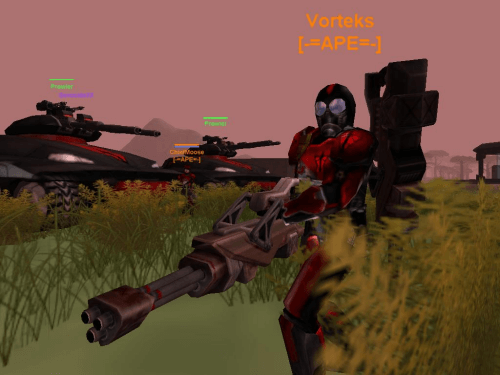
Some dirty TR scum hanging around Sanctuary.
“”Some dirty TR scum hanging around Sanctuary.”

Anyway, at some point you’d find yourself back in your empire’s sanctuary. The sanctuaries were small islands that represented each empire’s headquarters on Auraxis. From there you could access a VR training area where you could try out weapons and vehicles, various terminals to train and equip your character, use the HART (High Altitude Rapid Transport) shuttle to take a drop pod to wherever you’d like on Auraxis, or use a warp gate to warp to another continent. They also seem to have been intended as social hubs to some degree.

Back to your character. There were 20 “battle ranks” (BR) which were levels you progressed through as you gained experience by participating in facility captures, killing enemies, and destroying enemy vehicles and equipment. With each level-up you’d gained certification points (CP or just “certs”) which you could use to spend on a variety of skills or “certifications”. Certifications allowed you to use various equipment – armor, weapons, special devices, and vehicles. How many certification points each certification cost varied, but you could typically unlock some decent equipment by the time you completed the tutorial, and by the time you reached BR 20 you’d have quite a few of them selected. Apart from a few cases of advanced versions of certifications, this wasn’t some complicated tree with prerequisites and branching paths. As you can imagine, this meant that higher level characters had more options than lower level characters, but it didn’t necessarily mean they were any better. It was more of a horizontal progression, in other words. You also had the option of “forgetting” certifications, though only one at a time, and this was on a timer so it was more for correcting mistakes and failed experiments than a total “respec” of your character.
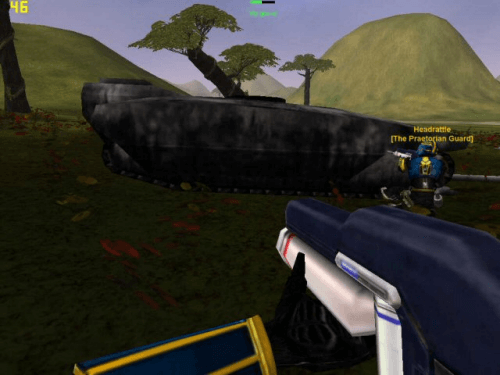
Using Nano Dispensers to try to save a damaged Vanguard. I think she's dead, boys!
“Using Nano Dispensers to try to save a damaged Vanguard. I think she’s dead, boys!”

A few certifications applied to special equipment, which was more akin to learning a new skill in a traditional RPG:

  • Medical Applicator – Allowed the use of a medical applicator, which was a pistol like device that allowed you to heal nearby friendly characters, or yourself. The advanced version of this certification allowed you to revive a dead friendly, which was a particularly powerful ability when playing closely with a squad.
  • Engineering – Allowed you to use a Body Armor Nano Kit (BANK) which worked similarly to a Medical Applicator to allow you to repair the armor of a nearby friendly character, or yourself. It also allowed you to use a Nano Dispenser, a larger device which let you repair vehicles, turrets, terminals, and other devices, which was damn handy for vehicle crews to keep in their inventory, by the way.
  • Combat Engineering – The advanced version of Engineering was so much more advanced it requires its own section. It made repairs quicker, but it also allowed the player to use an Adaptive Construction Engine (ACE) which let them construct various devices including mines, motion sensors, and automated “Spitfire” turrets. There were limits to how many of each of these you could have deployed at a time, of course.
  • Hacking – the normal Remote Electronics Kit (REK) was a pistol-like device that allowed you to hack IFF locked enemy doors and tower and facility control consoles. Pretty much essential for everyone to carry at all times. The hacking cert allowed this device to hack some enemy terminals, and to hack much faster. Advanced Hacking allowed even more types of terminals, notably equipment and vehicle turrets, and even unoccupied enemy vehicles in rare circumstances in which you might come across one. Powerful stuff!

Another subtle but neat thing about battle rank was that your character’s appearance changed as they ranked up through BRs. New Conglomerate troops, for instance, started with blue armor with some minor yellow highlights, and ended up being entirely yellow with some minor blue highlights. It didn’t take too long before almost everyone in my outfit looked the same, of course, but it was a nice touch.
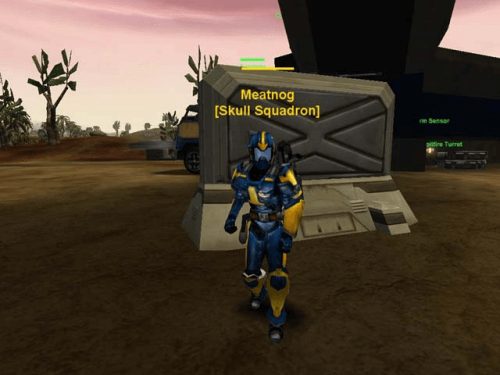
Meatnog's blue coloring indicates that he's below BR7 while his two shinguards and wristguard indicate that he's CR3.
“Meatnog’s blue coloring indicates that he’s below BR7 while his two shinguards and wristguard indicate that he’s CR3.”

There was also “command rank” (CR.) Command rank was leveled up by experience gained as the leader of a squad and each CR would unlock special abilities that could be useful in organizing and participating in large coordinated battles – things the ability to talk in a special command chat channel, place waypoints for your squad on the map, or at later levels, powerful, limited-use abilities like the ability to reveal enemy locations on the map, or order EMP blasts and orbital strikes. As with battle rank, your character’s appearance would be altered slightly with each new command rank gained by having their armor adorned with some additional accessories. Pretty cool stuff.
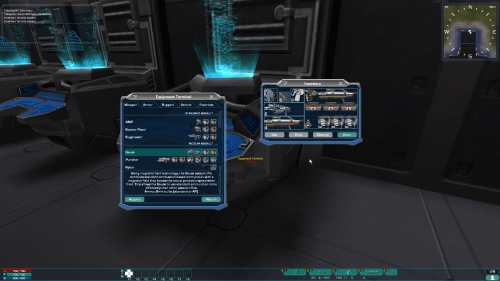
Using an Equipment Terminal to create a loadout.
“Using an Equipment Terminal to create a loadout.”

The next and arguably most important thing about your character was your inventory. Planetside featured a full old fashioned, RPG-like grid-based inventory system. You could use your inventory to store additional weapons and ammo and the aforementioned special devices. The amount of inventory varied widely depending on the type of armor you equipped:

  • Standard Exo-suit: Your basic starter armor that provided very little protection and a 9 x 6 inventory. No certification required.
  • Agile Exo-suit: Light armor that had more protection, a second pistol slot, and a 9 x 9 inventory. This is the armor that was most often used by vehicle pilots but also allowed for faster movement than “Rexo” armor. I rarely used Agile while on foot myself, but did have a loadout which paired it with a “Sweeper” shotgun for speedy CQB assaults.
  • Reinforced Exo-suit: Also known as “Rexo” armor. Included yet more armor, a second rifle slot, and a 12 x 9 inventory space, but traded this for a slower movement speed and was restricted from driving in many vehicles. Most infantry used this armor for extra flexibility and protection.
  • Infiltration Suit: This suit provided no protection, and only included a single pistol holster and a tiny 6 x 6 inventory. The trade-off was an even faster movement speed than Agile and a unique cloaking ability, however. This obviously lended itself to some very specialized roles and playstyles.
  • Mechanized Assault Exo-Suit: “MAX” armor was more like a mini-vehicle than normal armor in some ways. Included built-in weaponry and abilities, a ton of protection, and a huge 16×12 inventory. Like Infiltrators, MAXes played more of a specialized role. I’ll talk about both later on.

Vehicles also had trunks which could be used for additional storage, but the practical uses for these were pretty limited. Likewise, there were storage lockers found at the facilities which were almost exclusively used for looting empire-specific weapons and ammo from fallen enemies and stashing them away to play with on a rainy day. Looting, as a whole, was a fairly unusual addition to the game, honestly.

Finally we had implants. The number of implant slots increased as you leveled up, eventually ending with 3 available slots. Implants granted some special abilities like the ability to run faster, to see cloaked infiltrators, or to hide yourself from enemy radars, for instance. They were typically toggleable rather than always passively enabled, and drained your character’s stamina in addition to requiring activation time after first spawning. While their usage was limited, they were still pretty powerful – the ability to see cloakers with “Darklight Vision” for instance, was fairly invaluable to me.
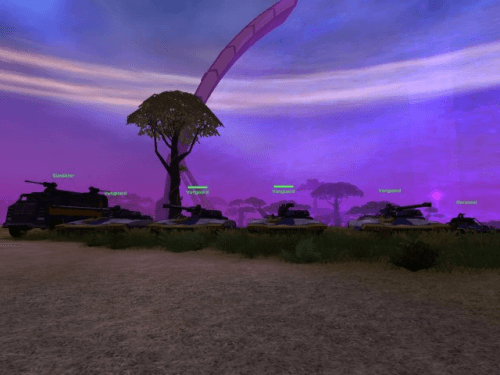
An NC column consisting of a Sunderer, 4 Vanguards, and a Harasser gather at a warp gate.
“An NC column consisting of a Sunderer, 4 Vanguards, and a Harasser gather at a warp gate.”

As mentioned, there were a number of vehicles available. You had to have a certification to drive / pilot most of them, and some required additional players to man some of their weapon positions. Most notable of these were the main battle tanks, in which the driver only drove and a second player controlled the main turret weaponry. Ground vehicles included one man ATVs, small armed buggies, a one person tank in addition to those main battle tanks, group transport vehicles, and the all important AMS and ANT vehicles (more on those later.) Air vehicles included a fighter / scout craft, an air to ground attack vehicle, a bomber, a massive troop transport vehicle, and later on, a vehicle transport.

As for putting all of this stuff together, most players would elect to join a squad, whether it was made up of friends or outfit mates or just other random people fighting in the same area. Squads were extremely useful for coordination as you could monitor your squadmates’ locations and status and communicate with text and even a half-decent built-in VoIP implementation, and as an added bonus allowed squad members to share experience points. Infantry squads would usually be made up of mostly soldiers in Rexo armor running whatever combination of certs and gear they preferred. I typically carried NC’s standard Gauss Rifle and a few Decimator dumbfire rocket launchers for the occasional run-in with MAX units (for which they excelled at handling) or vehicles. I’d also carry a Medical Applicator and a BANK for quick self-heals and repairs, along with healing and reviving of squadmates when necessary, and a REK for hacking the doors on enemy controlled structures and, of course, the structures themselves. I’d also pack some medkits for emergency heals and some frag grenades where I could squeeze them in. Oh, and of course, you’d have to account for extra ammo!
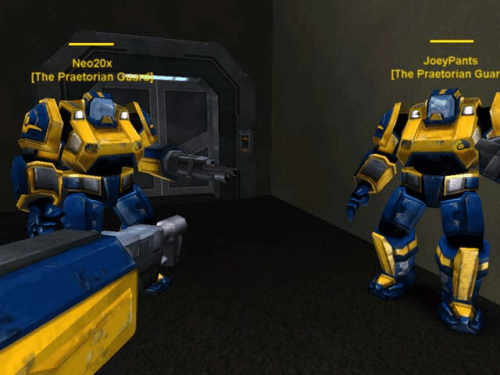
Me and my fellow NC MAX homies kickin' it.
“Me and my fellow NC MAX homies kickin’ it.”

How often MAX units would supplement squads really depended on the individual player – some people loved using MAX armor as much as possible, while others actively avoided it. Still, there were occasional strategies which involved attempting to overpower defenders (or less commonly, out live attackers) by massing MAXes. This was also known as a “MAX crash” due to the tendency for these groups of MAXes to charge into a room or through a chokepoint, as well as the strategy of “dropping” a large number of MAXes on a tower or a facility via a Galaxy dropship. Infiltrators sometimes supplemented a squad too, providing uniquely useful hacking and scouting support. More often than not, Infiltrators preferred to sow the seeds of chaos by playing solo though.
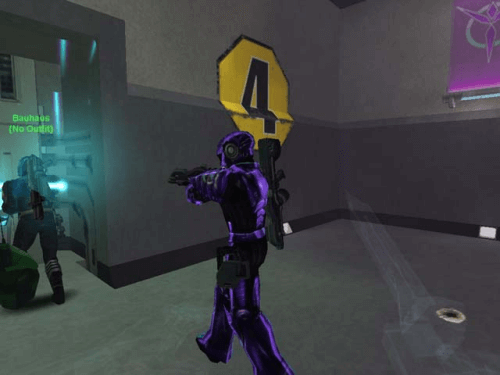
A cloaked NC Infiltrator about to backstab a VS soldier about to gun down an NC soldier about to hack a VS tower's command console.
“A cloaked NC Infiltrator about to backstab a VS soldier about to gun down an NC soldier about to hack a VS tower’s command console.”

Beyond those, probably the other most specialized infantry role was that of the Combat Engineer. Certain players gravitated hard to this role, and “maining” as a Combat Engineer was indeed a unique playstyle that concentrated on strategically placing, repairing, re-placing, and supplementing deployables like mines and Spitfire turrets, usually in a defensive position. Again, whether or not your squad had anyone playing as an engineer usually came down to personal preference, but I’d often see Combat Engineers playing solo or as part of small special ops squads fighting away from the main battlefronts.

Let’s take a quick step back and talk more about actually getting into the battle.

Planetside allowed you to get from your Sanctuary to the contested lands of Auraxis in a few different ways. First, although there was a timer on its use, “Instant Action” was only a keypress away. This feature would send you plummeting down to the earth in a drop pod to a “hotspot” – a location on the map where combat had recently occurred. Oftentimes this would bring you to one of the larger battles currently in-progress, although occasionally it might bring you to a small fight and maybe one that had already wrapped up. It also made no guarantees about landing you in a safe place, and might even send you into the middle of a battle that your allied empire wasn’t even involved in. This feature was interesting and could be super convenient for new and solo players, but most veteran players rarely used it since it was more desirable to join up with squad and/or outfit mates, or at the very least, strategically pick which fight you wanted to join.
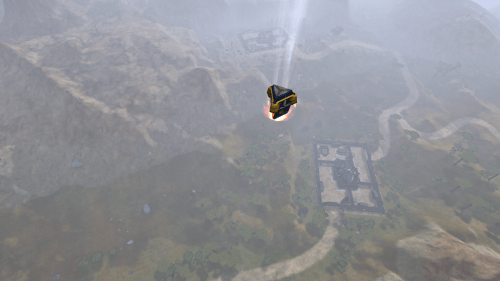
An NC drop pod plummets down near a facility.
“An NC drop pod plummets down near a facility.”

That’s where taking the HART comes in. As mentioned before, the HART (High Altitude Rapid Transport) shuttle could be taken from the Sanctuary every few minutes and could drop you (again, via drop pod) to almost any location in Auraxis outside of an enemy facility’s sphere of influence and, of course, an enemy empire’s Sanctuary. Despite having to physically go to the shuttle terminal and wait on a timer between flights, it could take you to wherever you wanted to go, quickly and accurately, and was by far the most common way to join the action.
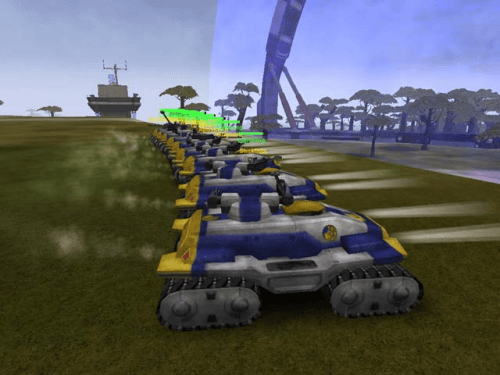
A huge squad of NC Lightning tanks gather at a warp gate.
“A huge squad of NC Lightning tanks gather at a warp gate.”

Finally, for the more organized players, there were “warp gates” that directly connected the Sanctuaries to specific continents. A player could walk into a warp gate and activate it to teleport to a warp gate on the connected continent. Of course, you wouldn’t want to actually walk – the continents in Planetside were huge and relatively barren. Instead, warp gates were primarily used for transporting coordinated vehicle pushes such as armor columns, air squadrons, or platoons of infantry preparing to drop from multiple Galaxy dropships. Given that they only went to specific places, these would most often be used when attacking directly connected continents since anything else required a lot more travel time – driving or flying from one warp gate to another, although that certainly wasn’t unheard of. In fact, one vehicle, the Lodestar, added late into the first year, seems to have been purpose built with that in mind, allowing you to fly a larger ground vehicle such as an AMS or a main battle tank around as well as serving as a potentially useful battlefield repair station. As an aside, warp gates were also safe zones, which sometimes made for some interesting meet ups with enemy forces. In fact, this was sometimes combined with the looting and advanced hacking systems to facilitate empire-specific weapon and vehicle trades.

In part two I’ll talk more about how the map works and the mechanics of taking it over, and wrap up by talking a bit about about how the game changed.

Pictures taken from my old NC outfit, The Praetorian Guard’s, archived website, JeffBeefjaw’s Imgur album, which looks quite similar, but from the TR perspective, and some newer pictures acquired while playing around on the PSForever server. Unfortunately the two former sources don’t really show any ACTUAL combat, as few people captured full time back in the day so most screenshots were of points of interest, outfit photo ops, and just dicking around rather than normal gameplay.
Save or Die!

As a little kid I became obsessed with skateboarding thanks to my best friend’s skater older brother, who we both thought was so cool. As it goes, my friend and I spent far more time flicking through Thrasher and Transworld Skateboarding, doodling halfpipe filled skatepark plans, and pining for half of the awesome gear in the latest California Cheap Skates catalog than actually skating. Regardless, I think there was something about the whole culture that appealed to the nascent misfit rebel in me. Beyond magazines and catalogs, there were a few other outlets for wanna-be skaters. While you could only watch Christian Slater Gleam the Cube so many times, a game like Skate or Die on the NES could be played over and over again… and I did! The disappointing Skate or Die 2 was one of the only Nintendo games I talked my parents into buying me at release, in fact.

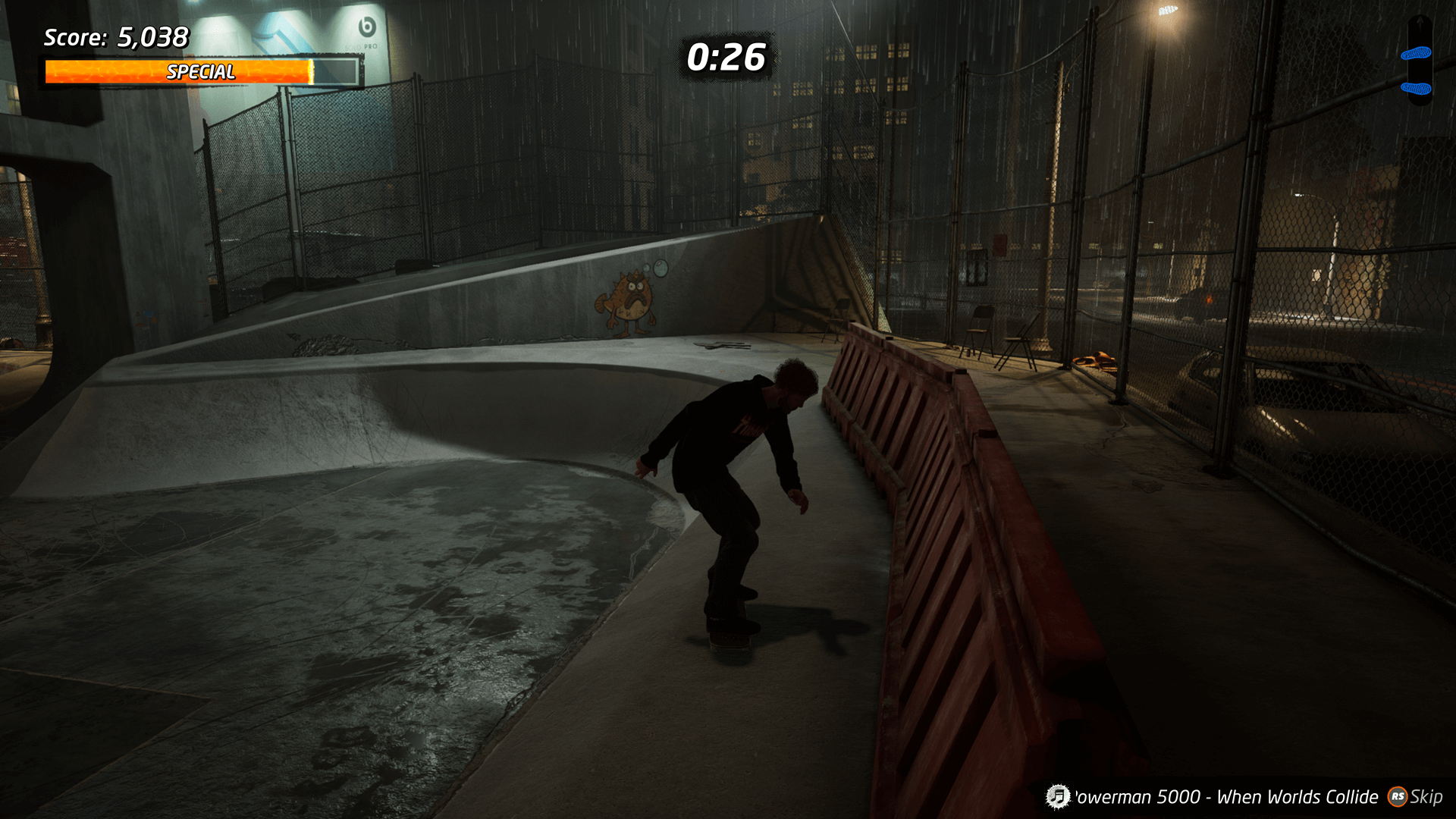
Man, I love this new moody version of Burnside!
“Man, I love this new moody version of Burnside!”

In my teenage years I got into punk rock something serious, and given the association, picked up skateboarding again. Nowhere near as physically coordinated as I was as a kid, and a lot more risk averse at that, I didn’t have any luck with continuing where I had left off, but I did discover a whole new joy of skateboarding – being alone with my thoughts while trying a trick I barely understood how to do over and over again in some empty parking lot somewhere. A useful release during some pretty stressful years. Of course, I still pined over CCS catalogs, but now I could actually afford some of the stuff in them. At around the same time I had developed something of a summer vacation ritual of bingeing on the X Games late at night. Then, to complete the circle, Tony Hawk’s Pro Skater dropped. The 90s were a hell of a time!

Or should I say 2000s, because while THPS had a reputation of being more of a PlayStation-centric series at first, it was ported all over the place, and I, being a Nintendo 64 devotee at the time, had to settle for that inferior version. That’s not to say it sucked though – the core of THPS was absolutely intact, and although the fog plague every locale (in more wide open areas) and the soundtrack was fucking butchered, it was totally serviceable for us schlubs with no alternates. While I have fond memories of jamming out to the awesome soundtrack (that very much aligned with my musical tastes) and struggling through that original selection of levels, I can’t tell you exactly how much of the game I played. I mean, I vaguely recall completing all of the challenges on all of the maps, but who knows?

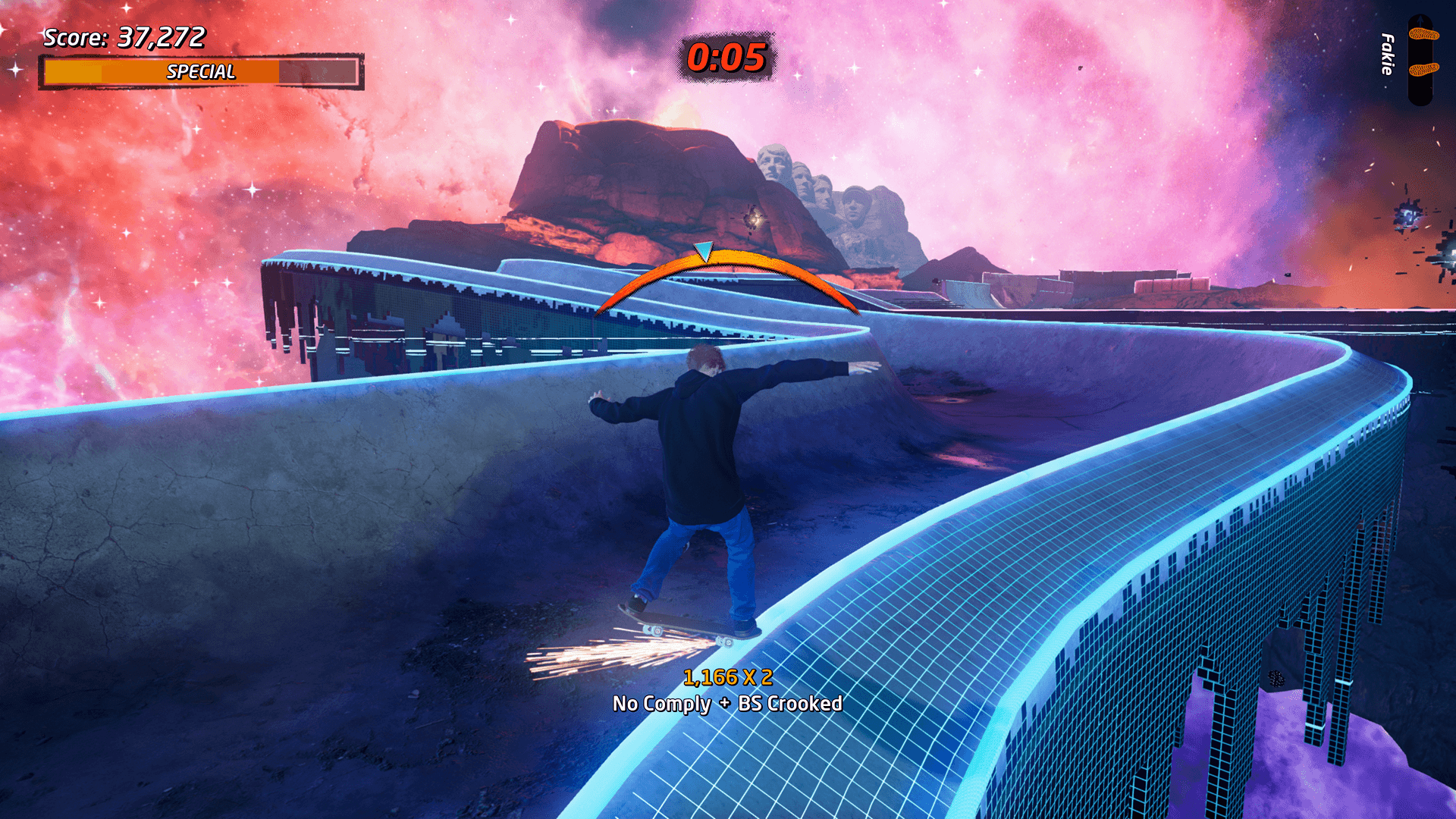
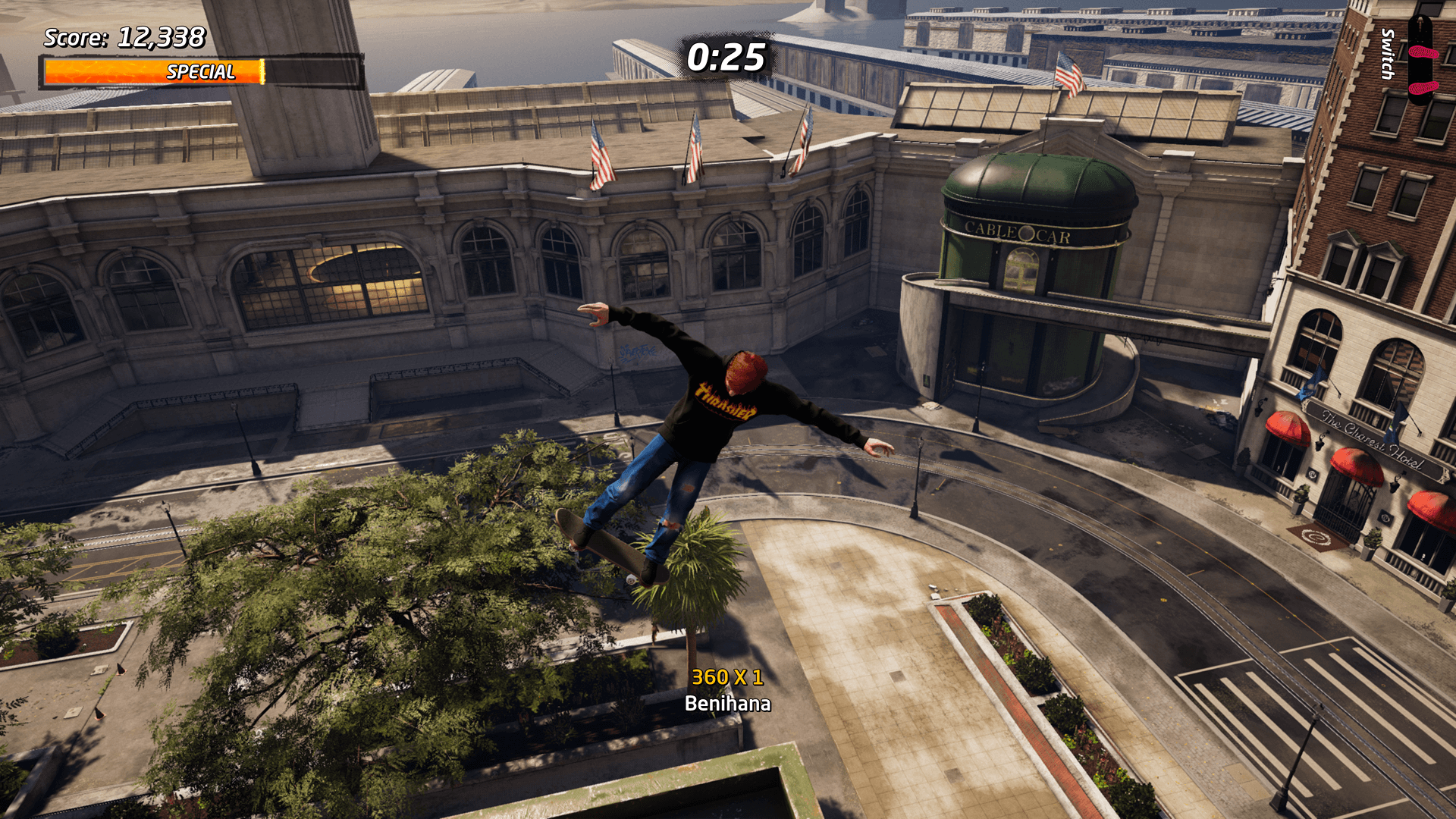
Falling from great height (with style that is) in San Francisco.
“Falling from great height (with style that is) in San Francisco.”

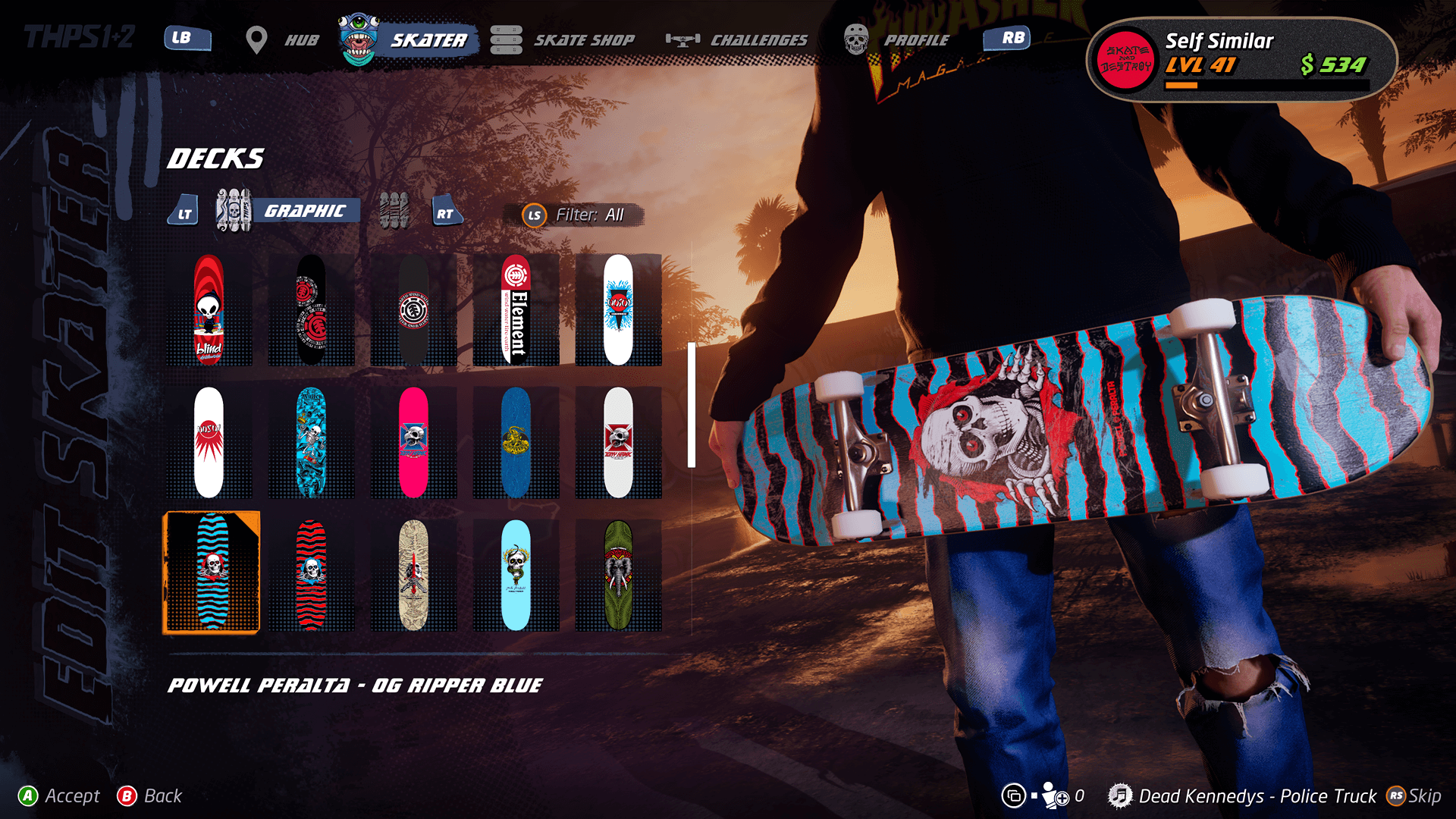
I have a lot more scattered memories of the series from then on – hanging out in more than one “punk house” watching friends get high and pass the PlayStation controller around playing THPS 2 and THPS 3, feeling deeply disappointed that I couldn’t play an apparently improperly burned copy of THPS 2 on my Dreamcast, that kind of thing. It wasn’t until I dove back in with Tony Hawk’s Underground on my original Xbox that I spent any quality time on a Tony Hawk game again. THUG was pretty fun, though I don’t remember vegging out on it nearly as deeply as I did with the very first game back on my Nintendo 64. That nostalgia is why I was curious about the remaster “Tony Hawk’s Pro Skater HD” which hit XBLA back in 2012, but as I wrote in this blog at the time, while it looked pretty nice, it just didn’t click with me. While I’d been tempted to check out other Tony Hawk’s titles, along with other challengers to the throne such as EA’s lauded Skate series, that was about it for me. That was, until I heard about all of the hype around this second attempt at a Tony Hawk’s Pro Skater remaster. This time with the added addition of THPS 2 levels and even some enhancements from later titles in the series. What can I say, I’m a sucker for some good, genuine hype.

And I’m happy to report that this time around the hype was real and Vicarious Visionsremaster was a lot more successful than Robomodo had been with Tony Hawk’s Pro Skater HD. As soon as I hit The Warehouse, just like riding a bike, I was back in my parent’s living room grinding through the goal list, only with the added benefit of not having to use a fucking N64 controller. While it took more than a little practice to be able to meet those “sick score” goals, the game just immediately felt good. Real good. Of course, it only helps that the remade visuals the game received looked great as well, with obvious effort being placed into staying reasonably faithful to the originals and with a masterful attention to detail. The classic soundtracks of THPS and THPS 2 were mostly intact too, with only a few casualties, plus a heaping helping of new tracks that mostly fit in well to give the whole thing some expanded variety.

I love customizing my weird THPS doppelganger with sick 80s gear.
“I love customizing my weird THPS doppelganger with sick 80s gear.”

The made over visuals and expanded soundtrack are far from the only differences though. Most importantly, the trick selection has been greatly expanded. This is most notable when it comes to the additions of manuals from THPS 2 and reverts from THPS 3, which, especially when combined, allow for some insanely ridiculous combo score multipliers. Unless you’re just a natural at the game, learning to use and abuse both moves is invaluable to earning high scores. There’s plenty more too, like new goals for each map, changes to the way “tour” level progression works, the pro skaters/create-a-skater mode and the skate shop. It goes on and on, but again, Vicarious Visions did a good job respecting the original games, and that’s probably what ultimately makes Tony Hawk’s Pro Skater 1+2 so successful.

I was about half way through the original THPS tour; I had still had a few levels to unlock, most pro and sick scores were alluding me, as was anything above a bronze medal in competitions and a few of the more challenging goals, when something finally clicked. I got fully into the zone for chaining together some combos and thus spent the next week and a half or so cramming in as many sessions of THPS 1+2 as I could while I methodically went through and destroyed all of my remaining goals. When I finally beat the last one I was disappointed that the associated achievement (“Grand Tourer”) didn’t unlock. Figuring that maybe it was the one stat point I hadn’t collected yet, I dutifully went for it and… still nothing! I thought maybe it was some kind of an odd save game synchronization issue so I quit my tour and then quit out of the game. Upon loading it back up the game seemed to sit on the save synchronization screen for quite awhile, and then… my tour progress was back to 47% from 100%. Fuck! Randomly the next day my Xbox App reported that I’d earned the achievement so, hoping that Microsoft was having some kind of a weird server issue, I rushed to my Xbox to see if my progress was restored. Nope. I’m still not sure if it was a THPS 1+2 bug, a cloud save issue, or perhaps something to do with the Series X’s quick resume, but in any case I was fucking furious. Cyco Vision indeed.

Skate or Die... and go to Skate Heaven!
“Skate or Die… and go to Skate Heaven!”

It’s funny that one of the reasons I queued up THPS 1+2 was because I wanted another casual game I could hop in and out of randomly as I’d been doing with Star Wars: Squadrons, but my god did I forget what a vicious hold this game can take over you. Beating both tours became an obsession. The fact that I had that save problem and didn’t immediately bail out of pure frustration speaks pretty highly to that, I think. Some of the goals are far from easy, they might even be a little rage inducing (the rooftop gaps on Downtown and the hidden tape on Streets come to mind) but it’s far from an insurmountable challenge, and soon I found myself having cleared all levels with gold medals in all of the competitions in both tours, and it all somehow felt absolutely worth it.

What can I really say that can top that? If you’re a fan of any of the original Tony Hawk’s Pro Skater games or you’re simply into skateboarding and want to play something a little different, definitely check this one out… but just to be on the safe side, you might want to get into the habit of manually saving your career (it’s hidden under the options menu, oddly) to help reduce to risk of throwing your controller through your TV like I almost did.

I got distracted while writing this and ended up watching reviews of the old Skate or Die games and clips from the old CKY videos for an entire evening. This in turn lead me to spending the weeks after watching tons of 80s and 90s skate videos and interviews with famous pros, and really, just generally fondly reminiscing about my love of skateboarding more than I have in something like 20 years. Thanks, THPS!

Wolfenstein 3D / Spear of Destiny Review

Note: The screenshots posted on this page have been scaled up a little from their tiny native resolutions as well as had their aspect ratios corrected to proper 4:3 dimensions as they should have looked on CRT monitors originally. For posterity’s sake you can also click them to view the “pixel perfect” originals.

Introduction

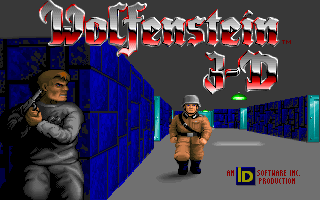
Wolfenstein 3D
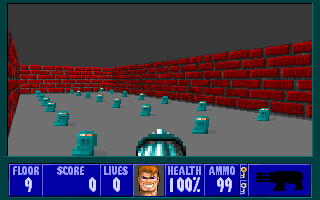
“Wolfenstein 3D”

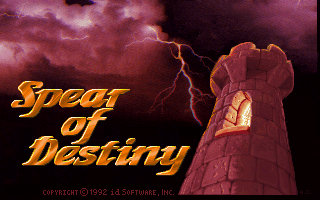
...and Spear of Destiny!
“…and Spear of Destiny!”

I’d been whining to my poor parents about wanting a new PC for literally years. While it seemed like I might have finally worn them down, I’d do whatever I could to play with any and every kind of computer whenever the opportunity presented itself in the meantime. One of those few opportunities was my 8th grade computer class. The first ever class I had with semi-modern IBM compatible PCs. The class was okay, but the main event was what happened when the last bell of the day rang and our computer teacher’s newly formed ham radio club gathered. For one reason or another, the club almost instantly devolved into most of us just hanging out in the computer lab and screwing around most every afternoon, and we were absolutely fine with that.

Our computer lab was in a pretty sorry state. Other than our teacher’s PCs, which were more or less dedicated to ham and, soon, running our middle school’s official bulletin board system, most of the computers we had were some form of outdated IBM AT clone with zero notable upgrades to speak of. Us nerdy delinquents quickly discovered that one was a cut above the rest, though: a 386 with a VGA adapter and an soundcard. Soon enough, this uber PC got pulled out into the middle of the classroom so we could all gather around it, watching and taking turns playing whatever the latest random game someone smuggled in and managed to get working was.

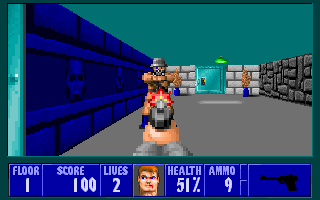
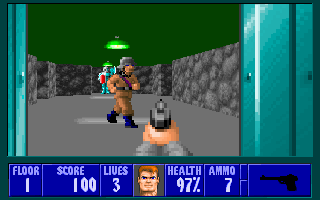
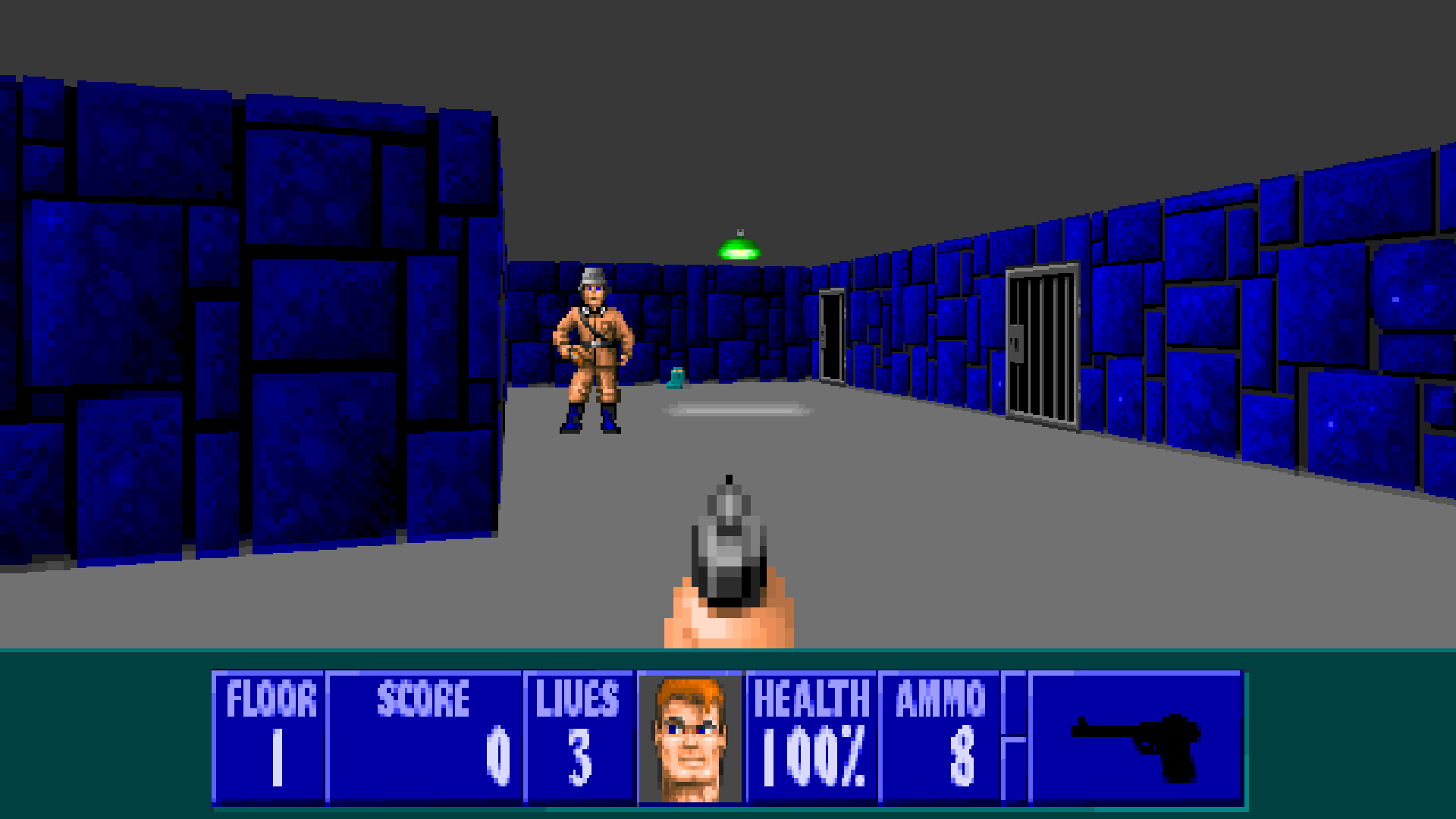
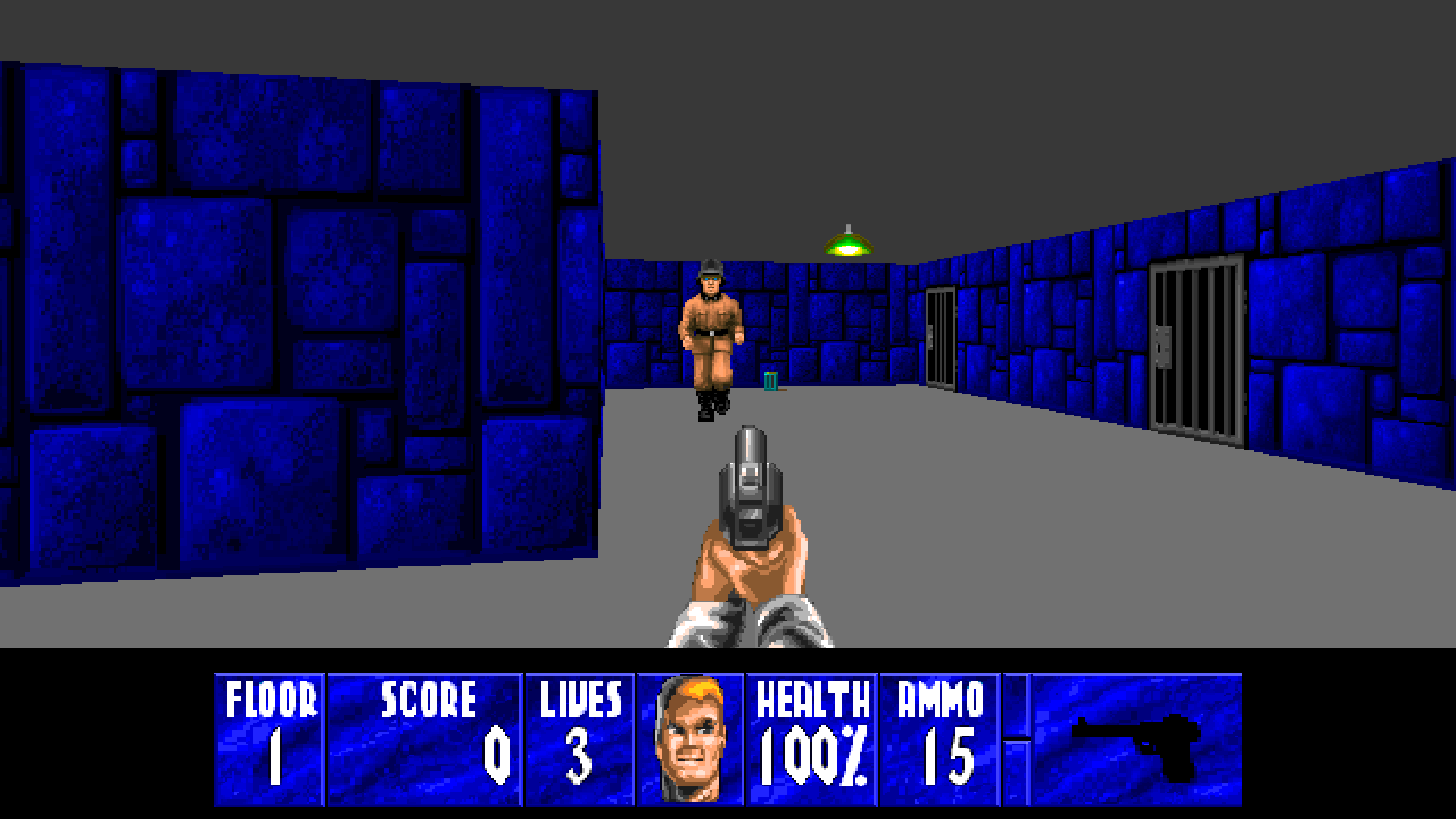
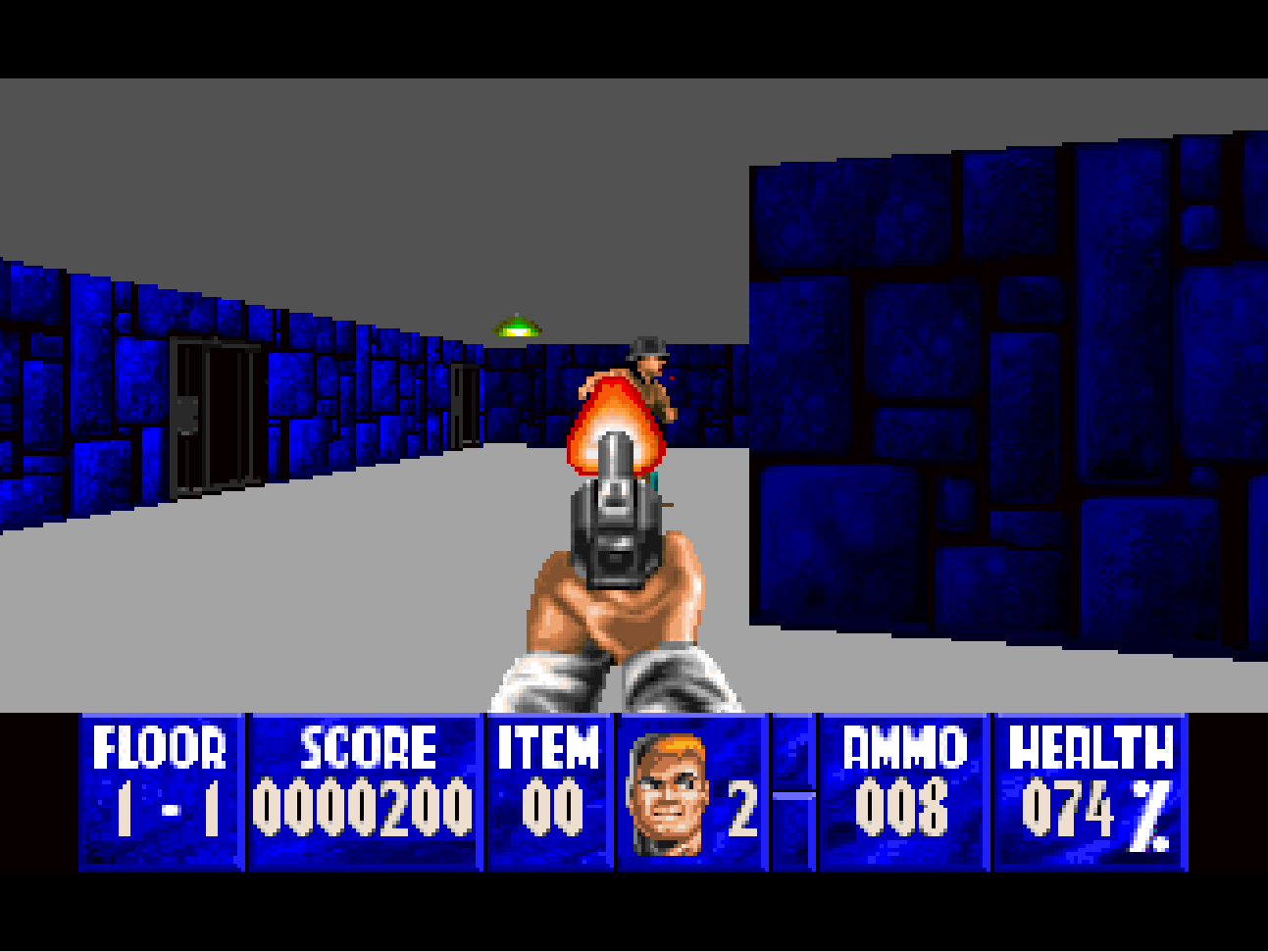
A showdown with a Nazi guard.
“A showdown with a Nazi guard.”

One fateful day it was the shareware version of Wolfenstein 3D. This machine only had an AdLib in it, so no sound effects, but it didn’t matter. To see Wolfenstein 3D smoothly rendering its glorious violence in full 256 color VGA was utterly amazing. On that day, the obsession I had to acquire a new PC turned into absolute fucking resolve. Wolfenstein 3D was already a year old at that point, and I’d get to see the shareware episode of Doom running (rather poorly) on the same machine before the school year was over, but you can bet when my parents finally caved and spent a ridiculous amount of money on a new 486SX/33 for me that summer, one of the first things I did was drag my mom to Radioshack to buy me a copy of the Wolfenstein 3D shareware disk.

Loading it up for the first time, my AZTECH Sound Blaster clone pumping out that distinctive AdLib soundtrack as my cell door loudly rolled open and I cautiously crept around the corner, pistol in hand, a Nazi guard spotting me and shouting “Achtung!” as he sprang to action, is something I’ll probably always vividly remember, and something that still feels fresh whenever I revisit the game. I loved Wolfenstein 3D! Doom soon utterly overshadowed it, sure, but Wolfenstein 3D will always be the game that introduced me to the now ubiquitous First Person Shooter genre and its masters, Id Software.

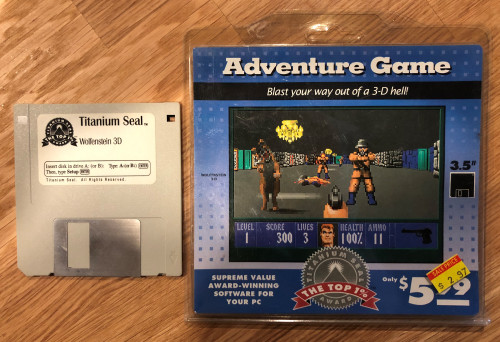
I still have my original shareware version. 3 bucks well spent (even though there's absolutely no mention on the package that this is only the shareware version... shady!)
“I still have my original shareware version. 3 bucks well spent (even though there’s absolutely no mention on the package that this is only the shareware version… shady!)”

Id Software was formed largely on the back of John Carmack’s technically impressive smooth side-scrolling routines and he soon turned his attention to developing an equally impressive first person ray casting, 2.5D engine which first saw publication in 1991’s Hovertank 3D and a little later, Catacomb 3-D, both released by Softdisk. By the time Wolfenstein 3D was released in 1992, Id had greatly improved the engine, making the controls more accessible, upgrading from EGA to VGA graphics, and adding AdLib music and Soundblaster sound effects. Probably most importantly, they abandoned Softdisk’s subscription publishing model and moved to publishing under Apogee’s shareware model which was already earning them some success with the Commander Keen series. Releasing as shareware meant much, much more exposure, and the game went on to be wildly successful. A commercial only sequel (really, more of a standalone expansion pack) called Spear of Destiny, which I’ll also be covering here, was released by FormGen the following year in 1993, leading to even more exposure. Wolfenstein 3D was a bonafide hit.

Gameplay

Wolfenstein 3D established what quickly became the basic gameplay template for most of the FPS games released in the 1990s. Each level begins in a predetermined location of a self-contained area (usually called a “map” in FPS vernacular) and it’s your job guide your character to the exit. Some parts of the map are behind locked doors which require keys you can pick up along the way, adding a tiny bit of complexity to the exercise. Of course, there are also guards patrolling the map who will shoot you on sight and alert others to your presence if you don’t take them out first. There’s also weapons, ammo, and health scattered around to collect, and unusually for the genre, various treasures that can be gathered to increase your score. It’s a simple formula, and with Wolfenstein 3D’s beautifully performing engine, you can often absolutely blaze through these maps.

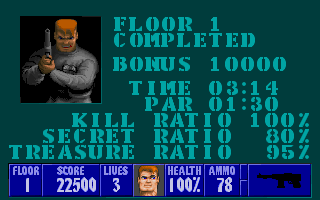
The end of level score tally.
“The end of level score tally.”

At odds with the blazing speed of the gameplay, the score tallied at the end of each mission rewards 100% completion, which includes enemies killed, treasure collected, and “secrets” discovered. These secret hidden areas became a fairly normal part of early FPS design, but Wolfenstein’s are particularly infamous for not being marked or otherwise hinted at in any way. This lead to the stereotype of players running up and down every single wall in every single room and corridor frantically tapping the open key, colloquially known as “wall humping” thanks to how absurd this looks and sounds. That said, without exploring quite a bit, you’re unlikely to get a 100% completion in any of these categories the first time through.

Exploration tends to be unavoidable anyway thanks to Wolfenstein’s labyrinthian maps. While the game starts out with simple designs seemingly based on vaguely realistic floor plans, it quickly goes off the deep end with some gigantic and thoroughly maze-like map designs, and with no auto-map to speak of, getting to the end of these take quite a while and be more than a little frustrating. Navigating the map in the correct order to find the aforementioned keys is the closest Wolfenstein ever comes to throwing puzzles at the player – there are no special trigger areas, switches, elevators, etc. as would soon become staples of the FPS genre. Lack of gameplay variety is not the only problem with Wolfenstein’s maps, as the maps themselves tend to be quite repetitive, with the engine only supporting simple, 90 degree angled walls on a single, level plane.

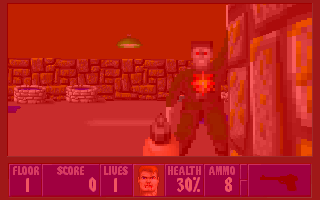
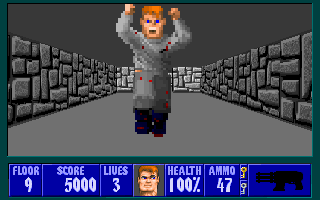
Ow. The mutants in episode 2 are fucking obnoxious.
“Ow. The mutants in episode 2 are fucking obnoxious.”

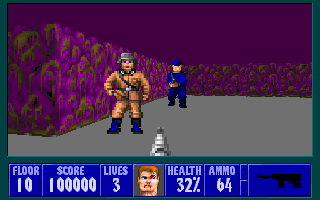
A bit more challenge comes from the enemies, which are often positioned to strike the second you open a door or go around a corner. While not quite “monster closet” levels of cheesiness, Wolfenstein can occasionally feel a little unfair when it comes to purposely devious placement of enemies, and getting caught by surprise can quickly lead to your death, especially on higher difficulty levels. There’s not too much variety in enemies either, with probably the most crucial variable besides their hit points and rate of fire being how quickly they draw on you in the aforementioned ambush situations.

The variety of your own arsenal is similarly a little slim, with the only thing being anywhere close to exotic being the minigun, which I tend to avoid using during anything but the end of the episode boss fights – the machine gun’s rate of fire is quick enough to effectively stun/stagger enemies but doesn’t chew through the ammo nearly as quickly as the minigun. This is notable, as ammunition can be a little sparse early on which can lend the game a bit of a survival feel, adding some much needed tension to the formula. This mostly falls to the wayside as you progress, assuming you live long enough to hang on to your ammunition supply between maps. These simple, hit scan based weapons do feel pretty satisfying though, which I have to think is a big part of what makes Wolfenstein so damn enjoyable.

As I said in my Duke Nukem 3D review, the old school style of FPS level design ends up feeling quite tedious to me, and in Wolfenstein the simplicity and lack of variety only exacerbates that feeling. As a kid, while playing through the first, shareware episode felt a little bit repetitive, it didn’t really overstay its welcome. By the time you add in the full version’s 5 additional episodes, and if you also play Spear of Destiny, which adds in another 21 levels, that’s a total of 81 levels, never mind the two GenForm bonus mission packs for Spear of Destiny, for another 42 maps, yeah, it’s a bit of a slog.

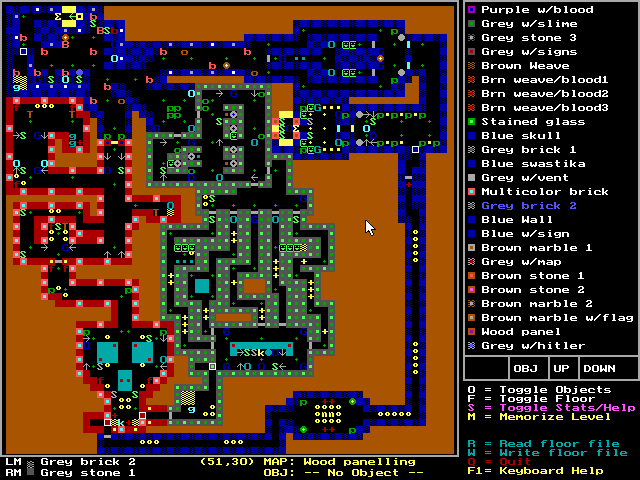
Probably the most popular map editor at the time, the aptly named MAPEDIT.
“Probably the most popular map editor at the time, the aptly named MAPEDIT.”

Surprisingly, a lot of people didn’t seem to think so though, as in addition to Wolfenstein 3D kicking off the FPS genre, it also introduced the world to FPS map making and modding. Wolfenstein’s data structures were quickly reverse engineered and map creation software was released. Given how simple Wolfenstein’s maps are, these editors were simple to use and a lot of people found themselves creating their own maps and campaigns, and a few even dove into editing the sprites and textures, creating some early examples of something close to resembling “total conversion” mods. Personally, I never played around with 3rd party Wolfenstein 3D maps and modifications back in the day, but apparently they were quite popular.

As a quick aside, some of the later console ports of Wolfenstein 3D do make tweaks to the gameplay, from the minor such as differently designed maps, to the more notable ones such as new weapons and even an automap feature. While it’s mostly the DOS version I’m covering here, I still feel this is noteworthy, as some of you might be reading this thinking “What about the flamethrower?” or “What? I used the automap when I played it!”

Story

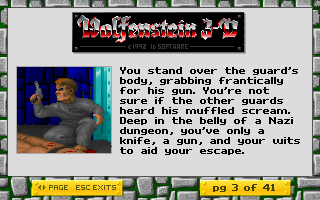
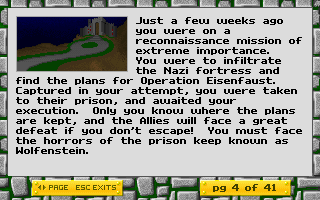
Wolfenstein 3D doesn’t have much of a story, rather it sets up scenarios and throws you into the action, never really advancing anything resembling a plot. Nevertheless, in presenting you with excuses to be in these mazes, it does at least make an attempt at throwing some fluff in in the form of text introductions and endings to each episode.

The introduction to episode 1 (as taken from the in-game readme in the shareware version!)
“The introduction to episode 1 (as taken from the in-game readme in the shareware version!)”

Continued.
“Continued.”

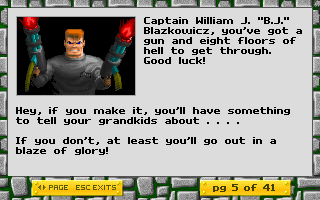
I'll definitely tell me grandkids about this..
“I’ll definitely tell me grandkids about this.”

Directly inspired by the 1981’s Apple II action stealth game, Castle Wolfenstein, Wolfenstein 3D follows the exploits of allied spy Captain William J. “B.J.” Blazkowicz against Nazi forces in WWII. The most famous of these scenarios, the first episode, has BJ attempting escape from the dungeon fortress Wolfenstein where he was being held prisoner. After that, BJ heads into Castle Hollehammer to stop Operation Eisenfaust – a sinister plot that involves reanimating corpses in an attempt to create the ultimate super soldier. In the third and final episode of the original trilogy, BJ heads to Hitler’s massive bunker complex underneath the Reichstag to put an end to the Third Reich once and for all. This is the definitive set of missions, without a doubt.

The second trio of episodes, snarkily called the “Nocturnal Missions”, are actually prequels, taking place before BJ was captured, in which he attempts to put a stop to a chemical weapons program. These missions aren’t bad, but don’t really add anything essential to the story.

Spear of Destiny... now with more wall textures!
“Spear of Destiny… now with more wall textures!”

Spear of Destiny, on the other hand, is notable because it fully commits to fantasy Nazi tropes, having BJ attempting to stop Hitler from using the occult powers of the legendary holy relic, the Lance of Longinus. He infiltrates Castle Nuremberg and eventually retrieves it, but not before getting transported to hell and having to defeat a demon “Angel of Death” in order to escape. Yes, you go to hell to fight a demon! Wolfenstein REALLY dove into the deep end of the occult stuff here, foreshadowing the full on demonic assault of Doom a year later. Outside of that, again, these missions hardly feel necessary.

Mission specifics aside, the fantasy World War II setting felt fresh to me at the time, especially when combined with Wolfenstein 3D’s immersive first person presentation. Even today, despite how exhaustively the setting and its associated tropes have been mined, the particular combination of pulp comic book action, occultism, zombies, super technology, and real life World War II presented in the original Wolfenstein 3D games feels like a relatively unique blend. I’d guess most people would prefer either semi-realistic World War II settings or even deeper dives into these concepts (as presented in later games in the series) but Wolfenstein 3D’s take certainly was enjoyable.

Oddly, the SNES port of Wolfenstein 3D features a totally reworked plot in an awkward attempt to censor any association with Nazi Germany. All this really accomplishes is turning the antagonists (renamed the “Master State”) into a sloppy and rather obvious analog for Nazi Germany, with Hitler being named Staatmeister and given a shave. Humph!

Controls

Wolfenstein 3D’s controls probably feel totally alien to gamers that grew up after FPS games moved to the WASD + “mouselook” style of control, but what Wolfenstein 3D did at the time set the template for other first person shooters for quite a while: Both hands on the keyboard with your right hand moving you back, forward, left, and right using your arrow keys and your left hand doing everything else with the far left side of the keyboard – Left Ctrl, Left Alt, Space Bar, and Left Shift were typically used to fire, strafe, open doors, and run, respectively. I got used to this control style with Wolfenstein 3D and perfected it with Doom, and had to pretty much force myself into using the newer convention only after it became the norm across the genre.

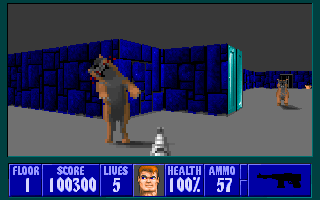
Yeah, you shoot dogs in this game. Seriously vicious dogs.
“Yeah, you shoot dogs in this game. Seriously vicious dogs.”

Granted, part of what makes it work is how simple Wolfenstein 3D is. There’s very little going on outside of moving, firing, and opening doors. You don’t need to (and indeed, can’t) look up and down, nor do you need precision aim since there is a vague aim-assist (or maybe just big hit boxes?) While I’m not sure how it technically works, it’s definitely less pronounced than in latter early FPS games since there is no variation in verticality in Wolfenstein 3D to make it jarringly obvious that your shots are being angled outside of your control.

Still, attempts to get those simple controls mapped to my old Gravis GamePad back in the day never ended very satisfactorily. In the case of the numerous console ports, greater care was put into getting the feel of playing on a gamepad right and thankfully, most of them have various degrees of passable implementations. Again, the simplistic controls make that translation fairly easy. Newer console ports, such as the Xbox Live Arcade version, introduce the modern dual-stick FPS control style to the game, albeit with the right stick only used to look left and right. It sounds weird on paper, but it feels pretty normal and overall I found Wolfenstein 3D to be right at home on an Xbox 360 or Xbox One controller.

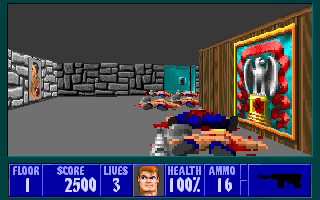
It's pretty typical to leave a trail of gore in your wake.
“It’s pretty typical to leave a trail of gore in your wake.”

While there is mouse support in the original DOS versions, it’s very rudimentary and won’t satisfy anyone trying to replicate modern control schemes. If you’re looking for that experience, the most popular of the Windows ports of the game, ECWolf, includes support for proper WASD + mouselook, and it works excellently. Like the Xbox 360 port, mouselook is limited to looking left and right, but it still feels fine. In fact, it’s my preferred way to play these days.

Graphics

While Wolfenstein 3D’s graphics aren’t typically the first thing I think about when I look back on the game, I have no doubt that they had quite a lot to do with the game’s success. As mentioned, the Wolf3D engine ran extremely smoothly, even with its VGA textured walls (an upgrade over the original Hovertank 3D) and sometimes large amounts of sprites on screen. Floors and ceilings remained untextured, oddly, but in playing the game this doesn’t really stand out as a deficiency. If anything, it helps the environment feel a little less cluttered than less skilled implementations of fully textured “2.5D” environments in some future games.

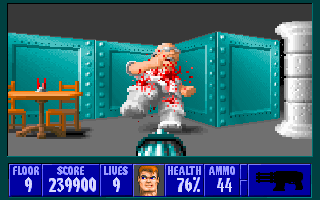
The death animations certainly give a hint of what was to come in Doom.
“The death animations certainly give a hint of what was to come in Doom.”

The real standout here is the artwork. An obvious precursor to his work in Doom, Adrian Carmack’s colorful, stylized sprite and animation work is a mix between the cartoony and (particularly in the death animations) dark and macabre, and is simply jam-packed full of character. As with in Doom, he really manages to nail the kind of “cool” that appeals greatly to teenage boys, without fully tipping over the edge into being embarrassingly cringy for adults to enjoy. Interestingly, I read somewhere that one of the reasons for Wolfenstein’s distinct, colorful look is that many of the textures and sprites were originally drawn with the limited EGA 16 color palette and then touched up with the engine’s move to VGA, which makes a lot of sense.

I will have to throw in just a little negativity here. While I mentioned the variety in weapons and enemies, as well as the simplicity of the maps already, the lack of variety in wall textures and environmental objects adds to this feeling of repetition to a large degree as well. While there are a fair number of different wall texture sets, it won’t take long until you’ve seen them all. This is huge factor in what makes the maps a little too maze-like, as well – when every room looks the same, exactly how are you supposed to tell them apart? While Spear of Destiny adds a few new textures into the mix, it really feels like a token effort.

Neat little details abound, like BJ grinning ear to ear when he picks up a minigun.
“Neat little details abound, like BJ grinning ear to ear when he picks up a minigun.”

Still, altogether, the look of Wolfenstein 3D is quite strong and holds up surprisingly well today, with this lack of environmental variety hurting the gameplay more than the presentation.

Interestingly, the graphics found in the original DOS release were not the only ones around. When the game was ported to the SNES some of the sprites were redesigned, most notably the weapons and your character’s head indicator on the status bar. When ported to the Macintosh, the rest of the graphics were redesigned, redrawn, and/or tweaked, including the enemy sprites and wall textures being drawn at double the resolution for cleaner scaling. The Jaguar and 3DO releases were also based on this version, though again with various tweaks of their own. Opinions on these facelifts vary but it seems like the new graphics in these versions are generally well liked and don’t stray too far from the spirit of the original work.

Sound

From the second the title screen loads and the AdLib rendition of Horst-Wessel-Lied starts blasting, you know you’re in for something different. Like with its graphics, it’s hard to imagine what Wolfenstein 3D would have been without its excellent soundwork.

Hitler delivering a serious beatdown.
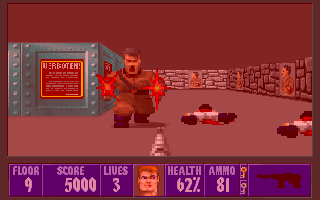
“Hitler delivering a serious beatdown.”

First, you have Bobby Prince’s soundtrack which is one of my personal favorite examples of classic AdLib music to this day. He manages to combine the sizzling snare rolls of military marches, triumphant anthemic horn blasts, and the intrigue of a good spy thriller into tracks that somehow gel with the feeling of sneaking around these Nazi dungeons almost perfectly. While some of these tunes can get a little repetitive, as an overall package it is very strong.

On top of that you have the Sound Blaster digital sound effects. The first cell door you exit slamming shut behind you, a sound you’ll hear a thousand more times before beating the game, in fact, grabs your attention and puts you at high alert. The gunfire thuds nicely, and the barks of the enemies as they spot you and, with any luck, go down, are awesome regardless of their humorously loose interpretation of German phrases.

Officers draw on you in and instant, barely giving you time to react to their bark.
“Officers draw on you in and instant, barely giving you time to react to their bark.”

More than just sounding cool, this is one of the first games I recall playing where the sound effects greatly affect gameplay. It’s easy to unwittingly attract enemies to your location while clearing out the map, and sometimes hearing a door open in the distance is your only hint that you’re being hunted. Likewise, almost every enemy “barks” at you the second it sees you, often giving you a few seconds to react before taking fire. Besides helping you avoid getting shot, this can also help identify which type of enemy it is, which can make the difference between life and death. That is, getting caught with your back to a normal guard isn’t nearly as detrimental as letting one of the machine gun wielding SS elite soldiers get a free burst off on you.

Returning to the subject of ports, it won’t surprise you by now to read that the music and sound effects in many of these versions have been touched up or replaced entirely. Most notably, the Mac and 3DO versions have their own, mostly totally distinct, orchestrated soundtracks from Brian Luzietti. While these have an entirely different feel from Bobby Prince’s original soundtrack, it’s hard to deny how great they are too.

Old Age and Alternative Versions

As usual, my primary method of playing through the game for this review was my dedicated 486 gaming PC. I didn’t bother disabling my cache or trying to slow my system down in any other ways, as I recalled it running fine back in the day on a machine only a tiny bit slower than this one. Other than running into some issues with the non-standard way I had my Sound Blaster configured at the time, I had no trouble running it, and it ran just as buttery smooth as expected. There is an issue with secret “pushwalls” sometimes moving further than they should on systems with extremely fast CPUs, but this requires some very specific conditions, thus isn’t a widespread issue.

As for playing it on a modern system, I also played through a significant amount of it in DOSBox. I used the pre-configured version from GOG, although I did have to increase my CPU “cycles” setting to make it run as smoothly as I’m accustomed to. Once I did that, I found that it played quite well. Given that if you acquire Wolfenstein 3D legally from places like Steam or the aforementioned GOG these days, you’re almost certainly going to be getting a copy bundled with DOSBox, don’t forget that you may need to tweak this and maybe a few other things to get the game running optimally.

ECWolf running smooth as butter in 1080p.
“ECWolf running smooth as butter in 1080p.”

ECWolf with the ECMac mod!
“ECWolf with the ECMac mod!”

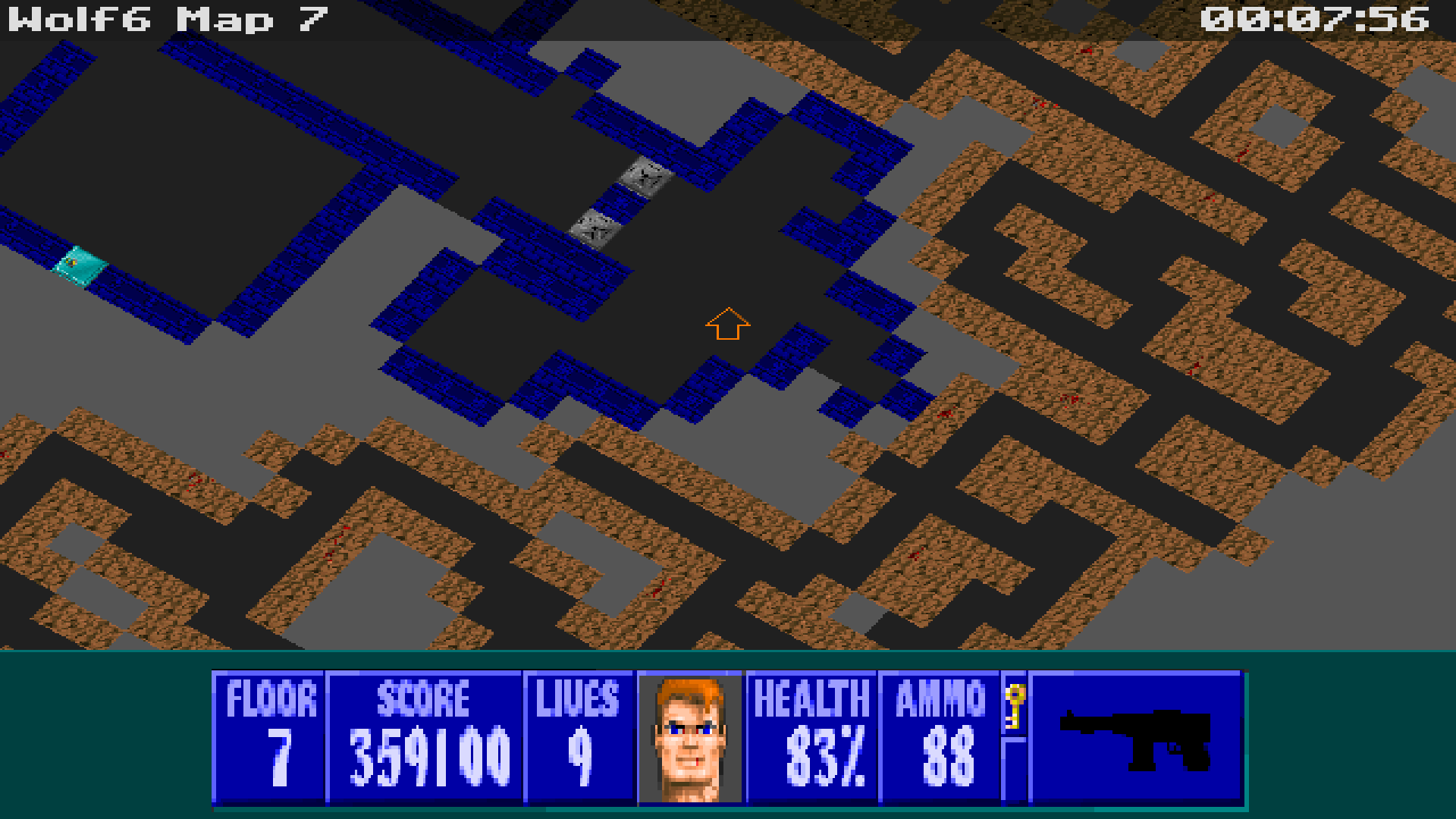
ECWolf's automap, as basic as it is, is a godsend.
“ECWolf’s automap, as basic as it is, is a godsend.”

That said, I also played through a large amount of the game in the most popular Windows ports of the game, ECWolf. I had only intended on playing through a single episode in ECWolf, but enjoyed the experience so much that I ended up playing through the entirety of Spear of Destiny in it as well. Besides running just as smooth as the original engine, ECWolf natively supports widescreen resolutions, modern WASD + mouselook controls, and includes an automap. It’s hard for me to quantify just how much more enjoyable the game is with an automap at my disposal – it’s a huge quality of life improvement and goes a long way to nullifying my complaints about the the repetitive, maze-life maps. ECWolf also includes some pretty cool drop-in modding capabilities, and I spent some time playing with a mod called “ECMac” which overhauls the original game’s maps with the improved aesthetics of the Macintosh version. Extremely cool.

Finally, I also played through an entire episode in the Xbox 360 / Xbox Live Arcade port of the game (on my Xbox One.) Despite some well-known issues with the music and some very minor texture changes, I found this version to be faithful to the DOS original and a fair representation for new players wanting to check out the game without dealing with getting it to work on a PC. As noted above, playing it with dual sticks on a modern joypad is a little odd at first, but I got used to it extremely quickly.

The SNES version looks passable up close.
“The SNES version looks passable up close.”

But the scaling is extremely harsh. You can barely make out the guard here!
“But the scaling is extremely harsh. You can barely make out the guard here!”

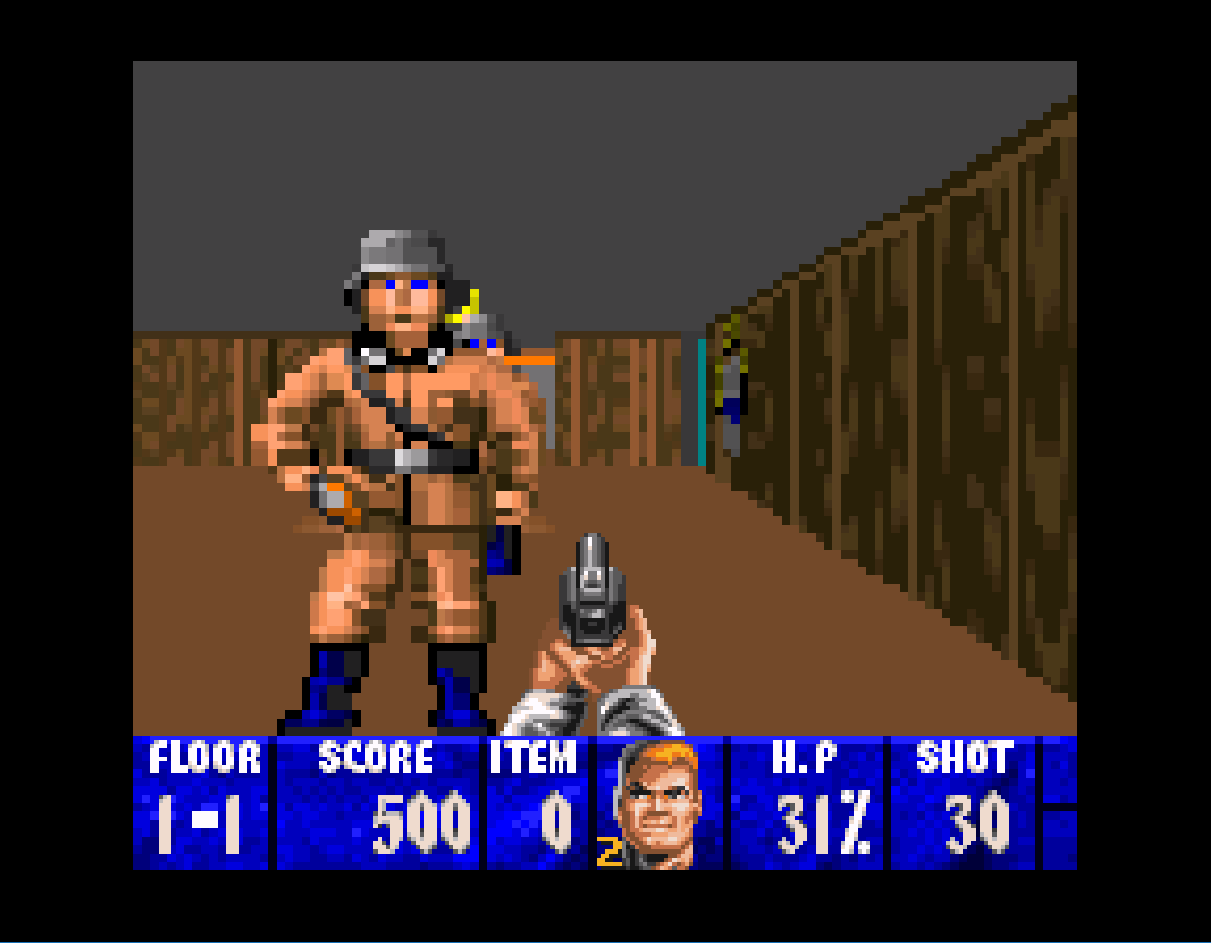
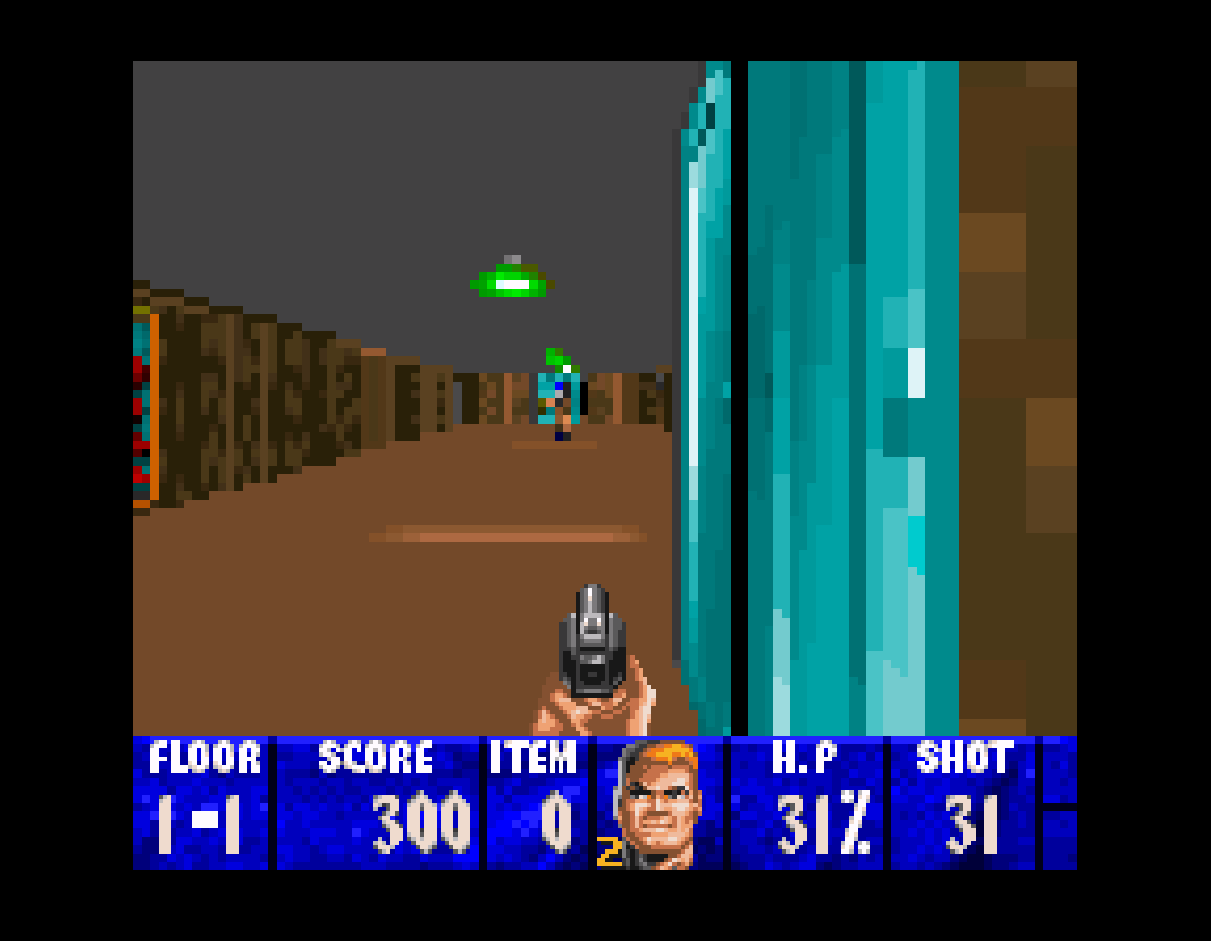
The 3DO version, on the other hand, is mostly excellent.
“The 3DO version, on the other hand, is mostly excellent.”

There are, of course, other ports. I mentioned some of the original console and PC ports: SNES, Macintosh, Jaguar, 3DO, and oddly, the Apple IIGS. There were also later ports to GBA and IOS, and unofficial ports for a number of systems, almost reaching Doom’s ridiculous levels of ubiquity. Some of these ports include their own maps and other odd changes that could be worth looking into for the truly dedicated. There are also some hidden versions and throwbacks in newer games, such as the original Xbox port included with Return to Castle Wolfenstein: Tides of War, and the cool little appearances in Doom II, Wolfenstein: The New Order and Wolfenstein: The Old Blood, and Wolfenstein II: The New Colossus… too cool!

The original game manuals are available when purchasing the game and various other sources, though besides being a straightforward introduction to the game, they’re not really required. You can also find the official hint books that came with boxed copies of the games around too. These hint books aren’t too useful outside of having detailed diagrams of every map in the original game, but they’re fun to flick through and even include some bonus vintage pictures of the Id Software guys.

Sequels and Related Games

Id Software moved on to Doom almost as soon as Wolfenstein 3D was out the door, and most wouldn’t consider Spear of Destiny a proper follow-up. It wasn’t until almost 10 years later that Gray Matter Interactive put out Return to Castle Wolfenstein, rebooting the series with some success. It was almost as long for it to get a sequel, the Raven Software developed Wolfenstein in 2009. In 2014, we finally got the acclaimed Wolfenstein: The New Order which continues the series, and it’s prequel, Wolfenstein: The Old Blood, which is somewhat of a re-imaging of the events of the earlier titles. The New Order got a proper sequel in 2017 with Wolfenstein II: The New Colossus. Along the way there was also Wolfenstein RPG for mobile devices, though I never got to play that one before it dropped off the face of the earth.

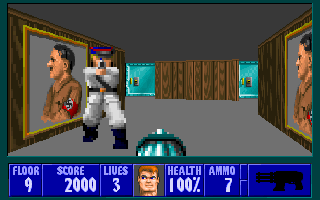
While the guard is slow to react, the SS soldier is about to drill me.
“While the guard is slow to react, the SS soldier is about to drill me.”

There were also plenty of other games that used the Wolf3D engine and its derivatives. Besides its predecessors, Hovertank 3D and Catacomb 3-D, the sci-fi Blake Stone: Aliens of Gold and its sequel Blake Stone: Planet Strike are favorites of mine and I’ll likely cover them here some day. There’s also the much less enjoyable Operation Body Count and Corridor 7: Alien Invasion, and the infamously bizarre Super 3D Noah’s Ark for SNES. Using a heavily modified version of the engine, Apogee’s Rise of the Triad: Dark War actually started life as a sequel to Wolfenstein 3D, and some hints of that exist in the game as-released. Finally, straying off a little more, technically, the Raven Software developed Shadowcaster used what was a bit of a stepping stone between Wolf3D and the Doom engine, AKA Id Tech 1, kicking off a long history of association between the two companies.

Closing

The camera zooms out to show you in 3rd person as you exit an epsiode. Awesome touch!
“The camera zooms out to show you in 3rd person as you exit an epsiode. Awesome touch!”

It’s honestly been a treat for me to head back into the corridors of Castle Wolfenstein and to see just how closely my memories of blasting Nazis and hording treasure hold up. I think others who remember Wolfenstein 3D and other, similar early FPS games fondly will potentially enjoy playing the game too, at least until its repetitiveness wears out its welcome. That said, if you were brought up on newer FPS games with frilly extras like “stories” and “mechanics” its hard to imagine Wolfenstein 3D keeping your interest even that long. It’s a highly influential, well polished, fun, but at the end of the day, very limited game, and it was improved on in just about every conceivable way by Id Software’s follow-up, Doom, and the long line of first person shooters that followed it. Outside of the nostalgic and those interested in FPS history, it’s unlikely to entertain all that much, sadly.

Bummer of an aside: While writing this and reminiscing about my old middle school computer science class, I thought it might be fun to track down my teacher and thank him for being an influence in my own successful career in information technology, only to discover that he passed away in 2012. Pouring one out for you, Mr. Miller!