2000’s Metal Gear: Ghost Babel (simply titled “Metal Gear Solid” in the USA) is a spin-off developed by Konami for the Game Boy Color to capitalize on the success of Metal Gear Solid (the actual one) in Nintendo’s massive handheld market. That said, the game is not an attempt to recreate MGS on the GBC, but is much more in line with the original MSX games. While it seems that Hideo Kojima was at least loosely involved in its production and is much more accepting of it than some of the other Metal Gear games he was less involved in, it clearly deviates from the chronology of first three games in the series and these days is decidedly non-canon. Personally, I was pretty ignorant about this game until researching to kick off this Metal Gear Mania series, yet it is often brought up as a severely underrated entry in the Metal Gear franchise and is often a recommended play by hardcore Metal Gear fans. Let’s see!
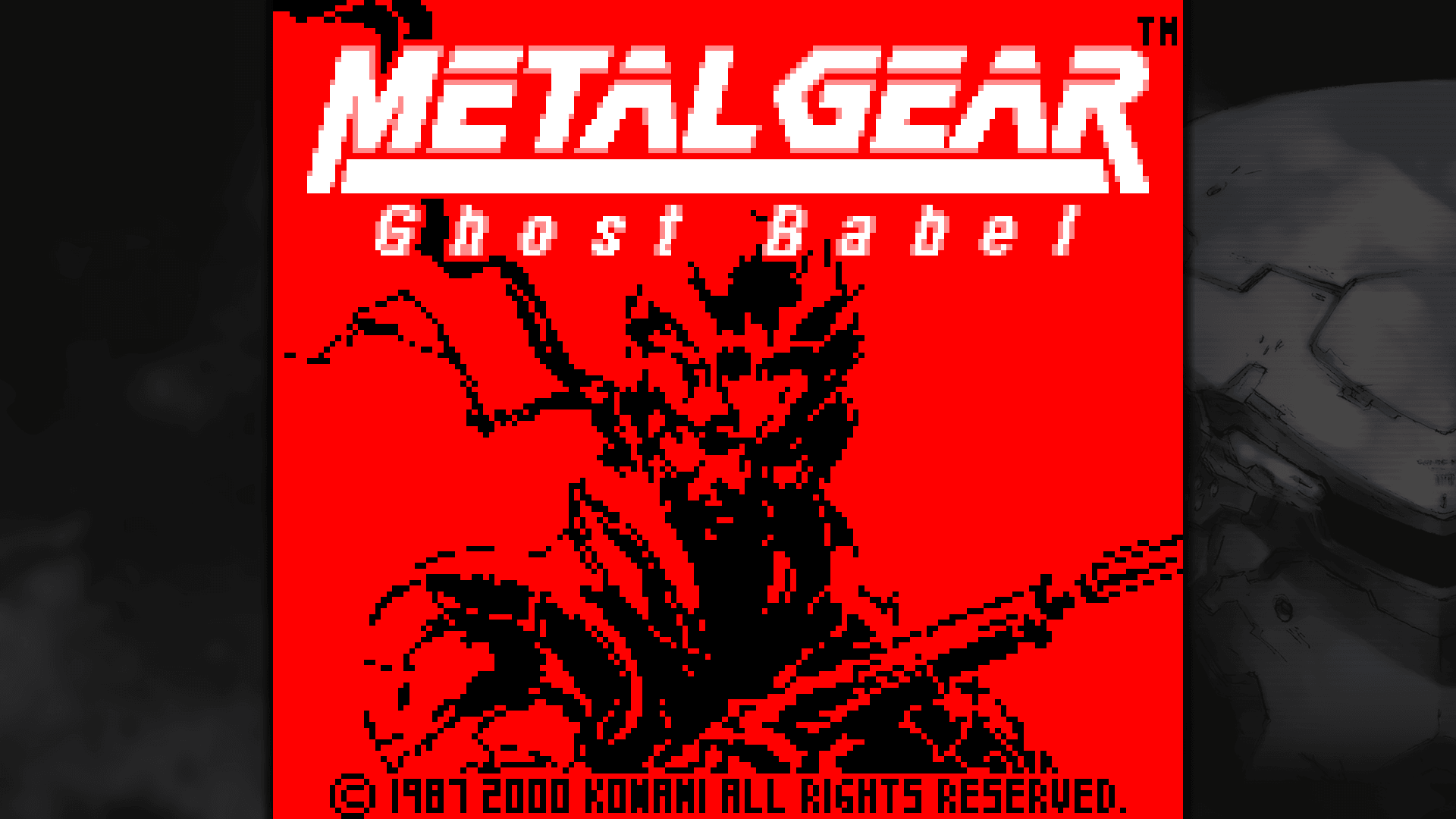
“Metal Gear: Ghost Babel – A blast from the past!”
First, I know I said I’d skip Ghost Babel for now and move on to Metal Gear Solid 2, but I dragged my feet for long enough that the next thing I knew, Metal Gear Solid: Master Collection Vol. 2 was here. The joke’s on me though, as disappointingly, that version doesn’t include the achievements/trophies that I was originally holding out for. Lame! In any case, for this playthrough, that is mostly the version I played (on my Xbox Series X.) Not unlike some of the games from the first Master Collection, this version of Ghost Babel is running in some kind of a GBC emulator rather than being a true port. Despite the lack of achievements, it’s not without any additional features though; most notably, it includes the ability to “rewind” your game. Konami did a pretty good job of supporting Master Collection Vol. 1, so it’s possible we’ll see some more enhancements added to this version in the next year or two, though my guess is that much more of their attention will be focused on the two main games in the collection. You know, the ones that actually got achievements. 🙄
Loading up the game you’re immediately tossed into a lengthy introduction sequence which, not unlike Metal Gear Solid proper, sets up the mission you’re about to embark on. There’s some decent pixel art here and a surprising amount of text. In fact, I think it’s the most detailed intro we’ve seen so far outside of MGS’s optional briefing videos. Once you’re dropped into the game itself, the colorful 2D pixel artwork is even nicer, and they make up for it being much lower resolution than Metal Gear and Metal Gear 2: Solid Snake by extremely skilled use of those limited pixels, including adding a lot of extra frames of animation wherever they could. Between that and the finely tuned control of Snake, Ghost Babel feels so much “smoother” than those older 2D games. Hell, the screen even scrolls as you move rather than being a single fixed screen! As the game progresses, you’ll see even more excellent artwork by way of the frequent cutscenes. The art here is quite stylized, part gritty and realistic, part anime and manga inspired, and, owing to its bold use of colors (probably to account for the GBC’s lack of a backlit screen), a little cartoony. It’s definitely a unique look, but one I think works well.
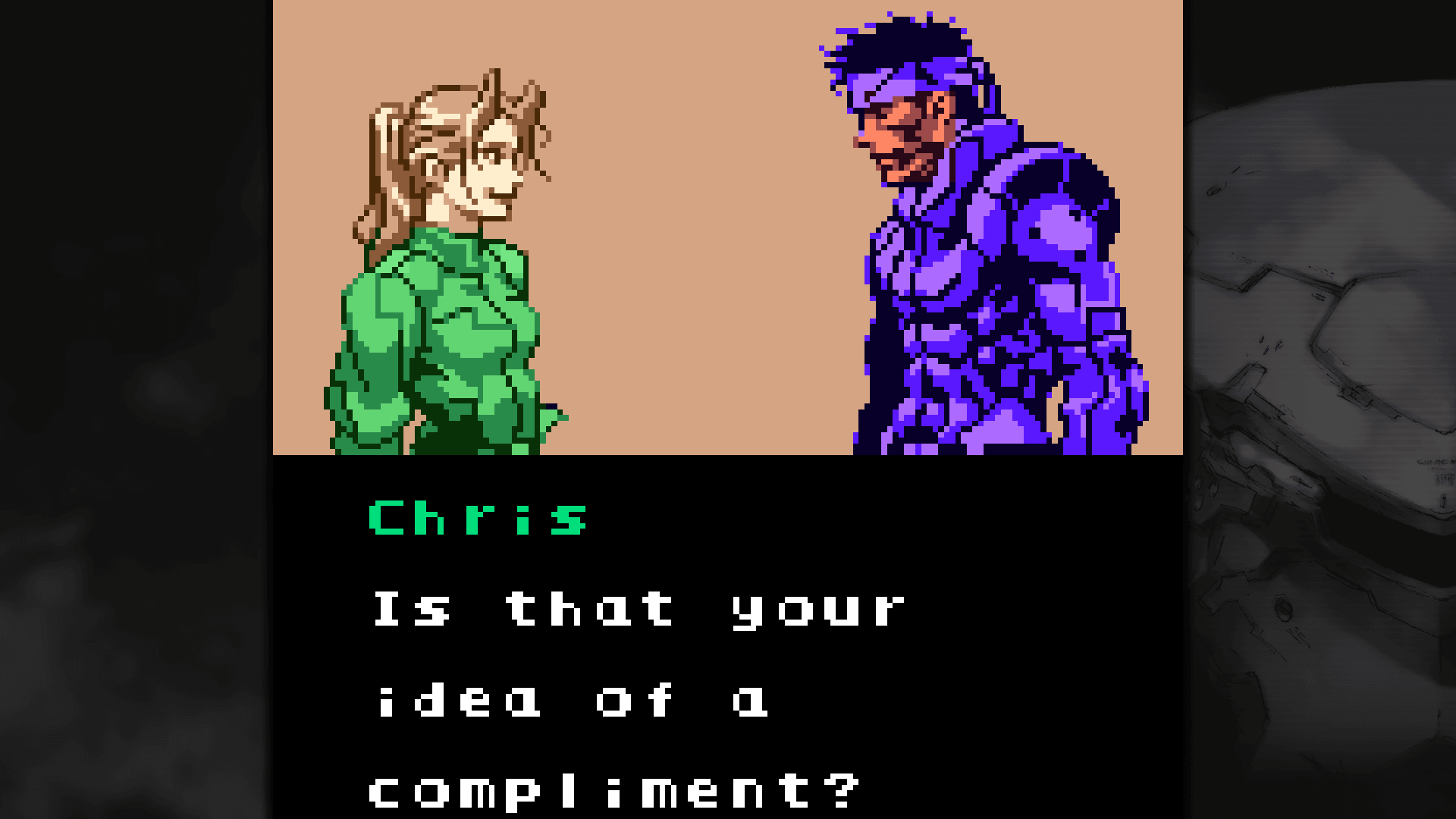
“Another swing and a miss. Poor Snake.”
Ghost Babel’s music and sound effects are also interesting, with throwbacks to all three of the previous games, especially the original MSX Metal Gear. Throwing back to the first Metal Gear is actually a pretty big theme here as, gameplay-wise, it really feels like Ghost Babel’s main two influences were it and, of course, Metal Gear Solid. Even the story pretends Metal Gear 2 doesn’t exist, instead being something of an alternate sequel. I’m not sure why MG2 was done so dirty, but perhaps it was an attempt to make this game appeal more to the Western audiences that, beyond MGS, might have only played the first game thanks to its widely distributed NES port. Regardless, having played these games in order, this really stood out to me.
In fact, jumping right into gameplay, stealth feels much more like the original Metal Gear. Guards have simple patrol patterns and no cones of vision, so it’s similarly quite easy to avoid and maneuver around them, including sneaking up on them to knock them out or laying in wait to pop them with your silenced Five-seveN. As such, your Soliton Radar has been downgraded to only show enemy positions and movements and not facing, though a bigger downgrade is probably just how damn tiny it is. If anything, sneaking around is even easier given some MGS inspired enhancements like the ability to squeeze against walls, which is actually used quite a bit more here, hide in and behind things, even in bushes, and knock on walls to lure guards to you. Actually, the game uses an almost exact duplicate of MGS’s evolution of alert phases, though it might be my imagination, I swear the phases progress even more quickly, making getting caught far less annoying. Certainly much less annoying than in MG2 at any rate. Snake’s weapons and equipment are also pretty close to those on offer in MGS, though I wouldn’t really call this an improvement over your already extensive caches in MG and MG2. I suppose the familiarity does help if coming from MGS though; the Nikita, for instance, works practically identically.
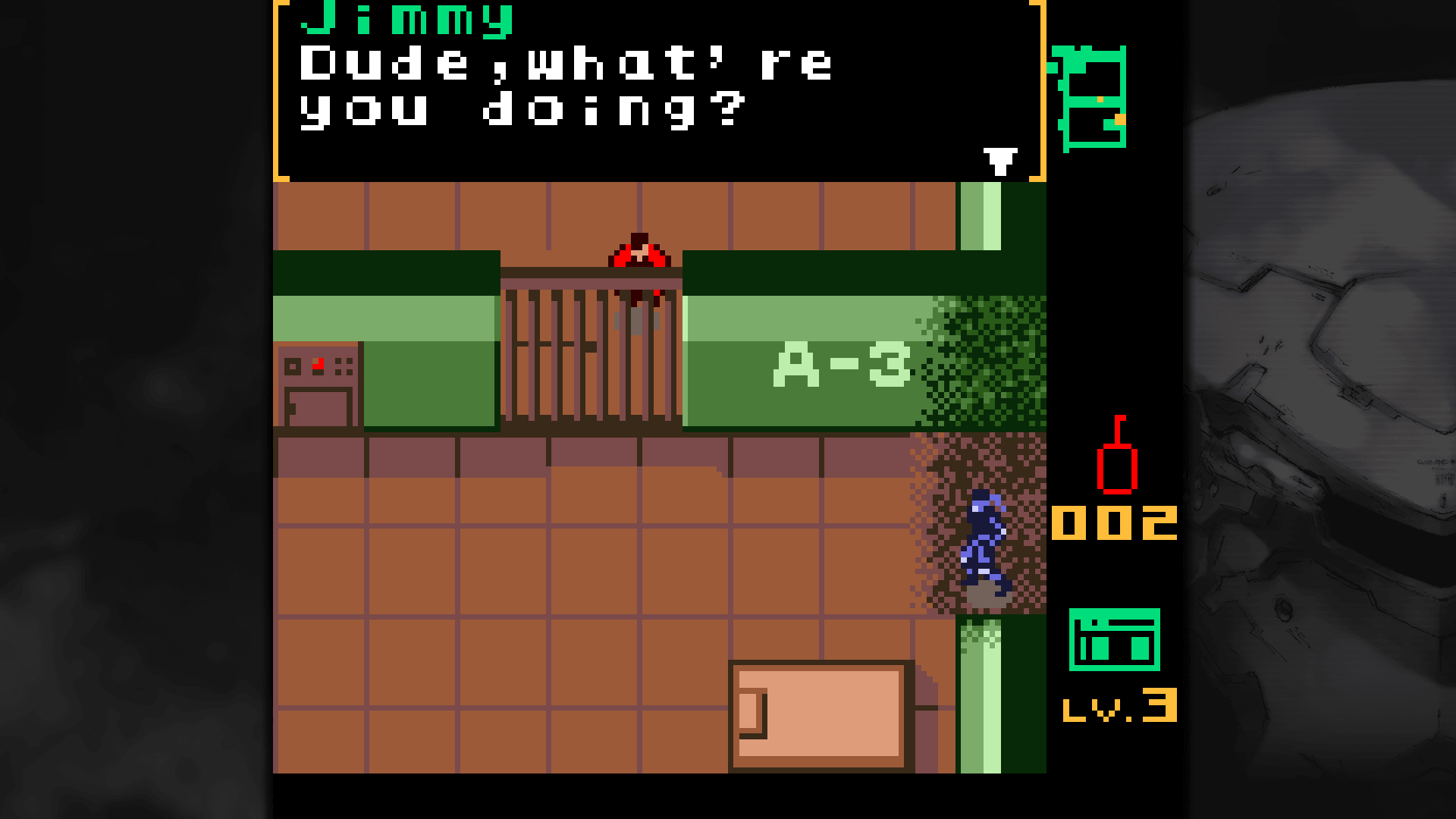
“Jimmy admonishing me for blowing up the wrong wall. Oops!”
A major departure from the earlier entries in the series is with the controls and the user interface. Of course, having to squeeze all of the controls on what, including start and select, is only four buttons, was obviously a bit of a challenge. They did a fine job, all in all, though the controls are certainly less intuitive than the revised MG and MG2 controls in the modern ports and it took me a while to get used to them enough to stop fumbling with them. Once I got used to them though, they worked great. The UI is similarly stripped back yet entirely adequate. It’s honestly kind of a miracle they managed to squeeze a working radar onto the screen without massively encroaching on the play area. As mentioned, it’s tiny as hell, but it is functional. Still, that was on a large TV so I can only imagine the eyestrain one might have gotten from trying to keep a careful watch on it when playing on the GBC’s minuscule screen.
The biggest departure though is with the structure of the game. Not counting Snake’s Revenge, Ghost Babel is the first game in the series to do away with the more open, interconnected world and replace it with a linear progression of discrete stages. This really doesn’t bother me though, as the series has relied less and less on Metroidvania-like progression gating and backtracking and many of these stages were large and open enough to still require a lot of exploration and backtracking anyway. The one thing I really didn’t like about it was the rating screen, similar to those shown at the end of other Metal Gear games, here shown to you after each stage has been completed. The ratings are quite strictly calculated, and it’s absolutely normal to get a bad rating if you did anything out of line, including simply taking a bit too long during an otherwise flawless run. It’s discouraging to be told you’re “terrible” between every level simply because you were thorough. I mean, this is a stealth game, right?!
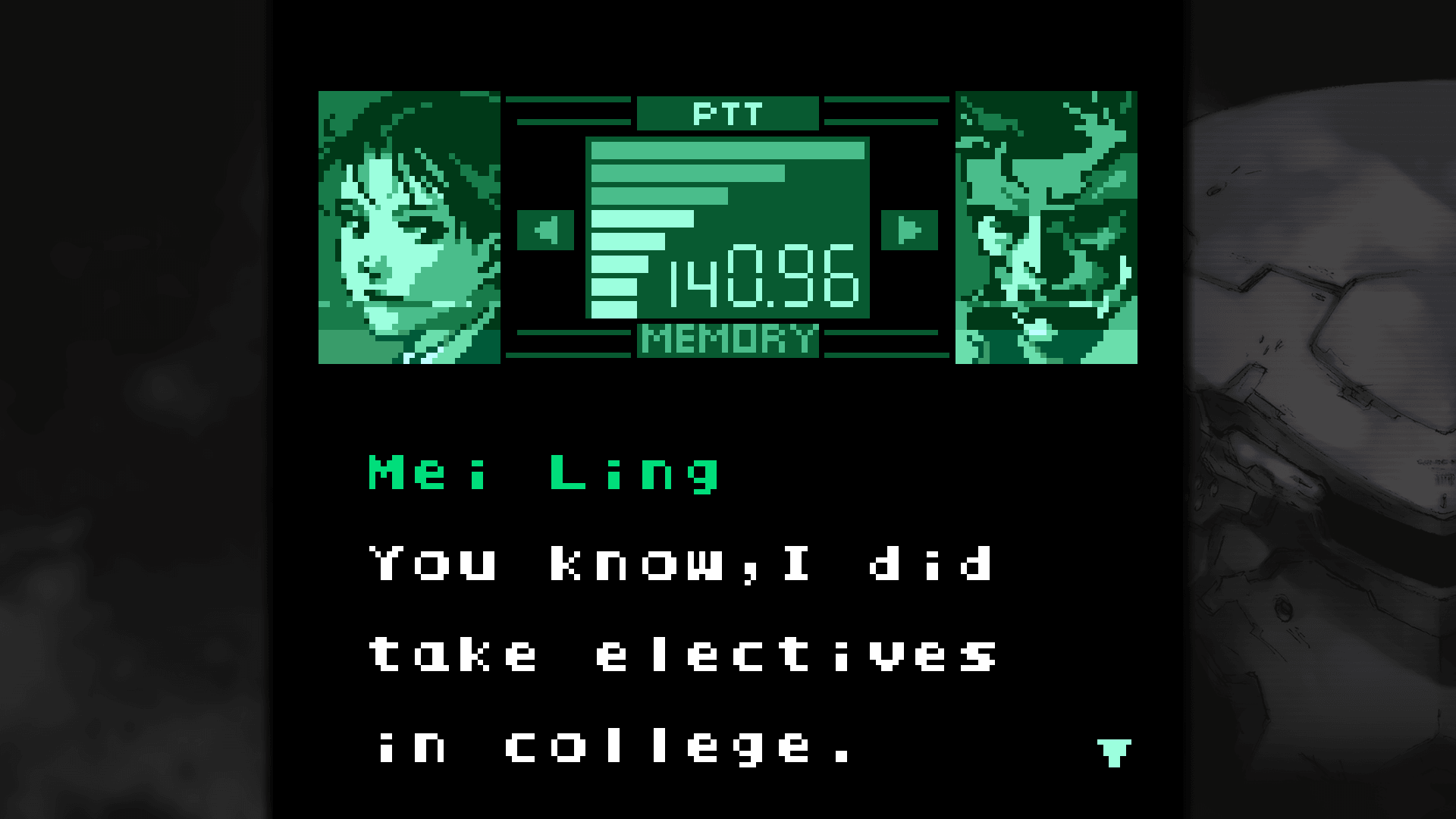
“Mei Ling on the back foot regarding her endless pearls of wisdom. LAWLZ!”
The codec though? That’s ripped straight from Metal Gear Solid. The conversations are a bit more terse owing, again, to the GBC’s tiny screen, but there is still a surprising amount of text here; probably being on par with MG2 or at least being a good approximation of what we got in MGS. They manage to fit in a whole lot of dialogue about political conspiracies and the like and Ghost Babel is probably even more egregious about telling you where to go next and how to solve puzzles. Of course, there’s no voice acting, but it still feels impressive given the platform. As with MGS, your main way to interact with the narrative is via those codec calls and with cutscenes. While of course the cutscenes are nowhere near as cinematic as what we got there, this mix still feels like a similar evolution of MG2’s presentation as MGS. As an aside, I find it kind of amusing that Ghost Babel is the game they decided to borrow the codec character portraits from when updating MG2, given how disconnected the two games otherwise feel from each other.
Let’s go ahead and address that elephant in the room and re-cap the story. Expand the box below for a high-level but still spoiler-filled synopsis of the game’s plot.
Story Synopsis - Spoilers!
2002. Prototype Metal Gear GANDER is stolen by the Gindra Liberation Front, led by General Augustine Eguabon. Former FOXHOUND commander Colonel Roy Campbell brings Solid Snake out of retirement, revealing that Galuade, the GLF’s stronghold in the African country of Gindra, is actually the former site of Outer Heaven. His mission: infiltrate Galuade and link up with Delta Force operators already on the ground to rescue any captured researchers and destroy GANDER before it can be used against the United States. Once inside the base, Snake is contacted by the only surviving member of the Delta Force squad, Sergeant Chris Jenner, who reveals the presence of a dangerous mercenary unit called Black Chamber. During his first contact with Black Chamber, Snake learns that they have a vendetta against FOXHOUND due to their part in a betrayal that wiped most of their unit out. They’re also seeking the identity of the person who ordered the attack, known only as “Anonymous”. Snake finds and frees Metal Gear GANDER’s young chief engineer, Dr. Jimmy “The Wizard”’ Harks. With little warning, GANDER fires at the United States. On a broadcast video message, General Eguabon reveals that this was a dummy warhead meant only as a demonstration, and gives the U.S. government three hours to recognize the GLF’s demands. Snake next attempts to infiltrate and sabotage Galuade’s power plant to crippled GANDER’s rail guns. While successful, Jimmy is recaptured by the GLF, though manages to escape. Upon reuniting with Snake, Jimmy begins to explain that GANDER has one more weapon at its disposal but his handcuffs explode, killing him. With no options left, Snake proceeds to GANDER’s underground hanger. Once there, Snake encounters the General himself, who activates GANDER and attempts to stop Snake. After a tense fight that leaves GANDER disabled and the General mortally wounded, the General reveals that Outer Heaven was originally established by the U.S. to create a base of power on the African continent, though Big Boss unexpectedly went rogue, leading to Operation Intrude N313 and Outer Heaven’s ultimate destruction. Still, those efforts continued, eventually leading to the current situation and Project Babel led by Army Chief of Staff John Parker. As the General lay dying, Snake is confronted by Black Chamber’s leader, Black Arts Viper, who reveals that he now believes the identity of “Anonymous” is Steve Gardner, Deputy Director of the CIA, who was behind the original Outer Heaven and Metal Gear projects. Viper then reveals GANDER’s last weapon, its ability to launch nuclear attacks from orbiting satellites, and begins preparations to use it. Snake attacks Viper, killing him and stopping GANDER in the process. Campell confirms that Gardner planned the whole operation to disgrace Parker and get control of Project Babel returned to him. Snake and Chris reunite, escaping Galuade together, with Snake vowing to stop Gardner.
Ghost Babel’s story certainly feels appropriate to the series, and while it lacks some of the more existential themes discussed in MGS in particular, we have the familiar components of deep state conspiracies, proxy wars, the exploitation of soldiers to satisfy both of those ends, and walking robotic weapons of mass destruction. The return of Roy Campbell and Mei Ling helps solidify this too, even if Snake clearly didn’t meet Mei Ling until the events of MGS. *shrug* Tonally, it feels more like MG2 to me, being a bit more focused and serious across the board. There is a little humor though, particularly when it comes to the bratty, arrogant Jimmy the Wizard, who I generally found to be pretty hilarious. The villains of Black Chamber are as over the top as ever too. I mean, Pyro Bison and Slasher Hawk give Vulcan Raven a run for his money and Marionette Owl feels straight out of a manga. The whole Outer Heaven being Galuade twist seemed a little silly to me, and the subplot about Steve Gardner and John Parker, Weasel and McBride, etc. felt quite shoehorned-in. Even still, it seems like they could have easily made a few minor tweaks here and there to make Ghost Babel fit cleanly into the established timeline. My guess is that Kojima simply wanted to maintain creative control of the series and wanted anything he didn’t write to remain non-canon, even if he liked it (and he seems to have, as there are some references to it in later Metal Gear games.)
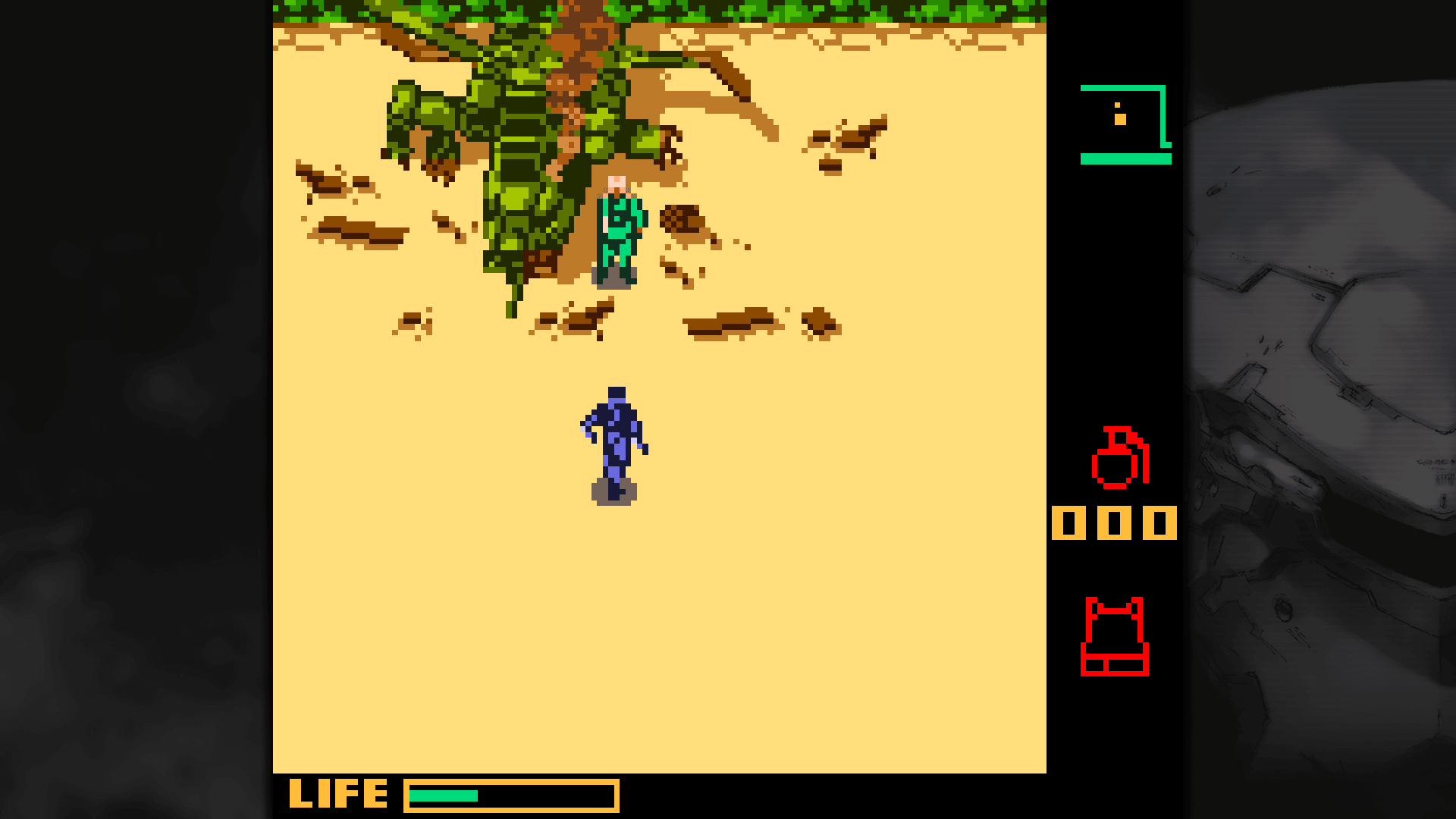
“Again?! Its an Mi-28 Havoc instead of a Mi-24D Hind-D, but close enough!”
Difficulty wise, I don’t think Ghost Babel was too challenging. There were some odd moments where Snake could get stunlocked (fucking dogs!) and the boss battle against (the awesome looking) Metal Gear GANDER was tricky; even after beating it, I’m not sure exactly what I was supposed to do as it seemed to take me ages to drain its health bar, having to restock on ammo multiple times. Still, the biggest challenges presented by Ghost Babel were its larger levels which were huge and often maze-like. The conveyor belt puzzle in particular was absolutely as diabolical as it was ingenious and satisfying to master. I used a collection of lightly annotated maps for this playthrough, but some of these sections must have been incredibly time-consuming and quite frustrating without a map and/or a full walkthrough at your disposal. Beyond that, my other biggest frustration was a bug seemingly related to the emulator used by the Master Collection Vol. 2 version which rendered gauss grenades completely useless. Those damn things were my lifeblood in the latter half of MGS, and there were several sections here in which I just had to face-tank gun turrets without them. Hopefully that gets fixed in a patch sooner or later. On the plus side, the aforementioned rewind feature of this version is actually incredibly powerful – invaluable for Nikita sections, but also extremely useful for experimenting with stealth in general. Make a mistake? Rewind and try again!
To round this out, there’s a few other things about Ghost Babel worth mentioning. First, it has its own massive selection of VR training challenges, most of which appear to be straight translations of those found in MGS to Ghost Babel’s 2D engine. Pretty neat. There’s also a Special Missions mode that unlocks after beating the game that brings you through what are essentially tweaked challenge versions of the campaign’s missions, but more interestingly, these are bookended with a lot more narration to help fill in some of the details of the story. Most interestingly of all, it’s revealed that these are actually VR simulations being experienced by a character named Jack rather than Solid Snake. Yep, that Jack! Ghost Babel was also the first Metal Gear game to include multiplayer, with its pretty cool sounding “Battle Mode” meant to be played via the GBC’s link cable. Unfortunately this feature was removed from the Collection Vol. 2 port.
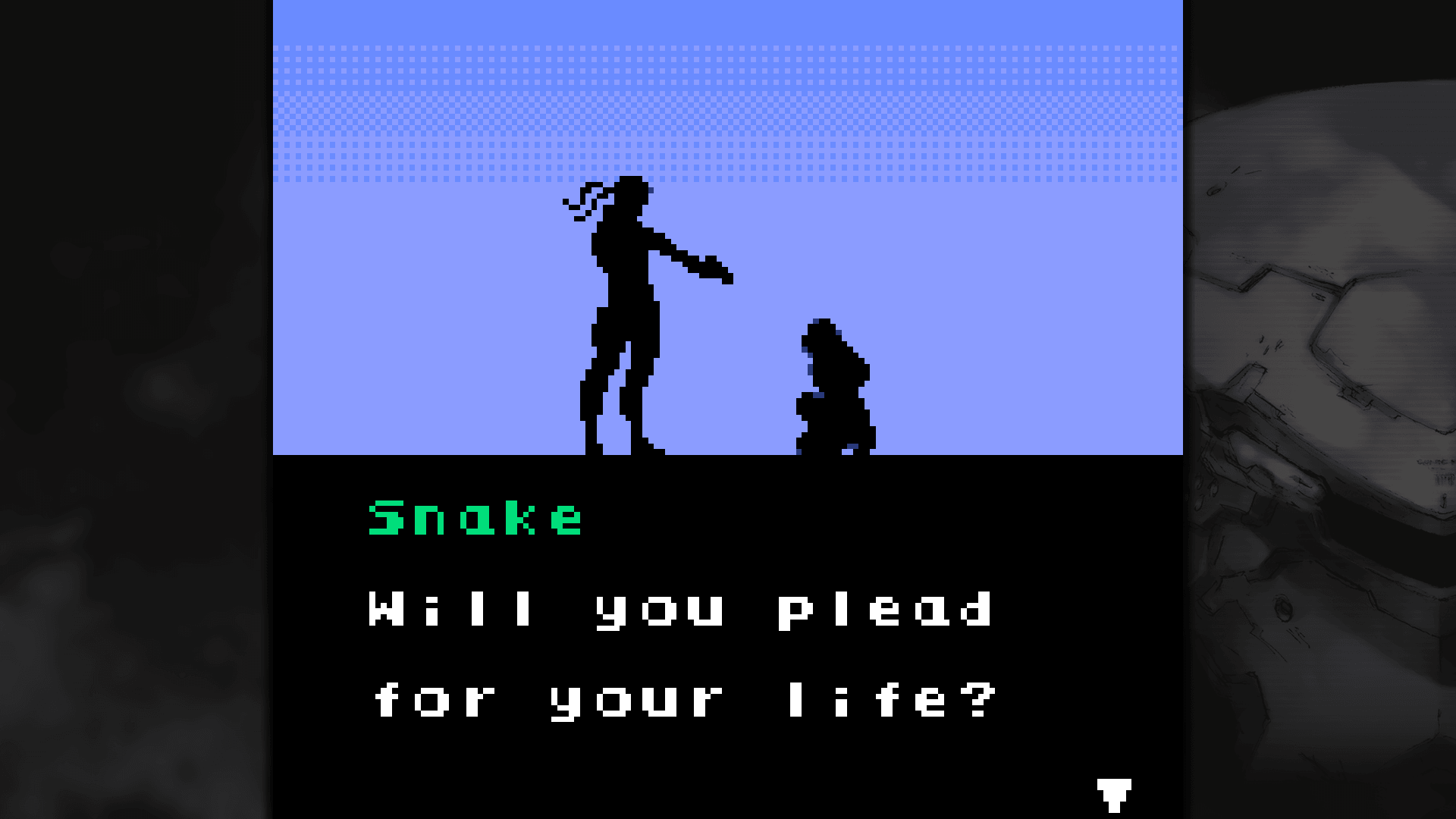
“You know, it’s much less of a kid’s game than you might think…”
While I think I might still prefer Metal Gear 2 over Ghost Babel, I probably had more fun with Ghost Babel, and it definitely pushes Metal Gear down the ranking when it comes to the 2D games. It’s a surprisingly competent entry into the series, and it’s a game that makes me rethink what was technically possible on the Game Boy Color, full stop; it really is quite impressive. Plus, it’s short, with the time of a single playthrough usually clocking in at under 5 hours if you don’t get too lost in those conveyor belt mazes. Honestly, my biggest issue with the game is its odd lack of coherence with the canon timeline, and perhaps I just wasn’t mentally ready to return to the 2D style of Metal Gear after finally playing Metal Gear Solid for the first time not that long ago. In any case, I’ll remedy that next time, as I finally play Metal Gear Solid 2: Sons of Liberty!