I rarely get on my soapbox and post rants on here but all of the news around Xbox has been inspiring me to want to write something for a while now. Every time the feeling subsides without me typing anything up, yet another piece of news drops that starts the process all over again. So, here I am, finally putting pen to paper, as it were.
Xbox: The Good Times
Instead of jumping right into all of the (mostly negative) events around Xbox lately, I figured I’d give a little background on how I became an Xbox fan, and what that journey has looked like through the years.
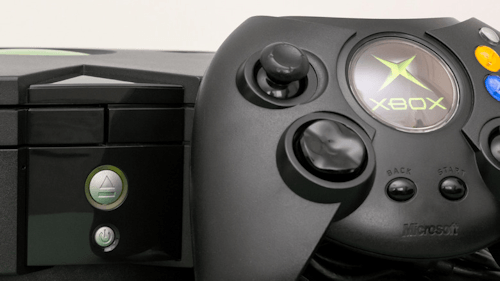
“I actually never had a ‘Duke’ of my own. Viva la Controller S!”
In something of a redux of me using one of my first paychecks to bring home a shiny new Nintendo 64 and a couple of games in the summer of 1997, my brother came home from a shift at his new job in, I’d guess, 2002 with a new Xbox and a couple of games. Being fairly checked out of gaming at the time, I don’t remember hearing too much about the Xbox or any of its upcoming games. I’m sure it didn’t help that, despite continuing to begrudgingly run Windows as my primary OS, I didn’t consider myself to be any great fan of Microsoft; I probably dismissed a lot of these rumors with a casual roll of the eyes. Not unlike the inspiration behind my N64 purchase, my brother had first tried an Xbox at a friend’s house and was blown away. I, on the other hand, remained skeptical.
One thing that hopefully isn’t too evident is that I’m often a bit of a skeptic when it comes to new things, especially technology and popular trends. Popular technology trends? Right out! I try to be open-minded and I’m certainly no Luddite, but I think “cautiously skeptical” would be the best way to describe my mindset. When my brother fired up Halo: Combat Evolved, I was both impressed and also a little judgemental, knowing how much the FPS genre had progressed in recent years on the PC. But, to steal a line from my Halo Fest post about Halo: CE, “I was quickly won over by its unique aesthetic, mysterious science fiction storyline, slick, polished execution, and almost perfect early implementation of dual analog stick FPS controls.” Of course, all of the good times playing split screen Slayer with my family and friends didn’t hurt either.
At around the same time I’d built my first new PC in years and dove back into PC gaming, particularly online, with a vengeance. After months of being absolutely glued to my monitor for hours every evening, I decided it might be nice to take some breaks away from my computer, as well as focus on some single-player games for a change. I knew from my brother’s Xbox that I liked the hardware, and never being a massive fan of JRPGs or fighting games, Xbox’s more western aligned library spoke to me a bit more than PlayStation’s. When it did come to Japanese games, however, some of my favorites were those standouts from my short time as a Sega Dreamcast owner, and as most fans of either console are well aware, Sega went hard on supporting the Xbox early on, releasing superior ports as well as sequels exclusively on the Xbox. I was particularly stoked to play Jet Set Radio Future (still an all-timer for me!) and to finally play Shenmue II.
During this time, I noticed that I had developed an unfortunate habit of buying every new game that caught my eye, playing it for a few hours, and then never playing it again whether I liked it or not. While I suspect quite a lot of gamers play this way, at some point I realized I wasn’t really getting my money out of these purchases, and I vowed to start beating every game I played. This intentional shift in my behavior around single player games is still something I do to this day – usually if I play a game, I fully intend on seeing it through. Maybe not 100%ing it, but at least completing the main single player campaign. One big downside is that I play a lot less games as a result, and by the Xbox 360 era I still had a huge library of original Xbox games I was slowly working my way through. Feeling left behind and determined to get an Xbox 360 “soon” I made a concerted effort to finish playing through the rest of my games, which was especially hard since my library kept growing. At some point I had to draw a line in the sand, or I’d never move on. Despite this being a bit of a grind, I have fond memories of this time.
When I finally joined the 7th console generation in 2007, I’d developed a similar habit of stocking up on every game that interested me, although by then it had shifted to the more frugal approach of buying used copies of games from GameStop, usually taking advantage of their sporadic “buy 2 get 1 free” sales. To this day, my collection of physical Xbox 360 games is absolutely massive and contains quite a few games I never got around to playing despite having every intention to. Regardless, those first few years of owning an Xbox 360 were great, with some of my favorite games at the time being released back to back, and having a lot of fun playing multiplayer, both online and offline, with a large group of local friends. While this blog was born around that time, it was just a year or two later, so unfortunately a lot of those games were not covered here.
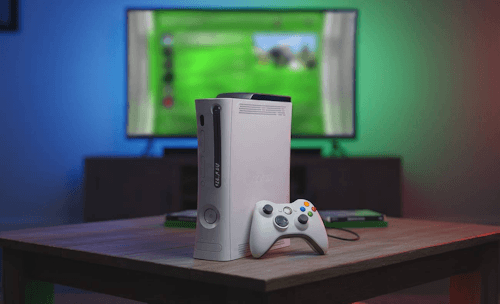
“It’s a thing of beauty, although I rock the Slim model these days…”
By the time the 7th generation finally started to wind down, I’d decided to reduce my gaming footprint down to only a single machine going forward, and it… wasn’t an Xbox. Don’t get me wrong, I hadn’t regretted my time with either the Xbox or the Xbox 360, but if I could only have one machine, it had to be a PC. Not only could it play most everything a console could play that wasn’t an exclusive but it could do so, so much more, and gaming is only one of many hobbies I have based around computers. Plus, as mentioned, I still had plenty of great Xbox 360 games to work my way through. On top of that, I had to begrudgingly admit that if I were to get a console, the PlayStation 4 was looking more like what I wanted – I didn’t care about the Kinect and while the Xbox One’s media integration was neat, it wasn’t what I was there for. Meanwhile the PS4 was much more focused on playing games and playing them well, and Sony had been building an impressive staple of exclusives over the years to boot.
I’ve told this story here before, but those notions all fell through in spectacular fashion in 2016 when I went out one Sunday afternoon to stop by work for just a couple of hours, only to return home to discover that my house had been broken into. One of the (thankfully) relatively small selection of things the burglars made off with was my Xbox 360. Because of my renter’s insurance company’s generous replacement program, not only did I get paid out for the depreciated value of everything I lost, but they’d also pay the full dollar amount to replace certain items. With the Xbox 360 no longer for sale, I got myself an Xbox One S for free. “Just when I thought I was out, they pull me back in!”
With both my partner and I having already invested so much in Xbox, it only made sense for us to continue down that path, especially given Microsoft’s continued treatment of backwards compatibility as a valued part of its ecosystem. While I never upgraded to the impressive Xbox One X, when the Xbox Series came out, I wasted no time upgrading to a Series X. Since then, I’ve only continued to do more and more of my game hoarding with Xbox, although pretty much exclusively digitally. Not unlike Steam, the Xbox Store has had regular, generous sales multiple times a year, making it all too tempting to load up on anything I’m even vaguely interested in. Despite the lack of many exclusives that really excite me, I’ve really enjoyed my time with the Xbox One and Xbox Series consoles, and I still do.
But things have gotten a little weird…
Xbox: The Not So Good Times
While the Xbox 360 arguably won the 7th generation with superior online features and only a few notable missteps (the whole “red ring” fiasco chief amongst them) compared to Sony’s slew of facepalming blunders, it started off the next generation quite poorly indeed. As mentioned, Microsoft seemed to be marketing the Xbox One as more of a multimedia machine than a gaming console, and you can’t downplay how much damage the whole always-on DRM fiasco did to their reputation with “core” gamers. Whether or not rumors about Sony planning to follow suit and changing their minds last minute were true, you can’t deny that Sony played that whole thing out to their advantage. Microsoft course-corrected, and a lot of people loved the Xbox One Slim and the later Xbox One X as much more gaming focused machines, but the damage was done and the silliness around all of this (“we have a product for people who aren’t able to get some form of connectivity; it’s called Xbox 360″ – Don Mattrick) lives in gaming culture infamy.
The PS4 was also a lot more powerful than the Xbox One which only reinforced the notion that the Xbox was no longer the best option for “core” gamers. This flip-flopped with the later releases of the PlayStation 4 Pro and the Xbox One X, but the damage was done. While a bit closer together, the Xbox Series X is also more powerful than the PlayStation 5, but the release of the Xbox Series S as a less expensive, lower spec model which Microsoft required studios to support is often blamed for the lack of more impressive technological advancement in the current generation. While this is debatable, if nothing else, there are some specific examples where this clearly impacted availability on Xbox, with the delayed release of Baldur’s Gate 3 being a notable one from recent years.
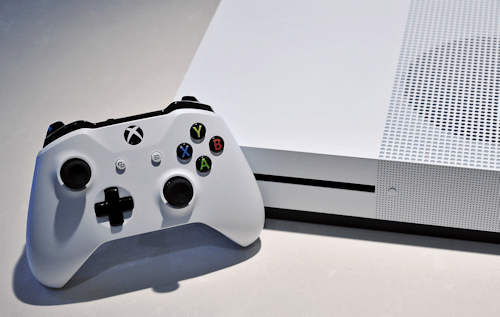
“You know, I still really like the look of the One S!”
Then we have the matter of Xbox exclusives. While this has always been an element of every console war debate, it truly became an issue for Xbox with the Xbox One and has only gotten worse. Xbox’s exclusives are few and far between, and very few of them have had the appeal of those associated with the PlayStation brand. That’s not to say there are no good exclusives, but a 1:1 comparison isn’t all that favorable. To make matters worse, Xbox started making more and more of their first party games available on PC. While I personally think this is a great thing, it is almost always used as a negative against Xbox in such debates – these titles are no longer platform exclusives, but console exclusives. Since a lot of gamers either own gaming PCs and consoles, or game on PC exclusively, it’s hard to deny that the wider availability of these games means there’s less reason to own an Xbox. Fast forward to 2025, and Xbox is even launching games on PlayStation, with them more or less stating that exclusives are an outdated concept, which raises questions about whether or not Microsoft sees Xbox as more of a publisher than a platform these days. Meanwhile, Sony has recently announced that its taking the opposite approach, and stepping back from its relatively recent move of porting more of its games to PC – they seem to be joining Nintendo by walling their garden back up.
When it comes to particular exclusives, I’m a Halo fan, and it’s hard to not talk about how much cachet the Halo series has lost since Bungie left Microsoft. There have been non-stop issues around the series since the hand-off to 343 Industries. It’s been fixed and further improved since, but the Master Chief Collection, one of the Xbox One’s most attractive exclusives, was a bit of an infamous blunder when first launched. Halo 4, Halo 5, and Halo Infinite are all surrounded by their own controversies as well. A more negative perspective on this could paint this as Microsoft essentially killing the goose that laid the golden egg. While I don’t view the situation quite as harshly, there’s no denying that the Halo franchise isn’t what it used to be. Still, I suppose it won’t be able to consider itself an Xbox console exclusive soon anyway.
Speaking of killing those golden egg laying geese, one odd thing about Microsoft’s acquisition of development studios over the years is that they’ve reportedly been relatively hands off when it comes to managing most of these studios and/or their projects. Going against the stereotype that publishers meddling in development is one of the primary reasons for so many problems with specific game releases, Microsoft has been accused of not meddling enough – leaving studios and their projects to fail due to mismanagement instead of lending their resources to ensure successes. Overall, it feels like we’ve seen more interesting games get cancelled than come out lately. Despite this, Microsoft has continued to gobble up more and more developers, including the insane acquisitions of ZeniMax Media and Activision Blizzard, bringing them under the Xbox Studios umbrella. Complaints about consolidation aside, Xbox fans wouldn’t be silly for thinking these would be massive wins for Microsoft, and yet very little of note has come out of most of these acquisitions.
Despite all of this, Microsoft has since conducted mass layoffs, even closing entire studios. This could be seen as (and indeed, was sold as) trimming the fat, but nothing encapsulates the controversy around this quite like the situation with Japanese studio Tango Gameworks. Tango released Hi-Fi Rush as a bit of a surprise announcement in January 2023, which went on to garner critical acclaim, and yet Tango was included in the May 2024 announcement of studios being shuttered. If the backlash from fans wasn’t already loud enough, Xbox Game Content and Studios head Matt Booty mentioned that Xbox needed more games which could secure “prestige and awards”. The contradiction and lack of logic around that situation was blatant, sealing yet another infamous chapter in Xbox’s history.
It’s hard not to blame a lot of this on Xbox’s focus on their Game Pass service as their primary sales strategy. For fans, it has been hard not to love Game Pass – access to most first party titles and a huge selection of third party titles, including day one access to new first party games. It’s always felt like a great deal, and the number of times a new game has been released that had some of my friends worrying about justifying the purchase, only for me to have it for “free” would have easily justified the cost if I was the type of gamer who played more games on day one. Still, from the early days critics have wondered how this was sustainable – surely Microsoft and individual third party studios would be leaving a huge amount of money from sales on the table in many cases. It can also be argued that services like Game Pass, along with huge sales on platforms like Steam, lower the perceived value of games, which isn’t a great thing when games cost more to make every year. More relevant to the discussion of studio closures, however, is a shift from looking at critical reception and sales numbers to looking at how launches of new titles on Game Pass impact subscriptions.
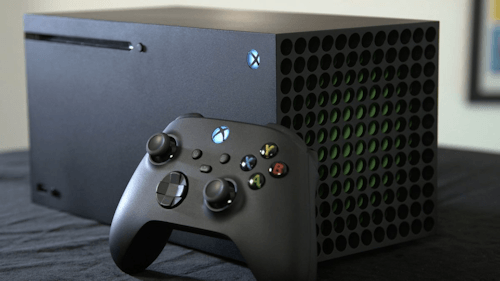
“The Series X. I love that hint of green!”
Another more recent controversy related to Game Pass has been the price hikes. Game Pass Ultimate went from $14.99 a month to $16.99 in 2023, then to $19.99 in 2024. At that point, the price was feeling a bit steep, but still felt like a fairly good deal, especially with the inclusion of Game Pass on PC and other services like EA Play. In 2025 the price went from $19.99 to $29.99, which kind of blew up the Internet. So many people cancelled their subscriptions as a result that Microsoft’s account management went down for a bit, and even I, someone who has had Game Pass since its inception, and Xbox Live Gold before that, downgraded from Ultimate to Premium. The price crossed over what I was willing to pay every month for a service like this, which is double the price of PlayStation Plus Premium, for the record, and unless this was a deliberate move to justify moving away from their Game Pass strategy, it felt like a massive blunder on Xbox’s part. Of course I have no idea what the numbers actually look like, but if social media is to be believed, a lot of people chose to jump off the Xbox bandwagon at this point.
When it comes to changes in strategy, starting in late 2024 we saw an advertising campaign that focused on, between Xbox on PC and Xbox Cloud Gaming, the ability to play Xbox games on just about anything, with the slogan “This is an Xbox”. This aligned with the previously mentioned gradual shift to have just about all first party games available on PC, this has had people wonder if we’d see another generation of Xbox, and if we did, if it would be made by Microsoft themselves or perhaps licensed out to other manufacturers as some other consoles have done in the past. The release of the ROG Ally Xbox handheld suggested that neither of these is an impossibility, since despite the branding, it was made by Asus, and only supported PC games with no Xbox compatibility layer to boot.
Most recently we’ve had a bit of an abrupt changing of the guard at Xbox, with Phil Spencer and Sarah Bond both out. Phil Spencer has been a divisive figure, as despite being the CEO of Microsoft Gaming since not long after the Xbox One launch and therefore being, in one way or another, accountable for most of the negative things listed here, he seemed to do a lot right in terms of recovering from that terrible Xbox One launch, and his passion for gaming actually felt genuine, which is pretty rare in the industry. Still, his boilerplate corpo-speak communications around things like the aforementioned layoffs and studio closures does bring some of this into question. Still, it’s much more concerning that he was replaced by a former executive in AI at Microsoft, especially when AI is already being blamed for so many layoffs and other random enshitification in gaming and in tech in general. While I don’t think she was put in place to kill Xbox, as some doomsayers have theorized, I do suspect this will herald some sort of major changes in direction for Xbox.
Yet, when you add all of this up, it really does seem like Xbox has taken themselves out of the game. Sales have suffered so much this generation that there was a news story being widely discussed about the third largest retailer in the world, Costco, based just down the street from Microsoft, no longer carrying Xbox consoles. Things sure seem pretty damn bleak right now.
Xbox: The Future?
To end this on a bit more of a positive note, the next Xbox, code named Project Helix, was officially unveiled at GDC 2026, and I’ve been surprised by how positive a lot of the response has been. As suspected, we know this next generation of Xbox will be yet another step towards the platform essentially being a Windows PC, but given the impressive Windows 11 “Xbox Mode” that debuted with the Rog Ally Xbox, I think we’d be safe to look at this more as an Xbox that can play PC games than a PC that can play Xbox games. That said, I’m particularly curious about how this new Xbox will handle allowing other stores, like Steam, to run on the platform, and indeed, if they will port their entire experience (including backwards compatibility with older Xbox 360 and original Xbox games) to the Windows based Xbox app. Here’s hoping any skepticism around Project Helix and Xbox Gaming’s new CEO is just that, but I can’t blame anyone for betting against Xbox at this point. Even then, as impressed as I’ve been with the PlayStation 4 and 5, I don’t think we’d want to exist in a world where Sony doesn’t have any legitimate competition – if you were around in those days, and not a Sony fanboy, I’d guess you remember Sony’s insane hubris during the first couple of years of the PS3 era. Yikes.
Images stolen from some low effort Google Images searches.