Tag Archives: Xbox

Xbox – Past/Present/Future

I rarely get on my soapbox and post rants on here but all of the news around Xbox has been inspiring me to want to write something for a while now. Every time the feeling subsides without me typing anything up, yet another piece of news drops that starts the process all over again. So, here I am, finally putting pen to paper, as it were.

Xbox: The Good Times

Instead of jumping right into all of the (mostly negative) events around Xbox lately, I figured I’d give a little background on how I became an Xbox fan, and what that journey has looked like through the years.
Ashes of Creation Early Access
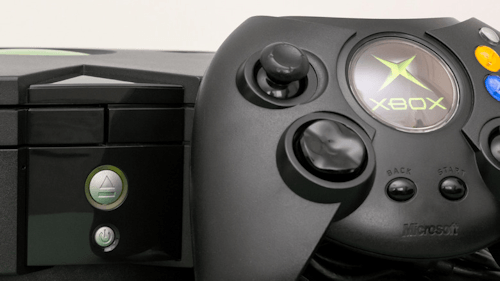
“I actually never had a ‘Duke’ of my own. Viva la Controller S!”

In something of a redux of me using one of my first paychecks to bring home a shiny new Nintendo 64 and a couple of games in the summer of 1997, my brother came home from a shift at his new job in, I’d guess, 2002 with a new Xbox and a couple of games. Being fairly checked out of gaming at the time, I don’t remember hearing too much about the Xbox or any of its upcoming games. I’m sure it didn’t help that, despite continuing to begrudgingly run Windows as my primary OS, I didn’t consider myself to be any great fan of Microsoft; I probably dismissed a lot of these rumors with a casual roll of the eyes. Not unlike the inspiration behind my N64 purchase, my brother had first tried an Xbox at a friend’s house and was blown away. I, on the other hand, remained skeptical.

One thing that hopefully isn’t too evident is that I’m often a bit of a skeptic when it comes to new things, especially technology and popular trends. Popular technology trends? Right out! I try to be open-minded and I’m certainly no Luddite, but I think “cautiously skeptical” would be the best way to describe my mindset. When my brother fired up Halo: Combat Evolved, I was both impressed and also a little judgemental, knowing how much the FPS genre had progressed in recent years on the PC. But, to steal a line from my Halo Fest post about Halo: CE, “I was quickly won over by its unique aesthetic, mysterious science fiction storyline, slick, polished execution, and almost perfect early implementation of dual analog stick FPS controls.” Of course, all of the good times playing split screen Slayer with my family and friends didn’t hurt either.

At around the same time I’d built my first new PC in years and dove back into PC gaming, particularly online, with a vengeance. After months of being absolutely glued to my monitor for hours every evening, I decided it might be nice to take some breaks away from my computer, as well as focus on some single-player games for a change. I knew from my brother’s Xbox that I liked the hardware, and never being a massive fan of JRPGs or fighting games, Xbox’s more western aligned library spoke to me a bit more than PlayStation’s. When it did come to Japanese games, however, some of my favorites were those standouts from my short time as a Sega Dreamcast owner, and as most fans of either console are well aware, Sega went hard on supporting the Xbox early on, releasing superior ports as well as sequels exclusively on the Xbox. I was particularly stoked to play Jet Set Radio Future (still an all-timer for me!) and to finally play Shenmue II.

During this time, I noticed that I had developed an unfortunate habit of buying every new game that caught my eye, playing it for a few hours, and then never playing it again whether I liked it or not. While I suspect quite a lot of gamers play this way, at some point I realized I wasn’t really getting my money out of these purchases, and I vowed to start beating every game I played. This intentional shift in my behavior around single player games is still something I do to this day – usually if I play a game, I fully intend on seeing it through. Maybe not 100%ing it, but at least completing the main single player campaign. One big downside is that I play a lot less games as a result, and by the Xbox 360 era I still had a huge library of original Xbox games I was slowly working my way through. Feeling left behind and determined to get an Xbox 360 “soon” I made a concerted effort to finish playing through the rest of my games, which was especially hard since my library kept growing. At some point I had to draw a line in the sand, or I’d never move on. Despite this being a bit of a grind, I have fond memories of this time.

When I finally joined the 7th console generation in 2007, I’d developed a similar habit of stocking up on every game that interested me, although by then it had shifted to the more frugal approach of buying used copies of games from GameStop, usually taking advantage of their sporadic “buy 2 get 1 free” sales. To this day, my collection of physical Xbox 360 games is absolutely massive and contains quite a few games I never got around to playing despite having every intention to. Regardless, those first few years of owning an Xbox 360 were great, with some of my favorite games at the time being released back to back, and having a lot of fun playing multiplayer, both online and offline, with a large group of local friends. While this blog was born around that time, it was just a year or two later, so unfortunately a lot of those games were not covered here.
xbox 360
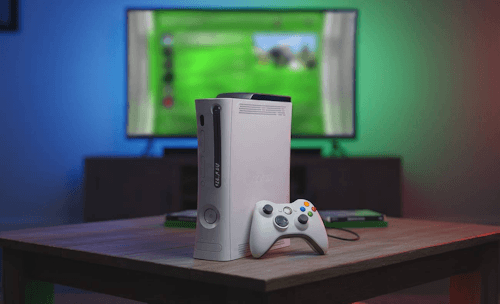
“It’s a thing of beauty, although I rock the Slim model these days…”

By the time the 7th generation finally started to wind down, I’d decided to reduce my gaming footprint down to only a single machine going forward, and it… wasn’t an Xbox. Don’t get me wrong, I hadn’t regretted my time with either the Xbox or the Xbox 360, but if I could only have one machine, it had to be a PC. Not only could it play most everything a console could play that wasn’t an exclusive but it could do so, so much more, and gaming is only one of many hobbies I have based around computers. Plus, as mentioned, I still had plenty of great Xbox 360 games to work my way through. On top of that, I had to begrudgingly admit that if I were to get a console, the PlayStation 4 was looking more like what I wanted – I didn’t care about the Kinect and while the Xbox One’s media integration was neat, it wasn’t what I was there for. Meanwhile the PS4 was much more focused on playing games and playing them well, and Sony had been building an impressive staple of exclusives over the years to boot.

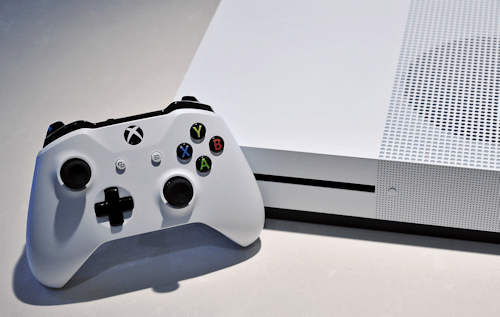
I’ve told this story here before, but those notions all fell through in spectacular fashion in 2016 when I went out one Sunday afternoon to stop by work for just a couple of hours, only to return home to discover that my house had been broken into. One of the (thankfully) relatively small selection of things the burglars made off with was my Xbox 360. Because of my renter’s insurance company’s generous replacement program, not only did I get paid out for the depreciated value of everything I lost, but they’d also pay the full dollar amount to replace certain items. With the Xbox 360 no longer for sale, I got myself an Xbox One S for free. “Just when I thought I was out, they pull me back in!”

With both my partner and I having already invested so much in Xbox, it only made sense for us to continue down that path, especially given Microsoft’s continued treatment of backwards compatibility as a valued part of its ecosystem. While I never upgraded to the impressive Xbox One X, when the Xbox Series came out, I wasted no time upgrading to a Series X. Since then, I’ve only continued to do more and more of my game hoarding with Xbox, although pretty much exclusively digitally. Not unlike Steam, the Xbox Store has had regular, generous sales multiple times a year, making it all too tempting to load up on anything I’m even vaguely interested in. Despite the lack of many exclusives that really excite me, I’ve really enjoyed my time with the Xbox One and Xbox Series consoles, and I still do.

But things have gotten a little weird

Xbox: The Not So Good Times

While the Xbox 360 arguably won the 7th generation with superior online features and only a few notable missteps (the whole “red ring” fiasco chief amongst them) compared to Sony’s slew of facepalming blunders, it started off the next generation quite poorly indeed. As mentioned, Microsoft seemed to be marketing the Xbox One as more of a multimedia machine than a gaming console, and you can’t downplay how much damage the whole always-on DRM fiasco did to their reputation with “core” gamers. Whether or not rumors about Sony planning to follow suit and changing their minds last minute were true, you can’t deny that Sony played that whole thing out to their advantage. Microsoft course-corrected, and a lot of people loved the Xbox One Slim and the later Xbox One X as much more gaming focused machines, but the damage was done and the silliness around all of this (“we have a product for people who aren’t able to get some form of connectivity; it’s called Xbox 360″ – Don Mattrick) lives in gaming culture infamy.

The PS4 was also a lot more powerful than the Xbox One which only reinforced the notion that the Xbox was no longer the best option for “core” gamers. This flip-flopped with the later releases of the PlayStation 4 Pro and the Xbox One X, but the damage was done. While a bit closer together, the Xbox Series X is also more powerful than the PlayStation 5, but the release of the Xbox Series S as a less expensive, lower spec model which Microsoft required studios to support is often blamed for the lack of more impressive technological advancement in the current generation. While this is debatable, if nothing else, there are some specific examples where this clearly impacted availability on Xbox, with the delayed release of Baldur’s Gate 3 being a notable one from recent years.
xbox one s
“You know, I still really like the look of the One S!”

Then we have the matter of Xbox exclusives. While this has always been an element of every console war debate, it truly became an issue for Xbox with the Xbox One and has only gotten worse. Xbox’s exclusives are few and far between, and very few of them have had the appeal of those associated with the PlayStation brand. That’s not to say there are no good exclusives, but a 1:1 comparison isn’t all that favorable. To make matters worse, Xbox started making more and more of their first party games available on PC. While I personally think this is a great thing, it is almost always used as a negative against Xbox in such debates – these titles are no longer platform exclusives, but console exclusives. Since a lot of gamers either own gaming PCs and consoles, or game on PC exclusively, it’s hard to deny that the wider availability of these games means there’s less reason to own an Xbox. Fast forward to 2025, and Xbox is even launching games on PlayStation, with them more or less stating that exclusives are an outdated concept, which raises questions about whether or not Microsoft sees Xbox as more of a publisher than a platform these days. Meanwhile, Sony has recently announced that its taking the opposite approach, and stepping back from its relatively recent move of porting more of its games to PC – they seem to be joining Nintendo by walling their garden back up.

When it comes to particular exclusives, I’m a Halo fan, and it’s hard to not talk about how much cachet the Halo series has lost since Bungie left Microsoft. There have been non-stop issues around the series since the hand-off to 343 Industries. It’s been fixed and further improved since, but the Master Chief Collection, one of the Xbox One’s most attractive exclusives, was a bit of an infamous blunder when first launched. Halo 4, Halo 5, and Halo Infinite are all surrounded by their own controversies as well. A more negative perspective on this could paint this as Microsoft essentially killing the goose that laid the golden egg. While I don’t view the situation quite as harshly, there’s no denying that the Halo franchise isn’t what it used to be. Still, I suppose it won’t be able to consider itself an Xbox console exclusive soon anyway.

Speaking of killing those golden egg laying geese, one odd thing about Microsoft’s acquisition of development studios over the years is that they’ve reportedly been relatively hands off when it comes to managing most of these studios and/or their projects. Going against the stereotype that publishers meddling in development is one of the primary reasons for so many problems with specific game releases, Microsoft has been accused of not meddling enough – leaving studios and their projects to fail due to mismanagement instead of lending their resources to ensure successes. Overall, it feels like we’ve seen more interesting games get cancelled than come out lately. Despite this, Microsoft has continued to gobble up more and more developers, including the insane acquisitions of ZeniMax Media and Activision Blizzard, bringing them under the Xbox Studios umbrella. Complaints about consolidation aside, Xbox fans wouldn’t be silly for thinking these would be massive wins for Microsoft, and yet very little of note has come out of most of these acquisitions.

Despite all of this, Microsoft has since conducted mass layoffs, even closing entire studios. This could be seen as (and indeed, was sold as) trimming the fat, but nothing encapsulates the controversy around this quite like the situation with Japanese studio Tango Gameworks. Tango released Hi-Fi Rush as a bit of a surprise announcement in January 2023, which went on to garner critical acclaim, and yet Tango was included in the May 2024 announcement of studios being shuttered. If the backlash from fans wasn’t already loud enough, Xbox Game Content and Studios head Matt Booty mentioned that Xbox needed more games which could secure “prestige and awards”. The contradiction and lack of logic around that situation was blatant, sealing yet another infamous chapter in Xbox’s history.

It’s hard not to blame a lot of this on Xbox’s focus on their Game Pass service as their primary sales strategy. For fans, it has been hard not to love Game Pass – access to most first party titles and a huge selection of third party titles, including day one access to new first party games. It’s always felt like a great deal, and the number of times a new game has been released that had some of my friends worrying about justifying the purchase, only for me to have it for “free” would have easily justified the cost if I was the type of gamer who played more games on day one. Still, from the early days critics have wondered how this was sustainable – surely Microsoft and individual third party studios would be leaving a huge amount of money from sales on the table in many cases. It can also be argued that services like Game Pass, along with huge sales on platforms like Steam, lower the perceived value of games, which isn’t a great thing when games cost more to make every year. More relevant to the discussion of studio closures, however, is a shift from looking at critical reception and sales numbers to looking at how launches of new titles on Game Pass impact subscriptions.
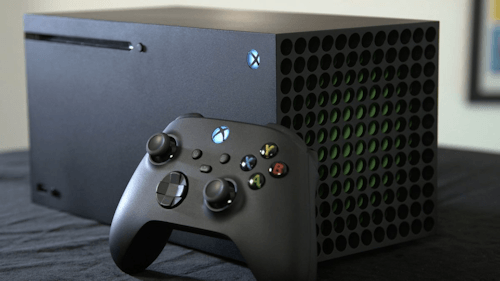
xbox series x
“The Series X. I love that hint of green!”

Another more recent controversy related to Game Pass has been the price hikes. Game Pass Ultimate went from $14.99 a month to $16.99 in 2023, then to $19.99 in 2024. At that point, the price was feeling a bit steep, but still felt like a fairly good deal, especially with the inclusion of Game Pass on PC and other services like EA Play. In 2025 the price went from $19.99 to $29.99, which kind of blew up the Internet. So many people cancelled their subscriptions as a result that Microsoft’s account management went down for a bit, and even I, someone who has had Game Pass since its inception, and Xbox Live Gold before that, downgraded from Ultimate to Premium. The price crossed over what I was willing to pay every month for a service like this, which is double the price of PlayStation Plus Premium, for the record, and unless this was a deliberate move to justify moving away from their Game Pass strategy, it felt like a massive blunder on Xbox’s part. Of course I have no idea what the numbers actually look like, but if social media is to be believed, a lot of people chose to jump off the Xbox bandwagon at this point.

When it comes to changes in strategy, starting in late 2024 we saw an advertising campaign that focused on, between Xbox on PC and Xbox Cloud Gaming, the ability to play Xbox games on just about anything, with the slogan “This is an Xbox”. This aligned with the previously mentioned gradual shift to have just about all first party games available on PC, this has had people wonder if we’d see another generation of Xbox, and if we did, if it would be made by Microsoft themselves or perhaps licensed out to other manufacturers as some other consoles have done in the past. The release of the ROG Ally Xbox handheld suggested that neither of these is an impossibility, since despite the branding, it was made by Asus, and only supported PC games with no Xbox compatibility layer to boot.

Most recently we’ve had a bit of an abrupt changing of the guard at Xbox, with Phil Spencer and Sarah Bond both out. Phil Spencer has been a divisive figure, as despite being the CEO of Microsoft Gaming since not long after the Xbox One launch and therefore being, in one way or another, accountable for most of the negative things listed here, he seemed to do a lot right in terms of recovering from that terrible Xbox One launch, and his passion for gaming actually felt genuine, which is pretty rare in the industry. Still, his boilerplate corpo-speak communications around things like the aforementioned layoffs and studio closures does bring some of this into question. Still, it’s much more concerning that he was replaced by a former executive in AI at Microsoft, especially when AI is already being blamed for so many layoffs and other random enshitification in gaming and in tech in general. While I don’t think she was put in place to kill Xbox, as some doomsayers have theorized, I do suspect this will herald some sort of major changes in direction for Xbox.

Yet, when you add all of this up, it really does seem like Xbox has taken themselves out of the game. Sales have suffered so much this generation that there was a news story being widely discussed about the third largest retailer in the world, Costco, based just down the street from Microsoft, no longer carrying Xbox consoles. Things sure seem pretty damn bleak right now.

Xbox: The Future?

To end this on a bit more of a positive note, the next Xbox, code named Project Helix, was officially unveiled at GDC 2026, and I’ve been surprised by how positive a lot of the response has been. As suspected, we know this next generation of Xbox will be yet another step towards the platform essentially being a Windows PC, but given the impressive Windows 11 “Xbox Mode” that debuted with the Rog Ally Xbox, I think we’d be safe to look at this more as an Xbox that can play PC games than a PC that can play Xbox games. That said, I’m particularly curious about how this new Xbox will handle allowing other stores, like Steam, to run on the platform, and indeed, if they will port their entire experience (including backwards compatibility with older Xbox 360 and original Xbox games) to the Windows based Xbox app. Here’s hoping any skepticism around Project Helix and Xbox Gaming’s new CEO is just that, but I can’t blame anyone for betting against Xbox at this point. Even then, as impressed as I’ve been with the PlayStation 4 and 5, I don’t think we’d want to exist in a world where Sony doesn’t have any legitimate competition – if you were around in those days, and not a Sony fanboy, I’d guess you remember Sony’s insane hubris during the first couple of years of the PS3 era. Yikes.

Images stolen from some low effort Google Images searches.
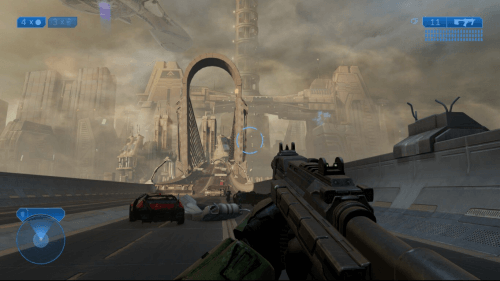
Halo Fest 2020 – Halo 2

The Story So Far: The “Master Chief”, a genetically modified “Spartan” supersoldier, is woken up from cryogenic sleep aboard a UNSC cruiser during an attack by an alien alliance known as the Covenant. With no options left and a plan to crash-land the ship on a mysterious artificial ring world nearby, the Master Chief is entrusted with safeguarding the ship’s AI, Cortana. On the surface of the ring the pair regroups with other survivors skirmishing with Covenant forces and formulates a plan to breach a facility that they hope will direct them to the ring’s central control room. In addition to learning that the Covenant worships the race who originally constructed this “Halo” installation, the Forerunners, Cortana discovers a weapons cache which might help turn the tide of the battle. It turns out that this “weapon” is a sample of a parasitic alien species called the Flood. Accidentally released, the Flood quickly begins to spread, overwhelming both the human survivors and Covenant forces alike. With the assistance of the installation’s caretaker, an AI called 343 Guilty Spark, the pair is guided to the ring’s control room so they can activate its defenses. Cortana stops the activation at the last moment, having learned about the nature of the defenses in question – the installation itself is a superweapon designed to combat the Flood by eradicating all sentient life in the galaxy. Not really loving that idea, the pair head to the wreckage of their ship to attempt to trigger a detonation that will destroy the entire installation and prevent Guilty Spark from carrying out its apocalyptic task. Successful, Master Chief and Cortana are able to locate a still-operational fighter in the wreckage and make it off of the installation just in time.

Halo 2 was hotly anticipated by Halo fans everywhere, setting pre-order records and ending up with massive sales and an amazing reception. Despite all of this, I somehow didn’t give too much of a toss about it. The truth is that 2004 was probably the peak of my involvement in online gaming and my clan at the time, The Praetorian Guard, was still playing America’s Army and Planetside as well as dabbling in some MMORPGs, with most of us waiting impatiently for World of Warcraft to finally be released. My brother, who had introduced me to Halo, brought home a copy of Halo 2 in short order too, but the hook didn’t quite stick the second time.

Back on Earth, at last.
“Back on Earth, at last.”

Halo 2 was quite a different animal than the original Halo: Combat Evolved. The game engine was rebuilt from the ground up and it really showed – the physics felt different, the game looked different, the weapons felt different, etc. On top of that, there were some huge gameplay differences too. One of the more notable ones was the overhaul of the health system. Now instead of having a rechargeable shield layered on top of a more traditional health bar, you simply have rechargeable shields which sit on top of a tiny buffer of unspecified, also regenerating health. This made tracking down health packs a thing of the past and really reinforced the importance of ducking out of combat to quickly recharge. While this feels quite jarring when playing Halo: CE and Halo 2 back to back, once used to it, I think I actually prefer Halo 2’s simplified take.

Another more “back of the box” change was the addition of dual wielding weapons. While nifty, it rarely felt advantageous to me since holding a second weapon came at the expense of being able to chuck grenades or melee attack, two staples of Halo: CE combat. On the other hand, basic melee attacks felt a lot less effective anyway, even if Bungie did decide to add a bit more depth to them by taking into account movement and what weapons you’re holding when calculating damage. Speaking of weapons, shocking at the time, my beloved assault rifle had been traded out for this new battle rifle thing, along with a new (weak and obviously intended to be dual wielded) submachine gun. While I’d eventually warm up to the battle rifle in future Halo games, neither gun felt like an adequate replacement for the assault rifle. There were numerous other weapon differences too, like the shotgun being all but ruined with its lower rate of fire and shorter range, and some new weapons like the Elite’s energy sword and Brute’s brute shot. Most of these special weapons were quite awesome though, thankfully.

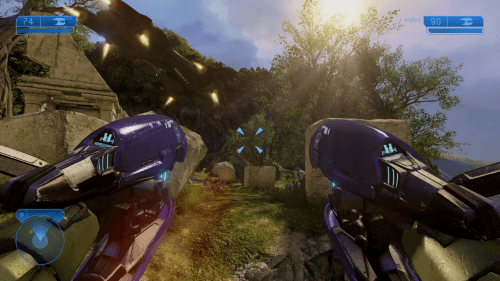
That said, I love dual wielding plasma rifles.
“That said, I love dual wielding plasma rifles.”

Another big change to the core gameplay was to vehicles, and like the aforementioned melee changes, the theme here is added complexity and depth. Unlike in Halo: CE, where vehicles were totally invulnerable, there’s now a vehicle damage system in which the vehicles degrade with damage until they eventually blow up and become unusable. While I sometimes miss Halo: CE’s simpler system, Halo 2’s updates feel more advanced and ultimately much better, even if it can be incredibly disheartening to watch your ride disintegrate around you. The graphical effects of having pieces fly off your vehicle as it gets smashed up by a huge explosion (or a poorly planned jump, as is often the case in the Warthog) definitely only adds to the already impressive spectacle. It also pairs nicely with the new ability to board and assault and/or take over vehicles, critically leveling the playing field a bit more, especially in multiplayer matches.

As for level design, Halo 2’s maps are constrained to open arenas connected by corridors. The larger arenas sometimes come close, but nothing really quite captures the feeling of Halo: CE’s more open environments and battlefields. Despite being more linear, the backtracking and repetitious sections are mostly absent, and even when present, aren’t anything like the more tedious sections of Halo: CE. For better or for worse, Halo 2 feels a lot closer to a modern first person shooter than its predecessor. One other difference I noted was how the later levels often feel more chaotic in Halo 2. “Containment Zone” for example, features some insane battles as Elites, Covenant loyalists, Forerunner drones, and the Flood all go at it, often with an array of vehicles and powerful weapons to spice things up. The insanity translates into more of a challenge on higher difficulties too. Playing this on “Heroic” difficulty once again, many of these encounters felt a bit untuned, with too many enemies that were a bit too bullet-spongy for my tastes, even if they were a bit less frustrating than the harder encounters in Halo: CE.

Hooray for vehicle damage?
“Hooray for vehicle damage?”

So, while none of the above is bad per say, in fact most people would call most of these changes improvements, for someone who loved Halo: CE but didn’t get caught up in the hype around Halo 2, all added up, it was a bit of a hard pill to swallow. I still dabbled with Halo 2, of course, occasionally playing a few matches of Slayer with my brother and my dad, but it didn’t come anywhere close to pulling me away from my PC. In fact, I don’t think I ever made any real attempt to get into the single player campaign until years later when I made a concerted effort to beat all of my old Xbox games before finally moving on to the Xbox 360.

One aspect of Halo 2 that was closer to universally unpopular was the addition of a second protagonist. You take control of the Arbiter, an Elite who had been entrusted with a series of special missions which has him ultimately crossing paths with the Master Chief by the end of the campaign. A lot of people hated playing this random alien instead of their beloved Spartan, but I and many others actually thought the Arbiter’s story was pretty damn cool, as was the addition of a new Covenant adversary key to this storyline in the powerful Brutes. Perhaps spreading the missions where you play as the Arbiter out a bit more and having less of them overall would have helped avoid people feeling that the Master Chief was being overshadowed, but who knows.

As with last time, for this playthrough I played Halo 2: Anniversary, included with the Xbox One Master Chief Collection. Like with Halo: CE, this was my first time playing the Anniversary edition remaster, so naturally I’ll pick the particulars of this version apart a little too.

...and this one's Great Journey, are the same!
“…and this one’s Great Journey, are the same!”

The first thing that stands out about this new version of Halo 2 are the graphics. While Halo: CE Anniversary still looked a tiny bit rough around the edges in spots, Halo 2: Anniversary is a total triumph. First, they got the legendary Blur to produce beautiful new cinematic cutscenes to replace the previous in-engine ones. These new cutscenes are based directly on the original ones but, with the higher fidelity, they feel a lot more expressive to me. I particularly love the new Gravemind scenes! I also can’t escape the fact that the game, given a similar new “coat of paint” to its in-game graphics as Halo: CE, wears them a lot better. I’d largely attribute it to how much more advanced Halo 2 was – given its release being so late in the cycle of the original Xbox, it was practically an early Xbox 360 game. The remaster being one generation newer, targeted for the Xbox One instead of the Xbox 360, doesn’t hurt either. On top of that, while some areas of the game do look radically different than their original incarnations, for the most part it feels like 343 was much more respectful of the game’s aesthetics this time around. Also, on a totally subjective note, I could never stand how oddly washed out Halo 2 looked, an issue that has been absolutely resolved in this remaster.

Like Halo: CE Anniversary, the sound effects and soundtrack have been completely re-recorded too. The original soundtrack was already a masterpiece, so while which renditions you prefer is definitely a matter of opinion, there’s certainly nothing wrong with the new tracks. On the other hand, as with last time, I find the new mix to be a bit distracting. It’s not quite as bad about overpowering the dialog but it can certainly drown out other sound effects. A great example of this is the level “Uprising” in which the ambient jungle noises and sounds of distant battle are all but missing because the music is so much louder. A nitpick, sure, but these little things do make a difference. Halo 2: Anniversary also includes the awesome on-demand instant swap between old and new aesthetics, which I’m mentioning now, because it also includes swapping between those original and remastered sound effects and the soundtrack now. Excellent.

The Arbiter heading to The Anodyne Spirit on High Charity.
“The Arbiter heading to The Anodyne Spirit on High Charity.”

This new version also revisits the idea of including hidden terminals in each level. The cutscenes triggered by interacting with the terminals focus on the history of the Covenant, and particularly the concept of the Arbiter. Although I did like the terminal cutscenes from Halo CE: Anniversary, I found these ones so much more interesting, and more likely to be appreciated by a first time player too. The additional background on the Arbiter only made me appreciate his role in the story that much more. Very cool stuff. That said, Halo 2’s story (which, like last time, I’ll wait to spoil in the next post) didn’t leave as many seemingly crucial background details out and it’s told in a much more cohesive way overall, so these scenes really do feel like bonus content rather than a necessary attempt to fill in gaps.

In the end, Halo 2 is a mixed bag for me. On one hand, the game still undeniably feels like a bit of a departure from what I loved about Halo: CE. On the other hand, it’s a richer and more skillful effort, and the lovingly crafted makeover it received with Anniversary only reinforces that, feeling almost as easy to pick up and play today as it would have 15 years ago. That is, of course, a massive compliment to both Bungie and 343 alike. How impressed I am with this remaster does make me just a bit nervous to return to Halo 3, which has yet to receive any such overhaul. More on that next time though!

Screenshots taken from the Steam community for the PC version of Halo: The Master Chief Collection.

Halo Fest 2020 – Combat Evolved

Halo: Combat Evolved rounds out a trio of FPS games, along with GoldenEye and Perfect Dark on the Nintendo 64, that my brother and I did some serious bonding over in my late teens/young adult years while he was living back with my family – we’d watch each other’s playthroughs, hop into cooperative missions together from time to time, and of course, play tons of “Slayer” deathmatch against one another. Unusually, my dad, not much of a gamer, was also strangely drawn to Halo, often filling a third slot in our split screen multiplayer sessions. My dad really got into it and probably spent far more time with the single player campaigns of the first Halo games than either of us did. In fact, through sheer force of will (I imagine assisted by unabashed abuse of the checkpoint system) I think he even eventually beat them both on “Legendary” difficulty.

Well, well, well. What do we have here?”
“Well, well, well. What do we have here?”

Beyond what it meant to me personally, Halo: CE was a special game. I still vividly recall my brother bringing home a brand new Xbox that he’d unwisely blown a chunk of a paycheck on, hyping us up on how awesome Halo was. At first I wasn’t all that impressed with what it was doing, since games like Half Life and Unreal had already started evolving the FPS genre in similar ways on PC, but I was quickly won over by its unique aesthetic, mysterious science fiction storyline, slick, polished execution, and almost perfect early implementation of dual analog stick FPS controls. I found the less linear, more open world sections (complete with crazy vehicles and more advanced AI than I’d seen up to that point) particularly compelling. As much as I had enjoyed some of the previous console FPS games, it was Halo that finally really sold the concept. To me, and to millions of others, it seems.

My enjoyment of Halo wasn’t isolated to consoles though – I preordered Gearbox’s PC port of Halo: CE mostly for the promise of at last being able to play multiplayer online, but I ended up being quite underwhelmed by it. The netcode in particular wasn’t quite as well suited for those of us pitiful enough to still be rocking dial-up Internet in 2002 as a lot of the other games I’d been playing on PC were. In more recent years that PC port of Halo: CE became the multiplayer game of choice for me and a couple of my co-workers during our breaks, and we still occasionally get together for online multiplayer sessions using the Xbox One’s Halo: The Master Chief Collection to dust off our old favorite maps to this very day. While multiplayer really isn’t in the scope of Halo Fest 2020, I can’t go without at least mentioning it since it’s such a huge part of Halo: CE (and the rest of the franchise’s) success, and there’s definitely still a ton of fun to be had there.

Alright, tutorial time!
“Alright, tutorial time!”

On to this playthrough of Halo: Combat Evolved! I should note that I’m playing through the version of the Halo: Combat Evolved Anniversary included with the aforementioned Xbox One MCC. This was my first time playing the Anniversary edition remaster, and given that I’ve played through Halo: CE’s single player levels more times than I can recall, I’m going to spend much of my time here discussing that release more than the game overall.

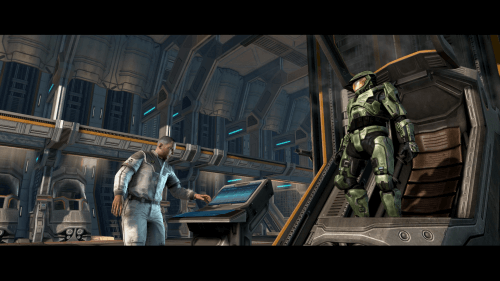
The first thing that I noticed upon loading into the first level of Halo: CE Anniversary was the lack of the short tutorial section based around Master Chief waking up out of cryo-sleep. This immediately left a sour taste in my mouth. I mean, what the fuck? They removed the tutorial? What else did they remove? ARGH! Later I realized that this was because I started the campaign in “Heroic” difficutly, which skips the tutorial just as it’s always done – nothing to do with the new version. Oops. Okay, well, of course, my attention then snapped back to the presentation.

While beautiful, 343 Guilty Spark feels quite different from the original.
“While beautiful, 343 Guilty Spark feels quite different from the original.”

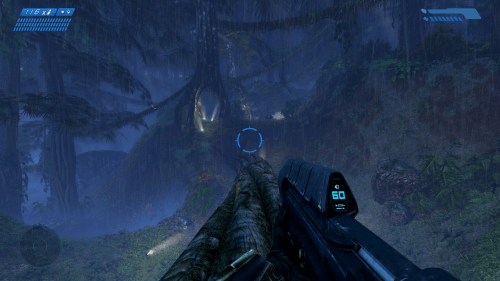
All of the graphics in the Anniversary edition have been lovingly and painstakingly remastered to make the game look a little bit more suitable to newer generations of consoles. The remaster also makes efforts to bring Halo: CE in-line stylistically with the latter games in the series, particularly Halo: Reach. For the most part, I think this was a rather successful effort. The new artwork is mostly great and overall the game looks how most people would likely remember it looking after not having played it for years. Still, the change in style also means it is often quite a departure from Halo: CE’s original graphics, which were of course Bungie’s first stab at what would eventually evolve into what we got in Reach. The dark purples of the covenant forces have been replaced by lighter hues, the architecture of the buildings on Installation 04 now have a lot more detail, but losing much of their cold, stark character as a result. The dense foggy swamp of “343 Guilty Spark” is now a much more lush, and much less creepy, jungle. The list goes on and on.

This might have all been less obvious if 343 didn’t include the fantastic addition of being able to instantly toggle between new and old graphics with the press of a button. I found myself doing this quite often to really take in the differences. Surprisingly, sometimes the original graphics “up-resed” still looked quite acceptable, even rivaling the new ones, and it took me a few seconds to realize I was accidentally still on the old graphics on more than one occasion. They would have been even better if they weren’t based on the aforementioned flawed PC port. That said, the outdoors sections of the game are where the remastered graphics clearly blow the old ones out of the water. The lighting on the indoor sections is quite a bit different too, and while some might protest a loss in tension, some sections are much easier to navigate as a result. “The Library” is the prime example; while still being a Flood infested, repetitive slog, you can probably remove getting turned around and lost multiple times from your list of its aggravations now.

Ugh. The Library...
“Ugh. The Library…”

While discussing potentially unpopular changes, let’s talk sound. The music has been completely rerecorded for the Anniversary edition, and it’s mostly great. The biggest issue I have here is with mixing – there were definitely many points where the music was drowning out the in-game dialog, which is an issue I don’t remember having with the original game. They did eventually add the option to toggle between soundtracks to keep the purists happy, which is probably a good thing given how beloved the Halo: CE soundtrack is. The sound effects have also been completely redone. Again, they did a great job here, and most people probably won’t even notice, but some of the effects do indeed sound radically different which I’m sure irks quite a lot of the more hardcore Halo fan-base. While I believe they’ve included an option to use classic sound effects when starting a single player session in a recent patch, it’s still not instantly toggleable like the graphics are, unfortunately.

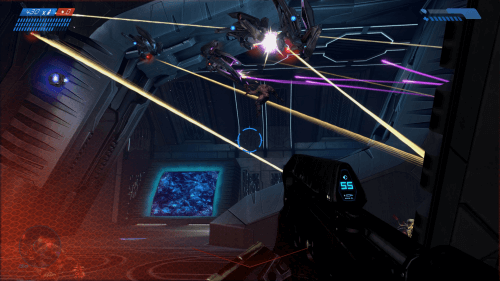
As I mentioned, I went through the campaign in “Heroic” difficulty, which is way more of a pain in the ass than I remembered it being. There were definitely a few sections where I had to bash my head against the scenario I found my last checkpoint throwing me into over and over until I managed to work out a strategy to survive, or at least had a rare bit of good luck with. Honestly, this didn’t feel much better than “save scumming” through the difficulty, and was seriously frustrating. Maybe this is just a case of me getting older and my l33t FPS skillz withering away though. Finally, as if Heroic didn’t make me hate myself enough, Anniversary added the “skull” system found in later Halo games, and while I did go out of my way to collect all of the skulls, I certainly didn’t activate any of them as part of my normal playthrough. Searching for them was a fun diversion, at least!

As annoying as the later levels can be, they have their moments.
“As annoying as the later levels can be, they have their moments.”

Throwing back to a complaint I’ve always had about Halo: CE, I hate how goddamn repetitive and long some of the levels in its campaign are. I’m looking at you “Assault on the Control Room”! At least the checkpoints come frequently enough to subdivide the levels into more bite-sized chunks pretty well. The infamous fact that you then have to backtrack through a few of them in later levels on top of that still almost feels like a direct middle finger from the developers to the player though. These rehashed areas tend to play out just differently enough to just barely work. The saving grace here is that, despite all of this, the campaign overall is fairly short. Again, this just barely works for me, and thankfully Bungie never really repeated these mistakes again in later entries.

Halo: CE’s story has always been a little odd. The overall plot, which I’ll recap in my next entry, is easy enough to understand, sure, but there are so many vaugeries in its details and its backstory that only later get fleshed out as the series progresses, and even then, I’m guessing (having never read them) those are mostly only truly explained in the novels. The Anniversary edition adds a hidden terminal to each level that can be triggered for a short animated cutscene that goes a long way to help explain flesh out the origins of Installation 04, Guilty Spark 343, and the Flood. I have to imagine that some of these would be utterly bewildering to new players, but to a Halo veteran like me they’re pretty damn cool and very much appreciated.

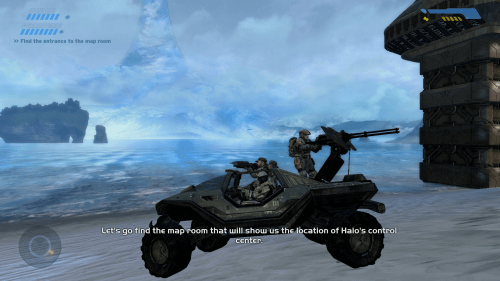
I never get sick of The Silent Cartographer, especially in co-op!
“I never get sick of The Silent Cartographer, especially in co-op!”

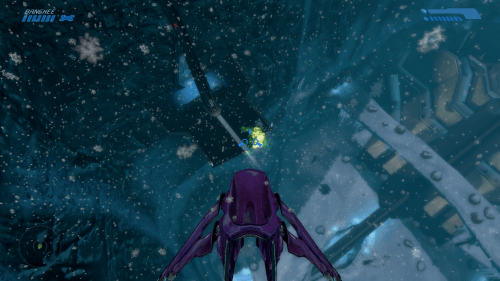
You know, Halo: CE still managed to be a fun ride despite its old age and more well-known shortcomings. The first time you load up a Warthog with marines and go tearing down the beaches in “The Silent Cartographer”, out maneuver a charging Hunter to land that final shotgun blast to the small of its back, or perfectly stick a plasma grenade to a rampaging Banshee as it dives down from high above you, you’ll forget all about this game being almost 20 years old. To me, it remains a reasonably timeless game, and the Anniversary enhancements should only help it to feel that way a little longer.

Now onto a game whose campaign I’ve somehow only completed once, Halo 2!

Screenshots taken from the Steam community for the PC version of Halo: The Master Chief Collection.