Category Archives: Ancient History

A (Personal) Battlefield Retrospective

Fresh off of somehow managing to dump 8 or 9 hours into the recent Battlefield 6 open beta, with all of the claims of it being something of a “return to form” after the lackluster performance of the last two games, I started to wonder exactly what that “form” is, or at least what people really mean when they say that sort of thing. While it may mean something similar to a majority of people, it’s totally subjective, I’m sure, and that conclusion has led me to reflecting a lot on my own time with the Battlefield series.
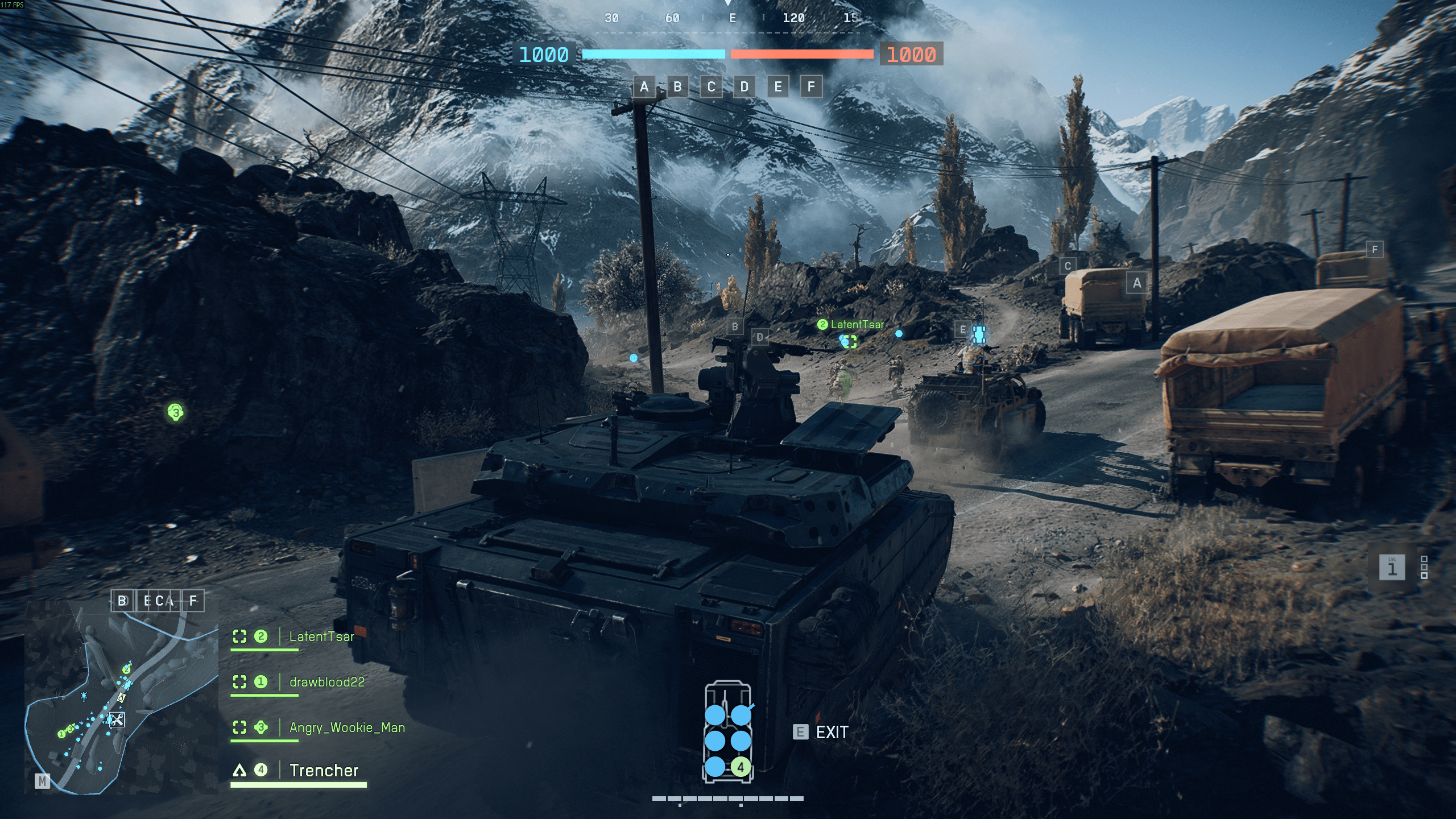
Hitching a ride to the frontline in the BF6 open beta.
“Hitchting a ride to the frontline in the BF6 open beta.”

While I’ve mentioned it once or twice here over the years, I’ve never gone into my absolute adoration for Battlefield 1942. One fateful day a co-worker who I occasionally ran into, and probably the only gamer I knew of at that place, was telling me all about how he’d just started playing this new “Battlefield” game and was talking about how you could do anything from crew a tank, fly a plane, or even captain a battleship in these massive, crazy online battles. This sounded a lot like World War II Online, which I’d been intrigued by but was always intimidated by due to its reputation for having clunky, simulation-like controls, but he assured me that it played more like a typical first person shooter. I was skeptical but curious. After doing a bit research I concluded that I just had to try it out, and picked up the game in something around November 2002. It was apparently a good recommendation, as I put an unspeakable amount of time into its multiplayer between 2002 and 2003, and even recruited a lot of other friends and co-workers to the cause. While I played a ton of mostly asynchronous “door” games like Legend of the Red Dragon on dial-up BBSes, Doom modem to modem, and Quake on the Internet in the 90s, apart from the very different Ultima Online, BF1942 was the first online game I was utterly obsessed with.

I was partial to infantry roles and focused on *gasp* playing the objectives, which in its default Conquest game mode, was kind of the point. I’m not a total dork though – I always enjoyed abusing tanks when one happened to be available too, of course. I also remember going out and buying a new flight stick so I could better handle the game’s relatively simple but fun to fly aircraft, and while I was never the best pilot out there (to this day, there are some people that have legitimately scary levels of skill when it comes to flying in these games) I more or less mastered the bonus Coral Sea map and would consistently clean house on it. F4U Corsairs and Zeros winding around those hilly islands is a core gaming memory for me, and I even made my own dog fighting map, filled end to end with huge mountains and massive valleys to make those kinds of pursuits even more fun. It also inspired me to take one of my first stabs at video editing, putting together a video of me dog fighting on Coral Sea in the pre-YouTube days. Unfortunately I’d have to strip out the sick Iron Maiden soundtrack if I were to upload it anywhere, plus the video quality is likely beyond abysmal by today’s standards.
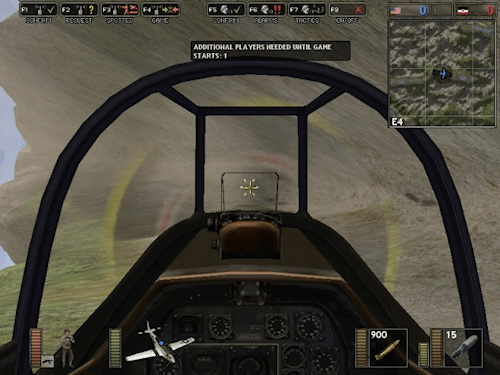
Flying through a canyon (sideways) in my crappy BF1942 map.
“Flying through a canyon (sideways) in my crappy BF1942 map.”

Probably reading about it on a Battlefield forum or a gaming news site, I ended up joining a semi-private tournament community called Battle for Europe. The basic idea behind BFE (and the other communities I’m about to mention) was actually kind of simple – add a persistent, progressive campaign around Battlefield 1942’s already huge battles. The fact that the game included maps representing battles all around World War II and players could pick from axis and allied forces meant all you’d need to do is organize regular matches, keep track of losses and victories, and tie it all together with a Risk-like campaign map. It was a great idea, though it might sound quaint these days since persistent player progression is now fairly standard, and while the Battlefield series may not have any sort of long term campaign progression, other games like Foxhole and the aforementioned World War II Online have done this to varying degrees too. (Editor’s note: For posterity, it’s worth noting that BFE was probably better known for applying this concept to other World War II games released around that time such as Day of Defeat and Call of Duty, and ran for several years after this.)

The battles themselves were absolutely epic! We filled out the 64 player slots on our server, plus extra observers, and had a ton of people on standby. How did we account for having more than 64 people in the community who wanted to play? Easy! We made the matches last as long as possible and ran these battles all day. Literally hours on end, with the idea that players could tag in and out, ultimately supporting a lot more players, and across multiple timezones to boot. As a whole our player base represented a wide variety of skill levels, though of course most of the types of people who’d join a dedicated community like this were at least above average, and the battles would be correspondingly vicious. While not quite a “milsim” or realism community of the sort that would later become popular with a variety of military shooters, we also had a player ranking system in which players could advance, as well as take on particular roles which, given the limited number of vehicles and need for a well balanced roster, was also a must. Leadership was especially vital if your side actually wanted to win, and I soon found myself being promoted to a squad leader, and then to an NCO role where I was in charge of something like 50 players. Speaking of, strategy was an interesting aspect of these long matches, as unlike a typical clan versus clan league or tournament match, there was way more than enough time for the other side to figure out exactly what you were doing and adjust to it, which made active leadership all that more important.

Creeping up to an enemy spawn in a BF1942 WGO match.
“Creeping up to an enemy spawn in a BF1942 WGO match.”

The reasons were a bit hazy at the time, never mind today, but there was a growing air of discontent around much of the BFE BF1942 community leadership, and as is often the case, there were people who had their own ideas of how they could do the whole thing better waiting in the wings. Several of the more vocal community members banded together to leave BFE and “roll their own” calling it War Games Online. With many of those involved being people I liked and respected, I was asked and accepted to come along for the ride, thus becoming one of the founders and administrators of this new community. I also signed up to help with the development of our new site which we had some pretty cool ideas for, such as an interactive campaign map. While this would take some time, we went ahead and launched our first campaign as something of a proof-of-concept. I still have fairly visceral memories of at least one intense and chaotic match on one of the semi-asymmetrical Road to Rome maps, which were new at the time. Sadly the whole thing went a bit pear shaped pretty quickly due to the head of our new community suddenly stepping down. As he wanted to maintain the WGO name, the rest of the leadership council spun it off into yet another new community called Global Conflict. I was starting to play Battlefield 1942 less and less by this point thanks to other distractions (namely Planetside) and I bowed out very early into GC’s life. While I ultimately had very little influence on what Global Conflict would become, it lived on through various games and is still around in some form today, which is very cool to see.

All that, and I didn’t even mention the fantastic Desert Combat. Desert Combat was a massive total conversion mod that introduced a ton of new weapons, vehicles, and maps to the game, shifting its focus from World War II to a now very familiar modern setting. While I never played it in any organized way, I spent a huge amount of time with it, and have especially fond memories of huge, immersive tank battles in desert maps, and there was absolutely nothing like hunting ground targets in an A-10 or SU-25 on the classic BF1942 map El Alamein. (Editor’s Note: Like many old games and mods, even ones as popular as Desert Combat was, there’s little detail online about it, though I stumbled upon this excellent series of posts about the game that I can’t help but to share – Part 1, Part 2, Part 3, Part 4)
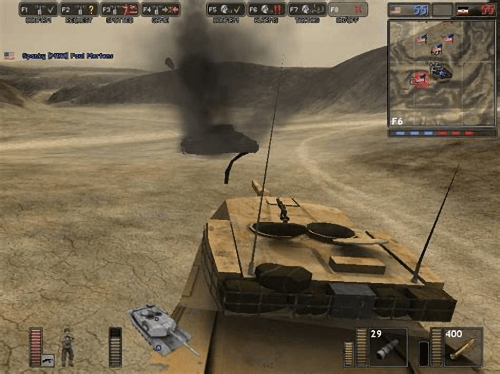
I loved tank battles in BF1942 but there was nothing like Desert Combat.
“I loved tank battles in BF1942 but there was nothing like Desert Combat.”

Another reason that Battlefield 1942 (and Desert Combat) is important to me is that it is a rare example of my dad really getting into a game. My dad’s taste in games has always been totally enigmatic to me. Simply put, certain seemingly random games over the years have really grabbed him, but attempts to understand his tastes and turn him onto other, similar games has usually been met with a lukewarm response at best. He’d always been a World War II nerd, and as I was still living with my parents at the time, I showed him BF1942. Not only did he think it looked cool, but he watched me play round after round, eventually asking me to let him play, which then became a regular thing. This was kicked into overdrive when I showed him Desert Combat, and one evening coming home from work to find him on my PC playing a match. My dad barely touched computers, so the fact that he figured out how to get online, start up Battlefield, and get into a match all by himself was kind of shocking to me. Some time later I built a new computer for my brother which came with the added bonus of enabling my dad and I to play together. With one of us driving/piloting and one of us gunning DC’s various helicopters, planes, and tanks, mowing down endless hordes of bots was a hell of a lot of fun.

Around the time my excitement for Battlefield 1942 started to wane Planetside came into my life and in most ways supplanted it, though there was a brief time some months later when I got a little burnt out on Planetside and decided to go back to Battlefield 1942, even trying out for a semi-sweaty clan called The Devil’s Brigade. They had kind of a template for how they’d assess potential new recruits, running me through various exercises that involved things like attacking a small bunker with multiple clan members defending it, and inversely, attempting to defend solo as they relentlessly attacked it. While my skills probably peaked before quitting to play Planetside, I was still pretty decent at the game, and it was actually kind of a thrill to be tested like that. I recall doing so-so overall, though I wasn’t exactly sure how well I was supposed to do in these scenarios, and I got quite a few kills against other members of the clan that I thought would be sure to impress, and sure enough, I was accepted. They seemed like a cool group of guys and I was really looking forward to playing with them, but I also felt like I owed my loyalty to my existing friends in my Planetside outfit, The Praetorian Guard, more than any potential new ones there, resulting in having a change of heart and regretfully bowing out of TDB before putting much time in with them at all.
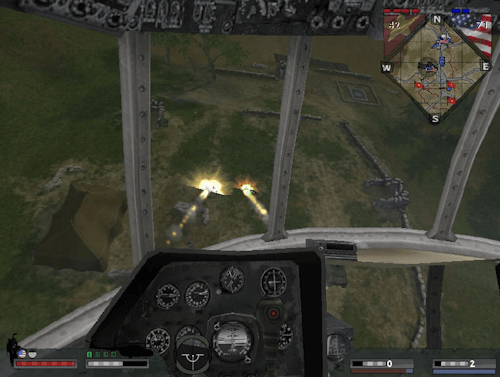
Choppers were freakin' everywhere in Battlefield Vietnam.
“Choppers were freakin’ everywhere in Battlefield Vietnam.”

After TPG’s original stint as a Planetside outfit slowed down, we were constantly dabbling in various other games together, sometimes in a fairly organized way, but often times we’d just all just squad up and hop into public games, not really employing all that much teamwork or anything. When Battlefield Vietnam was released in 2004 I and several others in the clan were hyped enough for it to pre-order it or otherwise grab it on launch day, and we played it together as a semi-disorganized group quite a bit. Unfortunately there was something about Battlefield Vietnam that just didn’t gel right for me. I don’t know what it was – the map designs, the asymmetrical armies, the particular combination of vehicles and weapons, the helicopter controls when compared against DC’s, subtle changes to the engine, or maybe some odd mix of all of those? Of course, I know it’s one of the more fondly remembered older titles in the series so I’m not claiming to be in the right here, but I really only kept playing it to play with my friends, with a dwindling hope that maybe something would eventually click.
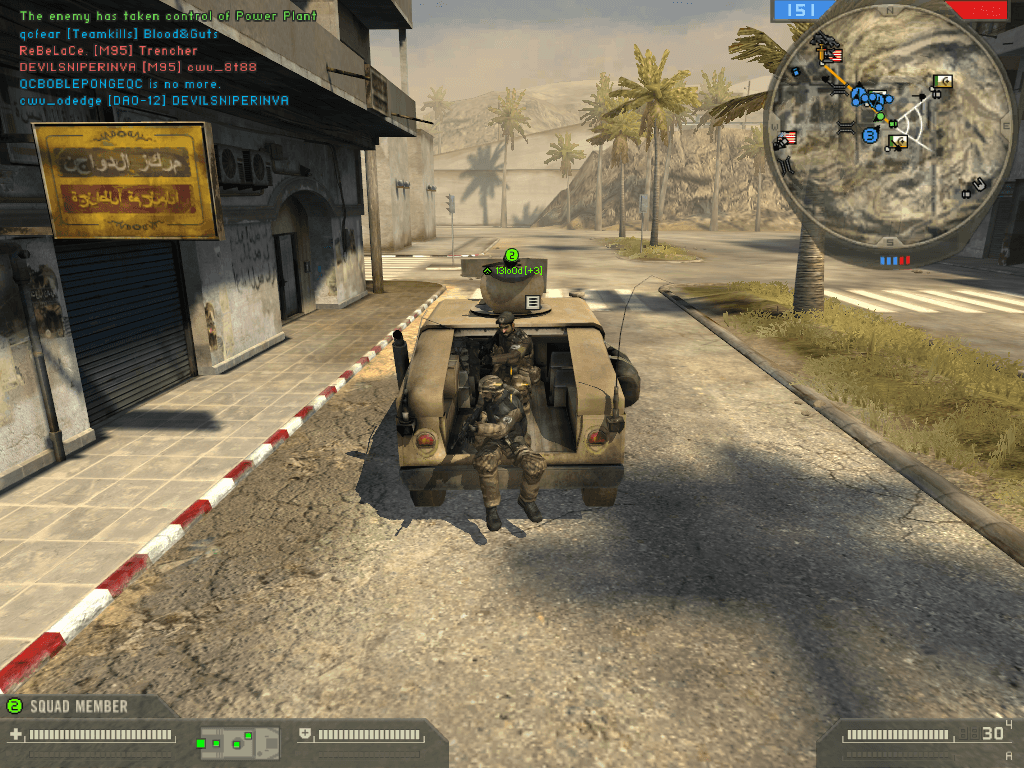
Hitching a ride with my old TPG buddy Blood in BF2.
“Hitching a ride with my old TPG buddy Blood in BF2.”

It’s a similar story with Battlefield 2. I was extremely hyped for an official DICE take on what we got earlier with Desert Combat, especially since the guys who made DC would be helping out, and there were a lot of undeniably cool enhancements to the engine and the gameplay in general, including a new squad system, persistent player progression (which would be a staple of the series from that point on) and the introduction of the RTS-like commander mode that saw one person on each team giving orders, dropping supplies, and otherwise attempting to direct and assist the fight from afar. When the Battlefield 2 demo built around the Gulf of Oman map dropped, a few of us played it like absolute madmen and really, really dug it. When the full game was released, most of the core members of TPG dove in as well, though it ended up not hooking me to anywhere close to the level I expected it to. Looking back now, I honestly don’t remember why that was – perhaps it was a similar situation as with Battlefield Vietnam, though I also have some vague recollections of having some technical issues with the game that might have kept me from playing as much as I wanted to. As an aside, I did briefly return to BF2 years later to play with some of its bigger mods, as mentioned here.
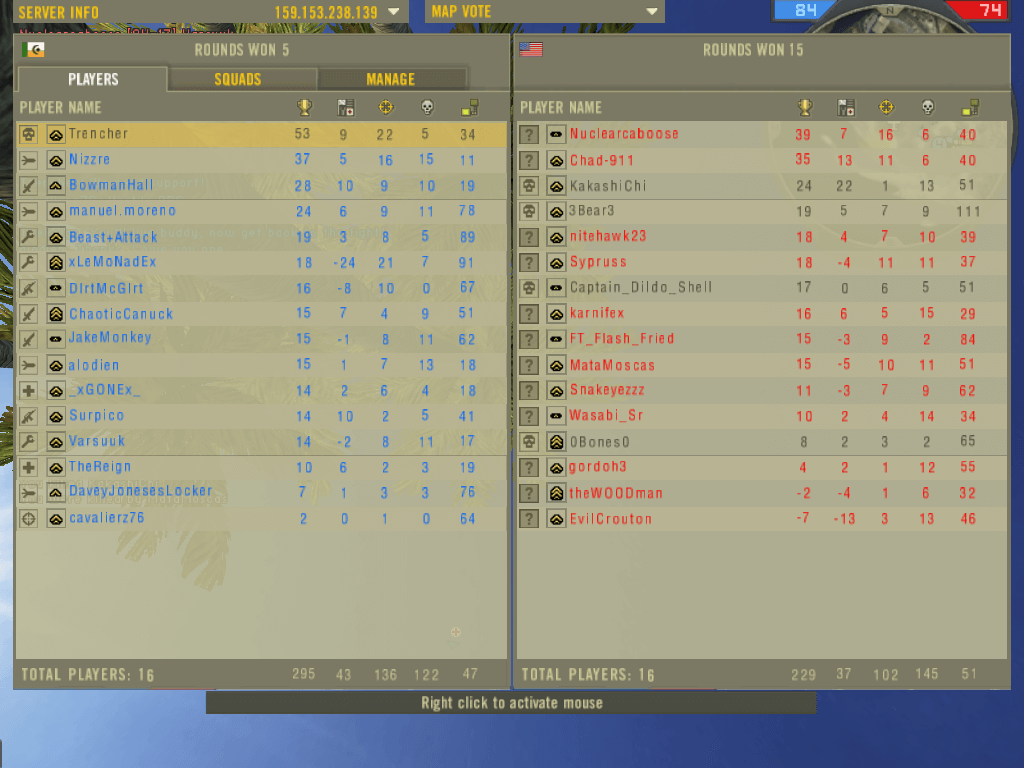
Look, proof that I didn't totally suck at Battlefield 2!
“Look, proof that I didn’t totally suck at Battlefield 2!”

I skipped the BF2 follow-up/spin-off Battlefield 2142, despite the fact that, given my love of the similarly sci-fi heavy Planetside, you’d think I would have been all over it. In fact, to this day I’ve still never played it. Not long after this, I started cutting way back on PC gaming and focused a lot more on console gaming, particularly single player games. I’d played the demo of Battlefield 2: Modern Combat on my Xbox 360 after watching a friend play it and thinking it looked pretty cool, but skeptical of Battlefield’s place on console, it wasn’t until Battlefield: Bad Company’s single player campaign that I gave it a fair shake. I dabbled with its multiplayer as well as its Xbox Live Arcade spin-off Battlefield 1943, as mentioned here, but I was a little late to the party on that one, and my Battlefield 1942 skills didn’t survive the transition to being played on a controller in any case. I fully intended to play through BC’s sequel’s campaign as well, though it wasn’t until I found out that it had become the flavor of the month online game for a lot of my old TPG friends that I picked it up on PC and joined in.

Battlefield: Bad Company 2 felt like something of a return home for me. The maps were smaller and less chaotic, with smaller player counts, yet perfectly balanced the map sizes, player counts, available vehicles, and all kinds of nifty new counters. It also focused on the more linear Rush mode over the series staple Conquest, which worked really well with that particular formula. Throw in a simple player progression and weapon unlocks system, and the awesome Destruction 2.0 and, man, it was a ton of fun. While BC2 was much more of a fun diversion for me than an obsession like with Battlefield 1942, I racked up a good 20 hours or so of multiplayer and have a lot of fond memories of playing it. I do still need to go back and play that campaign one of these days, though! As a quick aside, I recall being intrigued by the launch of Battlefield Heroes, a title that often gets left out of these kinds of retrospectives, but alas, I never actually got around to trying it. I thought it looked kind of neat though.
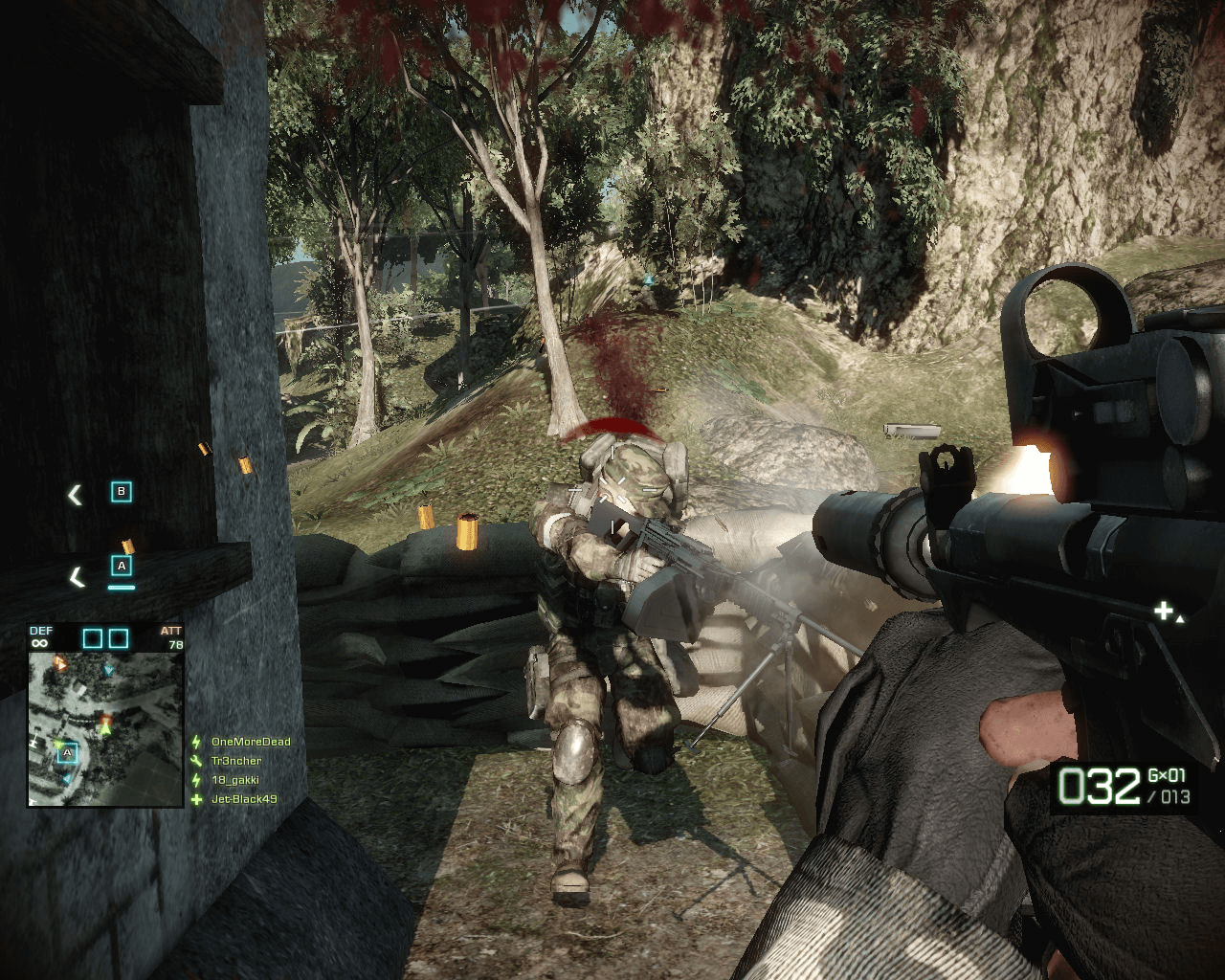
Man, I miss Bad Company 2. This dude was too close to miss, though!
“Man, I miss Bad Company 2. This dude was too close to miss, though!”

Somehow, the impressive looking Battlefield 3 with its more realistic models and animations, added cinematic flare, and a post-Call of Duty 4: Modern Warfare overhaul of infantry movement and gunplay didn’t reel me in when it was released a few years later. I think this is chiefly because I wasn’t gaming that much at the time, and when I was it was still usually focused on more single-player experiences on console. That, coupled with a lot of highly publicized technical issues at launch and that few if any of my friends were playing it, meant I gave it a miss entirely. The story is exactly the same for Battlefield 4 and the odd cops and robbers spin-off Battlefield Hardline. I thought all of these games looked cool, but I was increasingly feeling like the Battlefield series was no longer for me. Looking back, I can’t help but wonder what I might have missed by skipping those games, especially since 3 and 4 are always mentioned as points of comparison when discussing the series these days – I’ll probably at least go back and play through their campaigns one of these days.

Battlefield 1, however, really caught my attention, and it just so happened that I’d built a new PC around the same time as its pending release and was itching to do some legitimate PC gaming, and a lot of my old TPG friends were jumping into it too. Between that, and the fact that the game was actually really good, it was the first Battlefield game since BC2 that I spent any quality time with. It wasn’t perfect – I’d have preferred another World War II title to a Battlefield set in World War I when everyone is anachronistically running around with automatic weapons, and I generally didn’t love the weapons and vehicles as a result. Still, it had more than its fair share of uniquely awesome Battlefield series moments. Similarly to BC2, I wasn’t crazy addicted to it, but it did become my random pick up and play online game for a while there, temporarily unseating Planetside 2 from my rotation.
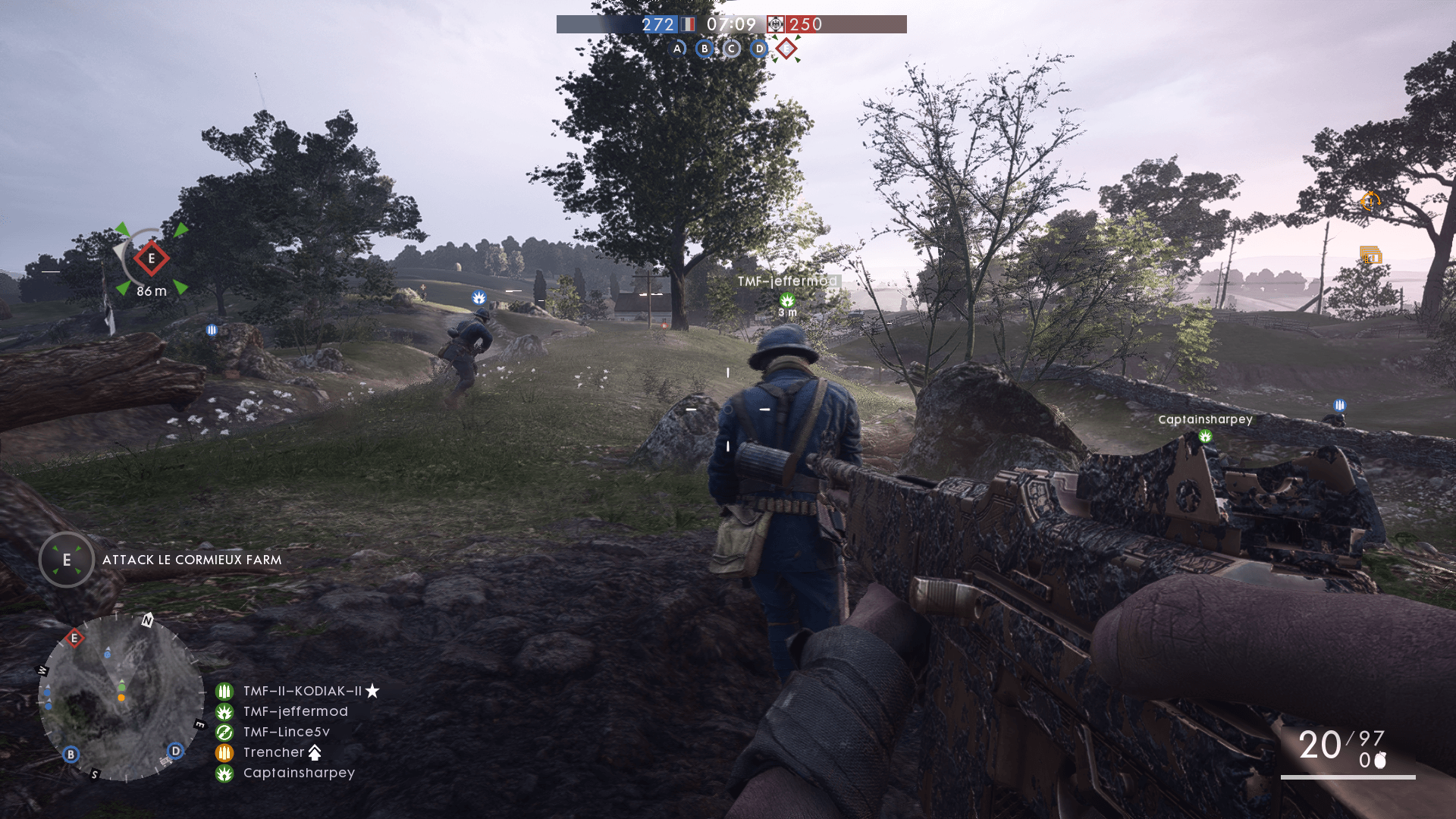
Over the top, boys! Probably seconds away from death in Battlefield 1.
“Over the top, boys! Probably seconds away from death in Battlefield 1.”

Like a lot of people, I was initially very excited for Battlefield V’s long overdue return to World War II, but then very concerned when EA released the reveal trailer featuring a mismatched squad of resistance fighters rather than your typical uniformed grunts, and graphics so bright and colorful that were, compared to Battlefield 1’s often dreary environments, absolutely retina scorching. That, and the marketing of the game focused on a female sniper from the group with what looked (at a glance) to be a bionic arm, which left me scratching my head. No, I’m not going to cry about female characters and minorities like a lot of Battlefield V detractors, but it did make me question what tone DICE were going for with V. It was feeling like it might be more of a less serious, perhaps even alternative history take on World War II, and combined with the news that it would include a Battle Royale mode and some of the other details coming out, such as “Elite classes” hinting at a more hero oriented system versus the generic classes of old, it really made me skeptical of the entire game.

Randomly feeling the urge to play some Battlefield, I actually ended up picking up Battlefield V super cheap during a Steam sale just last year. I played a couple of single player campaign missions as well as put a few hours into multiplayer, and I surprisingly really enjoyed what I played. Mind you, this was after years of patches to fix the game’s issues and dial back a lot of the more controversial changes, but I can’t help but think that this game was mostly a victim of a now seemingly misguided marketing push to make the game more attractive to Fortnite Battle Royale players coupled with the ensuing hate campaign made up of gamers all too happy to leap onto the bandwagon to trash the next big EA game. I’d always intended to go back and finish the campaign and play some more multiplayer before writing about the game, and hopefully I still will one of these days.
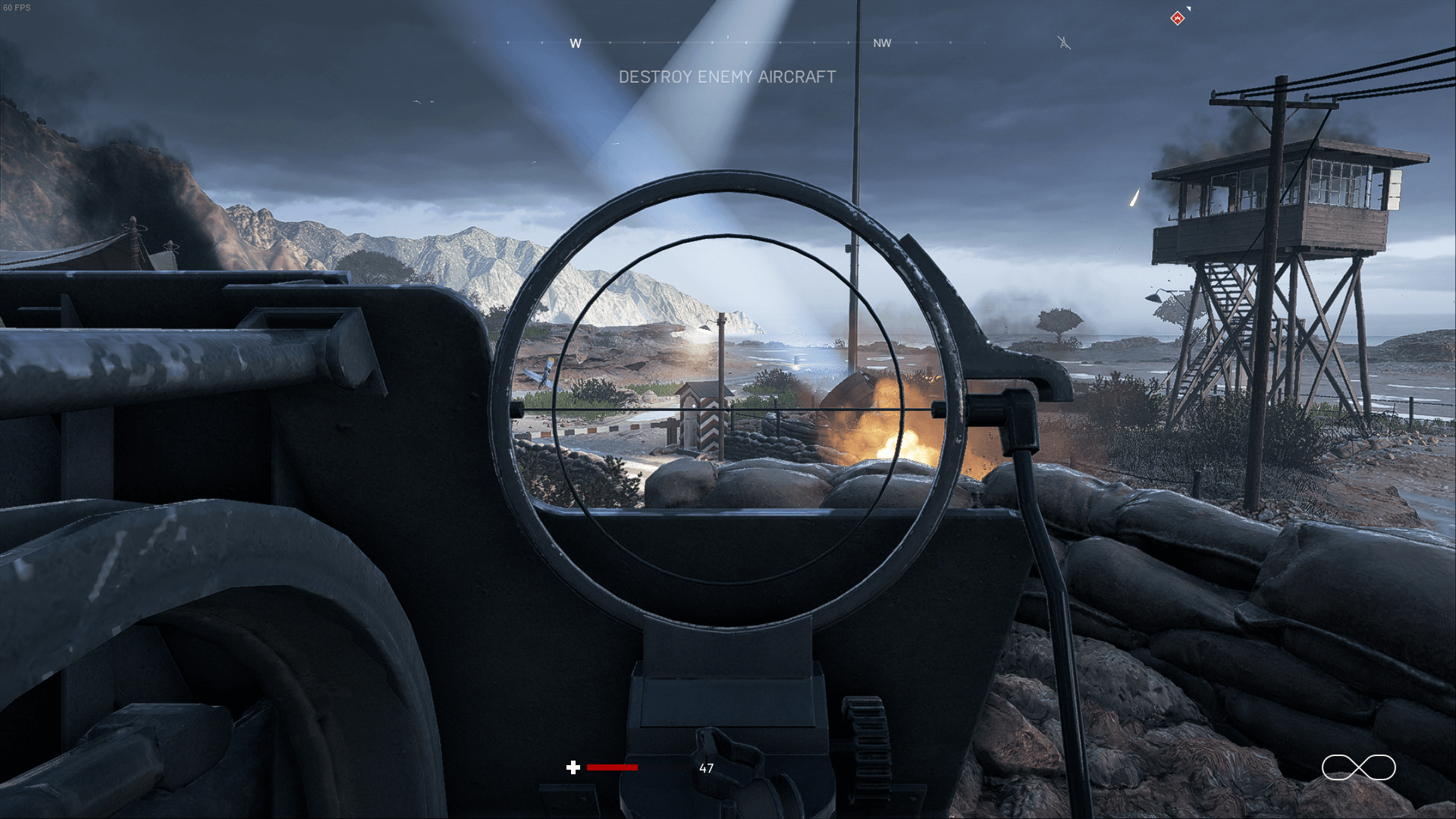
About to mess up some Messerschmitts in Battlefield V's campaign.
“About to mess up some Messerschmitts in Battlefield V’s campaign.”

Somehow even more depressingly, Battlefield 2042 went right over my radar upon its release in 2021. After the somewhat troubled release of Battlefield V and a rather rocky initial reception due to a number of technical, marketing, and gameplay fumbles, including going even further down the hero shooter class rabbit hole with its new “Specialists”, it never really appeared on my radar either. At least, not until it had been patched and expanded so much that opinions on the game finally started to gradually shift, though as mentioned above, that just ended up resulting in me buying Battlefield V instead. Given that it didn’t have any sort of campaign, it’s likely that I’ll never check it out, but never say never!

So that brings us to August 2025, when rumors about Battlefield 6 started to appear, and then early but very positive sneak peak impressions and preview event impressions started to build up in short order, culminating in the announcement of an open beta. I couldn’t really ignore the hype any longer, and I decided to check out the beta, but more on that much later, when I’m hopefully talking about the game we eventually get at retail!

Believe it or not, most of these screenshots, even the really ancient ones, are mine. Apparently I don’t delete things enough!
The First Four

Maybe it’s the holidays, but I was recently hit by a random streak of nostalgia around my family’s first ever computer, the Commodore VIC-20. I’m guessing it was sometime around 1985 or 1986 that my dad, almost certainly inspired by another family that we became friends with, the father being a huge Commodore 64 nerd, brought us home a VIC-20. We quickly amassed some game cartridges, a tape deck and a couple of tapes filled with demos and games, a joystick, and soon enough a Zenith ZVM-123 monochrome monitor so my brother and I weren’t tying up the family TV. I thought it would be fun to go back and revisit those first four cartridge-based games. This is where it all started for me!

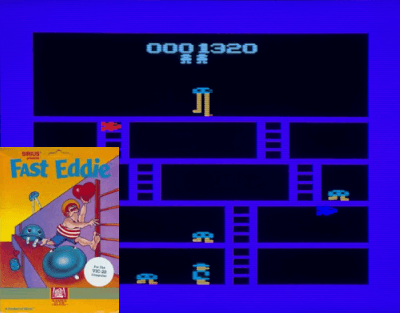
Fast Eddie plays exactly how you might imagine from this screen.
“Fast Eddie plays exactly how you might imagine from this screen.”

Fast Eddie is a single screen side-perspective platformer similar to more well-known titles like Lode Runner, Jumpman, and Donkey Kong. Your objective is to avoid these little mushroom looking “Sneaker” dudes while you climb ladders up and down multiple levels collecting “prizes” that appear at random. There’s a really tall Sneaker on the top level (called the “High-Top”) who will shrink in height with each prize you collect, eventually getting short enough for Eddie to jump over, which completes the stage. It’s pretty simple, but even on the VIC-20 it feels reasonably fast and responsive. The challenge is in timing your movements with the fast moving Sneakers, which is easy to do, but the faster you try to clear a level, the more likely you are to make a mistake and lose a life. I also checked out the Commodore 64 version while I was at it, which despite being more colorful with higher resolution, well, everything, doesn’t have quite the same charm as the VIC-20 version to me. Still, the more responsive and smoother feeling controls make it the superior version.

Despite the fact that I recall liking Fast Eddie as a kid, it wasn’t my favorite, nor did it get a ton of playtime in my house. I think that’s likely because, like so many early arcade style games, the formula is almost immediately obvious and doesn’t deviate much from what is established at the start in anything but difficulty. Once you “figure it out” the only real drive to keep playing is to push yourself to further levels and higher scores. That said, it is fairly addictive, and when I replayed it for the first time in preparation for writing this article, I ended up playing it for a lot longer than originally planned. Not bad!

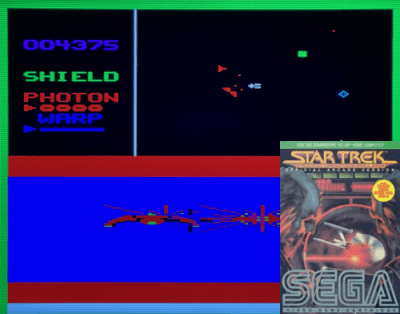
Despite the clown car colors, killing Klingons is serious business.
“Despite the clown car colors, killing Klingons is serious business.”

I never got into this next game as a kid, likely confused by its multiple perspectives and chaotic action, but I have fond memories of my brother camping out in front of this game for hours, filling little notepads up with diagrams and drawings. Having put a fair amount of time into the game while revisiting it for this post, I’m guessing these were simply sketches of ships and maybe a log of how far he made it and his scores, because an RPG or adventure game this is not; there’s really nothing to map nor clues to jot down.

Despite its title, Star Trek: Strategic Operations Simulator is purely an arcade action game, but one that crams a fair amount of ingenuity into its simple concept. On the top left of the screen you have indicators showing your health, photon torpedoes, and warp power. On the top right, you see an overhead view of your ship and the space around it in a style very similar to Asteroids. On the bottom of the screen, you see a first person perspective from the viewscreen of your ship (I assume the USS Enterprise?) which is synchronized with the action in the top down view. Pretty nifty. You fly around these little “sectors” shooting Klingon battlecruisers who are either attacking you, or focused on attacking your starbases. You can fly to a starbase to get a small bump in health, torpedoes, and warp. Your normal attack is an unlimited, rapid fire blast that is supposed to represent your ship’s phasers, but you can also launch a torpedo which has a devastating area of effect, and warping is simply a speed boost which I actually never found all that much use for. Once you dispatch all of the enemies, hopefully saving your starbases in the process, your score is tallied up and you move to the next sector map. There are some simple boss stages every 4 or 5 sectors as well. All in all, it didn’t really hook me, but it was fun, and I can imagine some people really enjoying it.

I tried out the Commodore 64 port of the game as well, and as with most games that exist on both platforms, while the gameplay is more or less identical, the graphics and sound are greatly improved (you can actually tell what the ships are supposed to be!) and control is a little more responsive, although it’s not bad in the VIC-20 port. The experience was so much more enjoyable that I ended up playing for quite awhile, far surpassing my previous high score on the VIC-20 version. Interestingly, the original game both of these ports are based on is a 1982 Sega arcade game. The arcade game looks vaguely familiar, but I don’t think I ever played growing up. Boasting impressive hi-res vector graphics and some digitized sound samples, it looks damn cool, although the gameplay is basically the same as what is presented in the home computer versions.

Frogger with a weird perspective and terrible controls? Sign me up!
“Frogger with a weird perspective and terrible controls? Sign me up!”

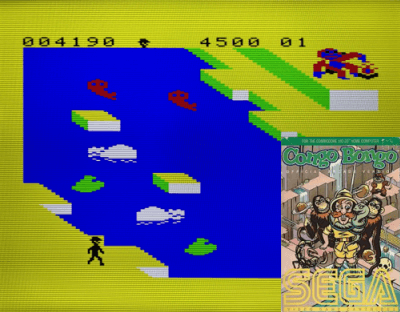
Out of the four of these games, there’s only one I had almost zero recollection of and that’s because, well, we barely played it, and we barely played it because it fucking sucked. Congo Bongo is a platformer that plays like a sloppy combination of Donkey Kong, Pitfall!, and Frogger, depending on which level you play. That is, the first level has much more of a Donkey Kong vibe, while the second brings in those Frogger elements. The key difference is that the levels are shown from something of a skewed isometric perspective. Different enough to keep the lawyers away, I guess. The wacky perspective, terrible, jumpy animations which make dodging coconuts and hopping onto moving platforms feel excruciatingly inaccurate, and the less than responsive joystick controls made a game that probably already relied a bit too much on memorization just one big bum out. I ended up beating the first stage (a feat I don’t recall if I ever managed as a kid) after about a billion tries but, running out of patience, abused TheC64’s save states to get through the second. That was it though, that’s the game! In theory, those two levels repeat with a higher difficulty 4 more times, but there’s no way I was going to go any further, at least not with this version.

This game was ported all over the place, however, and morbidly curious, I decided to check out the very similar Commodore 64 version of the game. I’m happy to report that while it looks quite close, it has more colors, better sprites, better animations, slightly better sound, and vastly superior controls. The monkeys even properly harass you in this version! Still only two levels though. Interestingly, the Commodore 64 actually had a second port released a couple of years later in 1985 which had much nicer graphics sporting a much better take on the arcade version’s isometric perspective, all 4 levels from arcade, and a lot of other original elements intact. Unfortunately the cracked dump I played glitched out on the last level so I couldn’t legitimately beat it, but hey, not too shabby! In either case, I’d have been a lot more satisfied with the Commodore 64 versions of the game than I was with this awful VIC-20 one. Honestly, the best part was the awesome box with its colorful cartoony characters and massive Sega logo.

Oh, and yes, believe it or not this game was based on an arcade game. The arcade Congo Bongo actually had beautiful graphics for the time and, while I’m sure it was still a quarter sucking kick in the balls, the gameplay looks a lot smoother. As a kid I had no idea it was ever in the arcade, and I didn’t know until researching the game for this replay that there’s actually an interesting story behind the game being something of a troll of Nintendo over a lawsuit related to Donkey Kong. I’ve never seen that event referenced before, but I wonder if that’s where the Sega and Nintendo beef all started?

Actually, Spider City doesn't look half bad.
“Actually, Spider City doesn’t look half bad.”

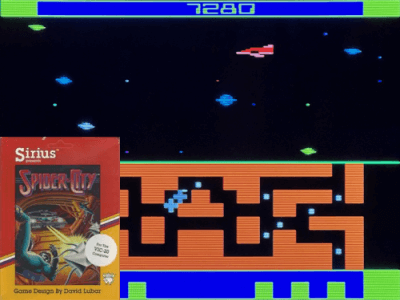
My favorite of these games as a kid was Spider City, AKA Flash Gordon. Spider City was a side-scrolling shooter, likely influenced by the arcade classic Defender. On the top half of the screen is a view of your ship, and on the bottom a sort of mini-map showing you the tunnel system you’re navigating. The map was crucial for locating your objective, the hordes of hatching spider warriors you needed to murder. Of course, you also need to avoid debris, patrol ships, and other hazards, as well as rescue captured spacemen. I remember thinking the game looked good as a kid, but… eh? Still, of these four games it does the most with the VIC’s meager sound capabilities by a longshot.

In retrospect, dazzling graphics aside, I don’t know why it appealed to me quite so much back then, other than I remember wanting to ape my brother’s deep fascination with Star Trek: Strategic Operations Simulator by diving deep into and mastering a game of my own. That said, like Star Trek: SOS, there wasn’t actually all that much to master. Fly through the map avoiding and/or shooting everything on the screen (except for spacemen, which you could fly over to rescue) and seek out the hatching pods, mow down the hatching spiders which would hopefully grant your ship a temporary shield, then rinse and repeat until the entire map is clear. There were also these “disruptor” zones which moved around the map and would fill your screen with debris when you entered one, though you could shoot the generator inside of them to freeze them temporarily if you couldn’t simply avoid them. Of course, all of these details are fairly obtuse and unintuitive, and I’m mostly only able to talk about them clearly because I read the manual.

Unlike the rest of these games, Spider City didn’t have a Commodore 64 port. In fact, the only other place it appeared was the Atari 8-bit computers. Odd, given that it’s actually fairly fun.

These days I think I probably prefer Fast Eddie to Spider City, but I still have to give Spider City major credit for being the first video game I ever loved. Additional takeaways? While I’m endlessly grateful to my dad for bringing home my first ever personal computer, I mean, I have multiple hobbies and a career to thank for my interest in computers, I definitely wish it was a Commodore 64 instead of a VIC-20. Oh well. As an aside, I’d love to make a part two to this if I can ever figure out exactly what those cassette tapes I mentioned having were. I have no idea if they were commercial releases or otherwise widely distributed, or if some dude at whatever local computer shop my dad got this stuff from cobbled them together himself. A mystery for another day. *shrug*

Apologies for the poor quality pictures – there are some major color inaccuracies, for instance. These were photos from my TV (usually at night, even) rather than actual screenshots. Box art stolen from LaunchBox’s games database.

Planetside (Part 2)

Continued from part one

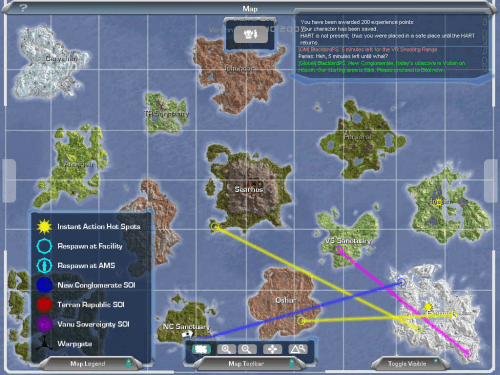
Auraxis, as it looked before The Bending.
“Auraxis, as it looked before The Bending.”

When talking about how to get to the action in the last article I made passing mention of connections between warp gates and “spheres of influence” so let’s expand on that and go over the all-important map. In addition to those empire sanctuary islands, Auraxis was made up of ten continents of similar size and various biomes. Those continents were connected to each other via the same type of warp gates that connected some of them to sanctuary islands. Each continent was a massive, expansive land of a size and scale that is pretty much unheard of for an FPS game. While it might blow other sandbox FPS games out of the water in size, the world is pretty empty, with the only real points of interest outside of the occasional bridge or bunker being the facilities and the small guard towers near them, which are ultimately what we’re fighting over.

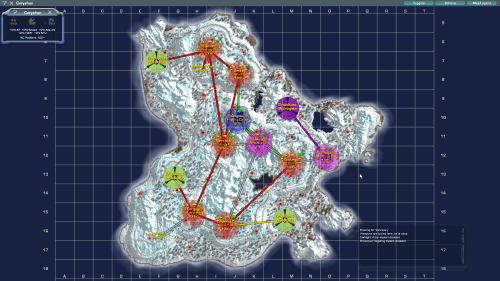
Ceryshen's continental map. Mostly controlled by the TR at the moment.
“Ceryshen’s continental map. Mostly controlled by the TR at the moment.”

Like the connections between continents, each facility was connected to at least one other facility on the continent, forming a “lattice” structure. The “lattice links” between these facilities were important in defining the battlefronts – your empire could only attack an enemy owned facility it had a link to, either by facilities you’ve captured, or by a warpgate connected back to your empire’s sanctuary or another continent you control. Thanks to these defined battlefronts, battles were mostly concentrated around these areas, helping keep the player population from being spread too thin. The continental lattice also provided benefits from facilities of certain types under your control. For example, if you were at a friendly facility that was connected to a tech plant your empire owned, you could spawn more advanced vehicle types from its vehicle terminals. This added a little bit more strategic consequence into decisions about which facility your empire should attack, and in what order, whether it be to gain those benefits or simply take them away from your enemies.

As for the sphere of influence, this was simply an area around a facility or a tower that was “controlled” by the empire that owned that facility or tower. This area could not be directly dropped on (as mentioned) and enemy Combat Engineers couldn’t fill them with their own deployable equipment. The area also more generally functioned roughly as a mini “zone” in the traditional MMORPG sense, so things like how experience points for battles over the control of these facilities and the scope of the “broadcast” chat channel were based on these areas. In between these areas was, as mentioned, not a whole lot, but all of this other space was ripe to be turned into massive combined-arms battlegrounds as forces moved between facilities and towers, and the terrain was just varied and interesting enough to lead to some cool battle scenarios. I have vivid memories of battles around Searhus’s massive volcano crater’s rim, and the epic fights around the many long chokepoint bridges spanning bodies of water all across Auraxis are legendary, for example.

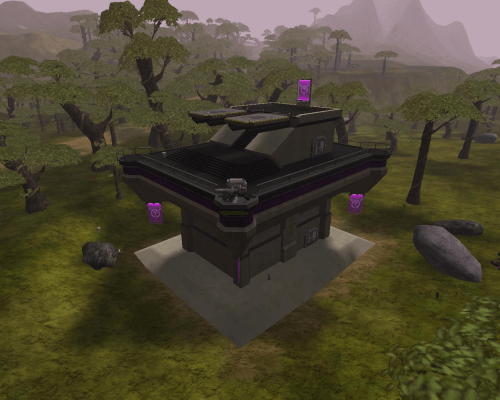
A nice, quiet VS tower, just waiting to be taken.
“A nice, quiet VS tower, just waiting to be taken.”

Outside of traveling between them, there were other reasons battles might take place in-between facilities that were directly linked to how taking over facilities worked. Let’s start from the beginning though. Each facility had a relatively small structure called a “tower” just outside of its sphere of influence. There were a few varieties of towers, with some having gun turrets, others having landing pads, but they were all close to identical on the inside. Dominated by a wide staircase wrapping from the basement, which contained spawn tubes and equipment terminals and was protected by a “pain field” to keep would-be enemy spawn campers at bay, up to the roof, with a control console near the top. There was not much to these towers, but they were key in how facility captures worked, as they allowed an attacking force to quickly gain a nearby foothold from which they could respawn and attack the main facility. Unlike facilities, control of the towers would instantly change once the control console was hacked, plus, not being tied to the lattice system, they could be hacked by anyone, at any time. Intense battles in and around towers weren’t uncommon, but they were also some of the more common places for great smaller fights to occur.

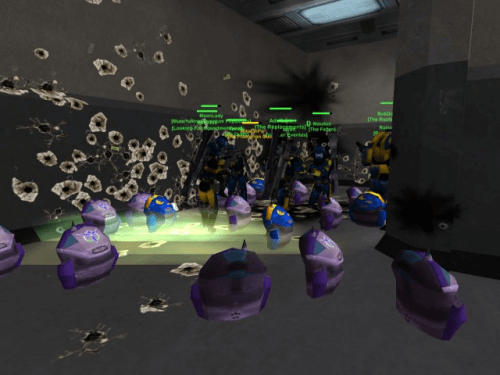
Tower fights could be bloody affairs. Get that loot!
“Tower fights could be bloody affairs. Get that loot!”

So, you hacked the door to a tower, made it up (or down, if you decided to land or drop on the roof from an aircraft) to the control console. You hacked it, and control of the tower went to your empire. If there were enemies around, they’d notice this pretty quickly and might immediately begin mounting a response to attempt to take it back from you. In the meantime, you and your allies could you set your sights on the facility itself. While there were other options for tactically deploying around a facility you were attacking, most notably a vehicle called the Advanced Mobile Station (AMS) which could be parked and “deployed” to cloak itself and act as a mobile spawn tube and equipment terminal, ownership of a facility’s tower was definitely a much more solid foothold.

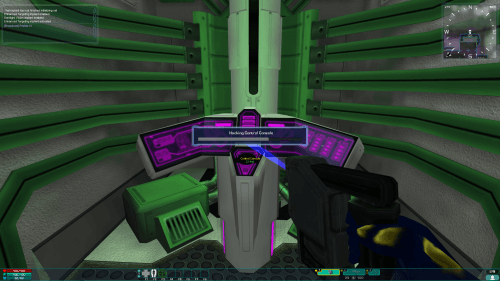
Hacking a VS controlled facility's control console.
“Hacking a VS controlled facility’s control console.”

Taking a facility worked similarly. There were several different facility designs and layouts, but they were all surrounded by high, castle-like walls with turrets which would act as sentry turrets if unmanned, with only a few entrances on foot – either the large arched gates on either side of the courtyard that allowed vehicles in and out, or via the locked backdoor of the facility. This is where a Galaxy dropship is especially handy, allowing a full squad of troops to effectively bypass the outer defenses of a facility, dropping right into the courtyard or onto the upper levels of the main structure itself. Regardless, assuming you were able to make it into and through the courtyard, you’d make your way into the main facility and eventually find its control console room, usually fairly deep within the complex. Unlike the rather exposed control console of a tower, the control console of a facility was in a small, dedicated room that was much more defensible. Assuming you were then able to get in there and hack the control console, you’d then have to wait for a 15 minute timer to tick down before control of the facility finally changed. During that time, of course, you could expect a defense to mount if there wasn’t already one – enemies would drop in via HART from their sanctuary, arrive by various methods from nearby facilities, and enemies killed in their attempts would respawn there. 15 minutes can feel like a damn long time.

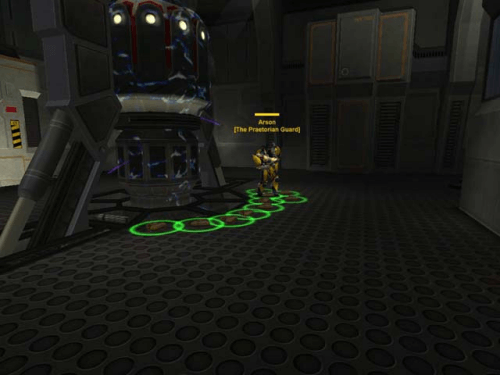
Arson
“Arson setting a bunch of Boomers (remote mines) to destroy a generator.”

One strategy that was often employed to help ease the burden of attacking a facility was purposely draining the facility of power. Every interactable device in the facility – equipment and vehicle terminals, spawn tubes, turrets, etc. ran on power provided by the facility’s generator, which was in turn fed by a supply of Nanite Technology Units (NTUs.) This power was drained much more quickly by the facility’s auto-repair systems, which would slowly repair any of these devices when damaged or destroyed. Once a facility was completely drained of NTUs, it would lose power and turn neutral, meaning no defenders could respawn there and it could be hacked freely once power was restored. Another version of this tactic involved blowing up the generator itself which would immediately cause the facility to lose power until it could be repaired, but this would also alert everyone that it was under attack as well as requiring it to be repaired before the facility could be back up and online. Still, it could be very effective to strategically take a facility’s generator down to deprive your enemies of the lattice linked benefits they’d get from it. Regardless, these strategies could allow small, coordinated groups to run special ops style “back-hacks” to assault facilities away from the frontline and take them over without much resistance.

An ANT refilling the NTU silo at a neutral facility
“An ANT refilling the NTU silo at a neutral facility”

One really cool element of the whole facility power system was that if a facility did run out of NTUs, it could be refueled. There was a special vehicle called an Advanced Nanite Transport (ANT) which could be driven out to a warp gate and deployed to fuel its tank, then driven back to a facility and deployed near its NTU silo to refuel it. Making NTU runs after a facility had been drained wasn’t usually too exciting, but making an emergency run during a huge battle could be edge of your seat intense. There were various ways to lessen the chances of your ANT run ending in a glorious, extra-large explosion, such as driving with an escort or even a whole convoy for protection, or using a Galaxy or Lodestar to haul one around in the air, but regardless, a well coordinated assault OR defense often involved accounting for the availability of NTU refuels.

Similarly, there was also a system added early into the game in which some facilities had a special device called a Lattice Logic Unit (LLU) which needed to be physically carried to another facility after a successful hack to complete the change of control rather than waiting out the timer. There were all kinds of conditions and limitations to who could carry the LLU and how – what vehicles they could ride in, etc. The LLU was, of course, a bit of a MacGuffin. It’s real purpose was to generate more battles outside of facilities similarly to those that could take place around ANT runs. While I don’t know how successful this ultimately was, I do recall being involved in some particularly intense battles that revolved around trying to protect or assault an LLU carrier.

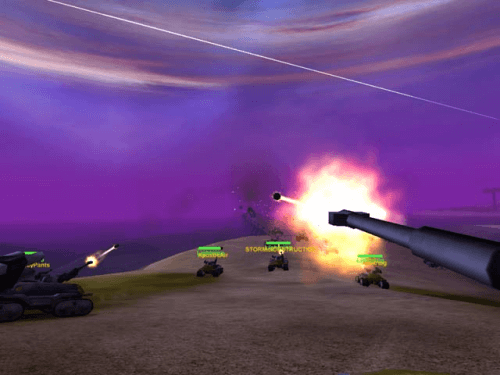
A squad of NC Lightning tanks engaging.
“A squad of NC Lightning tanks engaging.”

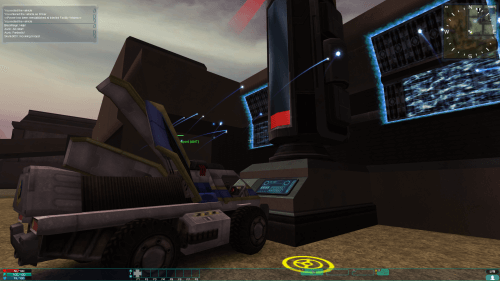
As a quick aside, both of those systems seemed to be there to introduce more opportunity for fights to happen outside of facilities and, of course, using numerous vehicles. While it was common to use vehicles of all sorts to travel between facilities, which is when the most epic vehicle battles took place, and using certain vehicles like Galaxy dropships for infantry drops, AMSes to setup spawn points, and ANTs for refuel runs were very specific but common use-cases, running vehicles that required multiple crew members, like main battle tanks and the fearsome Liberator bomber, along with running multiple vehicles together, tended to be something more of a distraction to my outfit. Something we did for fun, but not something that often felt like it was contributing meaningfully to most battles. Likewise, running the lighter Mosquito and Reaver aircraft seemed like it was used for more quick transport and scouting behind the lines, and solo hunting of enemies. While all of these vehicles could be effective in combat in the right circumstances, due to the way facilities were structured and facility capturing worked, their effectiveness as “force multipliers” was limited.

So, as mentioned above, once you controlled a facility, the lattice link to other connected facilities opened up, expanding the front and allowing you to move on to more facilities. This went on (often involving struggles between all three sides) until eventually one empire controlled the entire continent. This temporarily locked all of the facilities on the continent from being captured, so efforts would usually move to one of the next connected continents. So on, and so forth. Honestly, this larger strategic part of the game was one of the weaker areas of Planetside in my opinion. There wasn’t any real purpose to taking over a continent, or indeed all of Auraxis. Unlike similar MMORPG territory-control based PVP systems, you’re not establishing your own strongholds where you can build housing or shops, or new areas to craft, hunt, or run dungeons, and there’s zero permanence to any of it. Planetside, it seemed, gambled on the fun of the actual fights being enough to inspire players rather than any end goal or rewards. This couldn’t have helped Planetside’s subscription base – it really only took a month or two of playing the game to have seen everything and have it totally figured out, and unlike most MMORPGs, there simply wasn’t enough variety of other diversions to keep players who were bored or just needed a break from cancelling.

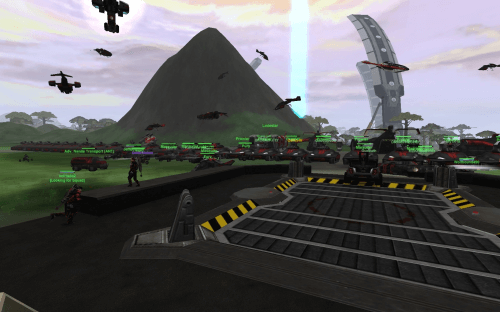
A massive TR force gathers at a warp gate.
“A massive TR force gathers at a warp gate.”

I didn’t really mention the concept of “zerging” at all, and I should, because it comes up a lot in discussions around Planetside. The “zerg” was an obviously Starcraft-inspired term used to describe the largest masses of players, and “zerging” was the act of joining one of these groups and following them from enemy facility to enemy facility, overwhelming enemy resistance with sheer numbers. Most of the time these huge forces would inevitably meet, meaning that on every contested continent, there was usually at least one incredibly huge, lag inducing, ridiculously chaotic battle. Following the zerg was a way to guarantee access to Planetside’s largest fights, and more importantly, the experience points that came with them, but to many of us this was less exciting than smaller fights, special ops missions, coordinated vehicle runs, and numerous other experiences the sandbox nature of the game could provide. Getting online and following the zerg every night was the entire game to some people, and unsurprisingly, many of them quickly grew to consider Planetside as rather repetitive and dull.

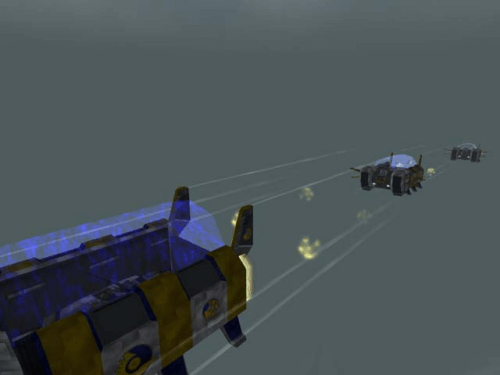
A group of NC Lodestars hauling Vanguard main battle tanks behind enemy lines.
“A group of NC Lodestars hauling Vanguard main battle tanks behind enemy lines.”

That about wraps up my lengthy overview of Planetside’s gameplay. As mentioned, I played the game pretty steadily for its first year or so. In that year, development felt a little slow, especially given the monthly fee we were paying SOE for the privilege, but in reflection it wasn’t too bad. The Liberator bomber was added, along with a dedicated anti-air vehicle called the Skyguard. The aforementioned LLU system was added. They expanded hacking. They added platoons, which could be used to combine 3 squads into one larger unit. They also added the Lodestar, which I’ve mentioned a couple of times now. I do have to wonder just how many of those additions were holdovers that didn’t quite make release, but regardless, content is content. Actually, looking back, one of the issues I think Planetside’s development team had with adding new content to the game is that it was essentially already fairly well designed and balanced upon release. Anything all that interesting that they added to the game was sure to irreversibly alter that balance. Speaking of…

Core Combat's caverns looked like nothing else in the game.
“Core Combat’s caverns looked like nothing else in the game.”

The game’s first and only paid expansion, Core Combat, also came out at around this time. Core Combat added several huge underground cavern maps to Auraxis. These could be accessed via warp gate-like areas called “Geowarps” that were limited in their availability. The main appeal of these caverns was a shift to more CQB-inspired infantry combat, as the caverns featured a lot of cramped areas, a lot of verticality, and relied on teleporters and ziplines for traversal since vehicle usage was limited. While most of my outfit mates were excited about the concept, I don’t think I was alone in being fairly underwhelmed by the cavern-based combat experience. There was at least a reason to go down to the caverns, and that was the new facility module system. You could obtain and charge-up a “module” in a cavern which could then be brought back to the surface and installed at a facility, giving it a particular new benefit, which also extended to any other connected facilities your empire controlled. These benefits were things like adding an energy shield to the otherwise open gate entrances in the walls of your facilities, granting players faster movement speed and reducing spawn times to a facility, and allowing them to pull some of the new “ancient technology” vehicles added with expansion, such as the extremely useful Router (a deployable teleportation system) and the Flail (long distance artillery) from the facility’s vehicle terminals. I totally appreciate a lot of the ideas they were trying to implement with Core Combat, and cavern runs could be a fun diversion for smaller squads, but it ultimately felt like too much of a distraction from the core systems of the game, and a bit of misstep.

A TR BFR stomping across the battlefield.
“A TR BFR stomping across the battlefield.”

Still, even more was added later into the game’s life. Beyond things like bug fixes and numerous UI enhancements, they added new vehicles, such as the Fury ATV and new empire specific versions of The Deliverer troop transport. They added a merit/accommodation system and other improved ways to view and track your stats. There was “The Bending” patch that replaced one of the continents (Oshur) with several new smaller “Battle Islands” which each had its own special rules and restrictions, which was kind of neat for variety’s sake, but they also made each continent its own planet, changing the global map to a interstellar map in a rather stupid move. Then, in perhaps the most controversial thing to ever happen in the game, they added huge mech-like vehicles called BattleFrame Robotics (BFRs) which absolutely shook the game to its core. I had mixed feelings about BFRs myself. I mean, the panic instilled by being on foot when a towering BFR stomped onto the battlefield, leaving a path of destruction in its wake, was a totally new addition to the dynamic of the game, and was only topped by having a friendly BFR show up shortly thereafter and watching them go toe-to-toe in an epic scrap. Regardless of how much SOE “nerfed” and otherwise altered BFRs after first introducing them, a vocal part of the community completely hated their addition for reasons ranging from reasonable concerns about the balance and indeed the entire overland combat meta being altered, to simply hating the idea of “unrealistic” mechs being added to their sci-fi vidja game. Boy…

There was more after that, of course, as the game stayed online in one form or another until 2016, but the last time I stepped foot onto the virtual battlefields of Auraxis was around the time the BFRs were finally close to resembling being balanced. I’ve said it before, but Planetside was a special game to me – one where I got really into gaming with a community, and where I made friends I still have today. It was a unique game too, that, like so many online-only games, is sadly now gone to us outside of some unofficial preservation efforts. It’s also survived by Planetside 2, of course, and while Planetside 2 was influenced heavily by the first game and does a good job of respecting what it established, they’re also very different games. It may end up being quite an effort, but I’m hoping to compare and contrast those two games, as well as talk more about Planetside 2 in general, in a future article here. Stay tuned!

Pictures taken from my old NC outfit, The Praetorian Guard’s, archived website, JeffBeefjaw’s Imgur album, which looks quite similar, but from the TR perspective, and some newer pictures acquired while playing around on the PSForever server. Unfortunately the two former sources don’t really show any ACTUAL combat, as few people captured full time back in the day so most screenshots were of points of interest, outfit photo ops, and just dicking around rather than normal gameplay. I also had to grab the original world map, the Core Combat cavern, and the BFR pictures from wherever I could find them.