Tag Archives: Adventure

Cleaning, Climbing, and Crime!

As a follow-up to Surviving Survival Tres, my group also snuck in some lower commitment co-op games in between some of the sessions of those games. We mostly did this if completed a game early and weren’t ready to quit playing for the night and/or hadn’t quite made up our minds on what our next longer game would be. The first of these games was Viscera Cleanup Detail.

I’ve been wanting to play VCD for quite a long time, after first hearing people rave about it on my favorite podcasts when it was still in early access, something like ten years ago. It had a reputation for being a scrappy little indie game that both helped invent the now hugely popular genre of games that capitalize on repetitive and comfortable yet somehow addictive activities (see Powerwash Simulator and half of the other “simulator” games on Stream) as well having a pretty amusing narrative conceit: ever think about the carnage and wreckage left in the player character’s wake in shooters like Quake and Doom? No, probably not, but these guys did! They also thought about the poor bastards that have to clean it all up. That’s VCD in a nutshell. You, and assuming you’re playing cooperatively (you should be!) your companions are essentially space janitors who have to bring order to the utter chaos left in each of these spaces. My boy Roger Wilco never had it so bad…
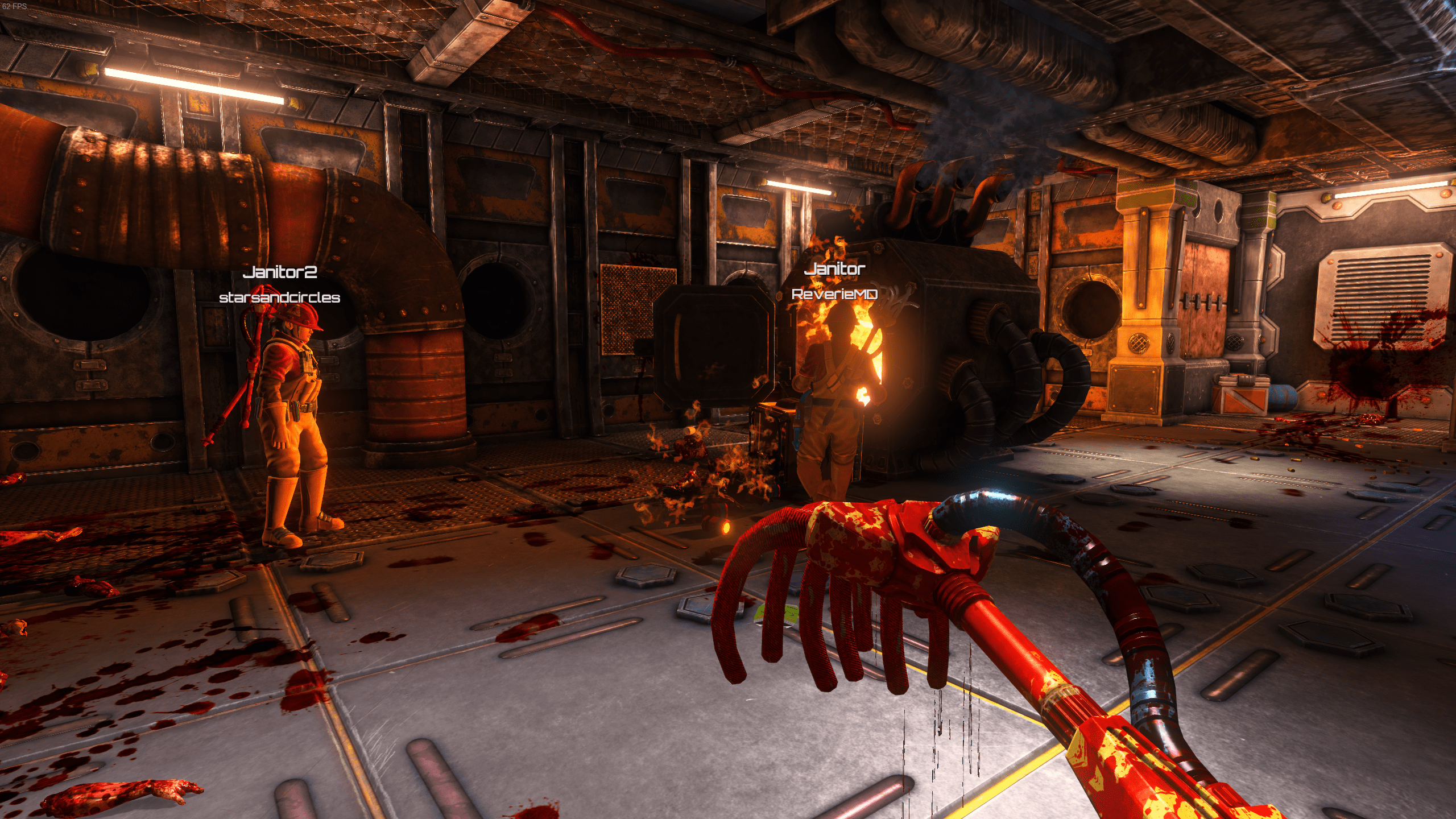
Welp, it's another day in the office...
“Welp, it’s another day in the office…”

These days repetitive task games, as well as games that give players purposely inaccurate controls and/or wonky physics for laughs, feel, eh… kind of quaint. Both gameplay tropes have been iterated on so much over the succeeding years that I can’t help but feel that VCD has aged kind of badly in comparison. Despite how much I love the concept of VCD, I was caught off guard by how much it leaned into the latter in particular – I was hyped to clean the ever loving hell out of some gore-strewn space station corridors, but I really wasn’t expecting the game to fight me so much in the process. Worse yet, given the game’s age, I was also never quite sure whether this was all very intentional or if these systems were just… bad. I have to imagine the former, since the game also gleefully puts other weird roadblocks in your way, such as randomly malfunctioning equipment. Regardless of intent, it feels a bit outdated and clunky by today’s standards and, honestly, while there were some hilarious moments in the 90 minutes or so I played it, I found myself more frustrated than amused most of the time.

I may go back to it one of these days just to give it a fairer shake, but I left the whole thing a little disappointed.

Speaking of indie darlings, we also hopped into a much newer game to hit the zeitgeist, Peak. I’d heard about Peak from podcasts like Rebel FM, but honestly, it seemed like everyone was talking about it for a little while there.
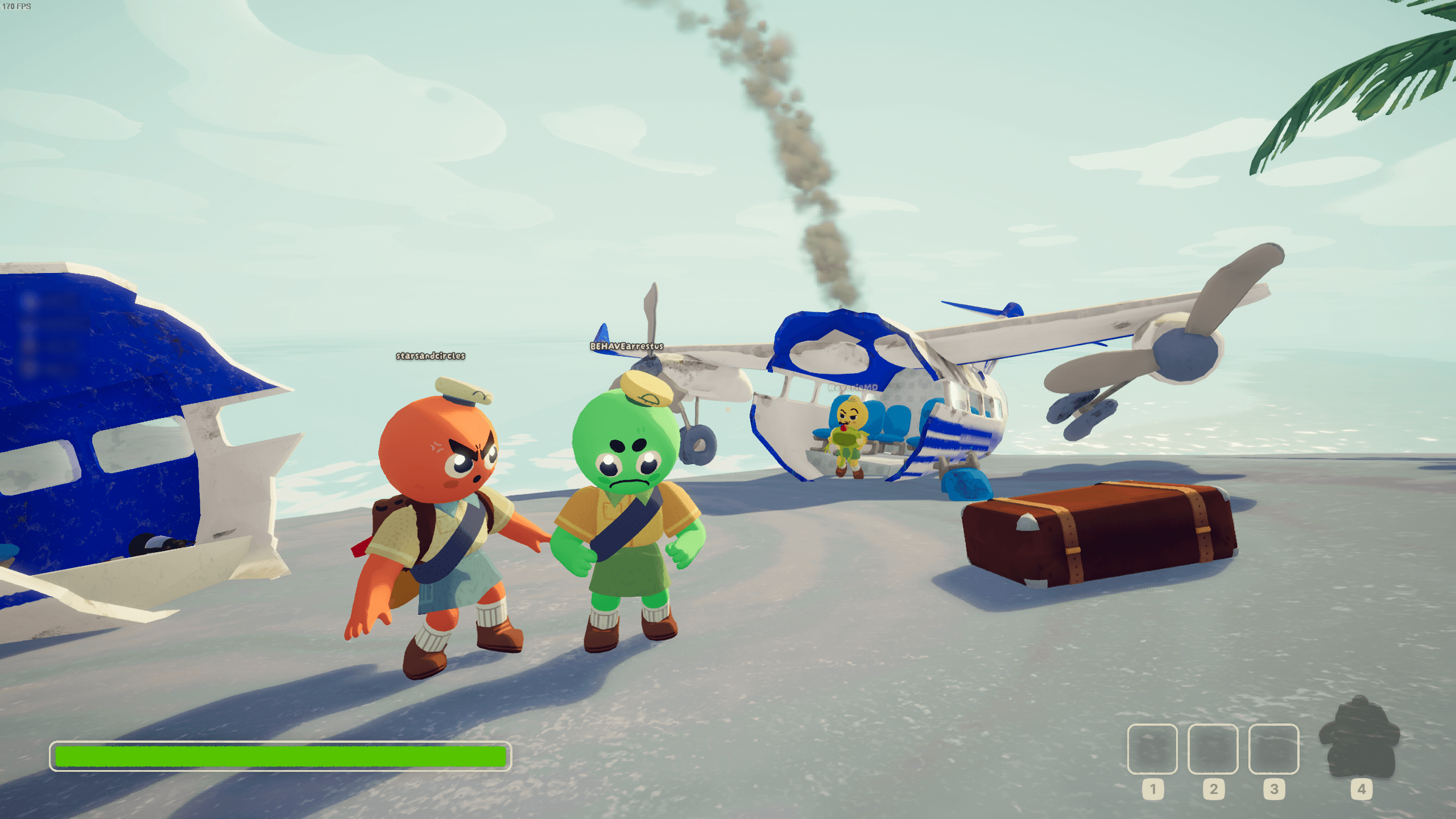
I mean, this picture was too perfect not to use.
“I mean, this picture was too perfect not to use.”

Peak is a cooperative game where you and your friends have to navigate some fairly harsh terrain, including climbing up mountains via some pretty sketchy cliffs. There’s a bit of that wonky physics stuff going on here too, but all and all it feels much more like it’s giving you the basic confines you need to work within to create a bit of a challenge rather than purposely trying to sabotage you. I suppose that’s a fine line and not all that objective, but that’s certainly how it feels to me. There are some neat little touches too, like how climbing works, the ability to give your friends a hand to pull them up, and the numerous items you can loot along the way that can sometimes help you achieve your goals.

The game also has an optimistic vibe which starts off feeling like a fun adventure with your friends. It doesn’t really stay that way though – while you’ll quickly get better at the game, naturally, the first several attempts to get to the top of the first mountain can feel tense and a little harrowing, and it only gets worse from there. That is, each run in Peak has you navigate through 5 different biomes, procedurally generated daily. Some of these biomes are harder than others, and many have some neat features unique to their themes, like the prevalence of ice anchors and storms in the snowy area, for instance. It’s worth noting that we played before the most recent two types of biomes were added to the game, so no experience with those. Anyway, this culminates in a final area, The Kiln, which is an almost vertical climb up a massive shaft while lava rises beneath you. Ooof!
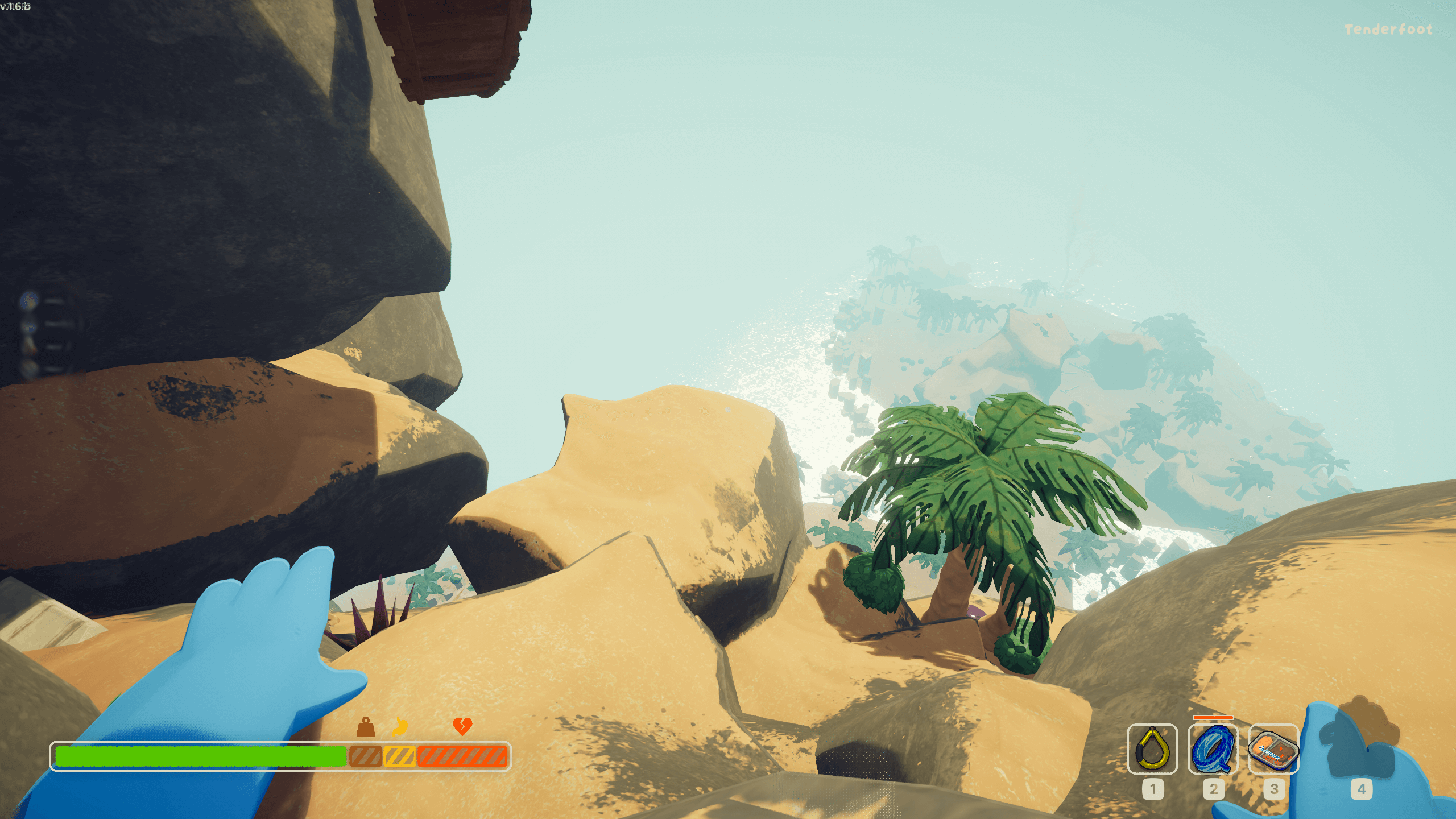
Looking back down onto the beach from the first mountain.
“Looking back down onto the beach from the first mountain.”

Of our sessions, we managed to make it to The Kiln multiple times, but by the time we got there we were in bad shape and had depleted most of our items, and were therefore ill-equipped to make it to the top. Not that we didn’t give it a go regardless. Making it all the way to the end but not beating it multiple times is a bit of a downer, though honestly I think most of our frustration came from other areas. For one, if your character dies and can’t be revived (which is common, since sometimes you’ll die from a nasty fall and your teammates won’t be able to backtrack to where you fell) you can’t be resurrected until reaching the campfire at the summit of the current biome. This means if you die just after getting there, you might be effectively out of the game for a very long time.

There’s also something of a time limit in the form of a rising fog which, not unlike the closing circle in a Battle Royale game, forces you to keep moving and keep somewhat of a decent pace.The fog is rarely a problem in and of itself, though if you all manage to die, be it to the fog or a series of misadventures, you all have to start all over again. I was personally pretty surprised that the first time this happened we didn’t restart back at the last campfire. Having the campfires be checkpoints seems like an absolute no-brainer to me, but I suppose that is counter to the rogue-like “run” design the developers had in mind with Peak. Fair enough, I guess, and it does seem like they’ve added a partial solution to this (the “Checkpoint Flag” item) in their latest content push, so perhaps that will help (although given the random nature of finding items in this game and the fact that its a per player, single use item, I’m skeptical!)
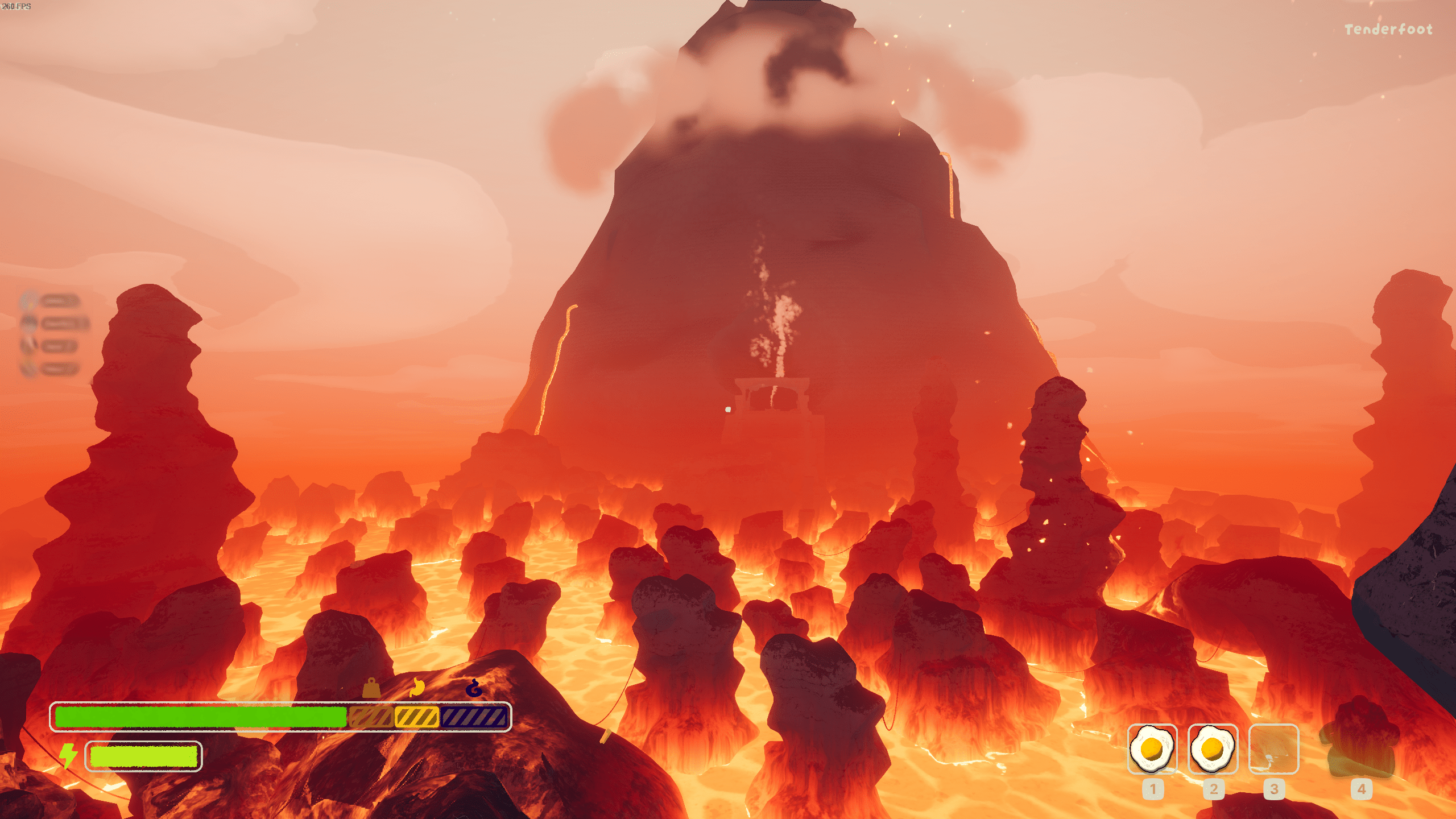
Okay, now shit is getting real!
“Okay, now shit is getting real!”

After my 8 or so hours with Peak, I think my biggest frustration with the game is how close it is to being really, really great. I fully expected the devs to iterate on the design and quickly release more and more content, but it’s been a little slow and underwhelming. These types of games (recently I’ve been hearing them called “Friend Slop” which is both very descriptive and a little unfortunate) tend to be a little short-lived in terms of player interest, with a new one, RV There Yet?, currently getting a lot of attention. Still, I think Peak is a fun game and recommended for people looking for a quick, pick-up-and-play cooperative experience, and I doubt that’ll change even after everyone has moved on from it.

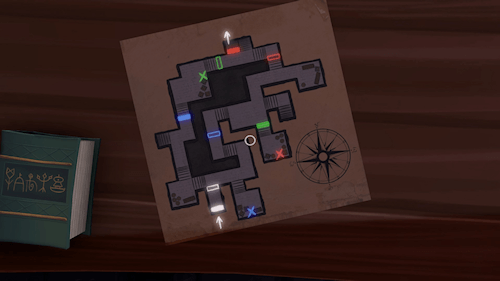
One game I almost forgot we even played was Escape First Alchemist. This was a pretty simple escape room style cooperative game, though unlike the last game of this type I played, We Were Here, EFA feels much more like a true escape room experience – you and up to 3 others are tossed into an area with no prescribed roles, you just have to work together to solve puzzles to progress.
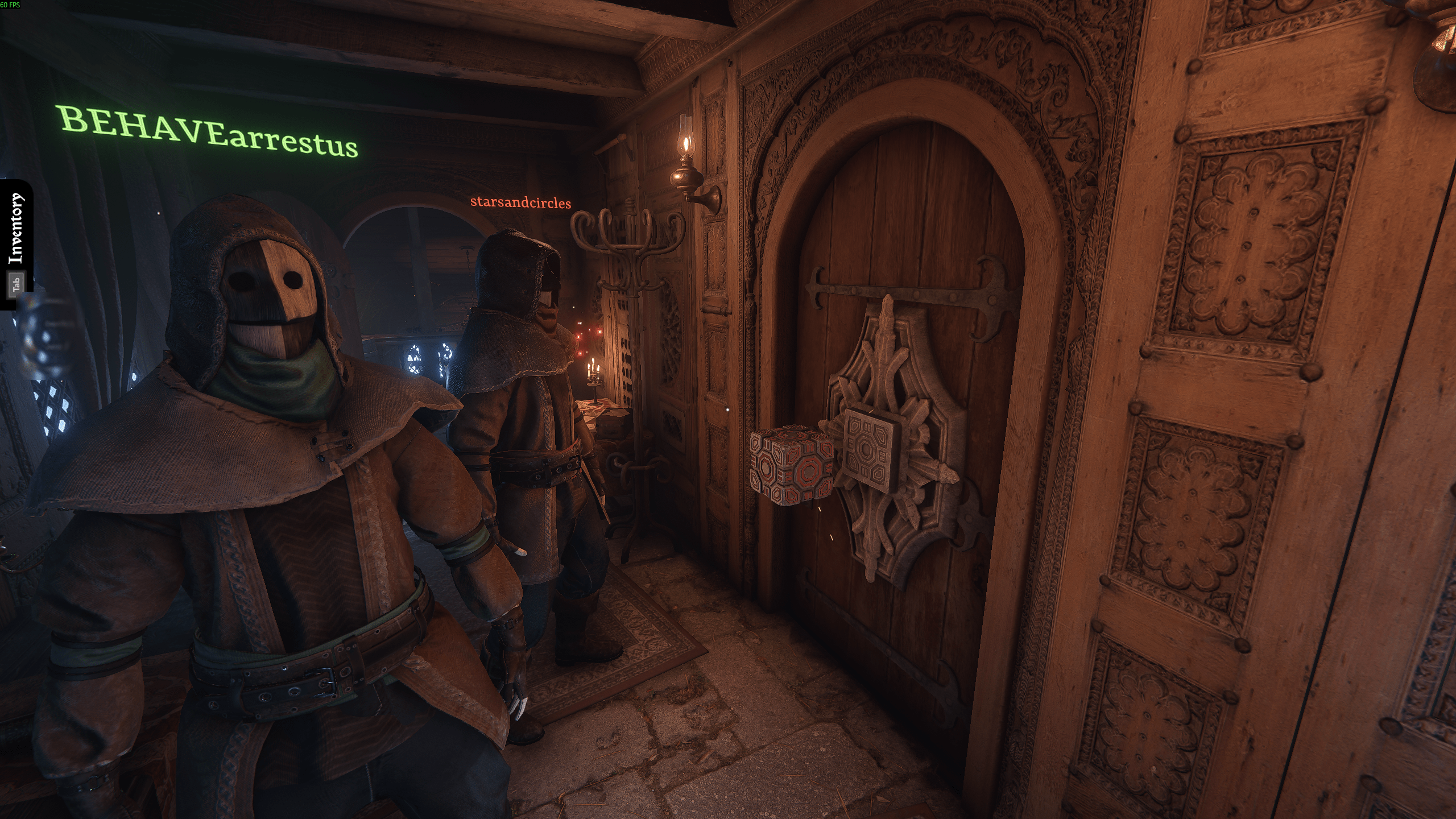
Unraveling the mysteries of... a door.
“Unraveling the mysteries of… a door.”

The setup is that you’re an alchemist’s apprentice, and you’ve got to try to free the master alchemist, Trismegistus, from whatever kind of magical pocket dimension he’s got himself trapped in. The puzzles are themed around this – brewing potions to affect yourself with whatever strange abilities they grant, fiddling with arcane machines, accessing secret passages with interesting mechanisms, that kind of thing. Honestly, while the game no doubt has some very cool moments and interesting ideas, as a whole I didn’t find many of the puzzles or the gameplay overall to be all that compelling. I was especially let down by the ending, which didn’t feel anywhere nearly as climactic as I want from a game like this. Honestly, ending with some vague text is kind of a letdown when the rest of the presentation was so nice.

Still, EFA only takes 2 or 3 hours or so to play through, and as a co-op experience, it’s fun enough. It has some really nice visuals and an excellent presentation overall, which really helps sell the experience, although the magic book that acts as your narrator apparently annoys a lot of people. I think in our case we were too busy talking amongst ourselves to focus too much on it, really. Personally, if Escape First Alchemist sounds appealing to you, I’d probably hold off until it’s on sale.
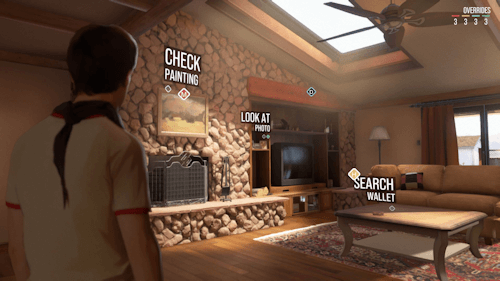
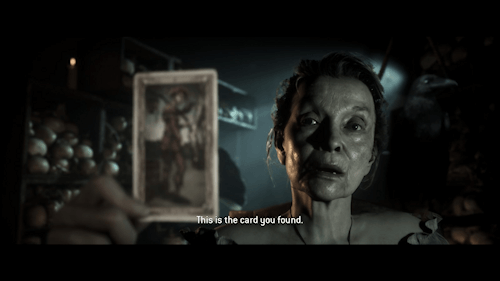
Well, it definitely looks like a narrative adventure game!
“Well, it definitely looks like a narrative adventure game!”

Radically changing directions, it’s been a while since my partner and I played through a narrative game together, but the mood struck us and we ended up diving into As Dusk Falls. Really, As Dusk Falls has been on my radar since before it was released back in 2022, but despite constantly hearing people sing its praises, I was skeptical of what little I knew of its story, and I actually found its unique art style, which reminds me of a low-rent version of A-ha’s Take On Me music video with its stylized makeovers of static images of real actors choppily stitched together, kind of off-putting. I’m not sure what intrigued her about the game, I’m guessing she heard some buzz about it from somewhere, but when she suggested it, I figured why not finally check this thing out.

For those unaware, As Dusk Falls falls is a narrative adventure game where you make conversation choices and other decisions, occasionally spiced up with some action scenes in the way of relatively simple QTEs. The game is split up into numerous chapters over 6 episodes, although for some reason the episodes were released all at once rather than the usual strategy of having weeks or even months between releases. In terms of how this is all implemented, I think it falls closer to the confusingly similarly titled Until Dawn or one of SuperMassive’s other horror adventure games (although I believe Quantic Dream’s DNA is what is actually at play here, though I’ve yet to play any of their games so I can’t quite compare them) which is to say that your choices matter a lot more than, say, a Telltale game, in terms of impactful results, with numerous endings (or at least, variations of endings.) The game wants you to be aware of this too, as at the end of each chapter you’re shown a tree of every impactful decision and how they all branch out, which is always really fascinating to look through.
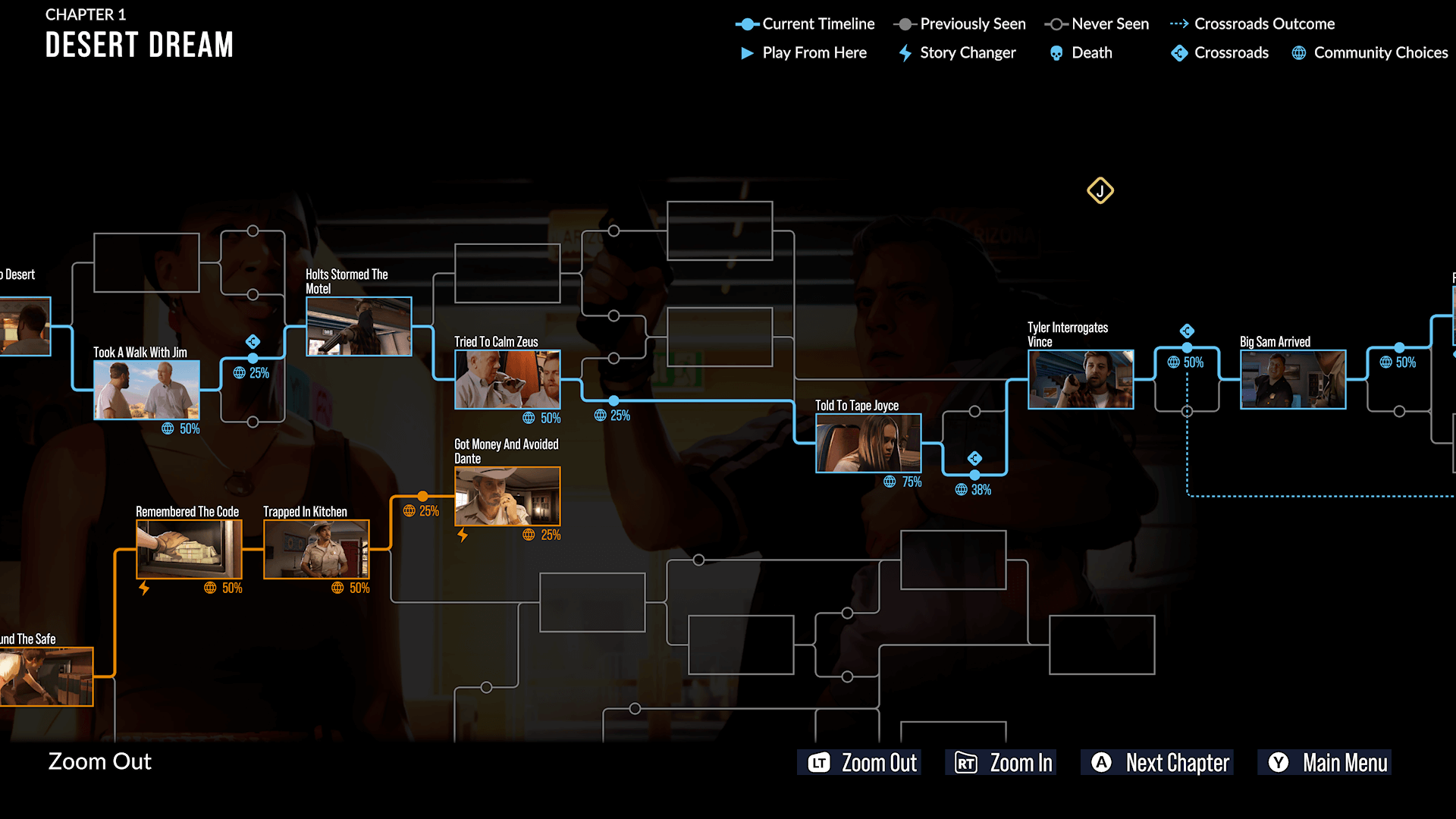

“These end of chapter decision trees are too cool!”

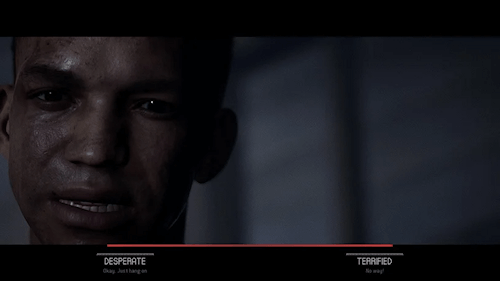
We played ADF via the game’s couch co-op mode, which assigns some decisions and actions to random player, and others more democratically (which may sound weird, but it also supports up to 8 people online, so a majority wins scenario makes a lot more sense there.) Interestingly enough, something I hadn’t seen, or at least not so prominently in other similar games, is that you can tune a lot of the game’s difficulty modifiers, like making it impossible to run out of time when making a decision, or making the timing on QTEs ridiculously easy. At first we had tuned a lot of this stuff to make it all really easy (I mean, who wants to fight against ridiculous QTEs?) but we actually ended up turning it all back up, as these kinds of games are a little broken if you make them too easy. I mean, if you never fail a QTE, you never get to see the resulting branches, and I’d imagine some of these scenes are tuned to be harder than others to push players towards a more likely path. It just made things feel a bit more linear than they were intended to be, and where’s the fun in that?

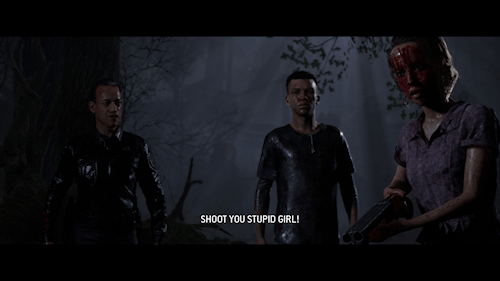
The story of As Dusk Falls revolves around a couple of brothers who get into some trouble with a corrupt sheriff, which quickly escalates into a hostage situation involving a whole heap of other characters. You mostly play as either one of these brothers, Jay, or as one of the hostages, Vince. Set against the backdrop of a small town in Arizona, the whole “bored teenagers stuck in a seemingly dead end rural wasteland” vibe stuck with me probably more than anything else about the game. I actually find something about that vibe, especially when it comes with crime stories and the desert, a little unappealing, but hey, I love Breaking Bad and No Country for Old Men, so maybe there’s also something in that inner conflict that works for me? That said, it’s hard to feel much sympathy for the Holts, even if Jay was somewhat more relatable and redeemable, and like a lot of good crime stories, there are some pretty harsh outcomes that some might find a little distasteful.
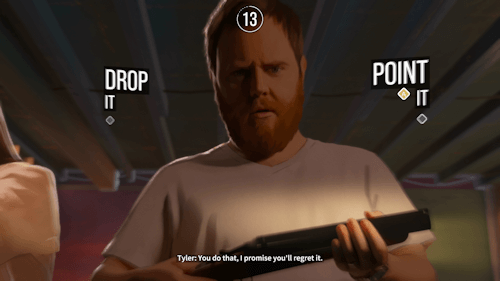
Most of your decisions will be fairly black and white, and very impactful.
“Most of your decisions will be fairly black and white, and very impactful.”

As I suspected, despite kind of disliking the art style, I got used to it pretty quickly, and while I’d occasionally see some animation or other element that was laughable, it mostly ceased to become an issue, and I might have even warmed up to it a little by the end of six episodes. I still don’t really know if this was a budget concession, strictly an artistic choice, or somewhere in between, but alas, if it was done to cut costs, I suppose I’m good with it if it allows more games like this to be released in the future.

In the end, I do think As Dusk Falls is a really good adventure game, but just how much you’re going to enjoy it is going to come down to whether its story, setting, and unique art style work for you. I still have some mixed feelings about it, myself, but I can’t deny that it deserves its place amongst the more notable of these types of games, and I’m quite surprised that INTERIOR/NIGHT still hasn’t followed it up yet, although they did just get the PlayStation port of it out last year, so perhaps they’re just not far enough along yet to make any announcements.

A couple of these As Dusk Falls screenshots were swiped from elsewhere due to us neglecting to take any screenshots while playing, with the exception of that end of chapter 1 decision tree.
Politicians and Other Psychopaths

Returning to something more traditional for my partner and I, the good old narrative heavy modern take on the adventure game, which we’d played so many of together over the years, we played our very first ever Supermassive Games title, The Quarry. Supermassive is probably best known for its PlayStation exclusive Until Dawn, and from what I gather, there are quite a lot of similarities between the two games – I’d even read that The Quarry was the product of an aborted attempt to make an Until Dawn 2. For better or for worse, since I’ve yet to play Until Dawn, I won’t be tempted to fill this entire review with those kinds of fun comparisons. They’ve also got the Dark Pictures Anthology series, which I gather consists of similar, though smaller and generally less ambitious games that each tackle different horror subgenres.

In true horror movie style, it doesn't take long for shit to get real.
“In true horror movie style, it doesn’t take long for shit to get real.”

Like those titles, The Quarry is also a horror game. I went into it somewhat blind, and was pleasantly surprised by having my assumptions about what the game was about quickly challenged – judging it by descriptions I’d read and trailers I’d seen, it looked like your stereotypical Friday the 13th style slasher affair. You know, a bunch of teens at a summer camp in the woods getting picked off one by one by a deranged psychopath, that sort of thing. It is that, but, being vague so that others might have the same experience as I did, it also, almost immediately, introduces monsters, witches, and weird Southern family tropes, which kept me guessing about where the story was actually going (at least for a little while) while being appropriately creepy throughout.

I have to say that The Quarry, overall, looks fantastic. The graphics are fairly realistic to the point of occasional moments of “uncanny valley” when it comes to those trickier to nail things like facial animations. Even more so because of their preference to base character faces on their actual voice actors, including some you’ll likely recognize – David Arquette’s character was featured heavily in promotional material, for instance. Overall though, the game looks really, really good. For the most part, the UI, hell, the entire presentation of the game, is also really nice and quite polished. Being that this was my first Supermassive game, I didn’t quite know what to expect in terms of quality, but this definitely feels a million miles away from your stereotypical low budget PC-only modern adventure game. Oh, and the audio here is all great too – the effects, music, and voice acting are very good, and more importantly, they’re all used really effectively too. On a technical level alone, most of my hesitation about jumping onto the Supermassive bandwagon quickly disappeared.

Choices are usually binary and often timed.
“Choices are usually binary and often timed.”

Gameplay-wise, The Quarry feels like a weird melding of your minimally interactive modern FMV or “interactive movie” games, like Late Shift, your old school, very interactive point and click adventure games, and the middle ground, something like Telltale’s Walking Dead series, for example. I think it works quite well, providing opportunities for puzzle solving and even action sequences as well as dialog choices and other decision making, while leaving a ton of room for setting the scene or advancing the narrative via long cutscenes. Interestingly, you’ll be jumping between playing each of a group of camp counselors, and the co-op mode lets you assign who plays which specific characters, and even lets you divide up the entire cast to different players via the online “Wolf Pack” mode. My partner and I divvied up the characters based on their profiles and swapped the controller as needed, which, in terms of who gets to play for how long, was more than a little random at times, but was fun and more tonally consistent than having to take turns making sometimes contradictory decisions as the same character.

YESSS! A game the ridicules me for missing useless collectibles!
“YESSS! A game the ridicules me for missing useless collectibles!”

I’m still of two minds over whether this is a actually bad thing, but sometimes these major branching moments didn’t come about by an obvious decision. For example, early in the game there was an action scene where, if we had reacted quickly enough, we could have killed a character which would have had a huge effect on the rest of the story, and the fact that this was based on a semi-twitchy, high pressure scene definitely caught us by surprise. Oh, and speaking of which, yes, major characters can die or be affected in very big ways that have ramifications throughout the rest of your playthrough, which was one of the charms of Telltale’s adventure games as well, and feels cranked up to 11 here. I understand this was also the case with Until Dawn and most of Supermassive’s other adventure games, and while this could be criticized as being gimmicky, personally, I’m a fan.

I can’t say I absolutely loved every character or every story beat, plus the ending felt a little sudden, which sadly isn’t an uncommon issue in these types of games. In this case though, I could definitely see myself playing through it again one of these days, especially given all of the fun extras and collectibles and the insane amount of deviation and branching your choices and actions can bring about – apparently there are 186 variations of the ending available. As I said, insane. In the end, we enjoyed it enough to buy the entire first season of the Dark Pictures Anthology the next time it was on sale. ‘Nuff said!

Next up, wanting to play an actual cooperative game on PC that wasn’t yet another tree punching survival game, I came across the We Were Here series of asymmetrical co-op games. Now, we’ve played a few co-op focused games, most notably the Hazelight ones, but reviews made We Were Here sound like it was much more likely to test the strength of our relationship. Now that’s true horror! 😅

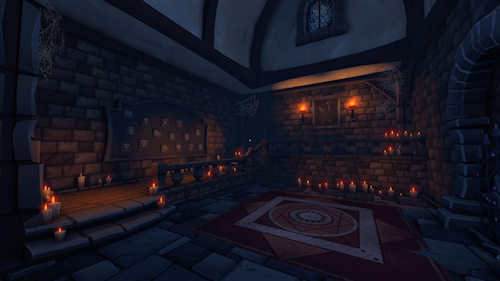
A creepy castle filled with creepy puzzles.
“A creepy castle filled with creepy puzzles.”

The setup is simple: Without much further explanation, you and your partner are walking with a larger group through a frozen wasteland and split off to check out and then take refuge in a mysterious castle. The next thing you know, you’re both waking up to discover that you’ve been split up. One player takes the role of the “librarian” whose primary job is to, confined to a small area, reference books and other useful objects spread throughout. The other player is the “explorer” whose job it is to, well, explore. That mostly involves navigating from room to room and investigating the mysteries therein, which ultimately lead to the way to the next area, like multiple relatively simple escape rooms chained together. Each player is given a walkie-talkie near the beginning to communicate with one another (using in-game VOIP, a feature I always really like even though I usually eventually end up abandoning for out-of-game voice chat) and from then on, the game is on.

Naturally, communication is key to solving these puzzles – the explorer might need to describe symbols or pictures to the librarian, or vice versa. That communication needs to actually be good too, as a lot of the things you’re asked to describe are intentionally extremely similar, so the players need to be detailed to avoid mistakes. There are also puzzles that involve one person helping the other person navigate through mazes, and as typical as that sounds, a lot of these scenarios have some pretty clever twists. Look, I grew up in the UK in the 80s and 90s and watched a ton of Knightmare, so I was more than up for the challenge. (If you know, you know!)

Guiding the Explorer around a maze as the Librarian.
“Guiding the Explorer around a maze as the Librarian.”

While obviously done on a budget, the presentation is pretty good, featuring the same kind of low polygon, colorful, stylized graphics I mentioned learning to love with Firewatch when describing a lot of other games recently (I really need to find a term for this style…) and yet it manages to be quite creepy a lot of the time too. It’s definitely a vibe, and your mileage may vary, but it works for me.

Interestingly, the whole thing only lasts a couple of hours, though you’ll likely want to switch roles and play it a second time, especially if you’re into achievement hunting. Still, the game is often free, and as such, makes a perfect demo for the rest of the series. That strategy certainly worked on us – we were impressed with it enough to immediately turn around and purchase the sequel, We Were Here Too, which I’m sure I’ll talk about here eventually.

Finally, we’ve just completed our playthrough of The Council. The Council is an episodic narrative heavy adventure game developed by Big Bad Wolf, who are probably best known for their later take on the Vampire: The Masquerade universe with Swansong in 2023. I don’t know too much about Swansong, but it appears to use a lot of the same gameplay mechanics as The Council, though it has significantly worse reviews. Hmm. 🤔 This might just be a result of The Council attracting more of a niche, adventure game loving audience than Swansong, which probably attracted a lot of players hoping for a sequel to the cult classic Vampire: The Masquerade – Bloodlines, which it clearly is not.

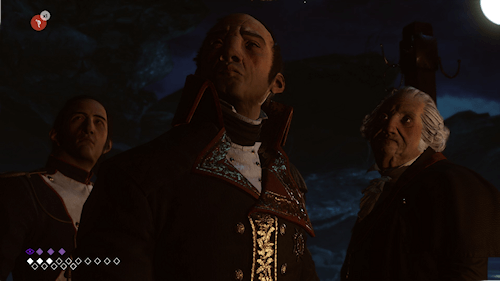
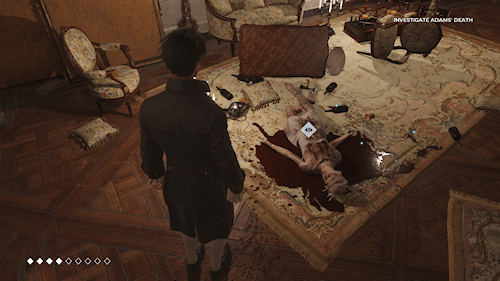
If you think these guys are ugly, you should see Sir Gregory Holm!
“If you think these guys are ugly, you should see Sir Gregory Holm!”

I distinctly recall having some hesitations about this game when first coming across it on the Microsoft Store, but my partner was very intrigued and its reviews were surprisingly positive, so we eventually purchased it. It’s funny, we played them far enough apart that I didn’t really compare it to The Quarry while playing it, but now writing this compiled review, I can’t help but to weigh them against each other, at least a little, given that they’re in the same genre of gameplay. On the surface, this does not bode well at all for The Council, but in some ways, The Council is actually much more interesting.

The main reason for my hesitation was the visual presentation. Screenshots and trailers made this game look almost comically bad looking. You have a variety of historical figures, like Napoleon Bonaparte and George Washington, with ugly, stylized character models, and hey, there’s some kind of a murder mystery or something afoot too? Seriously, what the fuck is this game?! While I have to stand by that initial impression of the graphics, particularly the character faces, as being bizarre, sometimes exaggerated to the extent of being grotesque, overall, I actually came to enjoy the style once I got used to it. This will no doubt be a divisive point though – I’d expect a lot of people will absolutely loath them. That said, the scenery, particularly inside of Lord Mortimer’s mansion, where you’ll be spending the majority of the game, was well executed. Really, the only technical issues with the visuals are around the character animations, which range from “eh, decent I guess” to utterly abysmal. Well, actually, the bottom of that range would be “not there at all” as we did encounter a few bugged moments where characters weren’t animated at all while their dialog played. All but one of these instances were brief enough to not take us completely out of the game though, thankfully.

Flashback to classic adventure games.
“Flashback to classic adventure games.”

The bulk of my impressions were around the gameplay though. On the surface The Council seems to follow a Telltale-like take on the adventure game – a lot of dialog choices, decisions which appear to branch the storyline, and plenty of cutscenes. I’d say that there’s a lot more free roaming and even the odd inventory puzzle in The Council, and there are no real QTE scenes since there are no real action scenes, so this edges it a bit closer to the traditional point and click adventure game of the 90s. Where this gets interesting is that there is a layer of almost RPG-like mechanics on top of all of this: a skill-based system complete with experience points to advance those skills, traits that affect them, and using skills requires spending limited “effort points.” I was initially skeptical…

To go into that all in just a bit more detail, many of your dialog choices and some of your special actions in the game are tied to specific skills. Using these skills requires you to have the skill, of course, and the use of a set amount of effort points, which is reduced depending on what level your skill is at. You level these skills up as you gain experience from chapter to chapter, and there are also books that you can read in limited quantities each chapter, and traits which can sometimes grant you skill points as well. Interestingly, you will still see the options to use these skills even if you don’t have them, which can help guide you to where you might want to allocate skill points later, or in a subsequent playthrough, though every skill gets its turn sooner or later. Your pool of effort points grows as you level up, but can also be affected by items – you’ll find consumables that let you restore some of your points or even make your next skill use free. There’s also one that removes your alterations, which negatively affect the number of effort points you need to use a skill.

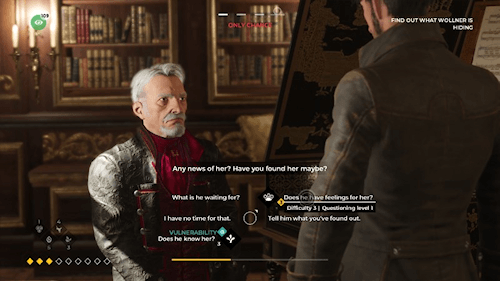
The Council's dialog system is surprisingly complex.
“The Council’s dialog system is surprisingly complex.”

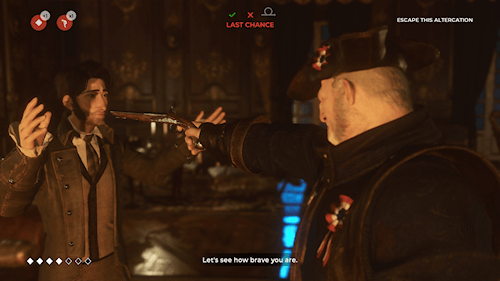
The dialog system also has a few other surprises. First, there are “confrontations” which are special dialog events in which you need to choose the correct options in order to convince someone of something or win an argument, that kind of thing, and your success or failure will often cause a decision-like branching of the story. These all felt a lot more tense than normal conversations, even if the stakes weren’t particularly high. Confrontations are particularly affected by that character’s specific vulnerabilities and immunities to certain skills, which are usually discovered the hard way by choosing the wrong dialog option, though there’s another consumable that will temporarily reveal them to you. Finally, we have “opportunities” which are as close as The Council gets to Telltale’s QTEs – moments where you can, if you’re quick enough, move your cursor to an interactive hotspot that appears briefly, usually over part of the character you’re talking to’s face or body. These unlock special dialog or actions, often revealing new information, including vulnerabilities and immunities.

Overall, some of these systems were a bit bewildering at first, but in the end I think they work surprisingly well, and add a nice gamey component to the otherwise rather simple dialog system that most of these sorts of games employ.

Finally, there’s the story itself. If you’re the type of person who likes ancient and old world conspiracy theory along the lines of something like the Da Vinci Code, you might be as drawn in as I initially was. Right off the bat we have something of a “whodunit” mystery, all kinds of mysterious characters and related subplots, and a backdrop of political intrigue complete with secret societies attempting to pull the strings of events across the entire world. I constantly found myself wanting to learn more about what was really going on here, at least until the rather heavy-handed main reveal (something of a twist) comes in a later episode. While I found that twist, which brings in a supernatural element, and especially my character’s reactions to it to be a little silly, by then I was invested enough to say “fuck it” and just roll with it.

Like I said, confrontations can feel a little tense...
“Like I said, confrontations can feel a little tense…”

Unfortunately, the end of the game was a bit of a let down. There was a final confrontation which just… well, it just suddenly ended. As the game summed up how bad of a job we’d done in the last chapter and the post-game character wrap-up started to play, it took my partner and I a full 30 more seconds to realize what had just happened before we looked at each other and let out a simultaneous “OOOOOOooooooooohhhhh!” It was jarring enough that we did something we never do in these kinds of narrative games – loaded up our last save, corrected a mistake we made (an easy to miss but vital item we didn’t pick up) and went through it again, this time achieving a much better, even if it was similarly abrupt, ending. This does speak of one of the game’s strengths though, in that, not unlike The Quarry, there is a good amount of deviation and branching that can take place here, with over a dozen distinct endings. In fact, there was one major decision in the second to last chapter of the game that really had us debating amongst ourselves about which way to go, which should suggest it was an interesting and impactful one if nothing else.

That sums up The Council pretty well. Despite the weird, somewhat janky graphics and the plot that goes to some unexpected places, then ends faaaarrrr too abruptly, I enjoyed the game, especially its take on the narrative adventure mechanics, which has me suddenly much more curious about Vampire: The Masquerade – Swansong, a game that hadn’t really been on my radar even a little bit before.

Unfortunately my dumb ass didn’t take enough screenshots of any of these games, and some of the ones I did take contained spoilers, so instead I’ve opted to steal them from various random places on the net.

Sierra On-line Books

I read and listen to a lot of books related to computer and video games, and having just finished one such book, I figured I’d make a post devoted strictly to books about the history of one of the most fondly remembered classic game companies, Sierra On-line. Fondly enough for me to talk about three different books, at least!

I’ve posted several reviews of vintage computer games over the years, and often gone into my personal history of some of these games. Sierra On-line is one particularly big component of that, as during their heyday they were without question one of my favorite developers (and when you throw in another of my all time favorites, Dynamix, one of my favorite publishers too!) Sure, LucasArts is widely agreed upon to be the victor when it comes to the fanboy favorite argument of which of the two companies made the best adventure games, but in the 90s Sierra held much more territory in the diskette and CD-ROM boxes of my personal game collection; the Space Quest series in particular being an all time favorite.

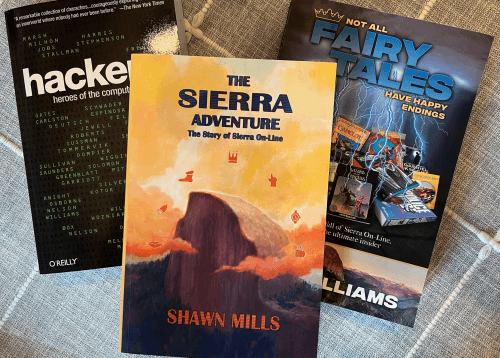
Three Books about Sierra On-line

Hackers: Heroes of the Computer Revolution by Steven Leary is surely one of my favorite non-fiction books; when I eventually stumbled upon it I honestly couldn’t believe I hadn’t read it much, much earlier in life. It covers a lot more than gaming, but of relevance here is the last third or so of the book which focuses on the shift of personal computer software development, while still somewhat rooted in enthusiast hacker culture, to a more commercial direction in the early 1980s. In particular, it mostly focuses on Ken Williams and Sierra On-line. Keeping in mind that this book was first published in 1984, this was a very contemporary look at what was then a fairly young version of Sierra, having only just released the original King’s Quest.

Of course the story of the founding of On-line Systems and the development of Mystery House is covered, but then Hackers moves into chapters devoted to Sierra’s close bonds with their peers, such as Brøderbund and Sirius Software, its “summer camp” like culture, and its gradual shift away from that and “hacker” ethics in general, along with all kinds of now legendary stories including the deal with IBM to develop for the PCjr, Richard Garriott joining Sierra, the noncompete lawsuit against Atari, and a whole lot more. The style of these later chapters is a bit different than those earlier in the book, feeling more like embedded journalism pieces than chapters in a book about computer history. Crucially, Hackers really provides a different take on who Ken Williams was and how he ran Sierra at the time than what I was familiar with. This is extremely fascinating stuff and absolutely essential for providing some eye opening accounts of those typically skimmed-over early years of the company.

I’m sure there had to be some, but I don’t know of anything else significant outside of blurbs posted in Sierra’s own manuals, guides, and magazine until 2018, when The Sierra Adventure was published. I was stoked. At long last someone put together a book about the history of the venerable Sierra On-line! The author, Shawn Mills, is a writer for Adventure Gamers and one of the founders of Infamous Quests, a throwback adventure game developer best known for Quest for Infamy and a couple of notable Sierra remakes. Respectable bonafides!

The Sierra Adventure isn’t quite the exhaustive chronicle of the history of the Sierra On-line and every last one of its products that many might be looking for in such a book. Instead, it attempts to approach the subject almost entirely from interviews with former employees. Quite a lot of notable people contributed the quotes that make up the bulk of the book’s content, though Ken and Roberta Williams themselves, still keeping a distance from all things Sierra at this point, are rarely quoted. Even still, there is enough here and I think the author put it together with enough love to make it a worthwhile read. I have to say, I was a bit annoyed with how the book starts, devoting its first chapter to flashing just a bit forward to talk about Sierra’s first couple brushes with death and how the company survived them before going back and starting at the beginning with On-line Systems and Mystery House in the next one. This kind of literary device often works quite well, but here it just came across like some kind of a bizarre editing snafu. A relatively minor gripe, I admit.

In 2020, founder and former CEO, Ken Williams himself, wrote and published Not All Fairy Tales Have Happy Endings. Part autobiography, part industry insider insight, Not All Fairy Tales Have Happy Endings is the story of Sierra On-line from the unique perspectives of Ken, and to a lesser extent, Roberta. While I did sometimes find the writing in need of a bit more editing (for example, Ken often repeats himself, especially from chapter to chapter) I quickly started to get in tune with Ken’s “voice” and ended up really enjoying his take. By the way, I originally listened to the audiobook version, and when I later got a printed book I was surprised to find it full of interesting full color pictures. Very much an upgrade!

Without a ton of detail, the book sometimes feels like just a bunch of strung together anecdotes, though it was all strung together reasonably well despite its numerous interludes. It certainly succeeded in satisfying my biggest hope for the book by filling in a lot of gaps about Ken and Roberta and the unique company culture that produced the games I loved so much. I was perhaps most intrigued by the conflict between Ken’s cold and detached approach to business: only wanting to work with “A players” and chasing monetary success, at times to the detriment of the company, with his more personable and generous side: hiring random locals to grow into very specialized positions and running the company like a big, fun family, and how that stuff all changed as he eventually ceded more of Sierra’s management and control to others as the company grew. I don’t know that Ken sees this as a “conflict” himself but, especially given Sierra’s eventual decline, it stood out to me. Speaking of which, this book gave me far more insight into the death of Sierra than anything else I’d read, with Ken providing a version of events that no one else has ever, or could ever, fully present around the CUC takeover and subsequent loss of control. It really is, as the title suggests, a bit of a cautionary tale.

Of course, Not All Fairy Tales Have Happy Endings is all from Ken’s point of view but, despite the obvious inherent bias there, his accounts do come across as sincere to me. Regardless, I’d highly recommend reading the sometimes overlapping accounts in all three of these books for a more well-rounded perspective. I’d also recommend reading them in the order I covered here; Ken even references his chapters of Hackers in Not All Fairy Tales. When taken together, we finally have as close to a complete picture of the company as we’re likely to ever have.

There you have it! Needless to say, these are far from in-depth reviews and I’d recommend Evan Dickens’s reviews and comparison between The Sierra Adventure and Not All Fairy Tales over at Adventure Gamers if you want to dive a little deeper than I did here.

This article was actually taken from my other blog, originally posted in March of 2023. Given the subject matter, I meant for this to be more of a cross-post but, hey, I guess I got a little distracted. *shrug*