Tag Archives: Friendslop

Mazes, Mulligans, and Monsters

My little co-op group occasionally takes breaks from the open world survival crafting games we normally focus on to play other things. Sometimes this is due to finishing one game and not having the time to properly dive into the next one that session, and sometimes it’s as more of an palate cleanser. As with Cleaning, Climbing, and Crime, I’ve got 3 more such games that we played relatively recently to cover.

MIMESIS is another “friend slop” game looking to capitalize on becoming a flavor of the week hit. While I don’t know how successful they were, the game is definitely interesting. At the risk of being offensively reductive, I’d describe it of combing the simple controls and pleasantly stylized graphics of something like the previously discussed Peak (but let’s be honest, thousands of other games too) with the basic gameplay conceit of an older and briefly very popular friend slop classic we haven’t discussed here before, Lethal Company. In a sentence, you and your group are sent into a creepy abandoned facility to scavenge while being harassed by whatever supernatural or at least paranormal entities lurk in the dark.
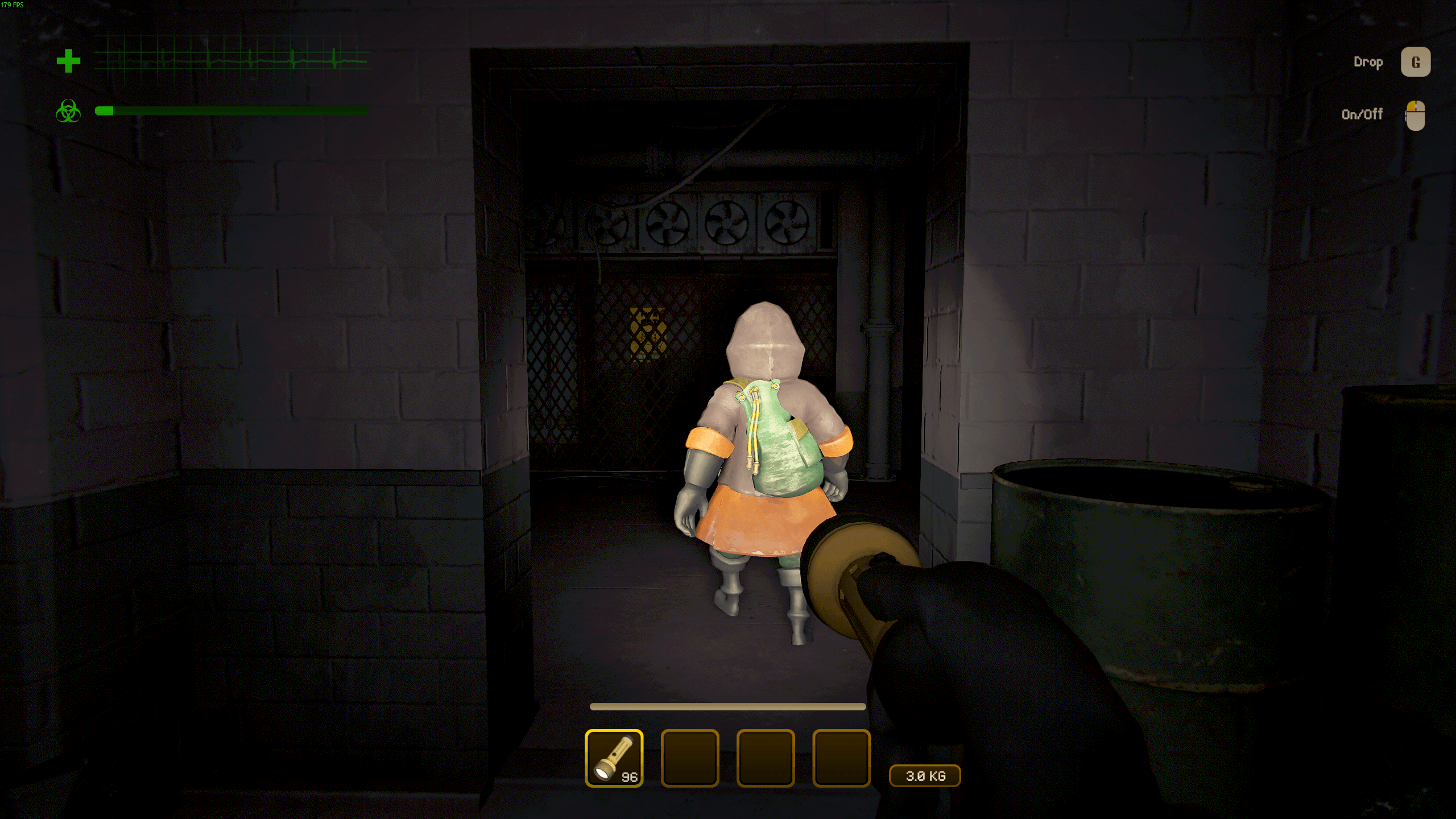
Get used to this view.
“Get used to this view.”

What sets MIMESIS apart is the clever way these “entities” are implemented. There’s something similar to Left 4 Dead’s AI Director going on, attempting to adapt to player behavior to for a varied and dynamic feeling experience regarding when, how, and what new entities and other events are deployed. In MIMESIS’s case, this also almost always includes a (usually gradual) escalation from the scares coming exclusively from the tension of being in a dark, maze-like environment and knowing that shit is eventually going to pop off, to utter chaos as you and your teammates end up getting split up, being chased by all kinds of terrible shit, and not knowing who is friend or foe.

That last part is key here, as there’s also a system in which some of these entities assume the identities of players, alive or dead, including attempting to mimic their behaviors and even repeating voice lines they said (which means for the best experience you should definitely be using the in-game voice chat.) In our age of LLM based AI this could get pretty sophisticated, though I don’t think what MIMESIS is doing is really is all that technically interesting. Instead, it often felt like dumb luck when just the perfect voice line was repeated at just the right time. In any case, it is highly effective in making people paranoid and thoroughly creeped out, and when things did get chaotic, it was some of the funnest, most hilarious moments I’ve had online in quite a while. Surprisingly, some of my favorite moments were after being killed and spectating on the remaining players à la something like Counter-Strike, only it’s much more entertaining to watch your remaining teammates frantically run around bumping into one obstacle after another, especially when that leads to interacting with your doppelganger(s) without a clue that you’re actually dead.
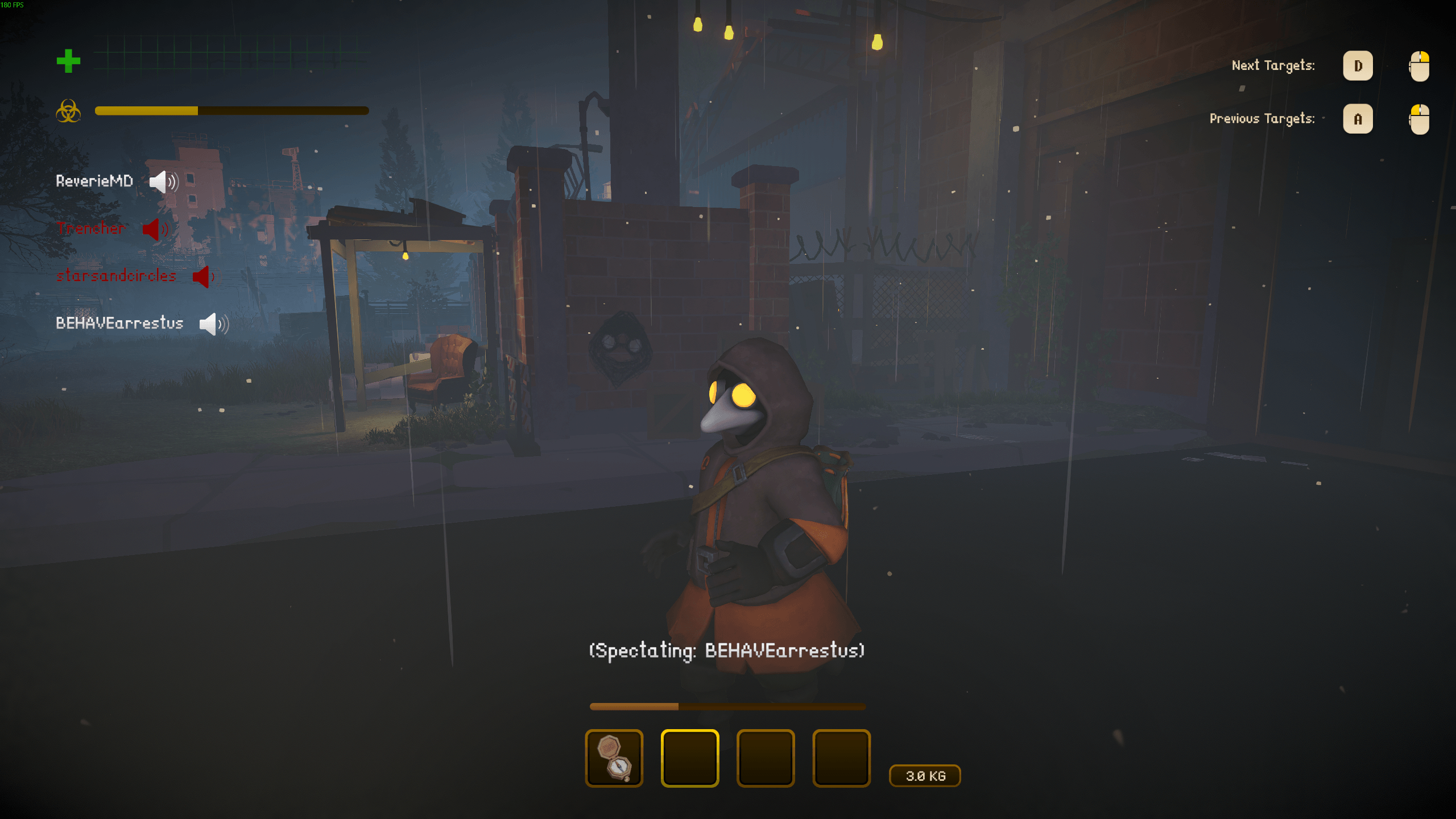
Spectating another player as escape to outside.
“Spectating another player as escape to outside.”

Naturally, there is a little hub area where you and your group can return to deposit your loot in between runs, buy some equipment and make other upgrades that persist to some degree, but this is an aspect of the game I can’t really speak to as after just a handful of runs across a couple of sessions, we all felt like we’d experienced what the game was about, had some fun, and were ready to move on. While I could see some groups sticking it out for much longer, it takes just the right game for our group to commit to something longer term.

Speaking of which, the next game is another “friend slop” game, and one we played for even less time. Super Battle Golf, as its name might suggest, is perhaps hard to even call a cooperative game. That is, it’s essentially a basic cooperative golf game, except all players go at the same time instead of taking turns, and you’re essentially racing against each other to see who can complete the hole first. As if that wasn’t chaotic enough, there are all kinds of funky items including Mario Kart like power ups you can find scattered around to make things that much more insane. There’s nothing like lining up the perfect shot to be suddenly run down by a golf cart, or similarly disrupting someone else by nailing them with a homing missile just as they’re about to take their swing.
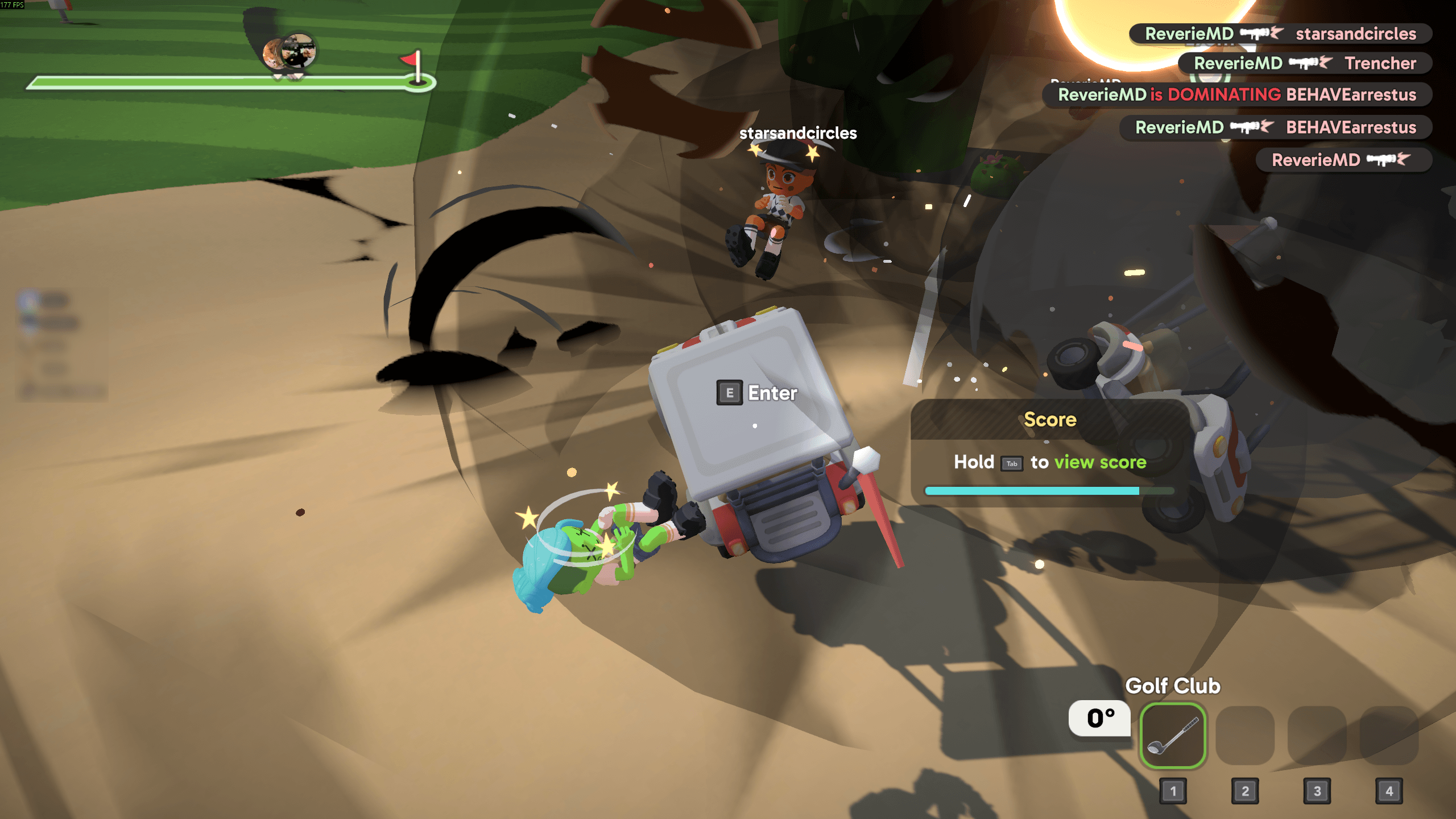
The exact moment a rocket slams into a couple of golf carts. FORE!
“The exact moment a rocket slams into a couple of golf carts. FORE!”

Super Battle Golf was definitely fun to screw around in, but had even less of a hook to keep us playing long term than games like MIMESIS or Peak, so screwing around for about 2 hours or so was all our time with the game amounted to. Still, it’s one I could see randomly going back to when we need to kill an hour or two. In fact, we choose this one due to having a fifth person join us that night and not wanting to toss them into the middle of a longer or more complex game. Objective achieved!

And now for something completely different, For the King II. One of our group had played through the first For the King game with a different group of friends and was itching to try the sequel. I thought it looked pretty neat, and it was definitely a different type of game than our usual survival games OR the kind of quick friend slop experiences we just covered. Instead, to me, it feels very much like it is based on some of the popular cooperative board games which had been making waves in the last 10 or so years. In particular, having only really played a little bit of the Jaws of the Lion version, it reminds me quite a lot of Gloomhaven, though there have been tons of vaguely similar fantasy RPG inspired board games over the years, such as the venerable Dungeon! and classics like HeroQuest.
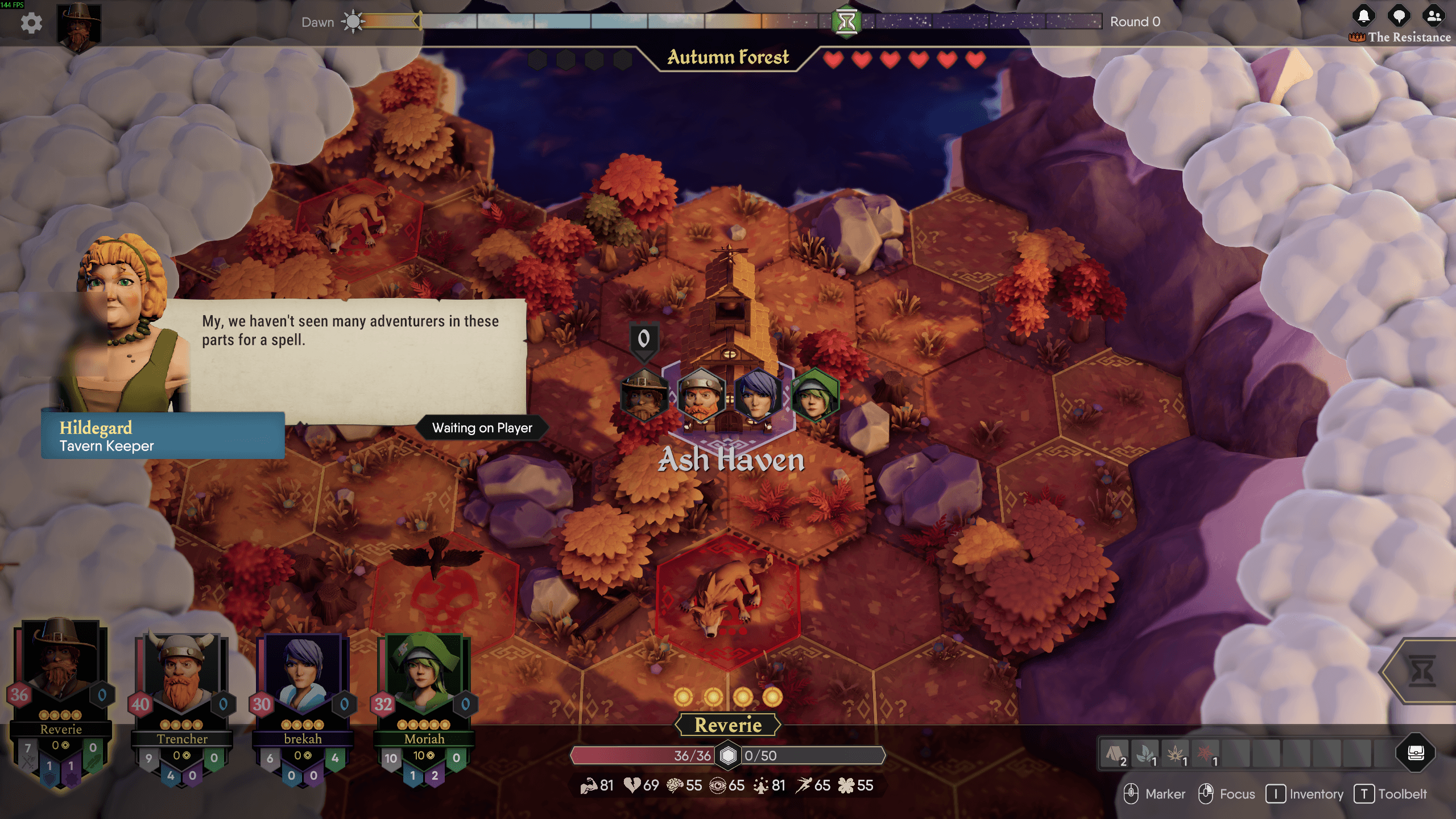
The world map as we kick off a new adventure.
“The world map as we kick off a new adventure.”

To describe that in a little more detail, the gameplay is something like this: Each player picks a character/class archetype and some starting traits and equipment and then get thrown onto a hex based world map where they take turns moving to trigger fights, visit towns, and investigate events and other points of interest. At the same time, each adventure (essentially a mini-campaign based on a single world map) has its own story with its own victory conditions, and because of the magic of video games, this can feel reasonably dynamic, with NPC dialogs and plot events triggering, etc. Oh, and I almost forgot to mention that in something of a rogue-lite twist, your characters do not persist between campaigns, but you’ll unlock new traits and equipment, points of interest, and even new classes which you can use in your next campaign.

As an aside, the class system is pretty interesting, as it mostly only dictates a few special abilities and your starting stats. The rest of your abilities are determined by the traits you pick during creation, and the weapons and other equipment you equip along the way. This means while it might be optimal to have a high intelligence, magic aligned character use a magic wand or staff, you can kind of do whatever you want.
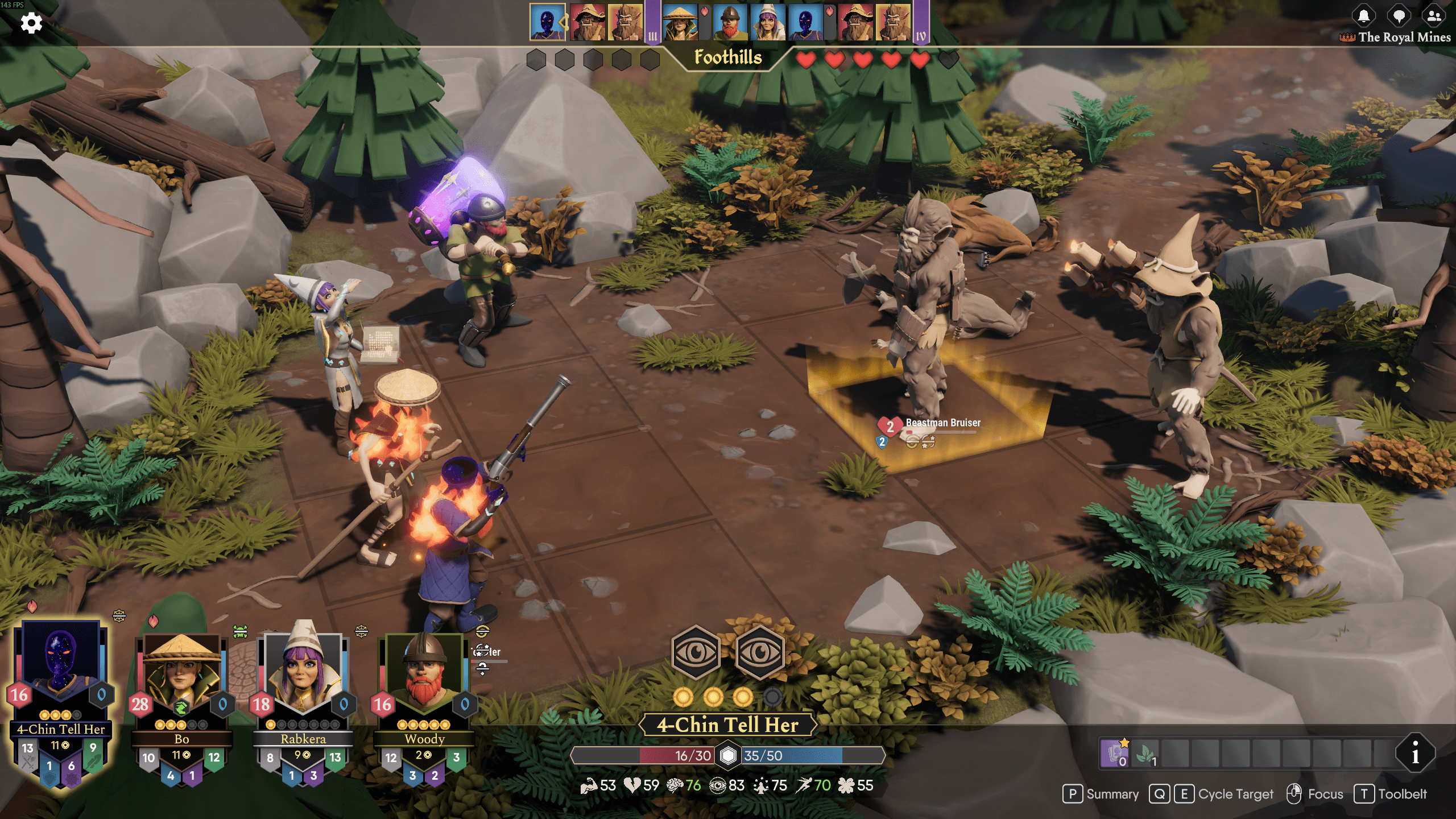
Strikingly familiar turn based tactical combat.
“Strikingly familiar turn based tactical combat.”

The combat in For the King II resembles that more of a traditional turn-based JRPG in which your group and the enemies you’re fighting are placed on a grid and cycle throw and initiative based sequence. Like those JRPGs, it can feel a little tactical, with positioning and choosing when is the best time to deploy what attacks, abilities, and items, being a big part of the equation. There are also dice rolls governing a lot of the aspects of this, though they’re not presented as obviously as some games. In fact, in many ways I was surprised how little For the King II actually leans into its obvious board game inspiration; it almost seems like its trying to hide it.

Most of these fights take place on the world map and need to be purposely triggered unlike the infamous random encounter trope most often associated with JRPGs, though there are also scenarios in which you might need to defeat multiple waves of enemies. There are also dungeons, which are similar but much longer and involve moving from room to room. Most of these rooms are fights, though there are sometimes other events, choices on which path to take, and opportunities to heal and rest between rooms.
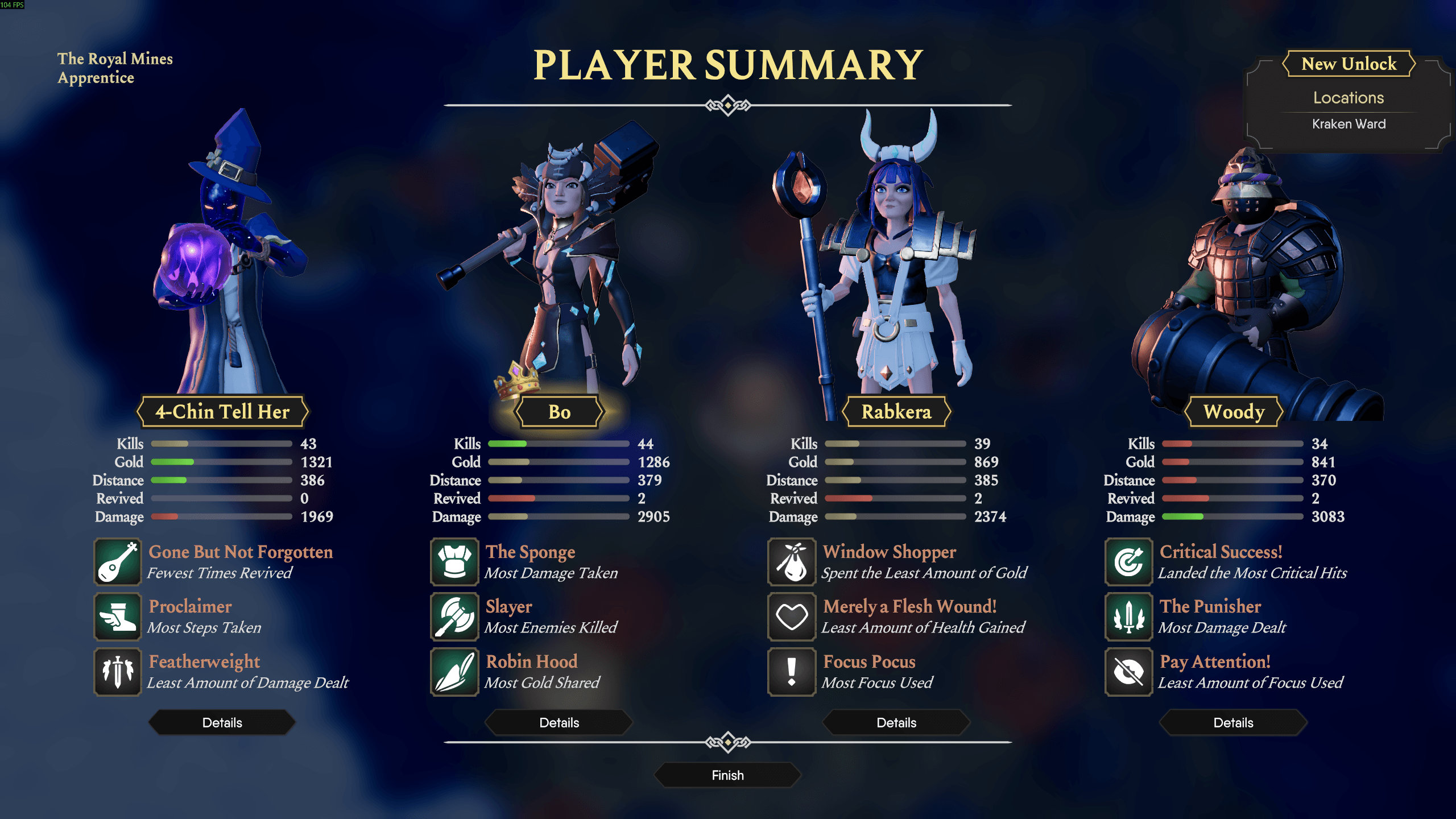
The stats screen that comes with the successful completion of an adventure.
“The stats screen that comes with the successful completion of an adventure.”

I didn’t mention the aesthetics of the game yet, and I really should. The first For the King had a “mid-poly” style that looked quite nice. For the King II drops the mid-poly style and goes much harder into the cartoony style that was hinted at in the first game, while also further refining the overall look with some nice effects and polish. Overall, while relatively simple and certainly stylized, I think it looks quite nice.

There was a little frustration from my group around For the King II, but once we understood the gameplay mechanics a bit more (another thing it borrows from board game adaptations is its fairly unintuitive gameplay systems and atypical UI choices) and had experimented a little with different characters/classes, we started to have a lot more fun. If I recall correctly, we failed the first adventure twice, and then sailed through it and two or three more of them, clocking in something like 30 hours of game time. Personally, I had a lot of fun with the game and wouldn’t mind coming back to it, even if just by myself, though I think as a group, repetition had started to set in and we were ready to move on to something different.

Interestingly, the next game we tried ended up being similar in a lot of ways, but we’re still playing that one, so more on that later!
Cleaning, Climbing, and Crime!

As a follow-up to Surviving Survival Tres, my group also snuck in some lower commitment co-op games in between some of the sessions of those games. We mostly did this if completed a game early and weren’t ready to quit playing for the night and/or hadn’t quite made up our minds on what our next longer game would be. The first of these games was Viscera Cleanup Detail.

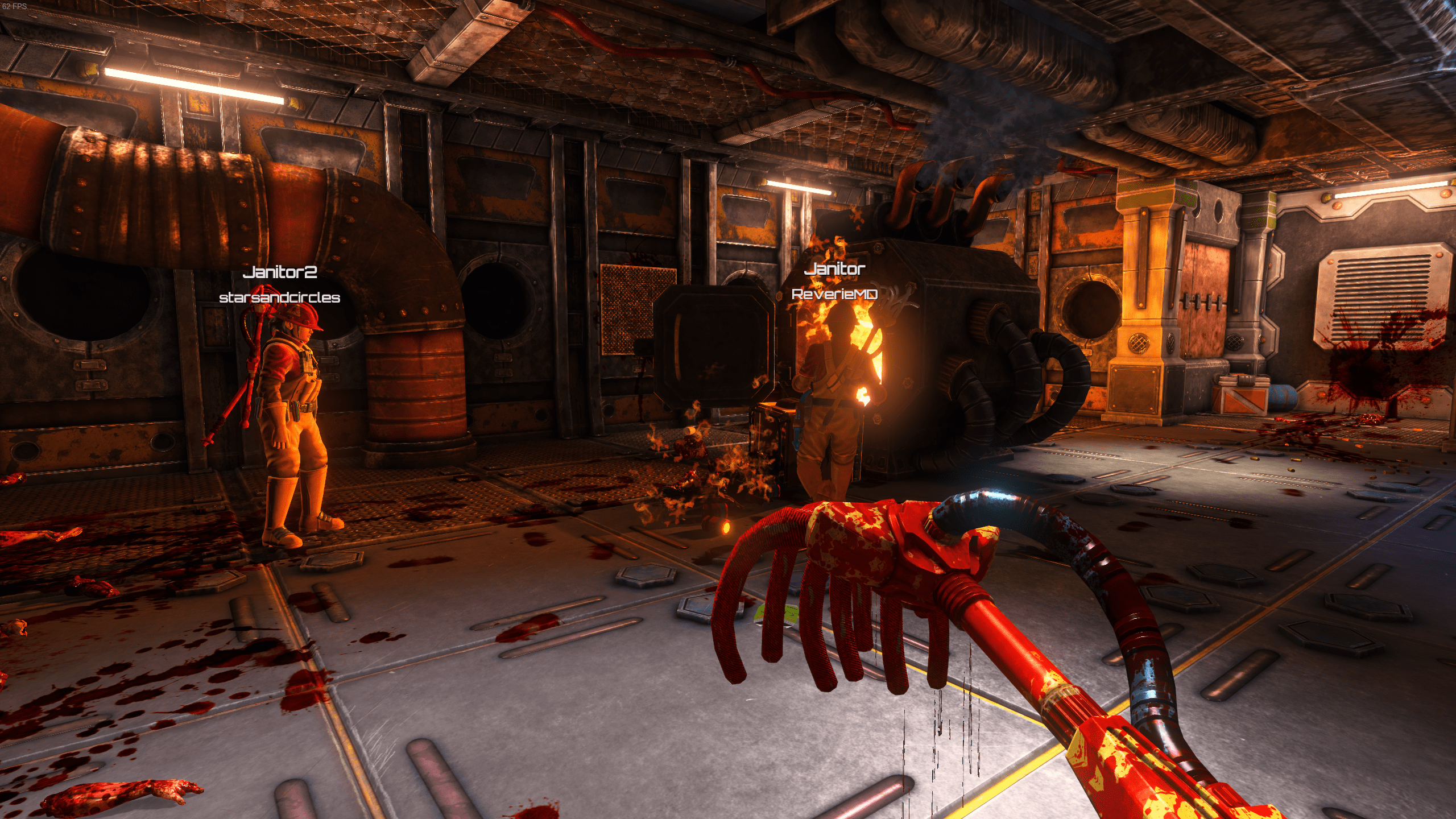
I’ve been wanting to play VCD for quite a long time, after first hearing people rave about it on my favorite podcasts when it was still in early access, something like ten years ago. It had a reputation for being a scrappy little indie game that both helped invent the now hugely popular genre of games that capitalize on repetitive and comfortable yet somehow addictive activities (see Powerwash Simulator and half of the other “simulator” games on Stream) as well having a pretty amusing narrative conceit: ever think about the carnage and wreckage left in the player character’s wake in shooters like Quake and Doom? No, probably not, but these guys did! They also thought about the poor bastards that have to clean it all up. That’s VCD in a nutshell. You, and assuming you’re playing cooperatively (you should be!) your companions are essentially space janitors who have to bring order to the utter chaos left in each of these spaces. My boy Roger Wilco never had it so bad…

Welp, it's another day in the office...
“Welp, it’s another day in the office…”

These days repetitive task games, as well as games that give players purposely inaccurate controls and/or wonky physics for laughs, feel, eh… kind of quaint. Both gameplay tropes have been iterated on so much over the succeeding years that I can’t help but feel that VCD has aged kind of badly in comparison. Despite how much I love the concept of VCD, I was caught off guard by how much it leaned into the latter in particular – I was hyped to clean the ever loving hell out of some gore-strewn space station corridors, but I really wasn’t expecting the game to fight me so much in the process. Worse yet, given the game’s age, I was also never quite sure whether this was all very intentional or if these systems were just… bad. I have to imagine the former, since the game also gleefully puts other weird roadblocks in your way, such as randomly malfunctioning equipment. Regardless of intent, it feels a bit outdated and clunky by today’s standards and, honestly, while there were some hilarious moments in the 90 minutes or so I played it, I found myself more frustrated than amused most of the time.

I may go back to it one of these days just to give it a fairer shake, but I left the whole thing a little disappointed.

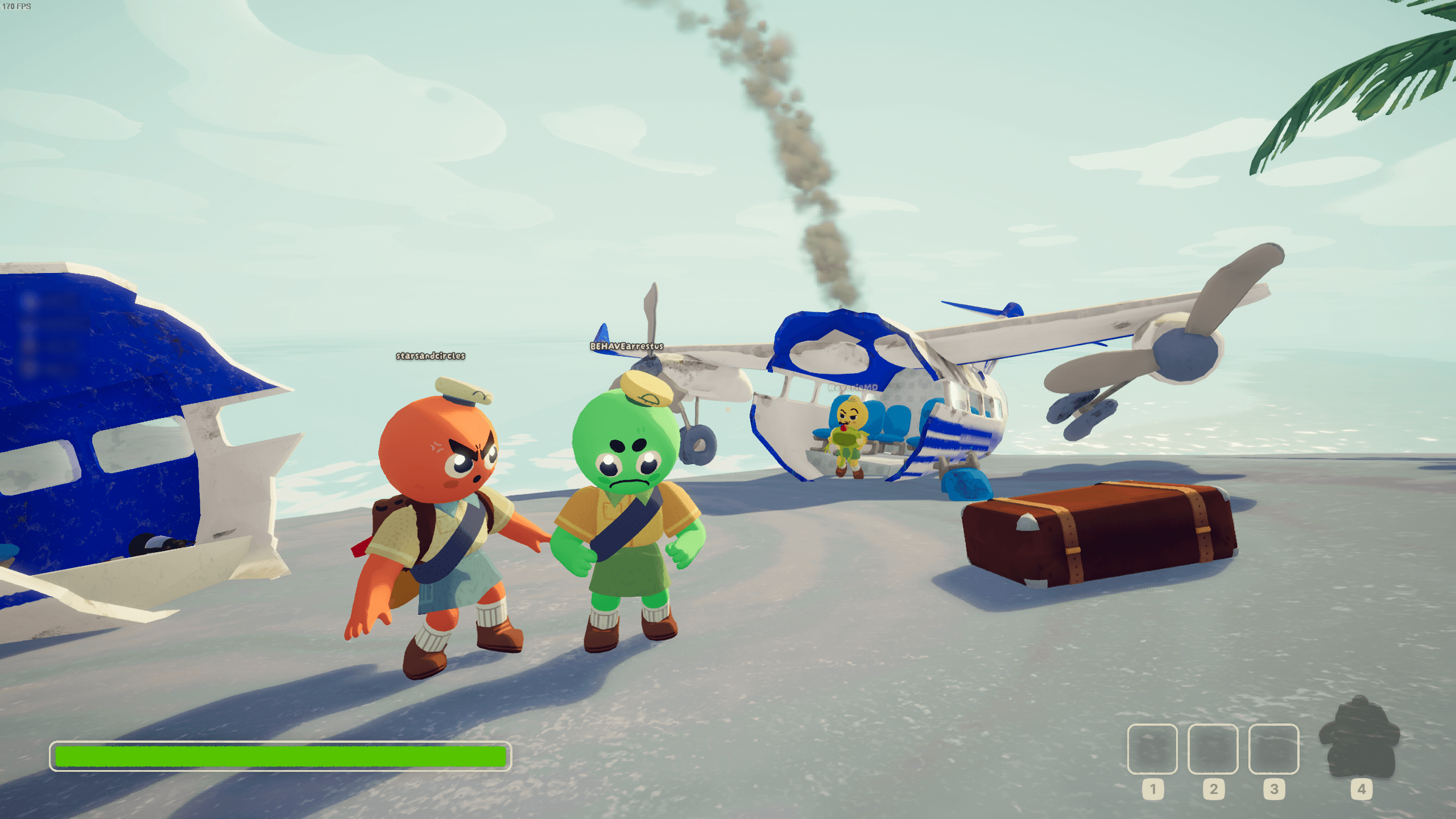
Speaking of indie darlings, we also hopped into a much newer game to hit the zeitgeist, Peak. I’d heard about Peak from podcasts like Rebel FM, but honestly, it seemed like everyone was talking about it for a little while there.

I mean, this picture was too perfect not to use.
“I mean, this picture was too perfect not to use.”

Peak is a cooperative game where you and your friends have to navigate some fairly harsh terrain, including climbing up mountains via some pretty sketchy cliffs. There’s a bit of that wonky physics stuff going on here too, but all and all it feels much more like it’s giving you the basic confines you need to work within to create a bit of a challenge rather than purposely trying to sabotage you. I suppose that’s a fine line and not all that objective, but that’s certainly how it feels to me. There are some neat little touches too, like how climbing works, the ability to give your friends a hand to pull them up, and the numerous items you can loot along the way that can sometimes help you achieve your goals.

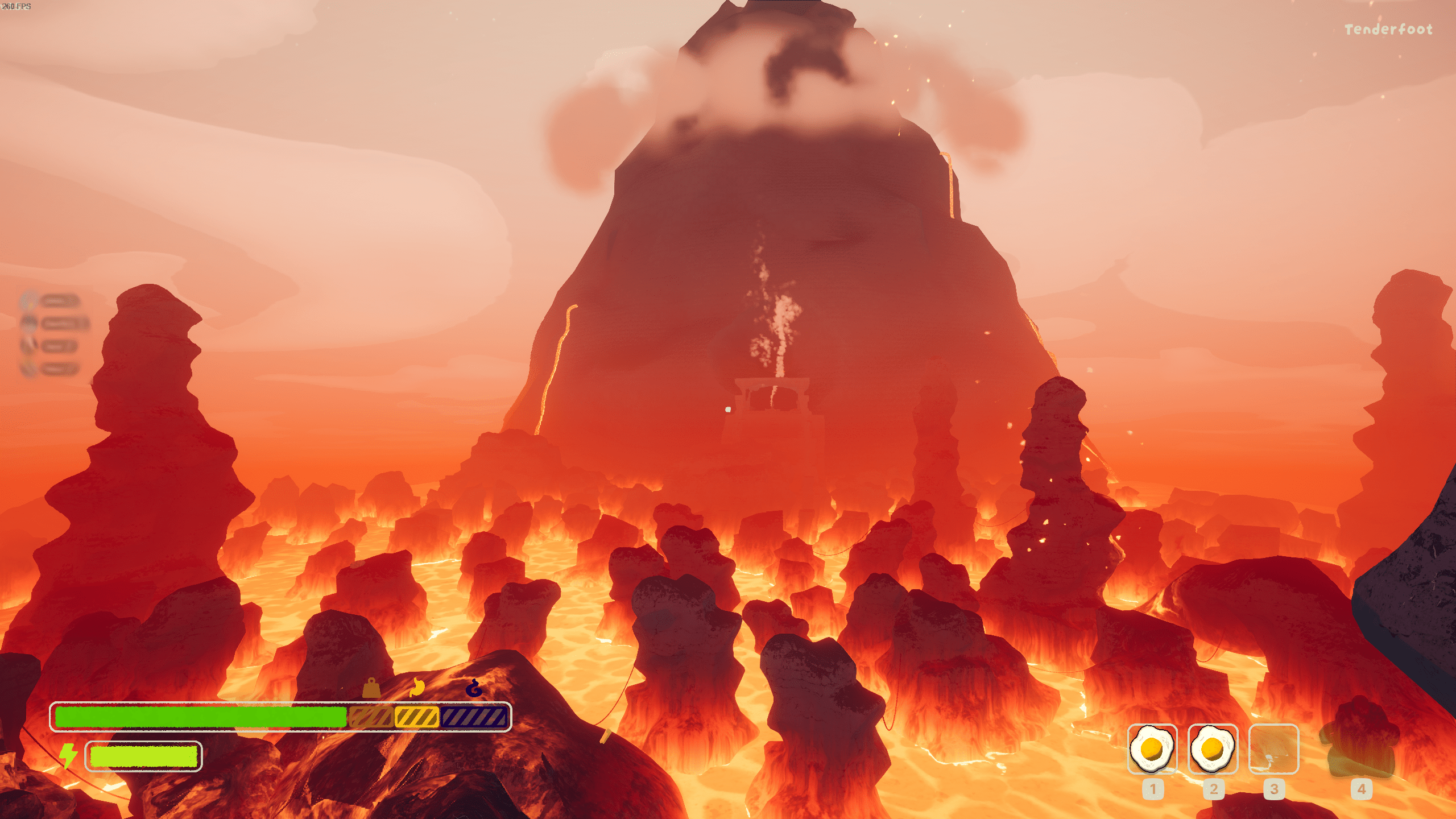
The game also has an optimistic vibe which starts off feeling like a fun adventure with your friends. It doesn’t really stay that way though – while you’ll quickly get better at the game, naturally, the first several attempts to get to the top of the first mountain can feel tense and a little harrowing, and it only gets worse from there. That is, each run in Peak has you navigate through 5 different biomes, procedurally generated daily. Some of these biomes are harder than others, and many have some neat features unique to their themes, like the prevalence of ice anchors and storms in the snowy area, for instance. It’s worth noting that we played before the most recent two types of biomes were added to the game, so no experience with those. Anyway, this culminates in a final area, The Kiln, which is an almost vertical climb up a massive shaft while lava rises beneath you. Ooof!

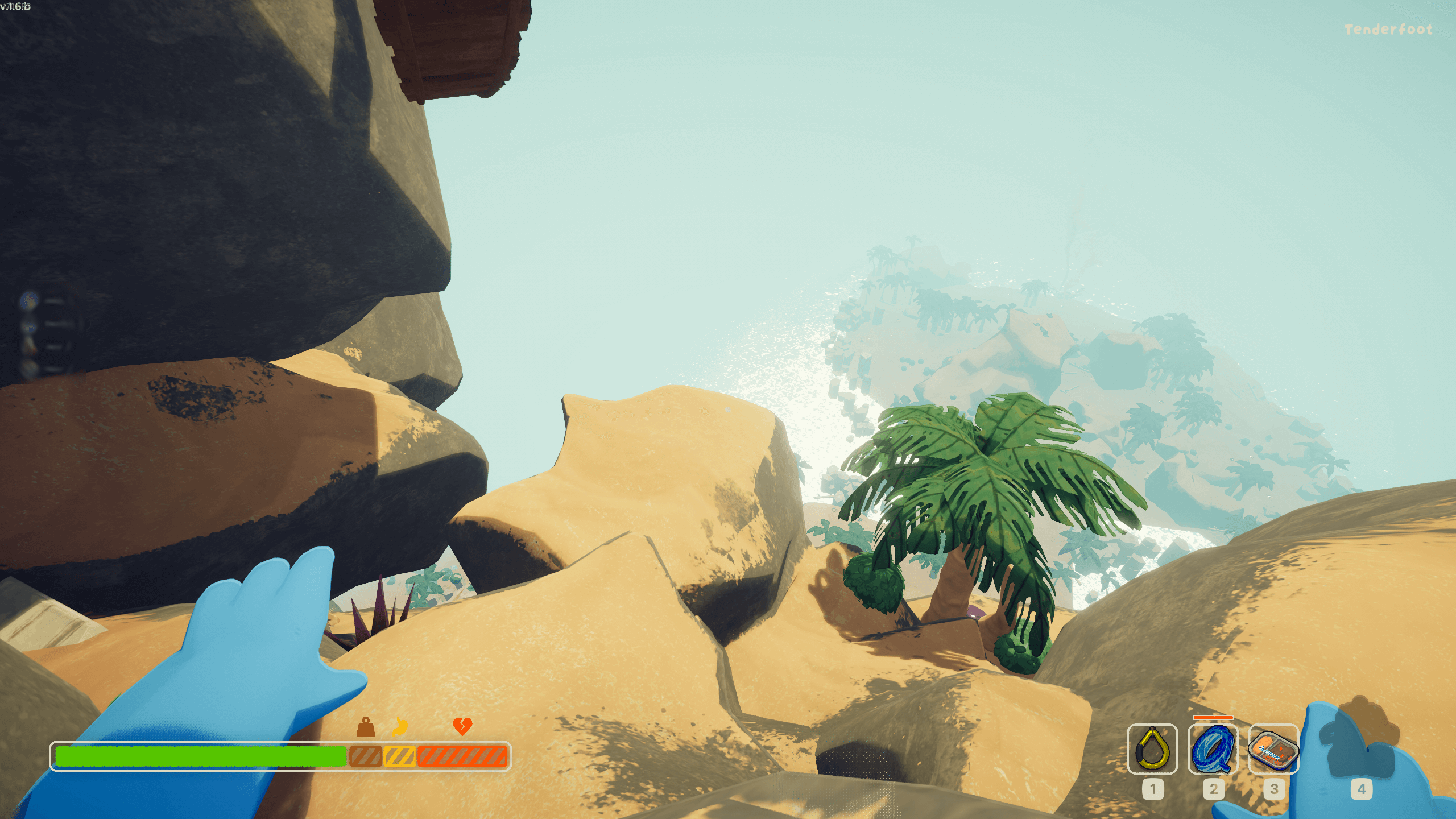
Looking back down onto the beach from the first mountain.
“Looking back down onto the beach from the first mountain.”

Of our sessions, we managed to make it to The Kiln multiple times, but by the time we got there we were in bad shape and had depleted most of our items, and were therefore ill-equipped to make it to the top. Not that we didn’t give it a go regardless. Making it all the way to the end but not beating it multiple times is a bit of a downer, though honestly I think most of our frustration came from other areas. For one, if your character dies and can’t be revived (which is common, since sometimes you’ll die from a nasty fall and your teammates won’t be able to backtrack to where you fell) you can’t be resurrected until reaching the campfire at the summit of the current biome. This means if you die just after getting there, you might be effectively out of the game for a very long time.

There’s also something of a time limit in the form of a rising fog which, not unlike the closing circle in a Battle Royale game, forces you to keep moving and keep somewhat of a decent pace.The fog is rarely a problem in and of itself, though if you all manage to die, be it to the fog or a series of misadventures, you all have to start all over again. I was personally pretty surprised that the first time this happened we didn’t restart back at the last campfire. Having the campfires be checkpoints seems like an absolute no-brainer to me, but I suppose that is counter to the rogue-like “run” design the developers had in mind with Peak. Fair enough, I guess, and it does seem like they’ve added a partial solution to this (the “Checkpoint Flag” item) in their latest content push, so perhaps that will help (although given the random nature of finding items in this game and the fact that its a per player, single use item, I’m skeptical!)

Okay, now shit is getting real!
“Okay, now shit is getting real!”

After my 8 or so hours with Peak, I think my biggest frustration with the game is how close it is to being really, really great. I fully expected the devs to iterate on the design and quickly release more and more content, but it’s been a little slow and underwhelming. These types of games (recently I’ve been hearing them called “Friend Slop” which is both very descriptive and a little unfortunate) tend to be a little short-lived in terms of player interest, with a new one, RV There Yet?, currently getting a lot of attention. Still, I think Peak is a fun game and recommended for people looking for a quick, pick-up-and-play cooperative experience, and I doubt that’ll change even after everyone has moved on from it.

One game I almost forgot we even played was Escape First Alchemist. This was a pretty simple escape room style cooperative game, though unlike the last game of this type I played, We Were Here, EFA feels much more like a true escape room experience – you and up to 3 others are tossed into an area with no prescribed roles, you just have to work together to solve puzzles to progress.

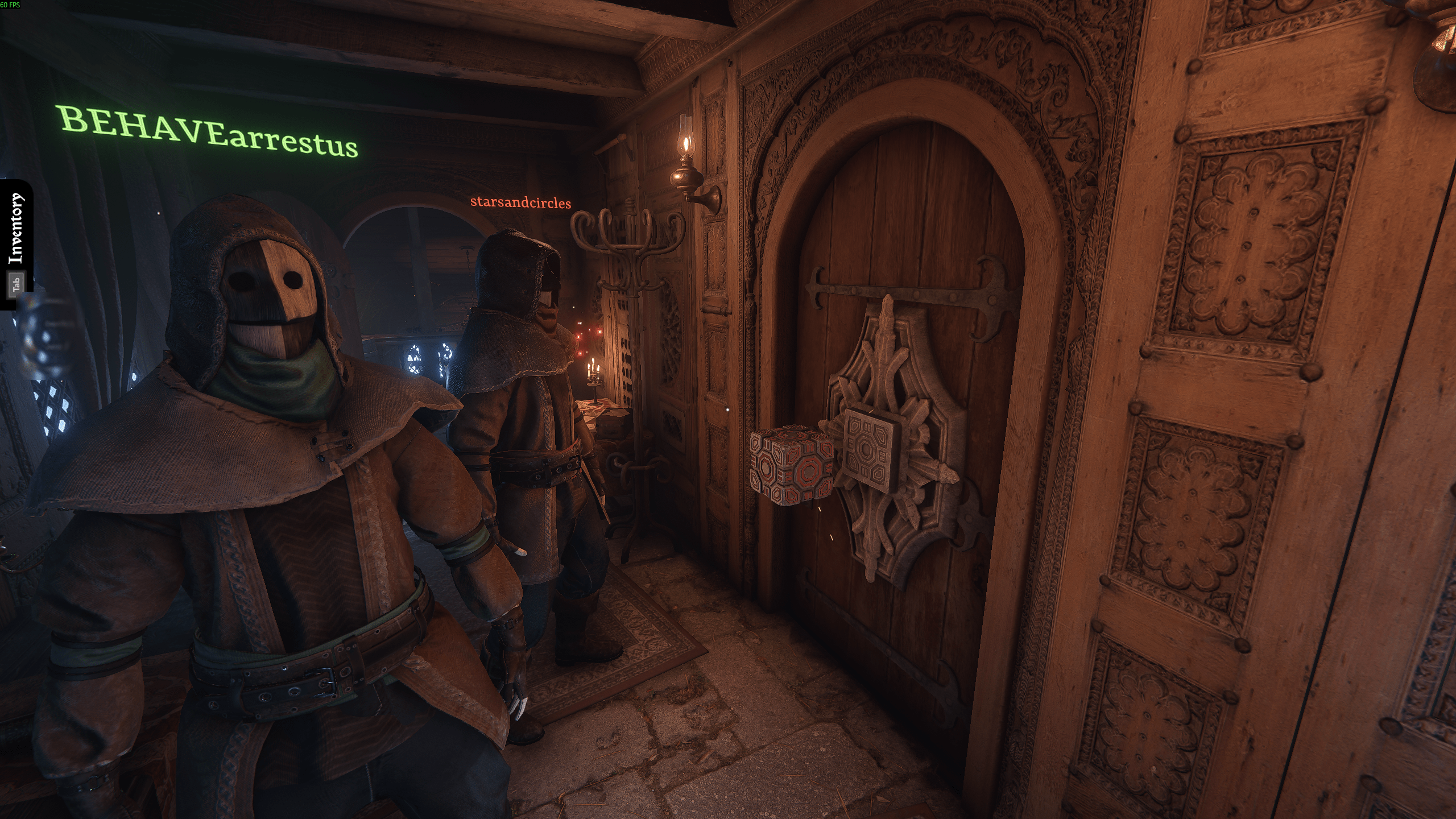
Unraveling the mysteries of... a door.
“Unraveling the mysteries of… a door.”

The setup is that you’re an alchemist’s apprentice, and you’ve got to try to free the master alchemist, Trismegistus, from whatever kind of magical pocket dimension he’s got himself trapped in. The puzzles are themed around this – brewing potions to affect yourself with whatever strange abilities they grant, fiddling with arcane machines, accessing secret passages with interesting mechanisms, that kind of thing. Honestly, while the game no doubt has some very cool moments and interesting ideas, as a whole I didn’t find many of the puzzles or the gameplay overall to be all that compelling. I was especially let down by the ending, which didn’t feel anywhere nearly as climactic as I want from a game like this. Honestly, ending with some vague text is kind of a letdown when the rest of the presentation was so nice.

Still, EFA only takes 2 or 3 hours or so to play through, and as a co-op experience, it’s fun enough. It has some really nice visuals and an excellent presentation overall, which really helps sell the experience, although the magic book that acts as your narrator apparently annoys a lot of people. I think in our case we were too busy talking amongst ourselves to focus too much on it, really. Personally, if Escape First Alchemist sounds appealing to you, I’d probably hold off until it’s on sale.

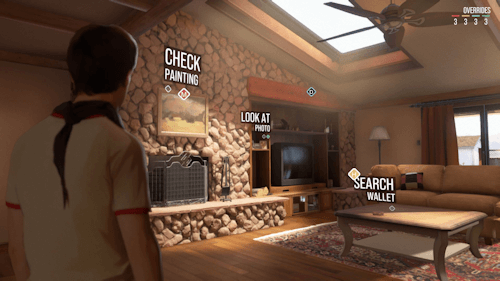
Well, it definitely looks like a narrative adventure game!
“Well, it definitely looks like a narrative adventure game!”

Radically changing directions, it’s been a while since my partner and I played through a narrative game together, but the mood struck us and we ended up diving into As Dusk Falls. Really, As Dusk Falls has been on my radar since before it was released back in 2022, but despite constantly hearing people sing its praises, I was skeptical of what little I knew of its story, and I actually found its unique art style, which reminds me of a low-rent version of A-ha’s Take On Me music video with its stylized makeovers of static images of real actors choppily stitched together, kind of off-putting. I’m not sure what intrigued her about the game, I’m guessing she heard some buzz about it from somewhere, but when she suggested it, I figured why not finally check this thing out.

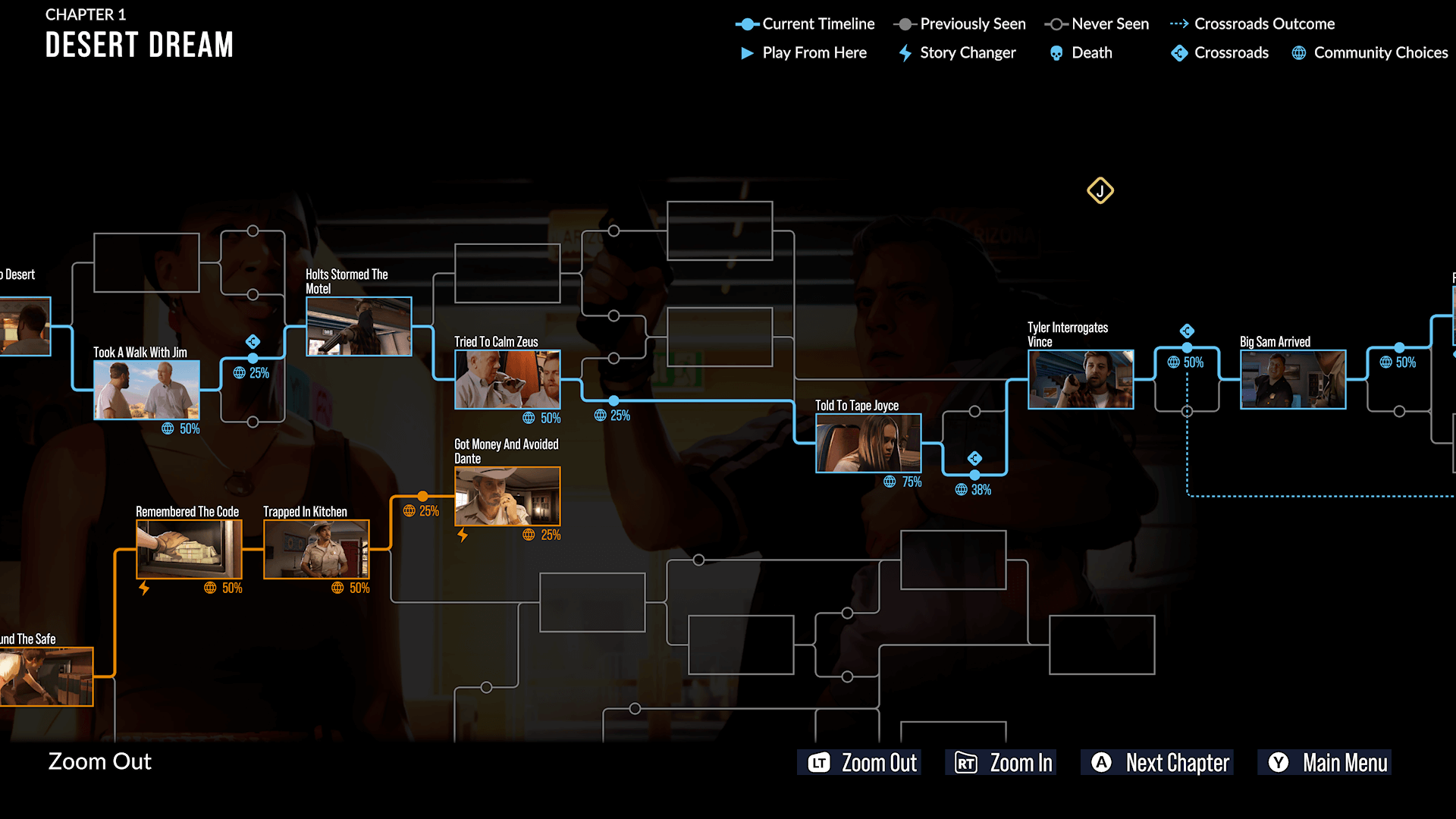
For those unaware, As Dusk Falls falls is a narrative adventure game where you make conversation choices and other decisions, occasionally spiced up with some action scenes in the way of relatively simple QTEs. The game is split up into numerous chapters over 6 episodes, although for some reason the episodes were released all at once rather than the usual strategy of having weeks or even months between releases. In terms of how this is all implemented, I think it falls closer to the confusingly similarly titled Until Dawn or one of SuperMassive’s other horror adventure games (although I believe Quantic Dream’s DNA is what is actually at play here, though I’ve yet to play any of their games so I can’t quite compare them) which is to say that your choices matter a lot more than, say, a Telltale game, in terms of impactful results, with numerous endings (or at least, variations of endings.) The game wants you to be aware of this too, as at the end of each chapter you’re shown a tree of every impactful decision and how they all branch out, which is always really fascinating to look through.


“These end of chapter decision trees are too cool!”

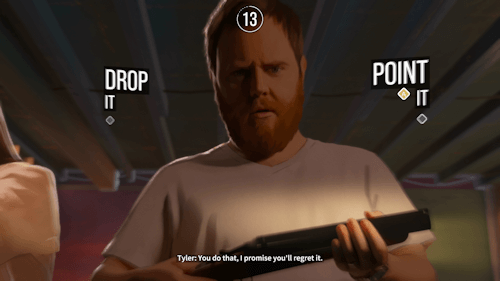
We played ADF via the game’s couch co-op mode, which assigns some decisions and actions to random player, and others more democratically (which may sound weird, but it also supports up to 8 people online, so a majority wins scenario makes a lot more sense there.) Interestingly enough, something I hadn’t seen, or at least not so prominently in other similar games, is that you can tune a lot of the game’s difficulty modifiers, like making it impossible to run out of time when making a decision, or making the timing on QTEs ridiculously easy. At first we had tuned a lot of this stuff to make it all really easy (I mean, who wants to fight against ridiculous QTEs?) but we actually ended up turning it all back up, as these kinds of games are a little broken if you make them too easy. I mean, if you never fail a QTE, you never get to see the resulting branches, and I’d imagine some of these scenes are tuned to be harder than others to push players towards a more likely path. It just made things feel a bit more linear than they were intended to be, and where’s the fun in that?

The story of As Dusk Falls revolves around a couple of brothers who get into some trouble with a corrupt sheriff, which quickly escalates into a hostage situation involving a whole heap of other characters. You mostly play as either one of these brothers, Jay, or as one of the hostages, Vince. Set against the backdrop of a small town in Arizona, the whole “bored teenagers stuck in a seemingly dead end rural wasteland” vibe stuck with me probably more than anything else about the game. I actually find something about that vibe, especially when it comes with crime stories and the desert, a little unappealing, but hey, I love Breaking Bad and No Country for Old Men, so maybe there’s also something in that inner conflict that works for me? That said, it’s hard to feel much sympathy for the Holts, even if Jay was somewhat more relatable and redeemable, and like a lot of good crime stories, there are some pretty harsh outcomes that some might find a little distasteful.

Most of your decisions will be fairly black and white, and very impactful.
“Most of your decisions will be fairly black and white, and very impactful.”

As I suspected, despite kind of disliking the art style, I got used to it pretty quickly, and while I’d occasionally see some animation or other element that was laughable, it mostly ceased to become an issue, and I might have even warmed up to it a little by the end of six episodes. I still don’t really know if this was a budget concession, strictly an artistic choice, or somewhere in between, but alas, if it was done to cut costs, I suppose I’m good with it if it allows more games like this to be released in the future.

In the end, I do think As Dusk Falls is a really good adventure game, but just how much you’re going to enjoy it is going to come down to whether its story, setting, and unique art style work for you. I still have some mixed feelings about it, myself, but I can’t deny that it deserves its place amongst the more notable of these types of games, and I’m quite surprised that INTERIOR/NIGHT still hasn’t followed it up yet, although they did just get the PlayStation port of it out last year, so perhaps they’re just not far enough along yet to make any announcements.

A couple of these As Dusk Falls screenshots were swiped from elsewhere due to us neglecting to take any screenshots while playing, with the exception of that end of chapter 1 decision tree.