Tag Archives: Turn Based Tactics

Mazes, Mulligans, and Monsters

My little co-op group occasionally takes breaks from the open world survival crafting games we normally focus on to play other things. Sometimes this is due to finishing one game and not having the time to properly dive into the next one that session, and sometimes it’s as more of an palate cleanser. As with Cleaning, Climbing, and Crime, I’ve got 3 more such games that we played relatively recently to cover.

MIMESIS is another “friend slop” game looking to capitalize on becoming a flavor of the week hit. While I don’t know how successful they were, the game is definitely interesting. At the risk of being offensively reductive, I’d describe it of combing the simple controls and pleasantly stylized graphics of something like the previously discussed Peak (but let’s be honest, thousands of other games too) with the basic gameplay conceit of an older and briefly very popular friend slop classic we haven’t discussed here before, Lethal Company. In a sentence, you and your group are sent into a creepy abandoned facility to scavenge while being harassed by whatever supernatural or at least paranormal entities lurk in the dark.
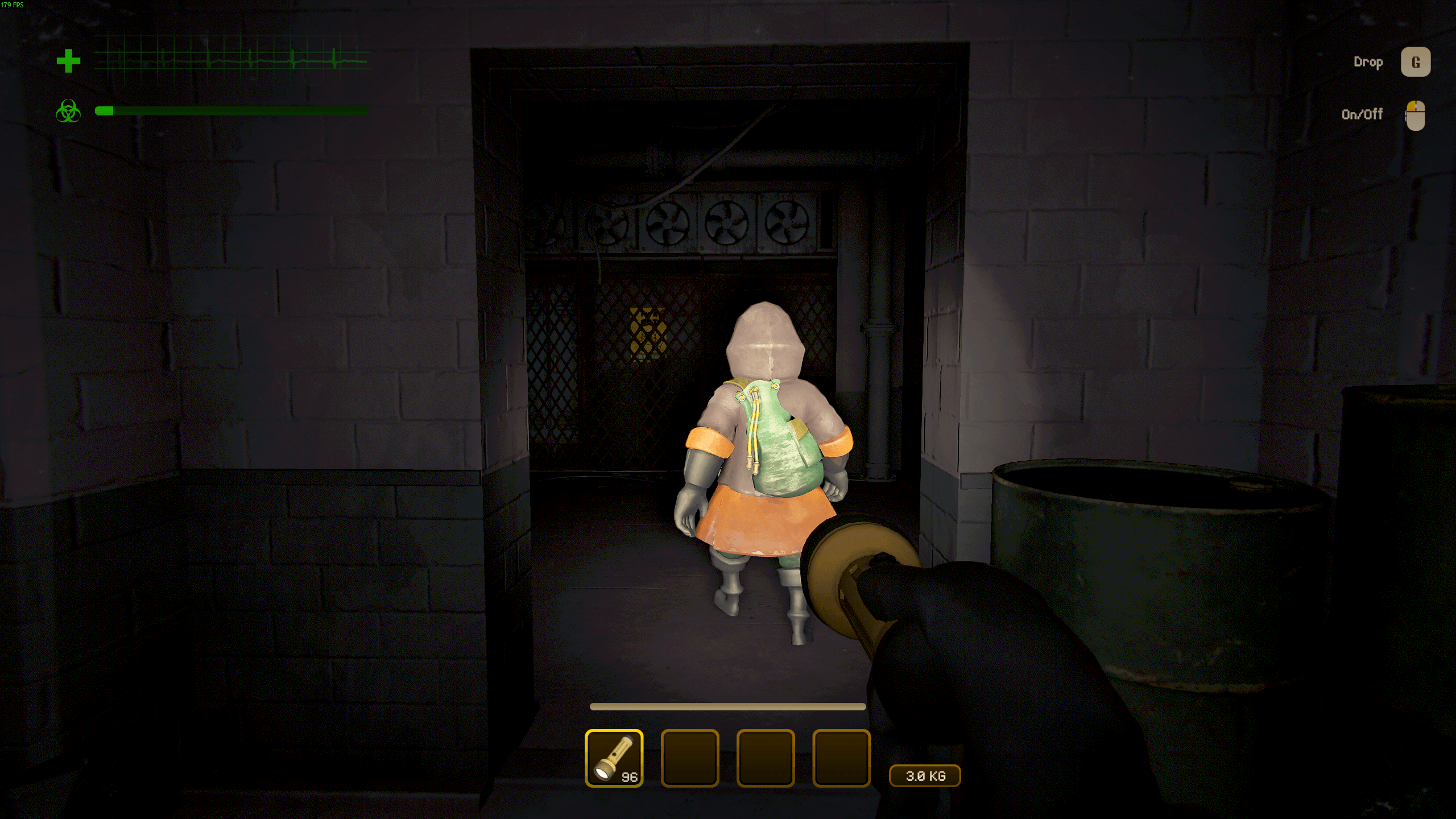
Get used to this view.
“Get used to this view.”

What sets MIMESIS apart is the clever way these “entities” are implemented. There’s something similar to Left 4 Dead’s AI Director going on, attempting to adapt to player behavior to for a varied and dynamic feeling experience regarding when, how, and what new entities and other events are deployed. In MIMESIS’s case, this also almost always includes a (usually gradual) escalation from the scares coming exclusively from the tension of being in a dark, maze-like environment and knowing that shit is eventually going to pop off, to utter chaos as you and your teammates end up getting split up, being chased by all kinds of terrible shit, and not knowing who is friend or foe.

That last part is key here, as there’s also a system in which some of these entities assume the identities of players, alive or dead, including attempting to mimic their behaviors and even repeating voice lines they said (which means for the best experience you should definitely be using the in-game voice chat.) In our age of LLM based AI this could get pretty sophisticated, though I don’t think what MIMESIS is doing is really is all that technically interesting. Instead, it often felt like dumb luck when just the perfect voice line was repeated at just the right time. In any case, it is highly effective in making people paranoid and thoroughly creeped out, and when things did get chaotic, it was some of the funnest, most hilarious moments I’ve had online in quite a while. Surprisingly, some of my favorite moments were after being killed and spectating on the remaining players à la something like Counter-Strike, only it’s much more entertaining to watch your remaining teammates frantically run around bumping into one obstacle after another, especially when that leads to interacting with your doppelganger(s) without a clue that you’re actually dead.
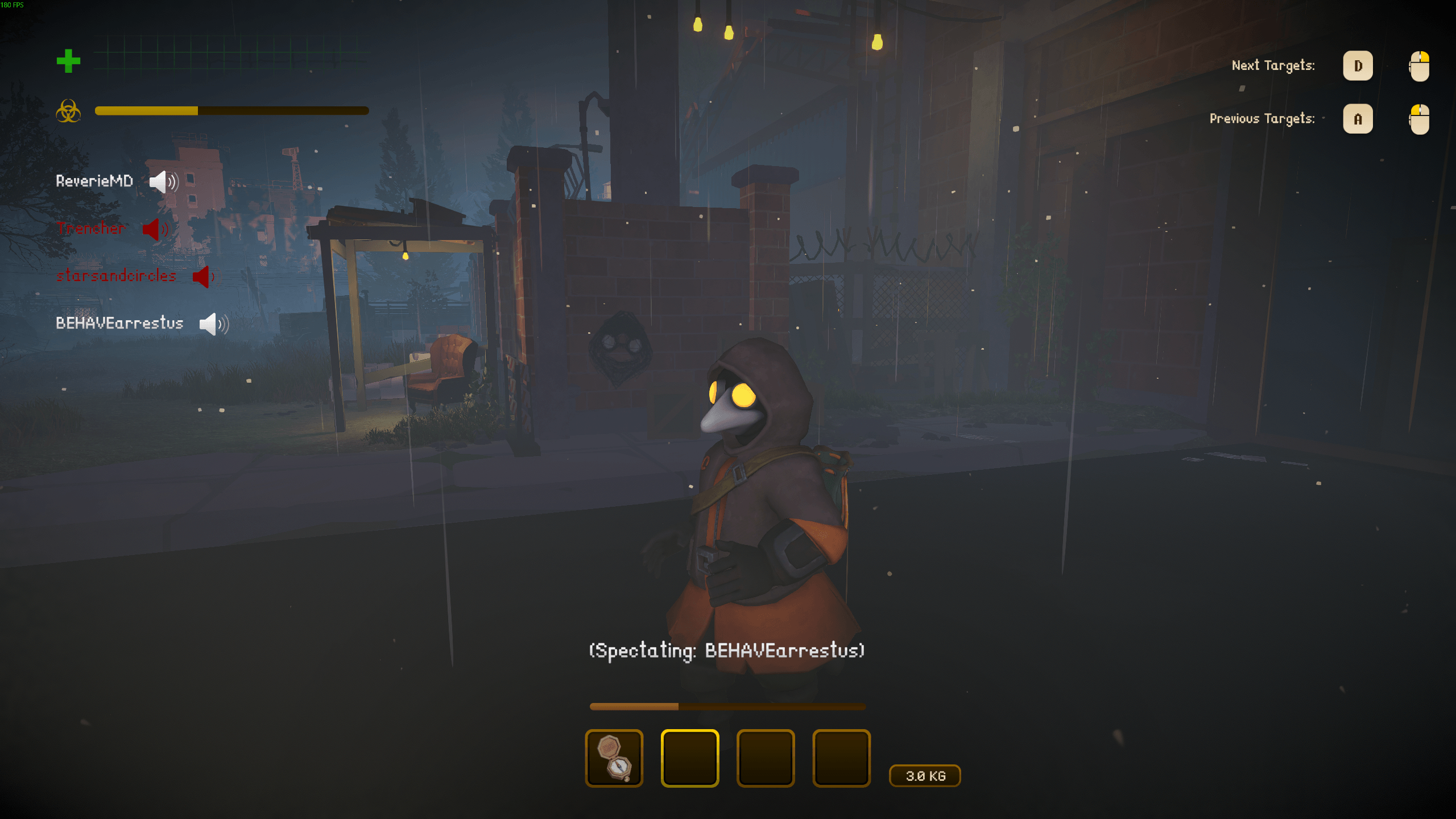
Spectating another player as escape to outside.
“Spectating another player as escape to outside.”

Naturally, there is a little hub area where you and your group can return to deposit your loot in between runs, buy some equipment and make other upgrades that persist to some degree, but this is an aspect of the game I can’t really speak to as after just a handful of runs across a couple of sessions, we all felt like we’d experienced what the game was about, had some fun, and were ready to move on. While I could see some groups sticking it out for much longer, it takes just the right game for our group to commit to something longer term.

Speaking of which, the next game is another “friend slop” game, and one we played for even less time. Super Battle Golf, as its name might suggest, is perhaps hard to even call a cooperative game. That is, it’s essentially a basic cooperative golf game, except all players go at the same time instead of taking turns, and you’re essentially racing against each other to see who can complete the hole first. As if that wasn’t chaotic enough, there are all kinds of funky items including Mario Kart like power ups you can find scattered around to make things that much more insane. There’s nothing like lining up the perfect shot to be suddenly run down by a golf cart, or similarly disrupting someone else by nailing them with a homing missile just as they’re about to take their swing.
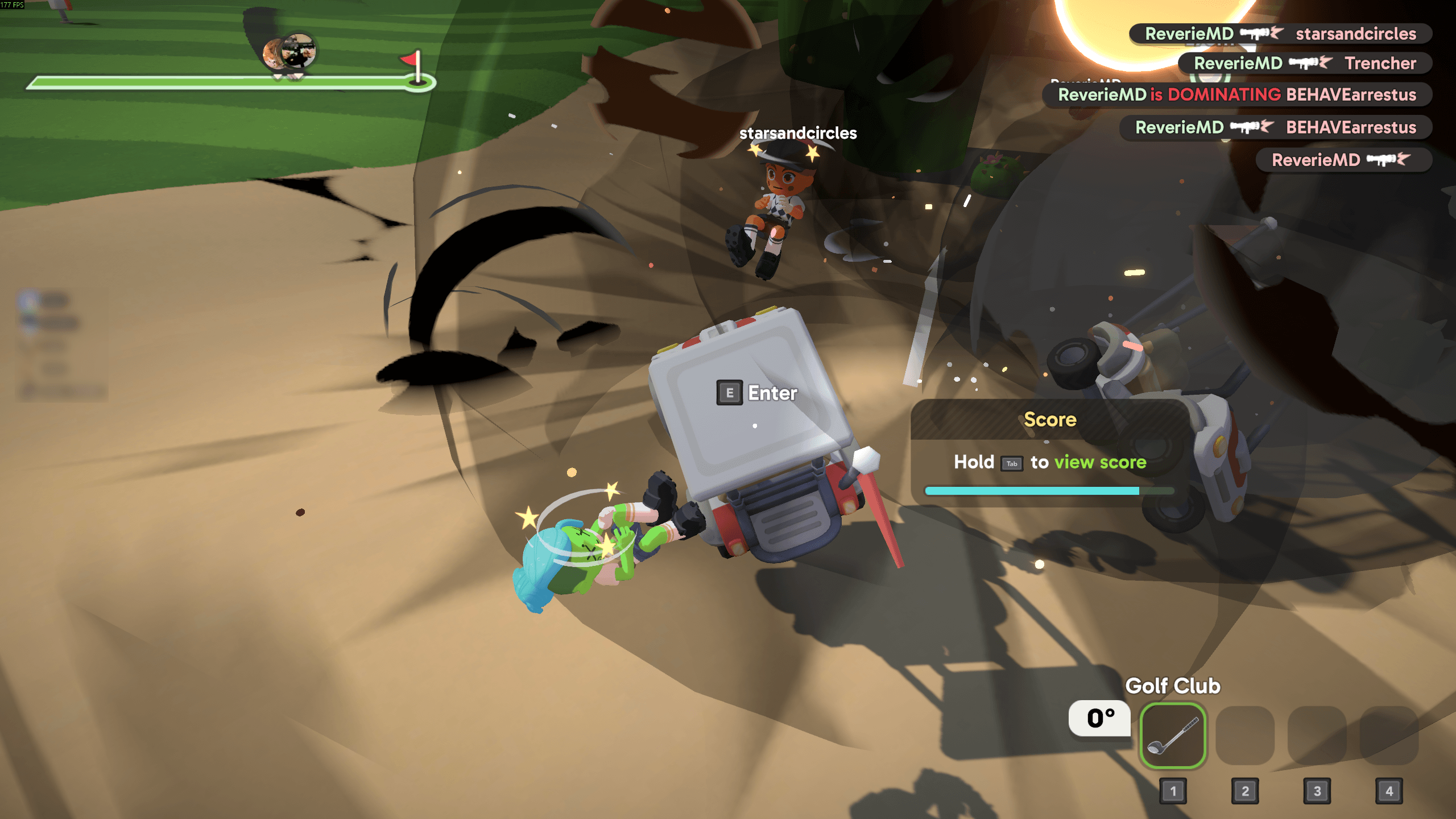
The exact moment a rocket slams into a couple of golf carts. FORE!
“The exact moment a rocket slams into a couple of golf carts. FORE!”

Super Battle Golf was definitely fun to screw around in, but had even less of a hook to keep us playing long term than games like MIMESIS or Peak, so screwing around for about 2 hours or so was all our time with the game amounted to. Still, it’s one I could see randomly going back to when we need to kill an hour or two. In fact, we choose this one due to having a fifth person join us that night and not wanting to toss them into the middle of a longer or more complex game. Objective achieved!

And now for something completely different, For the King II. One of our group had played through the first For the King game with a different group of friends and was itching to try the sequel. I thought it looked pretty neat, and it was definitely a different type of game than our usual survival games OR the kind of quick friend slop experiences we just covered. Instead, to me, it feels very much like it is based on some of the popular cooperative board games which had been making waves in the last 10 or so years. In particular, having only really played a little bit of the Jaws of the Lion version, it reminds me quite a lot of Gloomhaven, though there have been tons of vaguely similar fantasy RPG inspired board games over the years, such as the venerable Dungeon! and classics like HeroQuest.
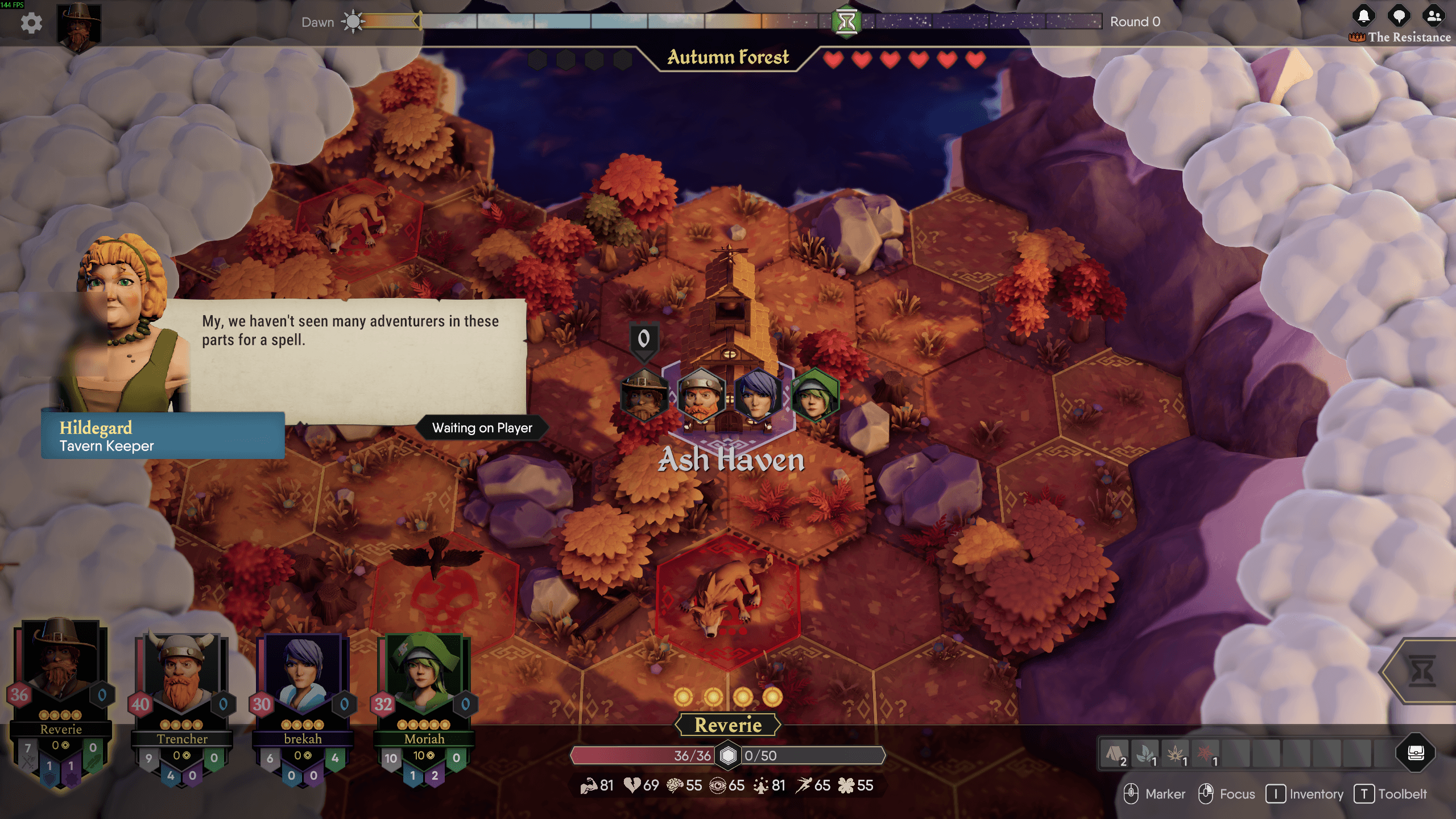
The world map as we kick off a new adventure.
“The world map as we kick off a new adventure.”

To describe that in a little more detail, the gameplay is something like this: Each player picks a character/class archetype and some starting traits and equipment and then get thrown onto a hex based world map where they take turns moving to trigger fights, visit towns, and investigate events and other points of interest. At the same time, each adventure (essentially a mini-campaign based on a single world map) has its own story with its own victory conditions, and because of the magic of video games, this can feel reasonably dynamic, with NPC dialogs and plot events triggering, etc. Oh, and I almost forgot to mention that in something of a rogue-lite twist, your characters do not persist between campaigns, but you’ll unlock new traits and equipment, points of interest, and even new classes which you can use in your next campaign.

As an aside, the class system is pretty interesting, as it mostly only dictates a few special abilities and your starting stats. The rest of your abilities are determined by the traits you pick during creation, and the weapons and other equipment you equip along the way. This means while it might be optimal to have a high intelligence, magic aligned character use a magic wand or staff, you can kind of do whatever you want.
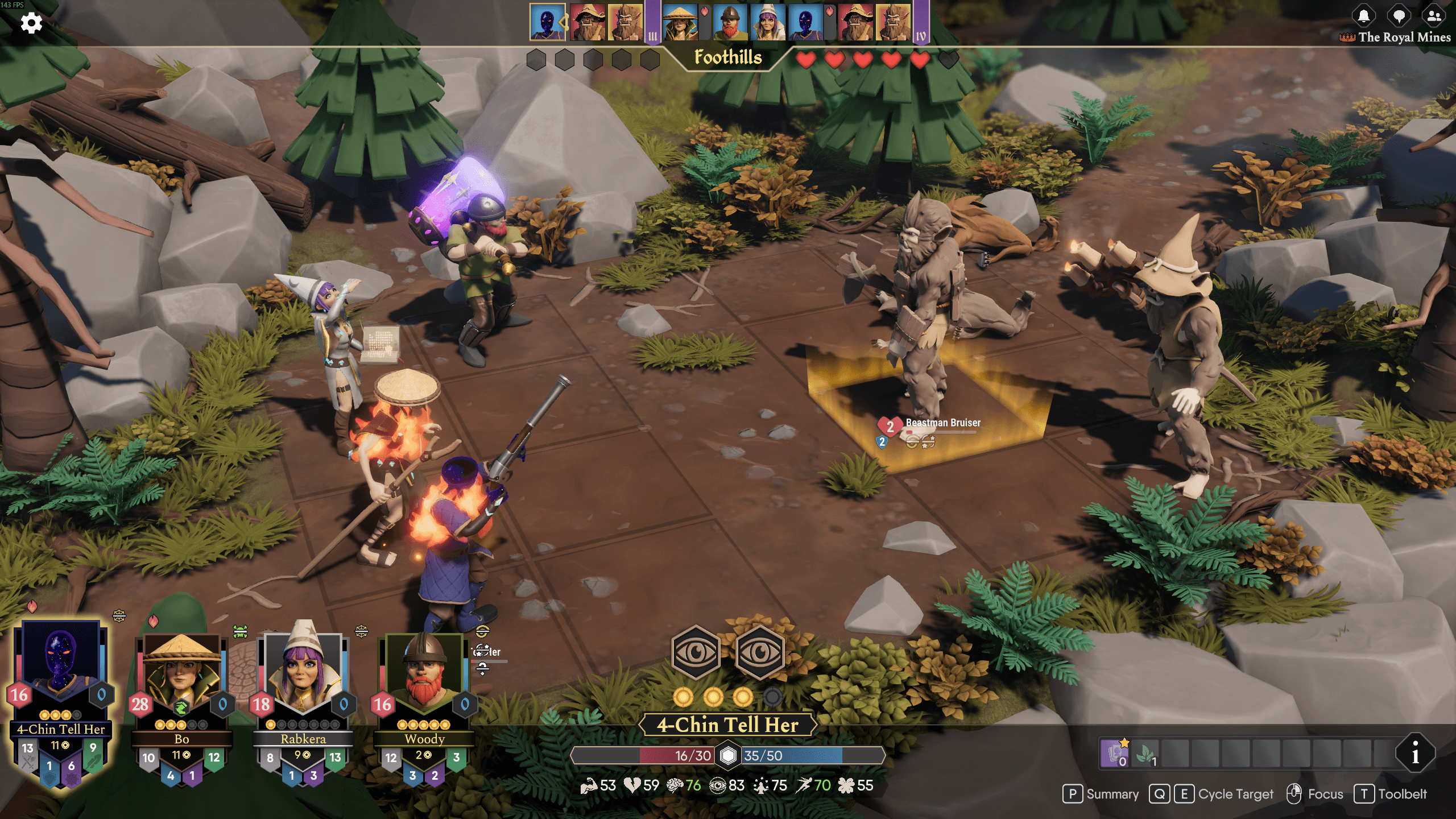
Strikingly familiar turn based tactical combat.
“Strikingly familiar turn based tactical combat.”

The combat in For the King II resembles that more of a traditional turn-based JRPG in which your group and the enemies you’re fighting are placed on a grid and cycle throw and initiative based sequence. Like those JRPGs, it can feel a little tactical, with positioning and choosing when is the best time to deploy what attacks, abilities, and items, being a big part of the equation. There are also dice rolls governing a lot of the aspects of this, though they’re not presented as obviously as some games. In fact, in many ways I was surprised how little For the King II actually leans into its obvious board game inspiration; it almost seems like its trying to hide it.

Most of these fights take place on the world map and need to be purposely triggered unlike the infamous random encounter trope most often associated with JRPGs, though there are also scenarios in which you might need to defeat multiple waves of enemies. There are also dungeons, which are similar but much longer and involve moving from room to room. Most of these rooms are fights, though there are sometimes other events, choices on which path to take, and opportunities to heal and rest between rooms.
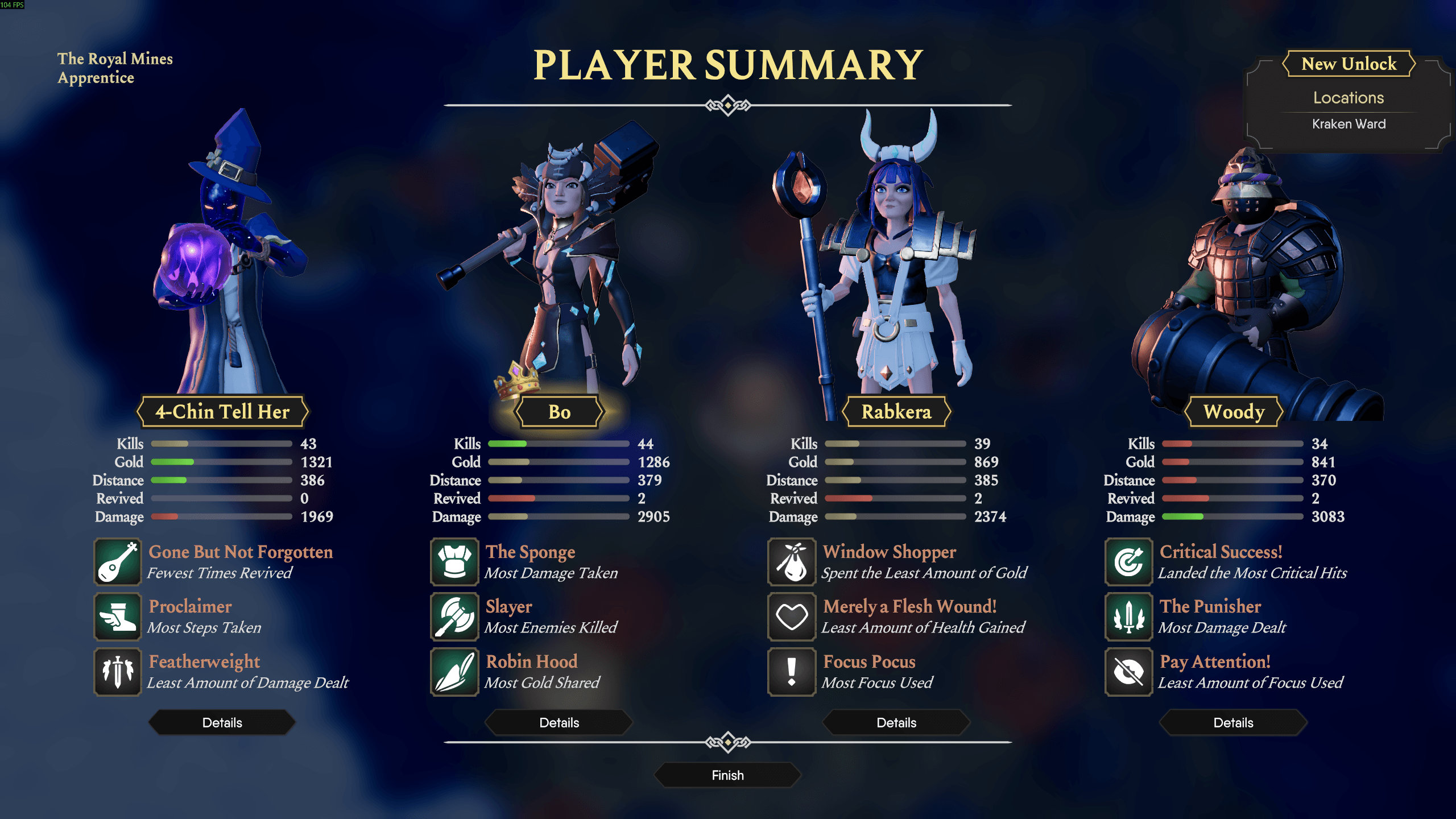
The stats screen that comes with the successful completion of an adventure.
“The stats screen that comes with the successful completion of an adventure.”

I didn’t mention the aesthetics of the game yet, and I really should. The first For the King had a “mid-poly” style that looked quite nice. For the King II drops the mid-poly style and goes much harder into the cartoony style that was hinted at in the first game, while also further refining the overall look with some nice effects and polish. Overall, while relatively simple and certainly stylized, I think it looks quite nice.

There was a little frustration from my group around For the King II, but once we understood the gameplay mechanics a bit more (another thing it borrows from board game adaptations is its fairly unintuitive gameplay systems and atypical UI choices) and had experimented a little with different characters/classes, we started to have a lot more fun. If I recall correctly, we failed the first adventure twice, and then sailed through it and two or three more of them, clocking in something like 30 hours of game time. Personally, I had a lot of fun with the game and wouldn’t mind coming back to it, even if just by myself, though I think as a group, repetition had started to set in and we were ready to move on to something different.

Interestingly, the next game we tried ended up being similar in a lot of ways, but we’re still playing that one, so more on that later!
X-com Versus the Zombie Menace!

Brace yourself for another shocking tale of my crippling case of backlogitis…

I pre-ordered XCOM: Enemy Unknown for PC back in 2012, anticipating the ever-loving fuck out of it after not having a turned based tactics game come close to the experience I had with the original X-COM back in the 90s, and here I am, finally playing the goddamn thing just after the release of its expansion pack over a year later… and I’m playing the Xbox 360 version to add insult to injury. I’m goddamn despicable.

The decision to go with the console release of XCOM: Enemy Within came about because I had never purchased the game on console and had heard repeatedly from various sources that playing with the controller was fine. Not only fine, but a lot of people preferred it to keyboard and mouse. Yes, even PC gamers. At first I found this unfathomable but I eventually accepted that it might just be true. This is 2014 after all. When Enemy Within was announced I figured it was my opportunity to pick up the complete “commander edition” version of the game in one package and play from the luxurious comfort of my couch. My only disappoint with this decision is that now I’m sure I’ll play through this game several more times in the future and when I do it’ll be on PC, so I’ll need to pick up another copy of the Enemy Within expansion pack regardless. Ah well.

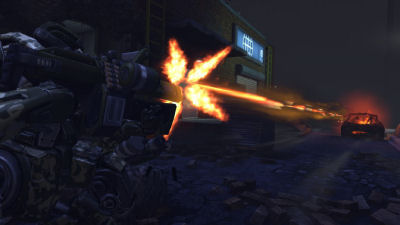
MEC troopers, never leave home without 'em!
“MEC troopers, never leave home without ’em!”

So yeah, I’m not going to go into why I loved the original XCOM: UFO Defense because I plan on putting together a retro review of it sometime in the next 20 years. Let’s just say that several aspects of the game struck me as more or less perfect and I wanted another experience that recaptured its glory. I watched all of the discussion regarding the various spiritual successors but always passed, played some other games inspired by its mechanics (such as Silent Storm, another game I need to revisit and review) but never got too far into any of them, and when I heard about XCOM finally picking up a biggish budget sequel I was thrilled. Finally, when the Firaxis game was announced and the first details were released I was quite hopeful that they’d finally put together a worthy sequel.

XCOM: Enemy Unknown isn’t really a sequel or a spiritual successor, but a full on, faithful re-imagining of the original game, updated with modern mechanics and presentation. While that sounds like a description for any update of an old game, it’s really quite literal with XCOM. It’s like they made a check list of everything that made X-COM “X-COM” and put it into this new version, only changing and (usually somewhat modernizing) the systems underneath to make the still very customizable, and still very brutal game more accessible in today’s market. To put it another way, it is almost as if the 2012 development team took the original design documents and concept art and made a new game without much knowledge of the previous one. Sure, a lot of the little details about how the mechanics work and whatnot are all quite different but on the surface it’s the same damn game. At the risk of losing some friends here, I’d even dare say that this new imagining of XCOM might even be better than the original in many aspects. It’s just that goddamn good! Awesome, dynamic squad based tactics, persistence through leveling soldiers, strategy via managing the XCOM program and researching technology trees on the geoscape. It’s all here!

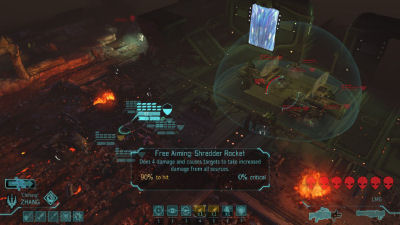
Despite what the suits back at base, sometimes you just HAVE to use high explosives.
“Despite what the suits back at base say, sometimes you just HAVE to use high explosives.”

I played through the entire long campaign with the worthy additions of Enemy Within and the other DLC, and despite only playing on normal difficulty I still found the game to be challenging at times and damn rewarding to boot. I tried to avoid “save scumming” but there were a few times where I reloaded to avoid losing senior soldiers… oh, and I abused the hell out of it to beat that damn whale mission. The Xbox 360 build had a couple of hard locks and other odd bugs but nothing to truly ruin the overall experience. I could go on and on about this game, and if I had written about it while playing I probably would have, but for now that is all I want to gush over it about. Perhaps more the next time I decide to play through?

To cross another one off of my pile of shame, I finally played through the first of Telltale’s The Walking Dead seasons. Being both a fan of the show and of adventure games in general, I’ve been wanting to play this game since I first heard about it and since then I’ve only heard more and more good things. Are they true? Yes, mostly…

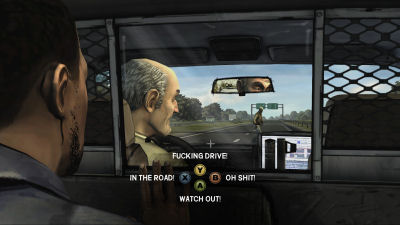
I wanted to post an example of TWD's excellent, well written dialog system. So, yeah...
“I wanted to post an example of TWD’s excellent, well written dialog system. So, yeah…”

The Walking Dead is a classic adventure game in most respects. Sure, the UI is stripped down and most of the puzzles probably barely qualify as being such in the traditional sense, but at its core it still plays unmistakably like the graphical adventure games of old. While there is still a lot of environmental exploration and “pixel hunting” for items, the items mostly serve to move conversations forward and add the occasional context sensitive action – there’s no tedious inventory management and item combination voodoo to deal with at all. The core of the gameplay instead focuses around the conversation choices you make and how those choices affect your story – who is in your group and how they feel about you, which in the end largely comes down to differences in dialog. That sounds a little simple but it works surprisingly well and while the ultimate outcome is more or less the same, your choices at least feel like they carry some real weight.

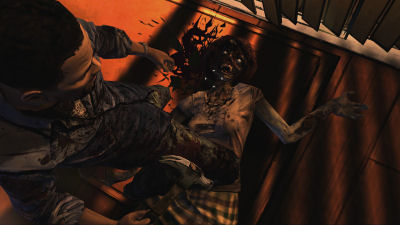
Not everything works well though. The action sequences are pretty much all god awful. I was almost shocked to even see them here at all – people have been complaining about crappy action and arcade sequences in adventure games since the 1980s. While there’s some variety there, mostly my problem with them has to do with my second complaint: the engine is pretty bad. There’s all kinds of issues: long loads, flickering, clipping, and general bugginess. It just generally feels clunky. This only really started to affect my enjoyment of the game when it came to those action sequences, especially when they resulted in a sudden death or fail condition. That leads directly to the final point, one I really wasn’t expecting, but instant deaths/fails galore! Really? I’ll fully admit that I’m a Sierra apologist but I thought the dudes at Telltale were big LucasArts fans. I figured they would detest this kind of thing. Ah well, at least they’re generous enough to automatically restart the gameplay right at whatever sequence killed you.

Home improvement time!
Home improvement time!”

Anyway, back to the good. The hand drawn, graphic novel inspired art style is good (sometimes even strikingly beautiful) even if the engine and some of the animation lets it down a bit. The voice acting is mostly fucking brilliant, with the main cast being among the best I’ve heard in a game. Telltale absolutely nailed the desolation, the desperation, and the overall feel of The Walking Dead setting too. Finally, the writing is great. I quickly found myself caring about the characters and, probably more telling, when I think back on my jaunt through zombie infested Georgia, I remember it more like I had read a novel or watched a good movie than I had played through it in a game. The more I ponder it, I’d have to chalk it up to a tricky combination of the basic setting and plot, the character development, and the agency the player is given behind how the story appears to unfold. It’s not just an infatuation with the excellent Lee and Clementine either, even the tiny stories from the 400 Days episode made an impact.

If you’re a fan of the Walking Dead show and/or comics and don’t completely detest graphical adventure games, please do yourself a favor and put this on your wishlist if you haven’t already played it. It’s brilliant. I played through the aforementioned “400 Days” extra episode and can’t wait to play through Season 2 when it is finished being deployed later this year.

Screenshots are PC not Xbox 360, as I swiped from the Steam Community. Thanks, glorious PC gaming master race!

Frozen Fables

I know I’m amazingly late to the party with this one but I finally got around to playing (and beating) Fable 2 for Xbox 360! Between playing the original Xbox Fable at release and watching/hearing other friends of mine play through Fable 2 I was really, really looking forward to playing this one. Despite having a lot of fun with the game I somehow don’t really have a whole lot to say about it… perhaps I’ve waited a bit too long to write about it, but I’ll try to put down a few thoughts regardless.

Fable 2 absolutely oozes a style of its own: the odd designs brought to life by the colorful graphics, the unique (in gaming, certainly) 17th/18th century meets middle ages aesthetics, the funny voice acting, hilarious item descriptions, and all around healthy dose of humor injected into the world, and all of that brought together in what feels like a relatively well produced, high budget package. I was immediately hooked!

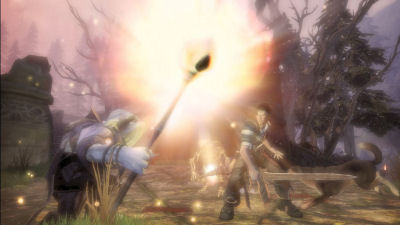
Significantly less dangerous than he appears.
“Significantly less dangerous than he appears.”

The gameplay is pretty simple and very easy to get into and start having fun with – combat, for instance, is quite streamlined, just a button for each weapon type, and it is only much later, when you start improving your various skills, that the combat system begins to become gradually deeper. My main character was a mage and while I typically don’t play pure mages in these types of games the magic system felt a little odd and a bit limited. You can only have one of each spell rank equipped and you cast all 5 spells (there are 5 ranks) by holding the same button down for increasingly longer lengths of time. From poking around on the forums there seemed to be quite a lot of people confused about how to assign and cast your different spells. That said, once you figure it out it’s a breeze to use and quite effective. There were definitely a lot of other odd design decisions made with Fable 2, not just with magic. Knowing Peter Molyneux’s reputation for interesting, ambitious design I’m assuming that there were many, much more extreme ideas penned that were eventually dumbed-down or cut for various reasons. At the very least the game still succeeds in feeling fairly unique and doing so without too many negatives.

The two new features that got the most attention in the press, your canine companion and the sparkly golden breadcrumb traill, were both successes in my book. The dog was pretty neat and when he wasn’t around I felt myself actually feeling more alone in the world – I missed the little flea bag. I did somehow expect him to be a bit more effective in combat than he ended up being, but oh well. The bread crumb trail, which always points you to the next step in your active quest, only ever annoyed me when it wasn’t working correctly (I found myself occasionally outrunning it, which made me think it was trying to point me in the opposite direction, for instance) otherwise I found it to be quite useful and easy enough to ignore when I wanted to explore a bit.

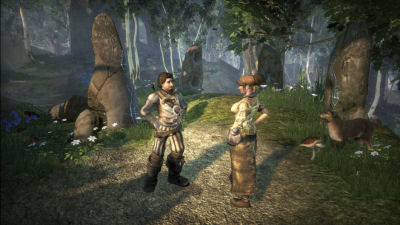
You'll probably spend way too much time hitting on peasant ladies (and/or dudes.)
“You’ll probably spend way too much time hitting on peasant ladies (and/or dudes.)”

I was pretty surprised at how quickly I progressed through the plot, figuring Fable 2 would have a pretty epic storyline after the backlash about how oddly quick the original Fable went. I agreed with those original assessments, by the way. To me it seems like many of the mechanics of Fable, and even more so Fable 2, particularly the character development and customization over time aspects, cater more towards longer and/or more open world game but I concede that perhaps my views simply don’t line up with the designers’ intent. That was another thing – I had gotten the distinct impression that Fable 2 was much more of an open world experience than Fable was, despite still maintaining a strong central story. Eh, not so much… definitely improved, but still lacking something in the way of a truly open feel. Regardless I dug playing through the story and customizing and progressing my character. Many of the side quests just didn’t feel that interesting and I had a hard time forcing myself to even be bothered with them though, I admit, this may be partially blamed on not playing many of them until after beating the main storyline.

Speaking of side quests, I did end up playing through the two DLC add-ons, Knothole Island and See The Future, which both provide you with some short side stories including a variety of additional quests. Both were easy enough to skip but recommended if you absolutely love the game and want a little more. Knothole Island was my favorite of the two, with its Zelda-esque series of quests into different temples/dungeons. It also got me my beloved dog back. 😉

All around, a fun game – I’m still a fan of the series and Fable 3 is definitely on my wish-list now. As an aside, I didn’t purposely go after many of them but some of the bizarre shit you have to do for achievements in that game was quite fun.

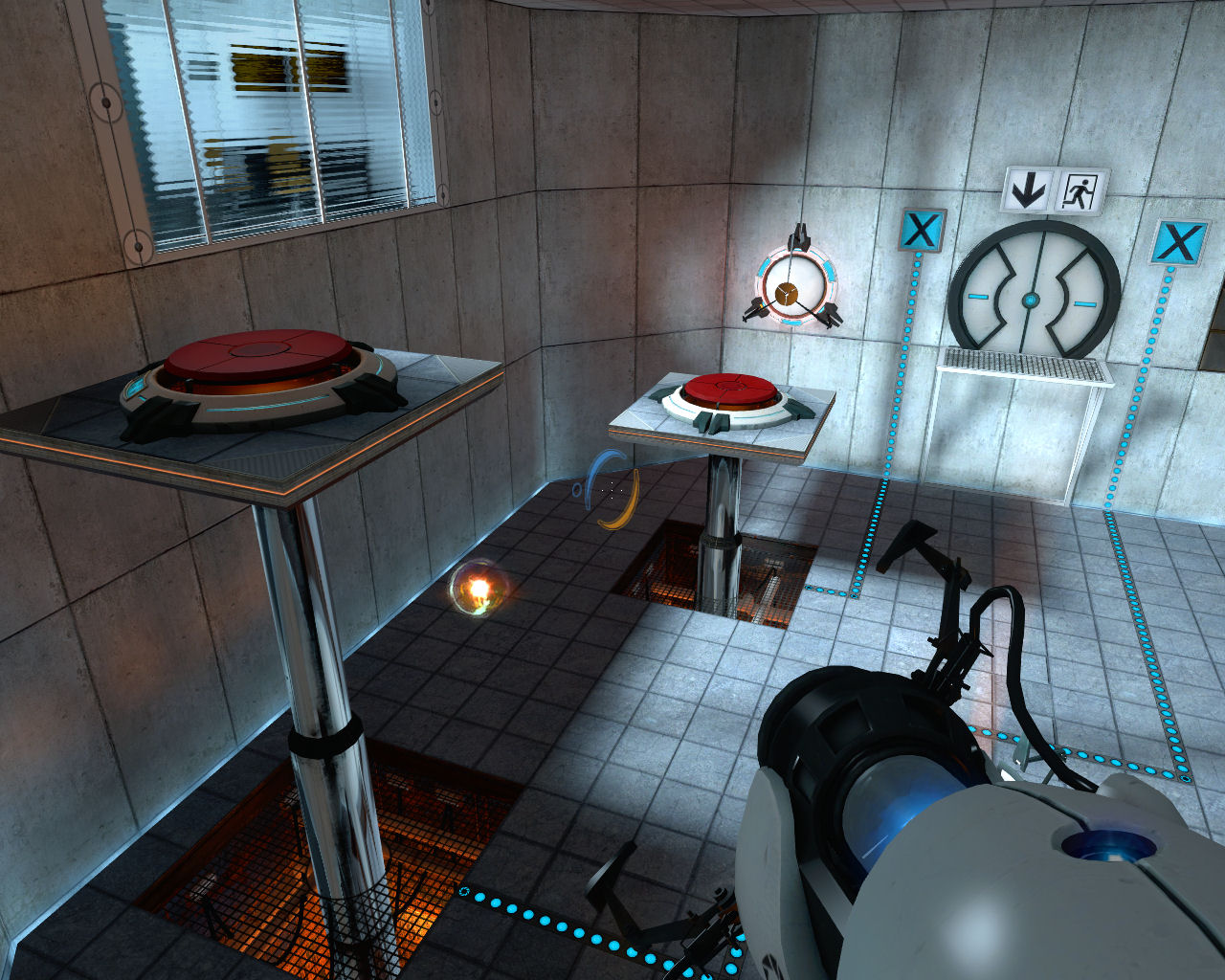
Going down?
“Going down?'”

I played through the original Portal on PC again with the intention of refreshing myself before playing Portal 2. What’s to say? Still a fun game – especially given that you can breeze through the entire thing in just one or two sessions. Perhaps it is part of growing up and having less free time but I love shorter game experiences. It always amazes me that I managed to never get stuck for more than a minute or so my first time through. Knowing the way my dysfunctional mind operates I figured I’d bash my head against many of the puzzles – here’s hoping I have the same sort of luck with the sequel.

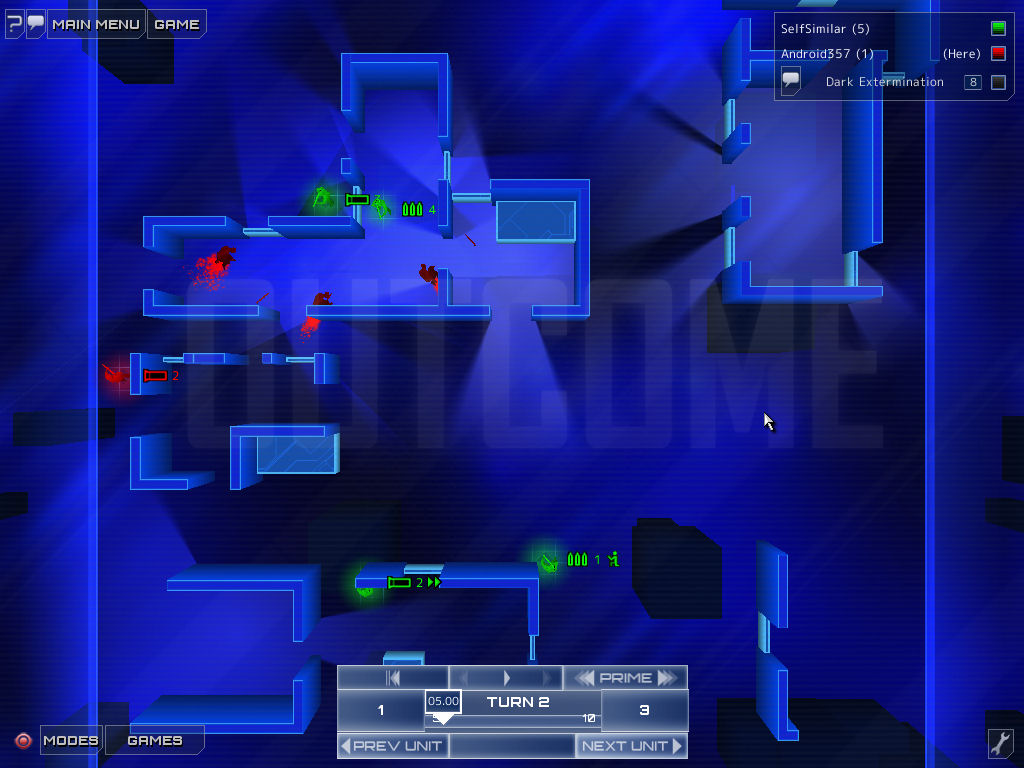
Finally, I recently picked up Frozen Synapse on PC. I’ve been hearing whispers about this game for what must be a couple of years now. They were offering a beta access for early buyers program similar to what Minecraft is doing but I decided to keep waiting out the formal release on Steam and that day has finally arrived.

The game is sort of reminiscent of the turn based, tactical combat found in games such as the original X-com and Jagged Alliance series, yet the mechanics give the whole thing a very different feel. Instead of being given a certain amount of time units, action points, or the like, you simply have to 5 seconds per turn and you can do whatever you have time to do in that window. It may be quite similar in principal but it is a little harder to know exactly what I have time to do and not do in Frozen Synapse without simply previewing my turn, though that is easy enough to do. In X-com everything you can do, from firing, to turning around, to moving, has a hard value associated it with it – such a thing likely exists in FS’s engine as well, but it’s just not presented that way.

Actually winning for once...
“Actually winning for once…”

Speaking of presentation, the interface is also some what of a departure from that style of game, feeling more like the planning stages of the old PC Rainbow 6 games than a typical turned based tactical game. Turns are also simultaneous which is another big difference from most games like this. I don’t know that it really ups the challenge but it certainly does make turns a lot more suspenseful. A major plus to this is that it is setup to allow for asynchronous gaming – you can be playing multiple games as once, swapping back and forth when your turn is ready. You can play by email, continue a half-finished game the next day, whatever. It’s very cool.

One thing that kills me about FS (literally, it gets me killed) is difficulty judging my line of sight and, particularly, my enemy’s line of sight to me. In one of my first online matches half of my squad got obliterated by a rocket blast that somehow slipped through 4 or 5 tiny openings that, because of the perspective, didn’t even look passable to me. I’d love a tool to clearly show me LoS views. Whatever… live and learn! I’ve been doing a lot of learning lately – my online record is currently atrocious. Most of my loses were very, very close… but it’s not like anyone can see that when looking at my win/loss record. 🙁

Anyway, it’s a fun game. It’s different enough that it doesn’t really scratch my X-com itch in the way something like Silent Storm did, but for a relatively cheap indie game that has good online capabilities and an active player base, I feel like it has been worth my money and time so far.

As usual, Xbox 360 screens lifted from elsewhere. Fable 2 was a perfect example of a game where I couldn’t find much in the way of ACTUAL screen shots, showing the game as it looks when it is being played with interface and all – mostly only canned shots released by PR. 😕