Tag Archives: Survival

Surviving Survival Part 4

I don’t recall how it ended up on our list, but the next game my little weekly co-op group dove into was Atlas. Atlas is closely related to Ark: Survival Evolved in numerous ways, from its studio being founded by Ark’s founders, to some shared tech and gameplay systems. Instead of dinosaurs, Atlas is pirate themed. Pirates! While I haven’t played a ton of pirate theme games, I’m certainly not immune to the allure of the idea. Sid Meier’s Pirates is a bonafide classic, I got sucked into the idea of (and quickly bounced off of) Pirates of the Burning Sea way back in the day, and I’ve almost caved and jumped into Sea of Thieves numerous times now, for example. Glossing over user reviews, there was actually very little negative criticism about the game itself, instead the harsher reviews usually focused on the controversial way the game had been abandoned. That really didn’t affect us as we were going to host our own server and treat it like any of the other cooperative survival games we’d been playing.
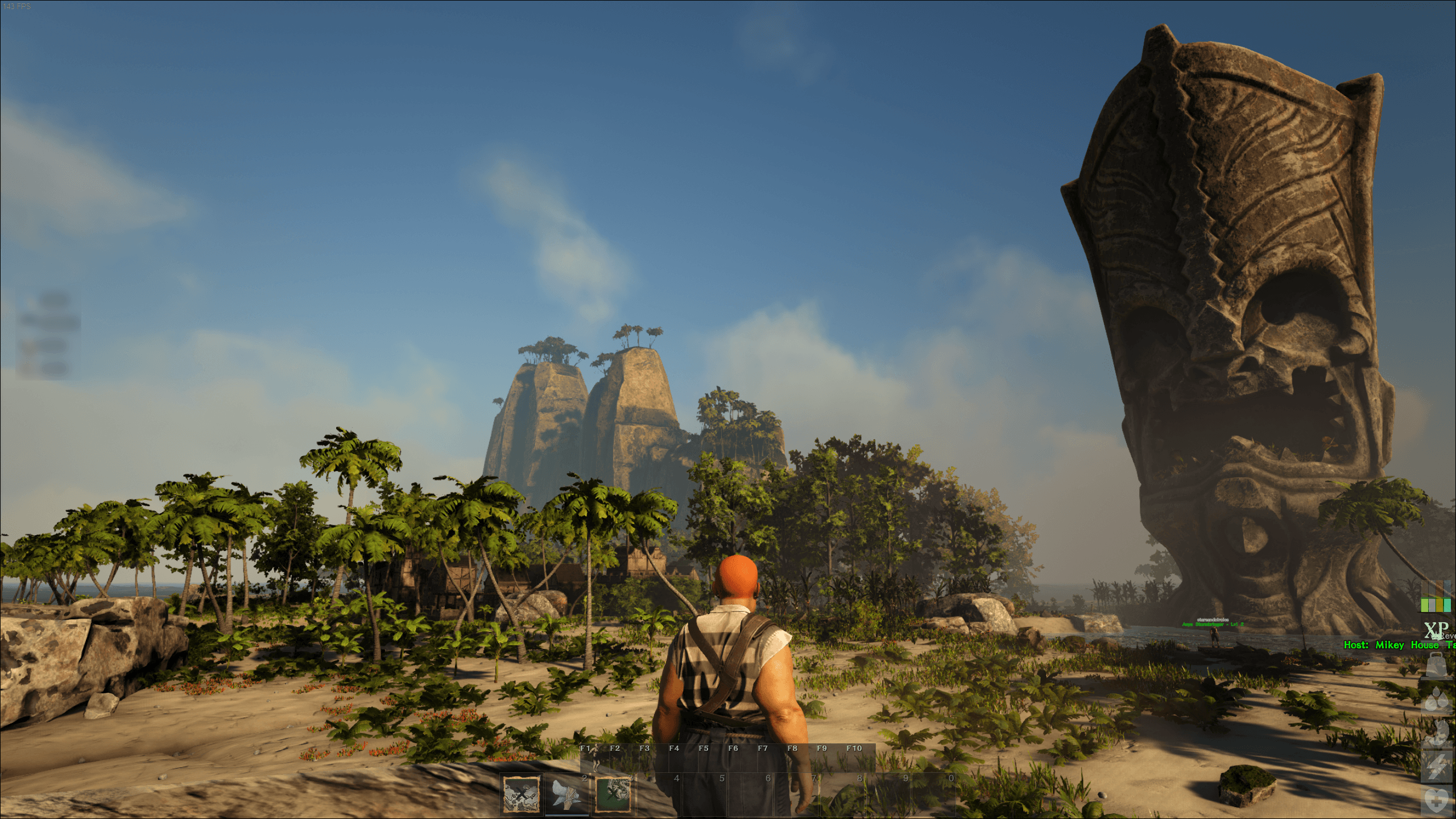
Easter Island, eat your heart out!
“Easter Island, eat your heart out!”

Except, it was pretty evident from our first few hours in the game that this was actually much more of an MMORPG-like experience than I realized. While the character creator was pretty neat, we were then dumped on a small island where we each had to do a bunch of tedious tutorial quests related to gathering x of y, running between NPCs, and killing groups of mobs; you know the drill. While progress seemed quite slow, it’s well documented that I’m a sucker for MMORPGs and the fact that we somehow accidentally got our co-op group into one was pretty exciting for what that could mean for future games if we actually enjoyed it. Eventually we managed to wrap things up on the starter island, get our first ship, and head into the high seas. Yaaaarrrrr!

Figuring out how to sail our ship was kind of fun, and the mysteries of the open sea, from storms and sea creatures to shipwrecks and floating loot, and at one point being chased by an incredibly intimidating undead pirate ship, was all pretty exciting. The first few islands we stopped at were literal copies of the starter island, which was… weird. Getting a little further away, we finally stopped at a legitimately new island and started to explore. This led to more gathering and crafting and some new stuff to fight, but honestly wasn’t much different than what we saw on the tutorial island. We then raised anchor and, maneuvering around more scary looking enemy ships marked on the map, set down onto yet another island. Exploring was kind of fun, but again, more of the same with not much in the way of new materials to gather, animals to hunt, or enemies to fight.
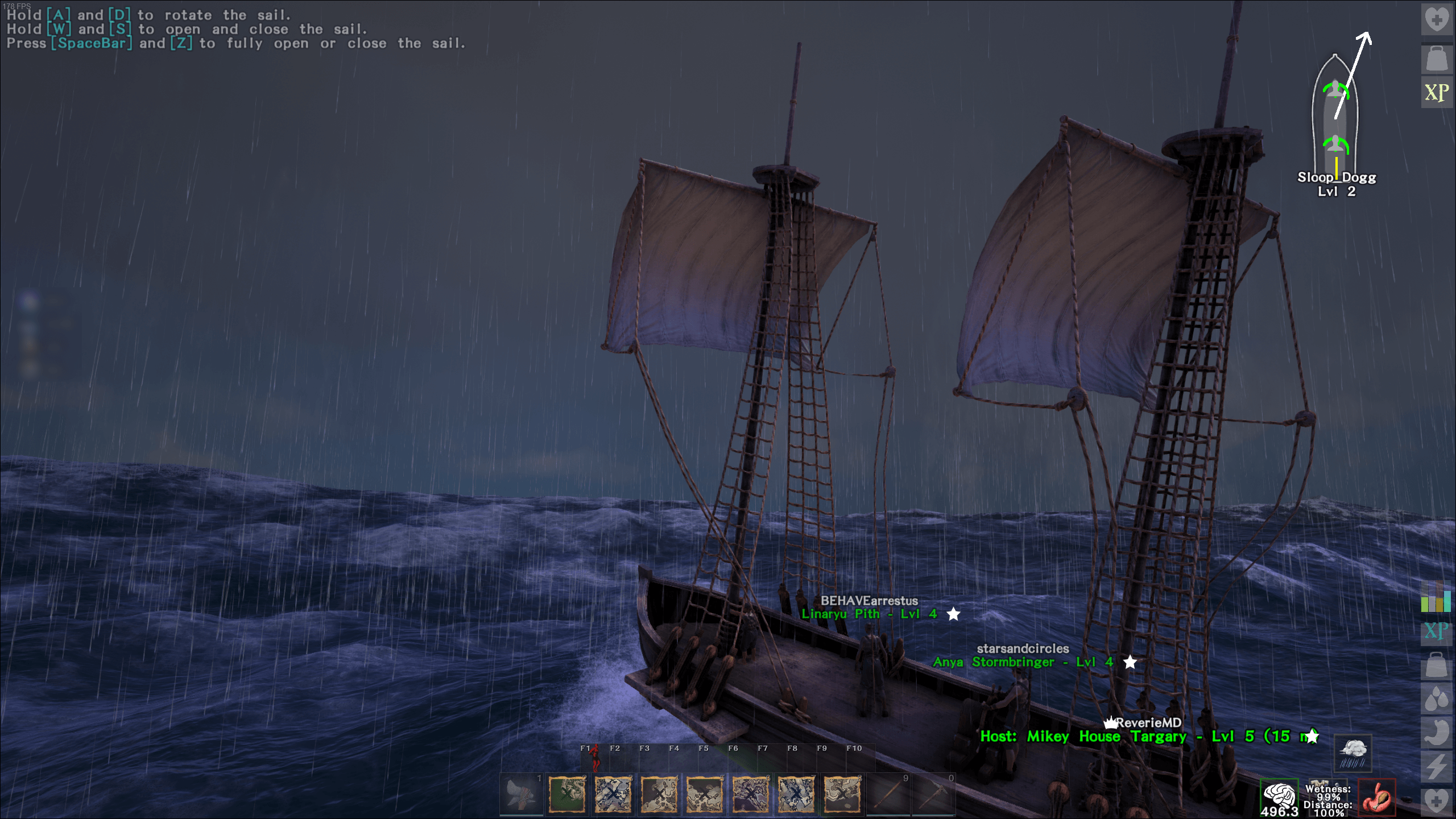
Braving a storm at sea in Atlas.
“Braving a storm at sea in Atlas.”

After only about 9 hours in the game, 2 of my group had decided they’d seen enough. Our time with Atlas wasn’t horrible, by any means, but the repetitive grind, occasional sharp spikes in difficulty, slightly janky feel, and lack of much a unique identity or any other hook to keep us playing soured the experience just a bit too much. Interestingly, since then Windrose, which looks a lot more like the type of game I thought Atlas was going to be, has hit early access with a lot of buzz. Maybe I can convince the crew to get back together and go a-plundering at some point in the future?

Next on the list is The Planet Crafter. The Planet Crafter was another game I wasn’t really familiar with, and with its simple conceit and cartoony graphics, honestly didn’t really sound all that interesting to me. You’re some sort of engineer who arrives on a planet’s surface and needs to manage oxygen, food, and water to survive, harvesting and crafting to build better and better technology along the way. Sound familiar? *yawn* In fact, that description makes it sound almost identical to Icarus which I talked about in Surviving Survival Tres. Except, as entertaining as it can be to be stupidly reductive, The Planet Crafter actually turned out to be one of the best survival games we’ve played together.
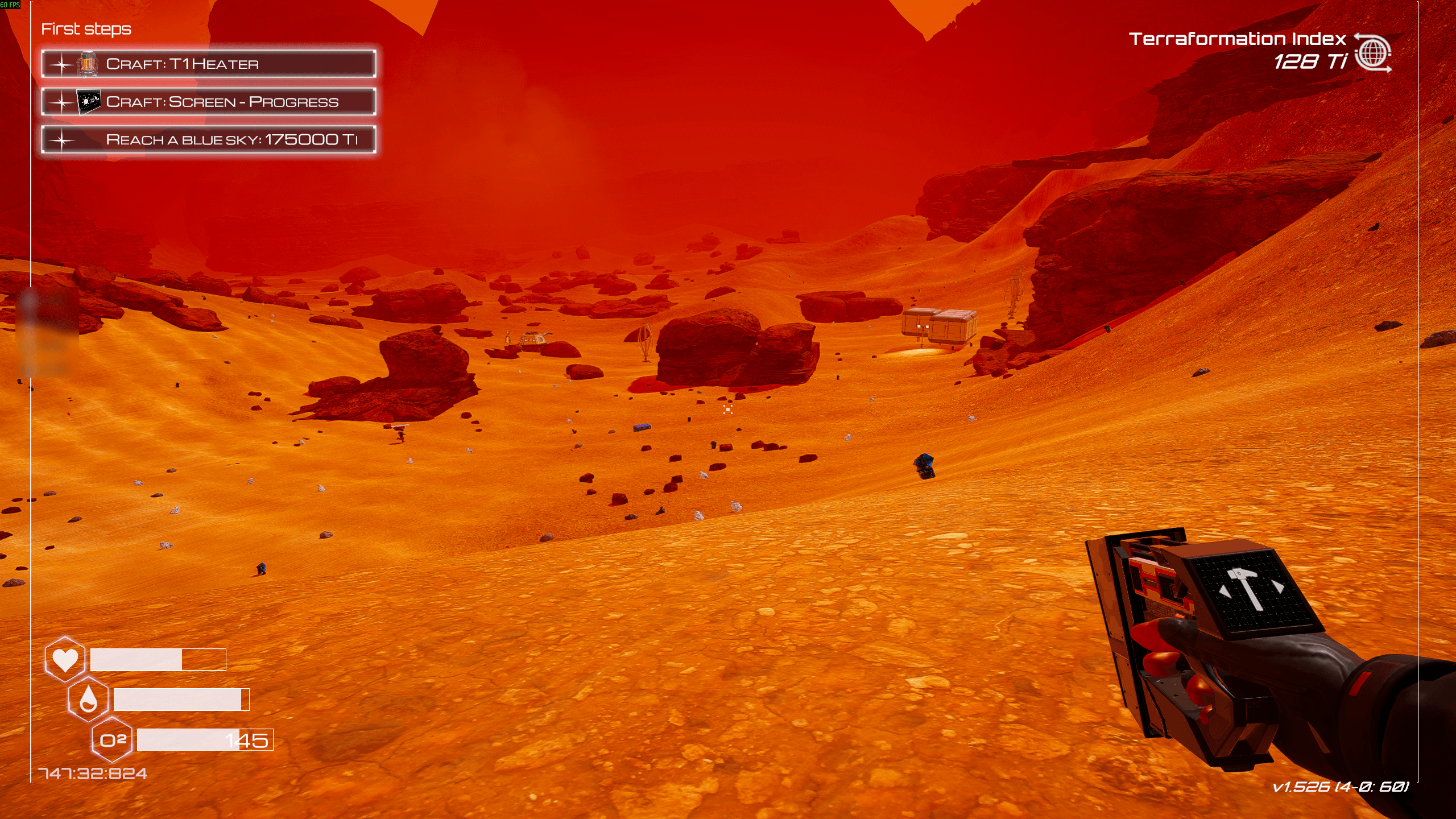
On the surface of Prime, not too long after landing.
“On the surface of Prime, not too long after landing.”

Upon closer examination, intriguing wrinkles in that simple conceit start to show. You’re not just some engineer, you’re actually a criminal who was sentenced to do this work. Interesting. What work? Terraforming the planet! Yep, unlike the aforementioned Icarus, the terraforming hasn’t already been completed – that’s your job, buddy! Not only that, but they didn’t send you down to the planet’s surface with no resources just because like the assholes in Icarus, but something went wrong and your decently equipped lander/habitat unit actually crashed, so your survival is at least somewhat out of necessity.

While all of this is pretty neat, where the game really shines is its systems. It manages to distill the basic “tree-puncher” formula down to the point where almost everything is done with a single mouse click. At first this feels kind of unintuitive, but soon you’ll be locked into the mindset and almost never have to wonder how to perform any action in the game. It’s fantastic! The whole terraforming thing is also a pretty interesting twist on your typical survival game. Much of the tech you’ll be building contributes to the pressure and heat you’re outputting, gradually transforming the barren planet to one with a blue sky and clouds, which leads to rain, which leads to the water level rising, which leads to moss and trees, which leads to insects, and then fish and eventually mammals. It’s super cool, and working towards that goal turns the game into feeling something more like a cross between Astroneer and Satisfactory. I rate both of those games highly, so this is no small praise.
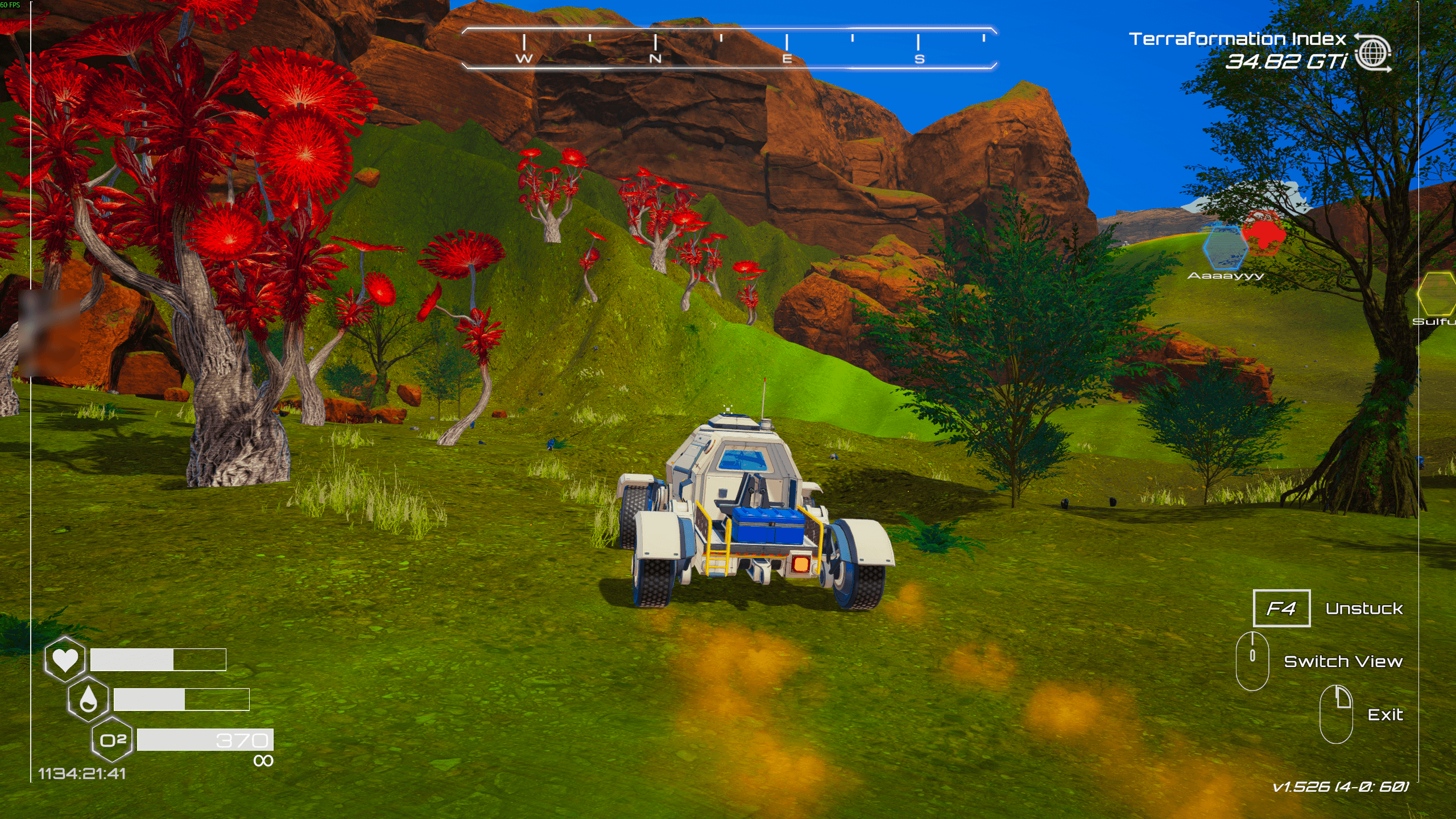
Many hours later, the world is looking much more hospitable.
“Many hours later, the world is looking much more hospitable.”

There’s also a focus on exploring more of the map to find new resources, as well as finding more and new tech by exploring shipwrecks, abandoned habitats from previous terraforming attempts, and long buried alien temples. There’s even something of a story to go along with all of that. This is somewhat similar to exploring in those two games, but much more of a necessity, and well balanced between being risky and being fun and rewarding.

Just like in Satisfactory and a lot of these kinds of survival games, I spent a lot of my time exploring. Unlike those games, so did the rest of the group. I think that speaks volumes.
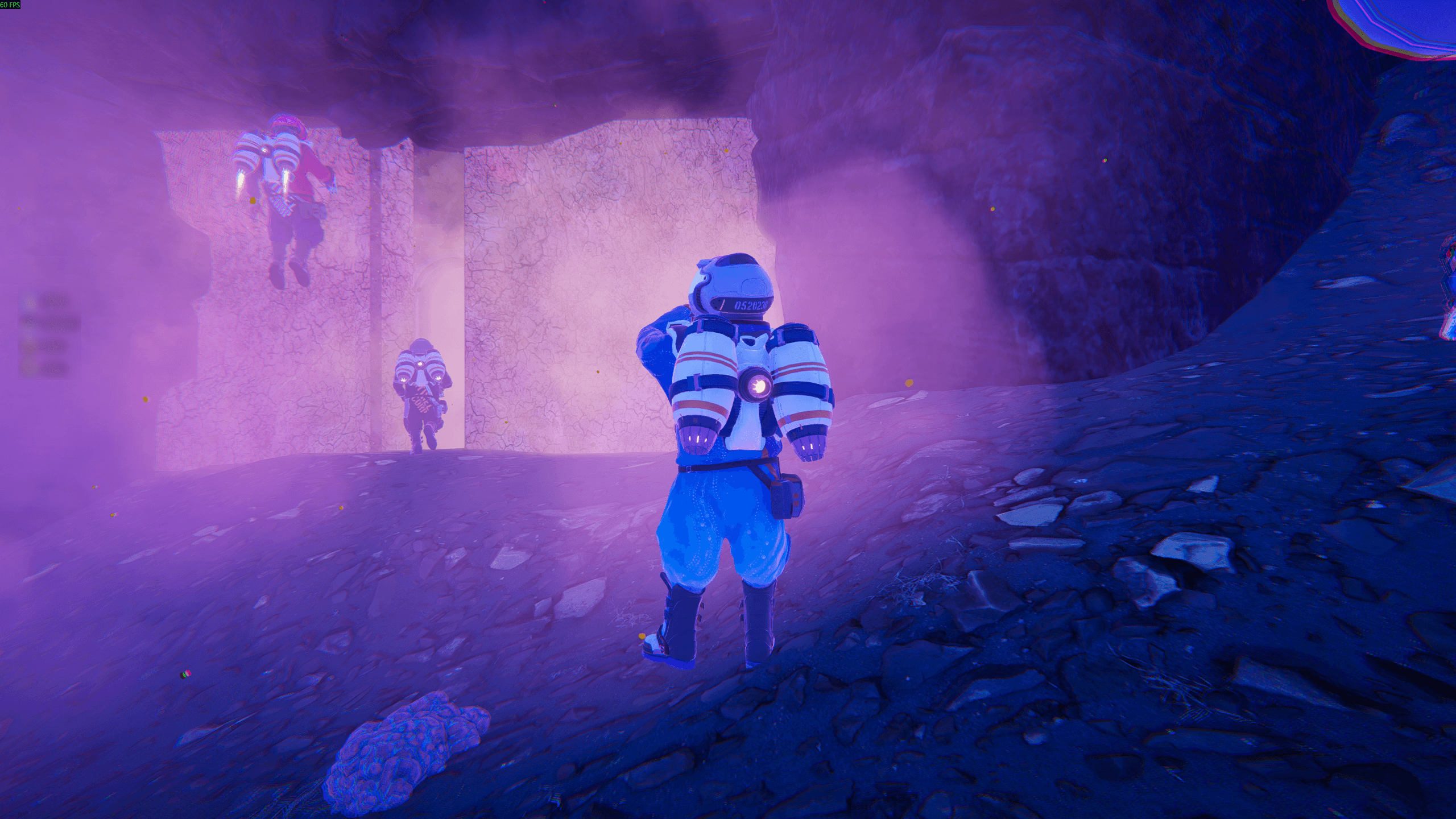
The crew and I about to enter an ancient temple.
“The crew and I about to enter an ancient temple.”

We completed terraforming the planet you start on (Prime) before taking off and heading over to the moon Selenea which started the cycle all over again, only with twists in what material was and wasn’t available from the get go, including some new things, and a limited ability to move items and resources between our original planet and the moon. While we didn’t finish terraforming it, the fact that we even played so much more of the game after “finishing” one playthrough says a lot about how much we enjoyed The Planet Crafter, and I could definitely see us coming back to it at some point in the future.

Next up was a game I’ve already mentioned in this series, Enshrouded. I’m happy to report that between a lot of patching since the last time we played it, adding more content and a lot of quality of life improvements, and playing with our full group this time, it finally hit more like I’d originally imagined it would.
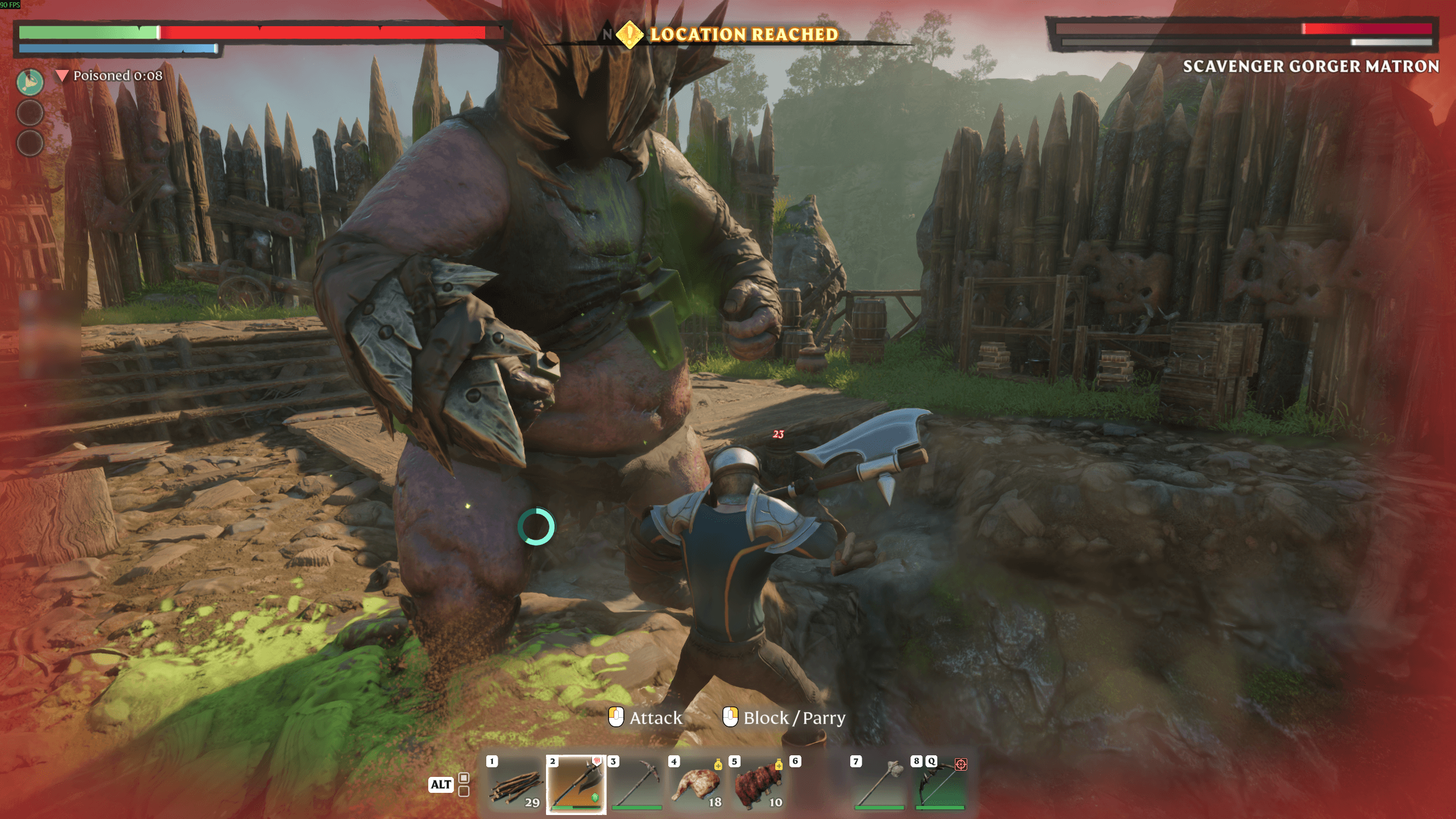
Soloing an apparently evenly matched mini-boss.
“Soloing an apparently evenly matched mini-boss.”

One of the first things I noticed when jumping into the game this time was the graphical overhaul it received. I believe the models, textures, and animations are still mostly the same, but at some point it got a lighting rework which made the game look so much nicer. I think it might also run a little better to boot, but that could be my imagination.

There are so many more survivor NPCs to recruit to your base, making it feel much more lively, and necessitating a settlement approach to construction even more than before. Of course, most of these new NPCs bring new recipes to craft and new quests to complete. In fact, that relates to one of my few complaints about this playthrough – there are way too many quests, and they don’t chain together like in a well designed RPG, rather your quest log is just stuffed with random tasks to complete all over the map, and every time you cross one off it feels like 3 more pop up. I’m perhaps exaggerating a little, but it did feel kind of overwhelming and tempted us to simply not worry about them that much. That said, when things got slow and we started to feel a little bored, crossing one or two off of the list was an easy way to remedy that.
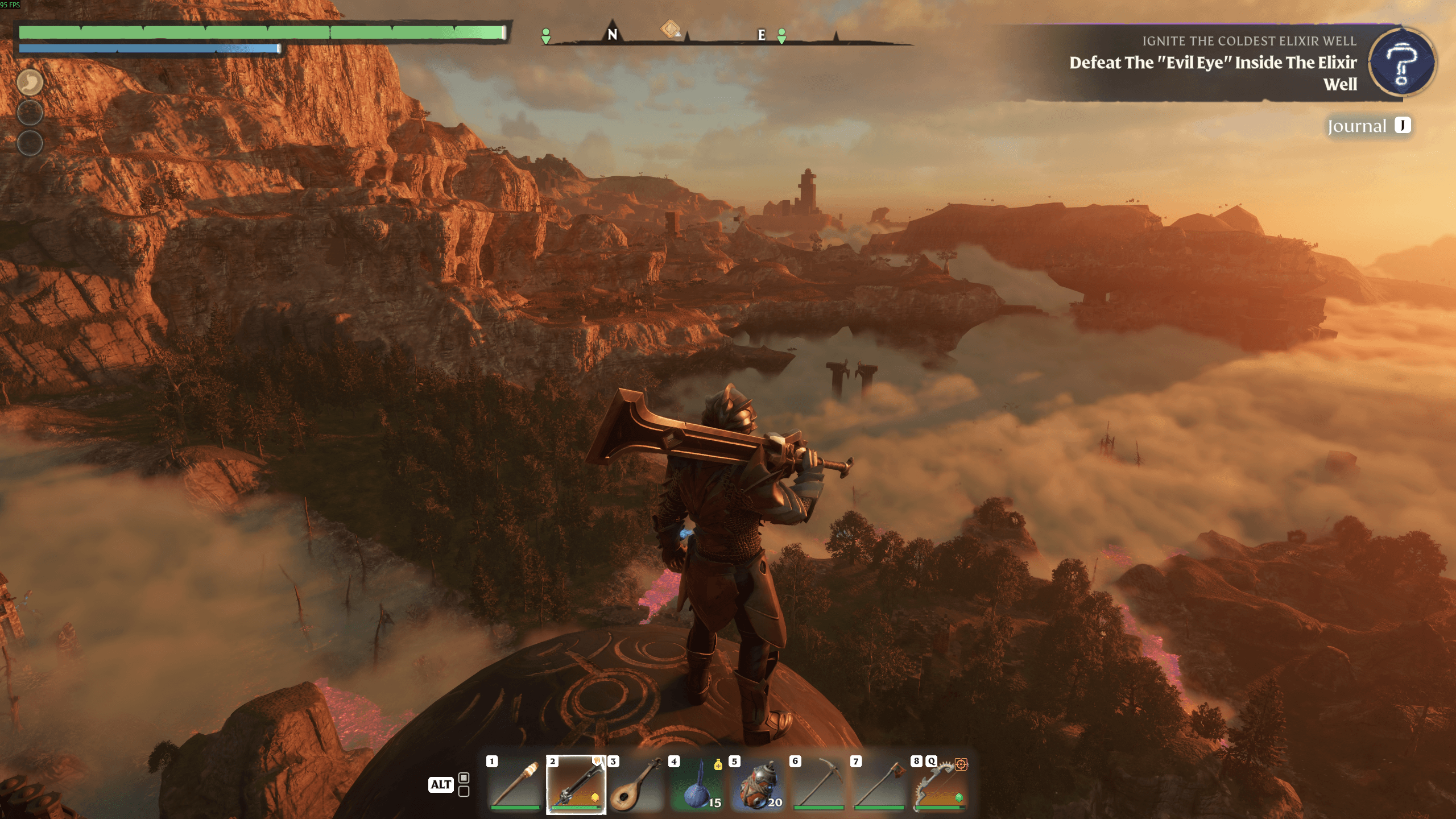
Man, Enshrouded is full of incredible views!
“Man, Enshrouded is full of incredible views!”

That was more of an issue later, but one thing that endangered our playthrough early on was the difficulty of the combat. I’ve previously described the game as more of an action-adventure game along the lines of a modern Legend of Zelda game, but its take on combat might be more inspired by the Dark Souls series and the like. Stamina management is important, as are blocking and rolling and dodging in and out of combat to avoid what otherwise can be fairly punishing attacks. Thankfully this is much more of an issue for the first few levels of the game, as between obtaining new and better gear and selecting new skills as you level up, combat gets considerably easier as you progress.

At this point the game is still in early access so I’m not sure it actually has anything resembling an “end” quite yet, though we did explore almost the entire map including maxing out our skill points and defeating what is, at least at the moment, its biggest and hardest boss, the Fell Dragon Youngling at the Howling Peak. This was easily the most poorly tuned and frustrating part of the entire game, and we hit our heads against that particular challenge for large portions of at least two different sessions, and probably would have quit over it if we weren’t hard-headedly determined to get beyond it, even if it wasn’t actually blocking any of our progress.
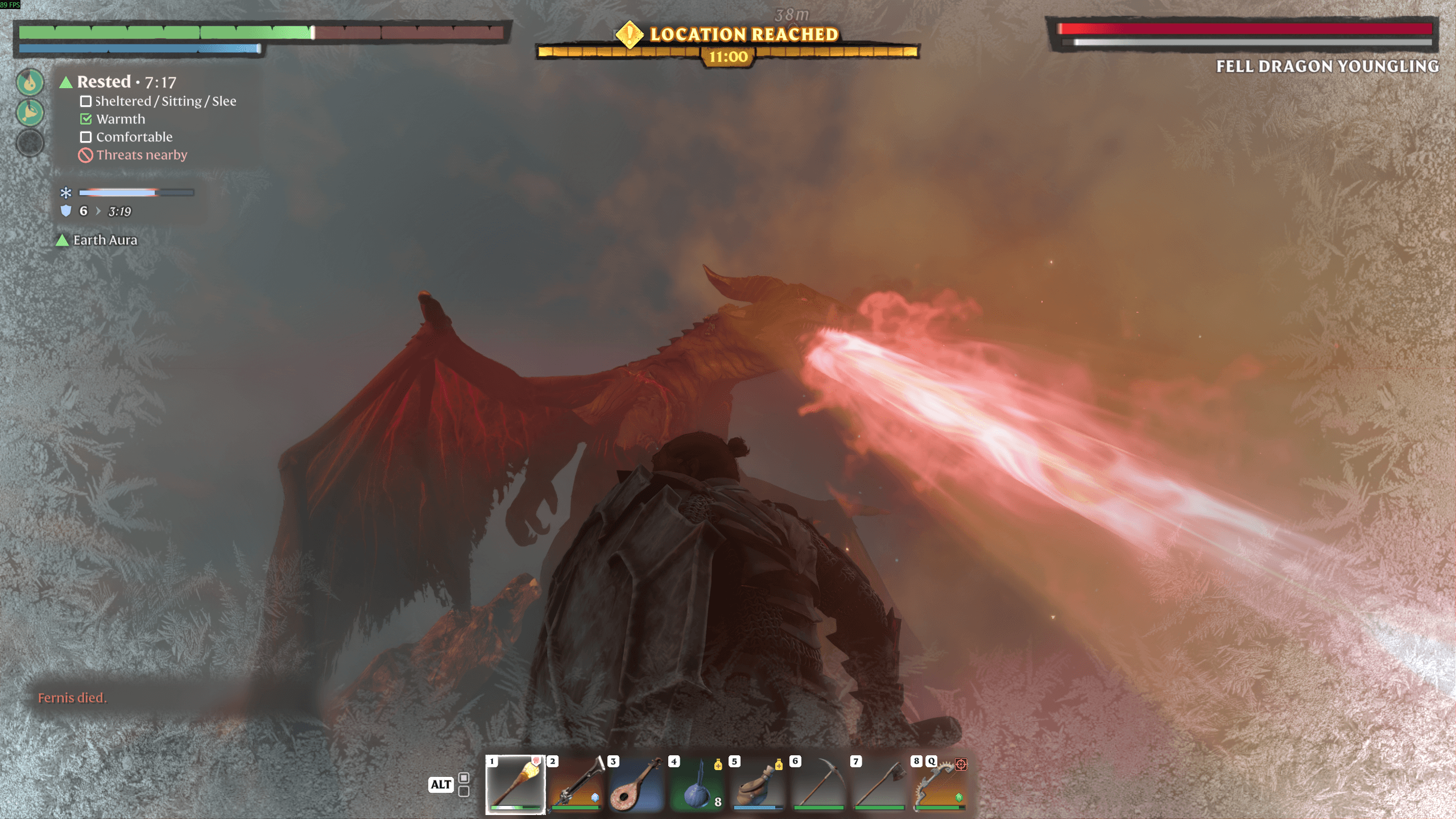
On the other hand, finally slaying this fucking thing felt great.
“On the other hand, finally slaying this fucking thing felt great.”

We finally quit the game when we felt like we’d more or less exhausted the more notable content, and between the three playthroughs I’ve done I have about 127 hours in game. My first two were probably in the single digits, so yeah, we definitely put our time in! While it was dicey at first, in the end I think Enshrouded has earned a spot amongst the best co-op survival games we’ve played thus far. It might not be my absolute favorite, as some more unique experiences edge it out, but it’s a great game, and I’ll be keeping an eye on it when it finally reaches 1.0 (projected to be quite soon) and beyond.

Finally, on a much less positive note, is Nightingale. This is another game that I’d heard nothing about but ended up on our radars somehow, and we all picked it up during a Steam sale. I was feeling a little down on the idea of jumping into yet another boiler plate tree-puncher, after all, we’ve played quite a few of them, often one after the other, but once we started playing the game and learning its systems, it was growing on me.
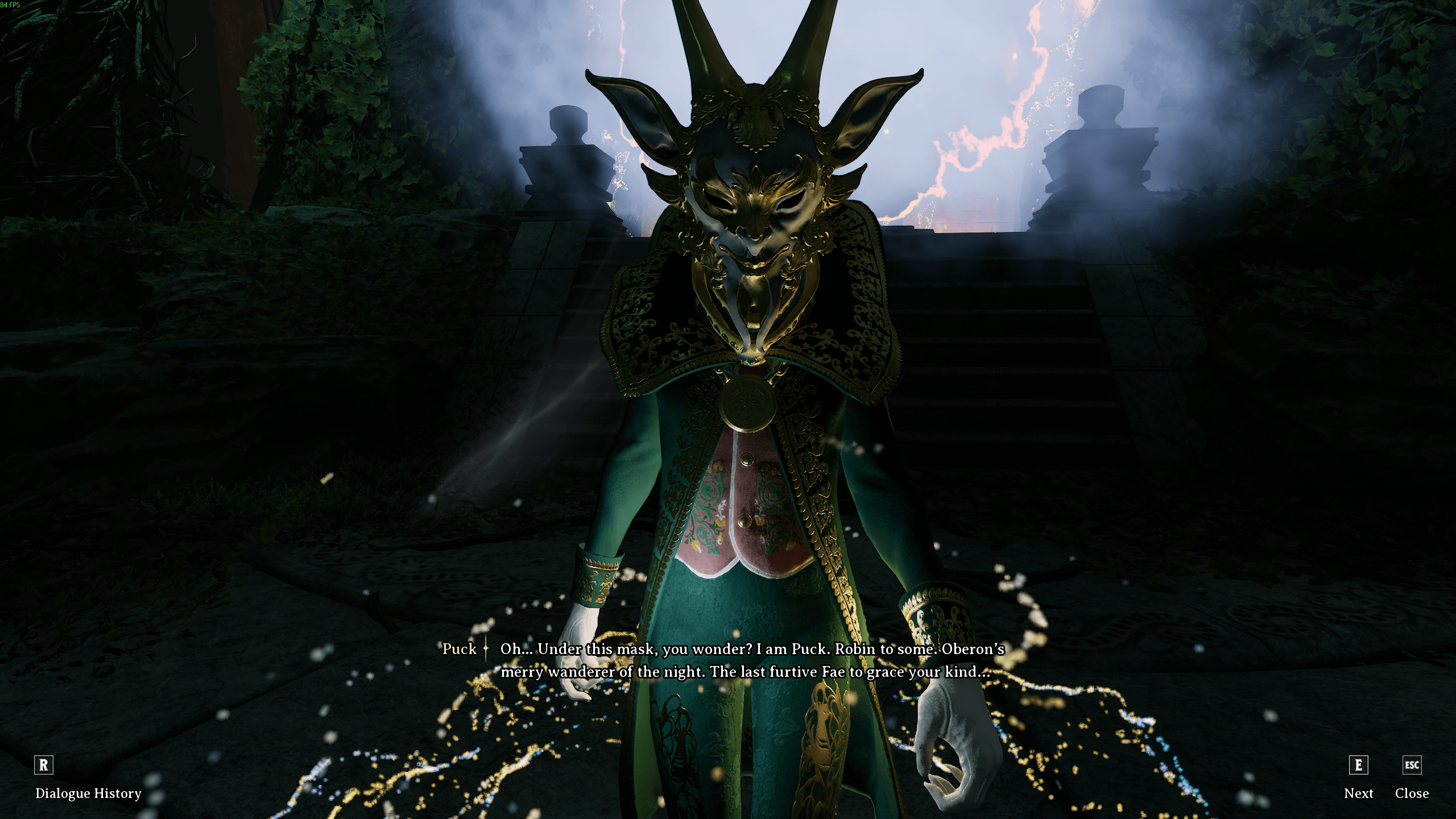
Puck is always around to creepily advise you on your next steps.
“Puck is always around to creepily advise you on your next steps.”

To back up for a second, Nightingale has kind of an interesting theme, mixing Victorian-eque gaslamp setting with fae mythology and magic, and more than a little interdimensional travel. It looks gorgeous much of the time, and its systems are fairly interesting, albeit it apparently pivoted from being an MMORPG to a more traditional open world survival game at some point in its development. I don’t know much about its history, but I get the distinct impression that, not unlike Atlas, some shit went down, and as a result, the game just didn’t quite hit as hoped. I don’t believe it’s been abandoned yet, but it definitely seems to have lost just about all of its early access momentum and hype, sadly enough.

So we jumped into the game and started trying to figure out what the hell we were doing. The fact that it took a little while to figure out some of the systems at hand was actually a positive, since it meant it wasn’t quite as cookie-cutter as I’d feared. We traveled all over the first realm completing quests and exploring points of interest before finally moving on to the next one. In the next one, we set up a new homestead to serve as our base of operations, and then spent quite a while gathering, crafting, and otherwise teching up before moving on to knocking out quests and otherwise clearing the map. Unfortunately, the latter task felt a lot like what we’d done in the previous realm, which gave me some concern about the gameplay getting too repetitive if we continued to play it so methodically.
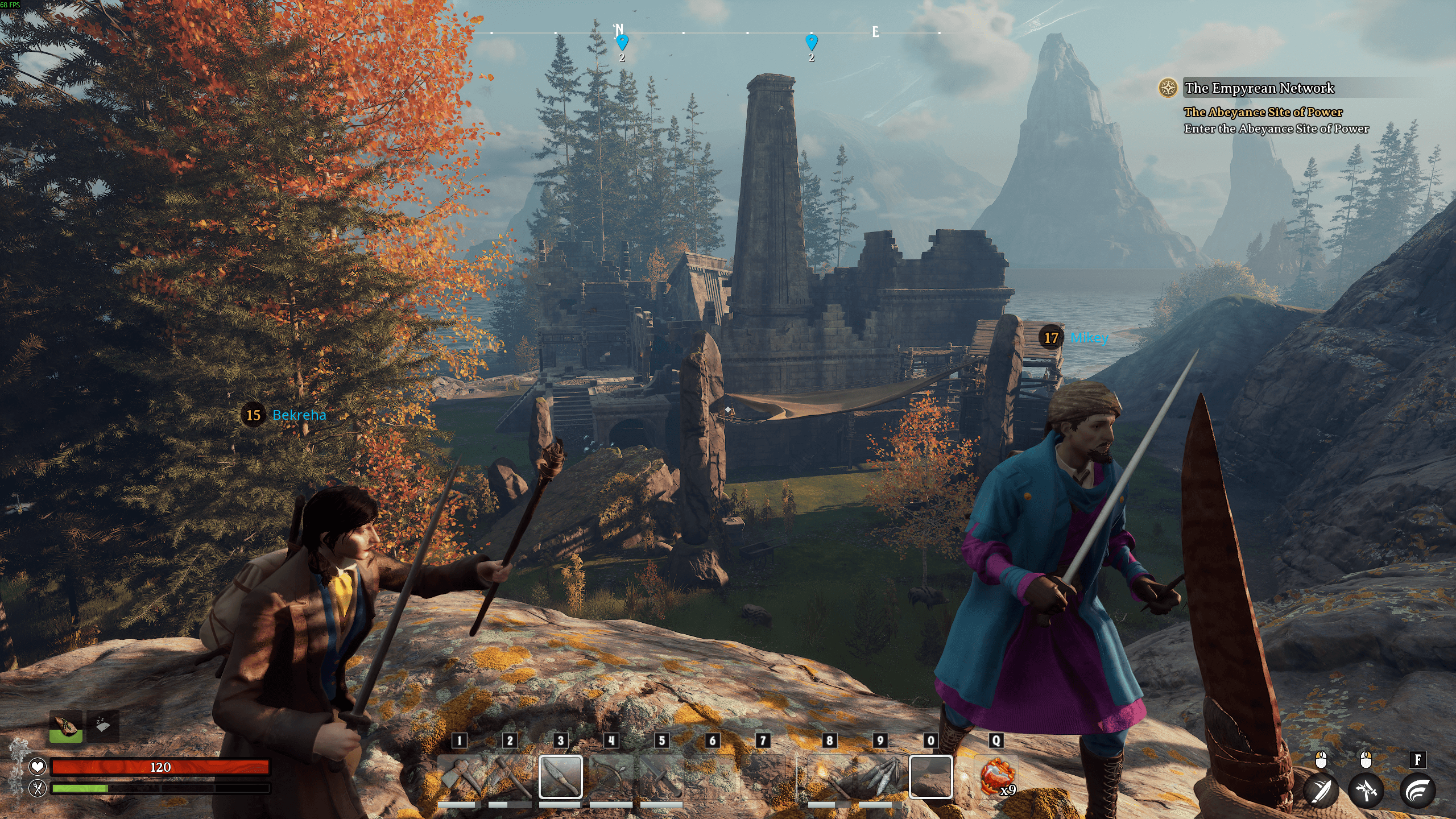
Exploring the mysterious realms of Nightingale.
“Exploring the mysterious realms of Nightingale.”

At some point we got a quest to try out a new ability to more freely travel from realm to realm by opening our own portals, which brought us to yet another new, though much smaller realm. This one was quite different, and the promise of all of these unique realms was starting to be evident. Once we cleared it and went back to continue where we left off on the second realm, however, we made a startling discovery: our homestead and everything we’d had stored in it was totally gone; the map was back to its original state. While we still had our character progress, losing all of this work, including some special quest rewards, took the wind right out of our sails. While we found reports of similar issues evidently caused by bugs from years back, it still isn’t clear to me if we could have somehow screwed something up in the way we traveled back to this realm, or if it was indeed some kind of bug. In any case, after fruitlessly looking for some solution to restore our progress, we collectively gave Nightingale the middle finger and moved on. Major bummer!
Surviving Survival Tres

As mentioned in Surviving Survival Part 2, the next thing on my weekly gaming group’s hit-list was Icarus. Icarus is a game I was entirely oblivious to until one of the group recommended we check it out next, as he’d previously played it a bit and enjoyed it. Released in 2021 by Dean Hall of DayZ fame and his studio RocketWerkz, I’m kind of surprised I hadn’t at least heard of it. Looking for more info, I stumbled across a random entertaining video showing a group of friends and their hijinks in the game. It looked interesting, if not perhaps just a little hardcore for our group, as the game is close to a pure “tree-puncher” style open world survival crafting game, and our enjoyment of it was very likely to hinge on how well that difficulty was tuned.

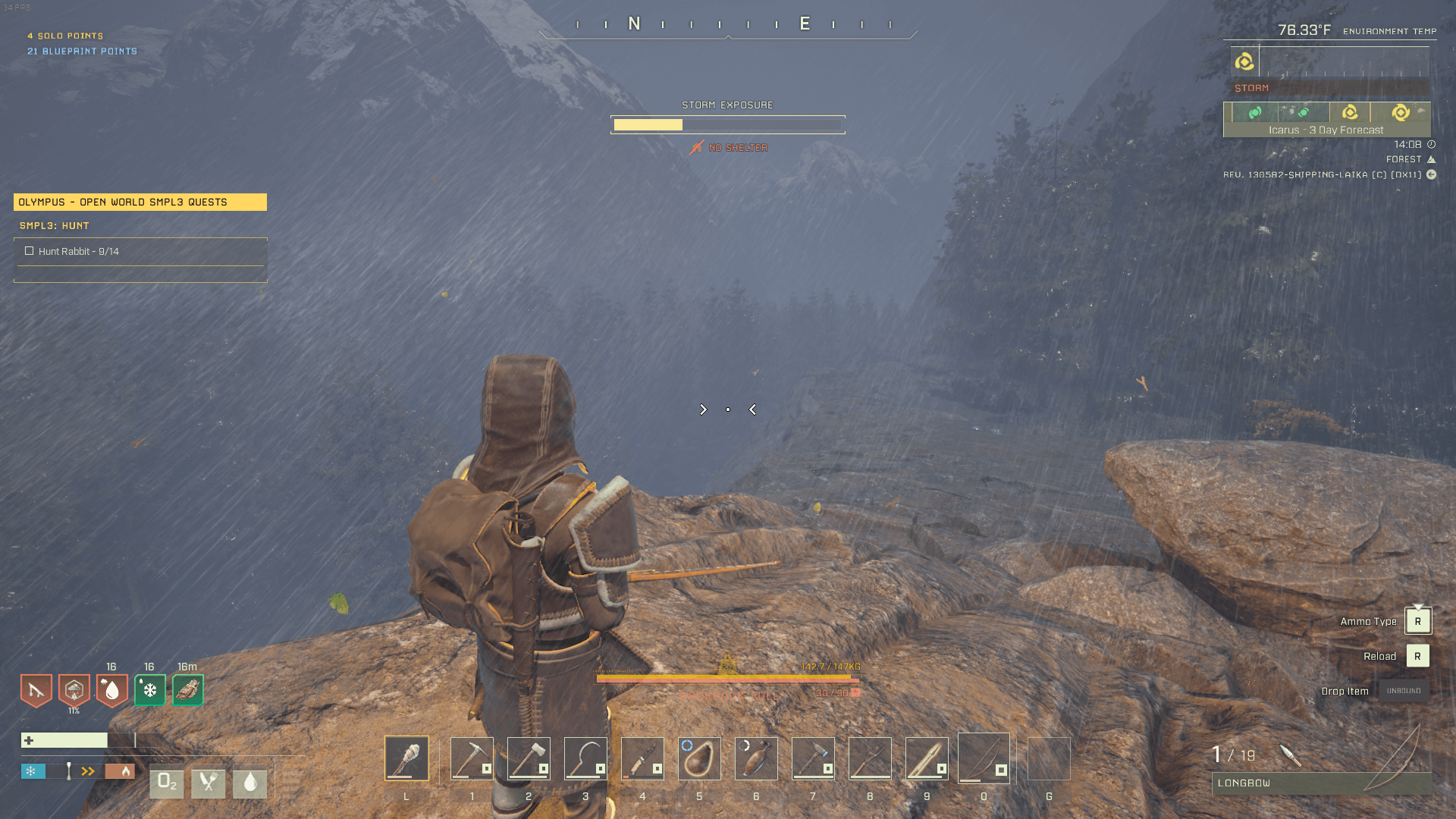
Hunting on a rainy day on Icarus.
“Hunting on a rainy day on Icarus.”

The premise is simple enough. An attempt to terraform a planet (the titular “Icarus”) goes wrong due to the presence of undetected exotic matter, and while the result is not habitable to humans, life evidently found a way. You and your team of disposable prospectors head down to the planet’s surface to collect various samples, run tests, and of course, gather some of these valuable “exotics”, all of which will also require you to become self-sufficient enough to survive the harsh climate for the duration. While the latter aspect is pretty cookie cutter, the former is represented by a series of missions that you can choose on-demand. There are a number of these, many of which are of the “go to this place and do this thing” variety. Usually gather or scan special items, resources or kill/destroy a creature or structure, for example. Completing these will reward you with some of the game’s in-game currencies, which then allow you to purchase supplies that can either be sent down to you, or work as upgrades to your starting gear for future expeditions, rogue-lite style. Those systems are actually pretty neat, and I did appreciate having a bit more structure rather than the experience being totally unguided, though I feel like they could definitely be expanded on quite a bit more. It’s also amusing to think that the United Development Agency sends you down with such meager supplies that your survival journey starts out with you living like a literal caveman, yet are quite capable of offering you a leg up in exchange for some valuable materials. Too realistic!

As mentioned, the teching up (which is done via talent points, earned from performing numerous in-game actions) starts out with you building tools, weapons, and structures out of bone, wood, and stone, but jumps to more and more modern material and equipment as you move between its 4 tiers. Since you’re completely alone on a primitive planet, you pretty much have to craft everything too. It’s fine, and there are even some really neat touches here and there, but man, does it get repetitive damn quickly. But honestly, so does everything else. While the world itself is handcrafted, there is very little of interest here. Yes, it’s fun exploring, finding new caves to clear out, wildlife to hunt or tame, and resources to gather, and some of the missions are quite fun too, but it wears out its welcome fast and begins to feel like a bit of a grind. The relatively nice graphics, which I think look really good at times, can’t really save that from eventually being an issue. I’m not trying to pick on Icarus here, as I think that is a challenge the genre as a whole struggles with, and that balance doesn’t seem like an easy one to strike.

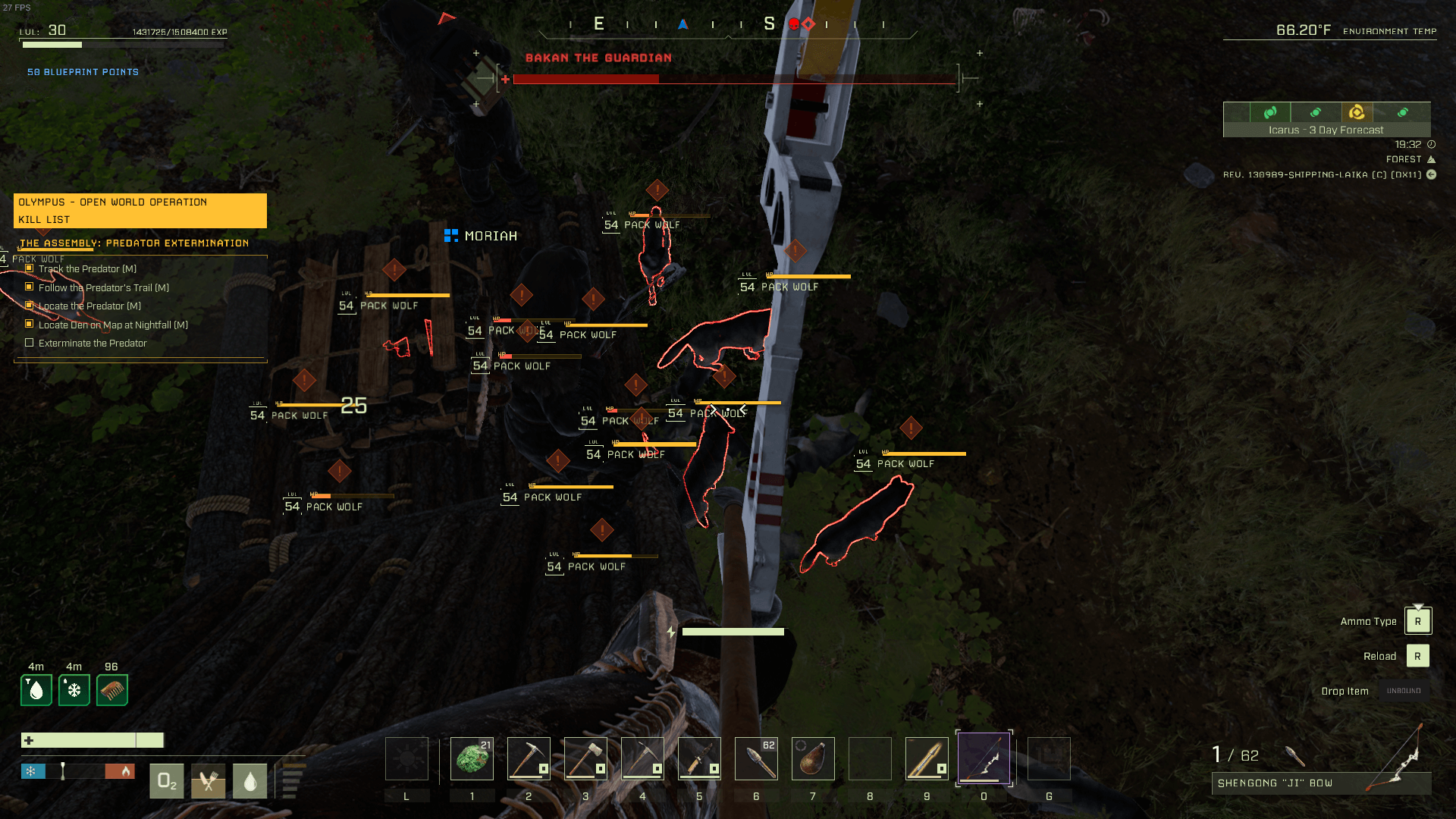
Trapped in a tree-stand by a pack of wolves. Fun!
“Trapped in a tree-stand by a pack of wolves. Fun!”

This, not any perception of difficulty, was the reason why, after 40-some hours, we decided to move on to something new. That said, I really do think if you’re someone who likes a reasonably “pure” survival crafting experience, Icarus should be on your short list of games to check out – you may absolutely love it. It’s a solid game with some unique features, and hey, it’s still getting regular updates with new features and other additions to this day. I could even see enjoying a long solo play-through, if you really like the genre. As for us, it’s definitely possible we’ll come back in the future, though maybe prospecting on a brand new world (which are sold separately as the game’s main DLC strategy.)

I’ll close out Icarus with a little anecdote, a hilarious emergent moment that was so awesome I found myself telling friends at work about it the following day, and was probably a big part of why I was happy to stick it out for so many more hours:

The last moments of our beloved fishing pier...
“The last moments of our beloved fishing pier…”

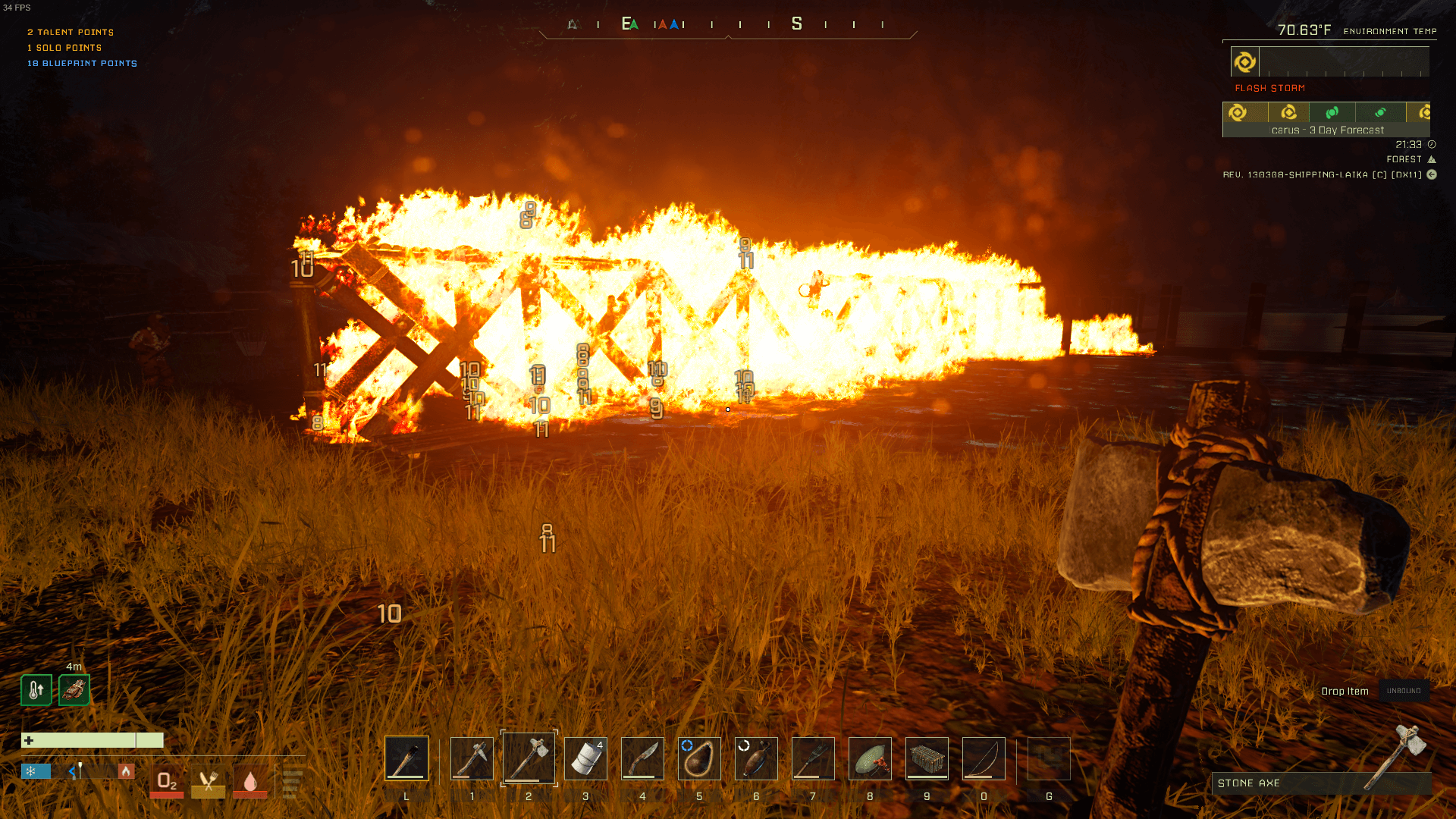
As part of our very first session, we built our little settlement on the banks of a small lake close to where we initially landed. If you’ve played Icarus, you probably know the one. As the member of our crew who had played before knew he’d want to spend a good chunk of his time fishing, he decided to build a fishing pier to make this a bit easier. At first this started off as a tiny dock, but eventually expanded into a massive pier that reached the middle of the lake, complete with railings and a covered roof, and later an extension to another part of the lake so it could serve as more of a bridge. It was wholly unnecessary, but these kinds of distracting projects can be a key part of the fun of the genre in my opinion. One thing I didn’t mention about Icarus is its dynamic weather system, which can require you to seek shelter from various dangers, depending on the biome you’re in. Right at the end of our session, after our rather impressive pier was totally up and operational, a severe lightning storm rolled in right on top of us. The sustained barrage of lightning strikes ended up catching our pier on fire, and several of us braved the conditions to run out and try to save it, or at the very least, keep the fire from possibly spreading to the rest of our camp. Given that our tech was still effectively tier 1, the best we could do was run into the chaos and try to beat the fire back with primitive “fire whacker” tools. As ineffective as this sounds, it worked okay at first, and we were able to keep the fire from spreading inland, but as it spread, we found ourselves in danger of being cut off and had to retreat. Unfortunately I was stuck in the middle of the pier, surrounded by raging flames, and soon discovered that the railings we’d added for decorative purposes had turned into my prison bars, keeping me from being able to jump off into the safety of the water. In an intense panic, the idea of simply deconstructing them didn’t occur to me, and I finally destroyed one of the floor panels and just barely managed dive into the lake and make it back to shore.

Our session ended with us all standing there watching helplessly as the fire engulfed the entire structure, eventually leaving nothing standing except for some of the timber piles that were below the water line. In terms of our progress, it was a bit of a gut punch, sure, but in the moment? One of the most incredible introductions to a game I can remember experiencing!

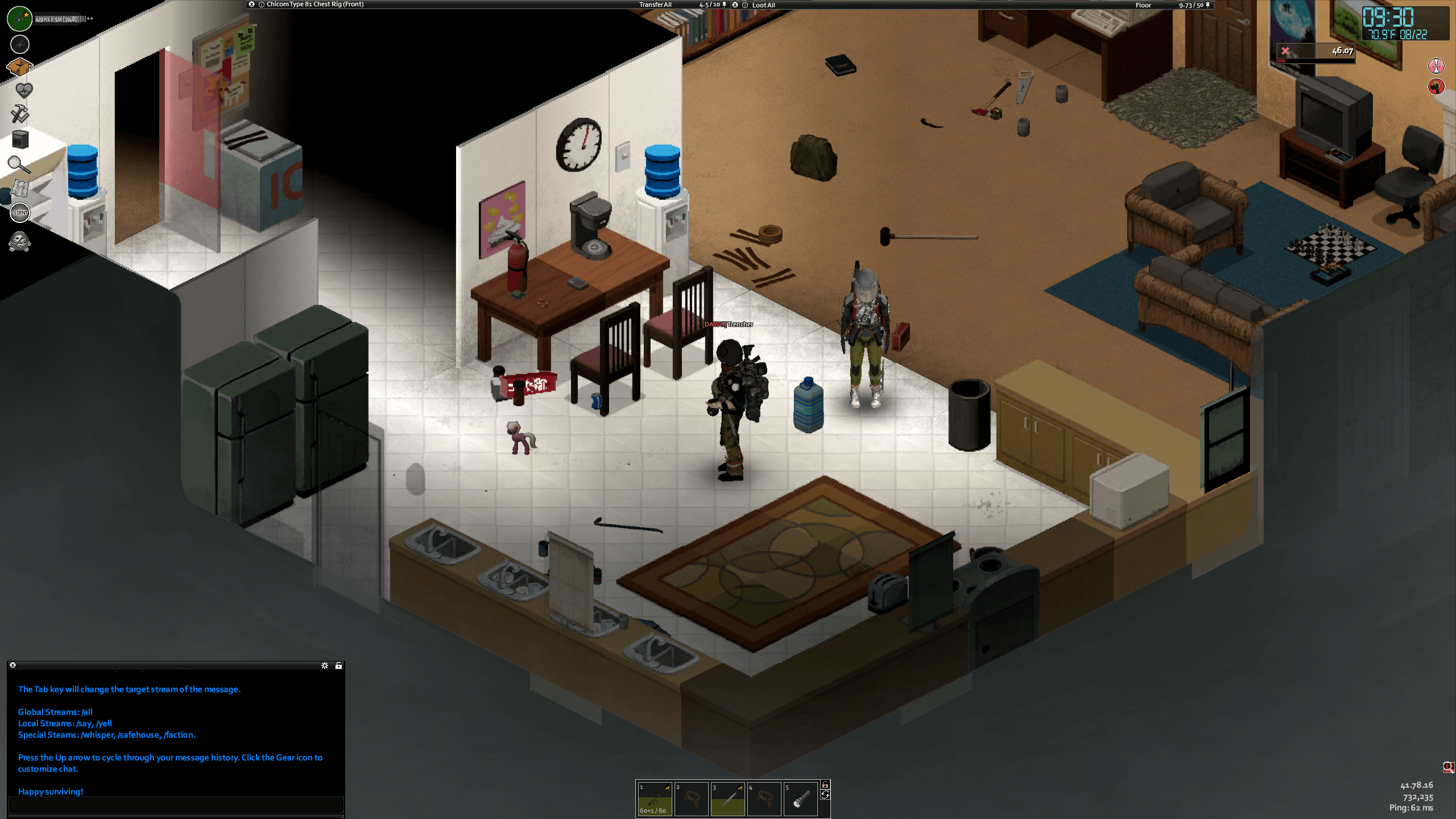
Taking a breather in an abandoned house.
“Taking a breather in an abandoned house.”

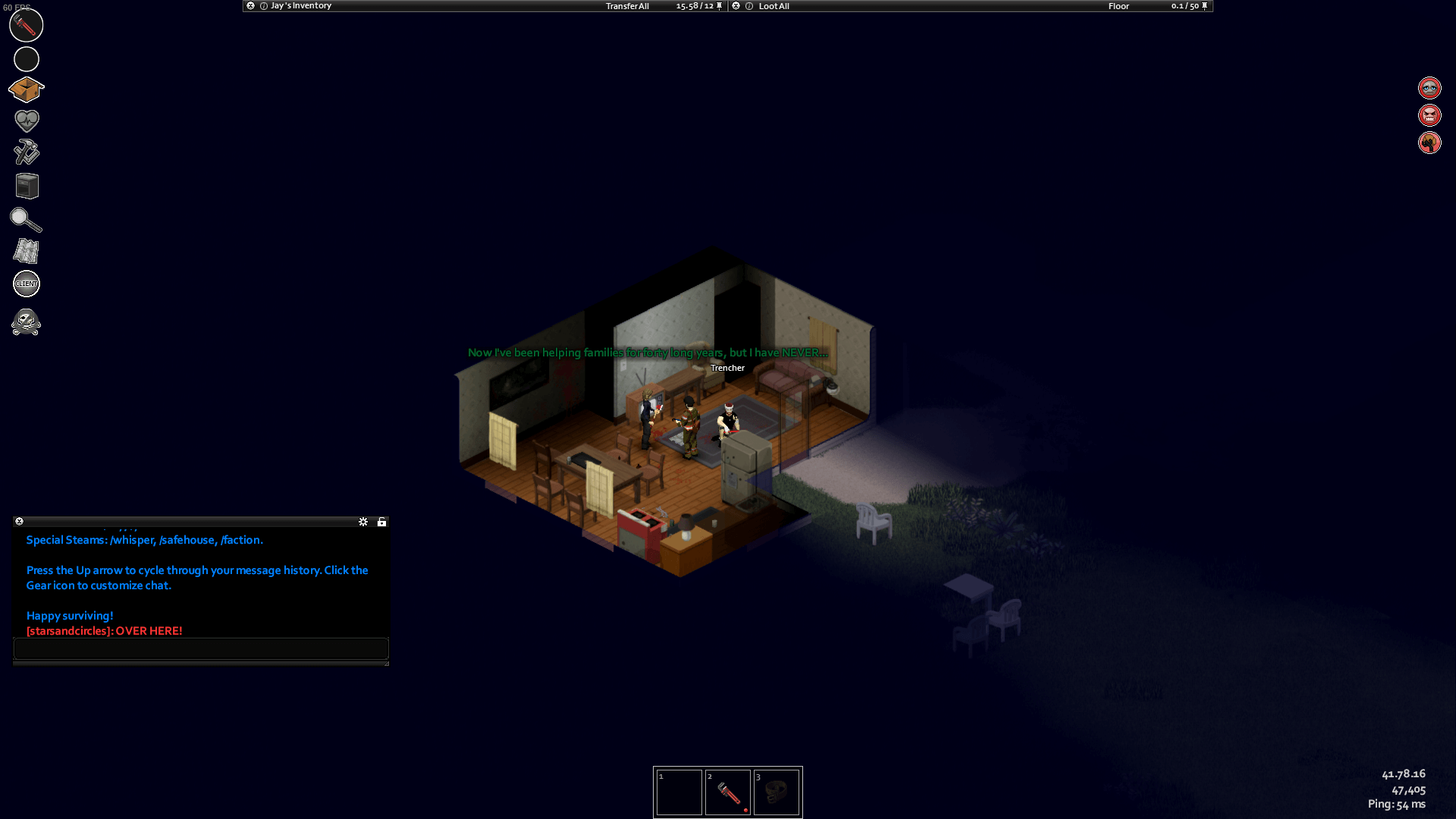
Project Zomboid has been brought up frequently in our little gaming group, as it’s one of one member’s all time favorite games. He finally somehow talked everyone into giving it a whirl, so we jumped into a new server he spun up, complete with an impressively massive array of mods to expand numerous systems and add a multitude of new items. If he hadn’t spent so much time curating and optimizing the mod list, I don’t think there would have been any chance we’d have jumped into the deep end like that, but alas, he made it pretty easy for us. It’s a good thing too, as learning the game itself was a big enough drain on our collective energies.

Let me rewind for a moment and talk more about what Project Zomboid actually is. It’s a (stop me if you’ve heard this one before) open world survival game, but as it’s set during a zombie apocalypse, it focuses a lot more on scavenging than progressing your way up through a more traditional gathering, crafting, and base building system. That’s not to say it doesn’t have a ridiculously deep crafting system – it does – but it’s a notable difference after just describing Icarus. It also has a pretty in-depth skill system, including a favorite feature of allowing you to take negative traits to get more points to allocate during character creation, which was greatly expanded by some of the aforementioned mods. On top of all of that, there is a surprising amount of simulation in the game – weird little systems that, while mostly unnecessary, go a long way to add detail to the world which, to me personally, make time spent in the inhospitable world of Project Zomboid so much more immersive. Very cool!

Looting a warehouse.
“Looting a warehouse.”

No, the biggest hurdle a lot of players will have with Project Zomboid is its relatively simplistic isometric graphics. I’m no stranger to getting immersed in an isometric world myself, but I fully expected the others to really struggle with it. Surprisingly, everyone seemed to adapt reasonably quickly. Instead, almost all of the difficulty came from the fact that, especially early on, you’re going to be using melee weapons a lot, and lining up your character with an enemy is quite a bit more fiddly than it really should be, leading to occasionally missing a swing you think you’re perfectly aligned with, for example. One missed hit can cause a fight to quickly spiral out of control, as the next thing you know your character has been bitten, and possibly infected as a result, and now instead of confidently managing the zombie threat around you, you’re suddenly being completely overrun, struggling in a chaotic fight for survival. While yes, when I put it that way that does sound like a cool scene from The Walking Dead or something, when you’re actually playing the game, it can feel incredibly frustrating. Dying when it doesn’t feel like it was your fault is never a fun time, though this became less of a problem the more I started to rely on firearms instead.

While I’m on the subject, the entire health system is quite brutal. Bites happen pretty randomly, even when well protected, and getting infected means you’ll be suffering a slow (well, sometimes quick) demise. This can feel like it comes out of nowhere, though after the first few times you drop dead seemingly randomly, you’ll probably learn to start checking your status a bit more frequently. Thankfully, one of the mods on our server let us loot “zombievoxir ampules” from a rare type of zombie, which could cure the infection instantly, and the hunt for those special zombies was sometimes a pretty enjoyable diversion. Regardless, I liked having some way to cure the infection, which from my understanding does not exist in the base game. The brutality doesn’t stop there though, there are numerous other ways to get hurt or die, and another way that is probably a bit more prominent than it should be, is from car crashes. The roads are littered with hazards and driving really fast is a recipe for disaster. While, unlike a lot of isometric games, you can zoom your view out quite far, there can still be an issue with the engine rendering everything quickly enough to avoid collisions. Getting ejected from a car sucks, naturally, but even minor fender benders can result in a lingering internal injury that you absolutely need to address.

Clearing the road for our convoy... in style!
“Clearing the road for our convoy… in style!”

My last major gripe relates to dying. On one hand, if your character dies, you can simply roll a new one and rejoin the server. Then, with some luck, you can track down your body and at least get your old gear back, though this might require killing the zombie version of your old character first. We also had a mod that awarded extra traits points during character creation depending on how long your previous character survived, which added some nice rogue-lite style progression, and since you were making a whole new character, let you more freely experiment with different builds as an added bonus. On the other hand, one way that skills are learned is via finding and reading books in the world. These don’t actually give you skills directly, but boost the XP multiplier you get while learning them. Unfortunately those bonuses are lost upon death, making the hunt for those books feel like a total waste of time, at least if you’re a newbie who finds the idea of living a long life more outlandish than the possibility of frequent deaths. There are, of course, mods to entirely fix that issue too, we just weren’t using one.

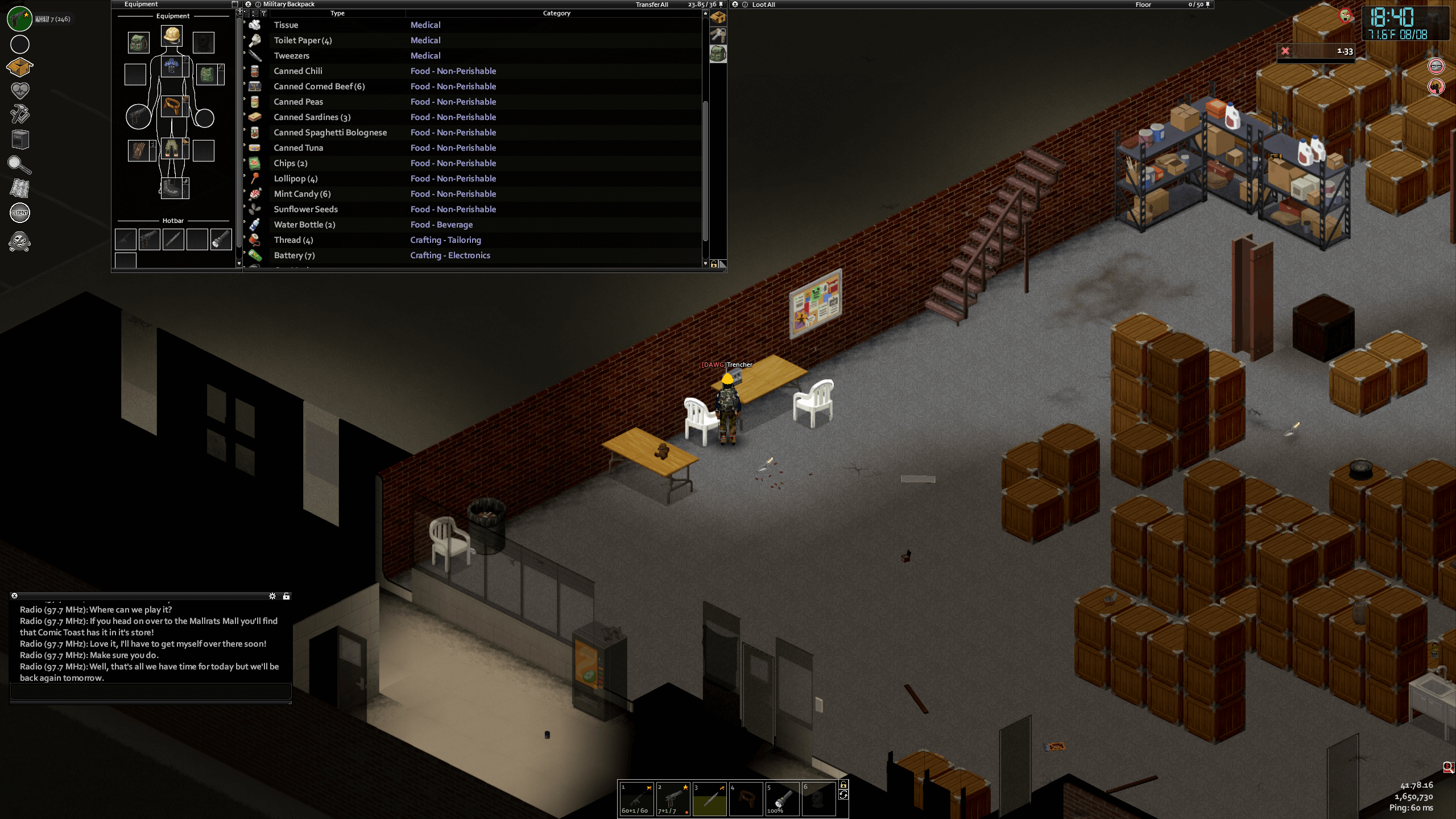
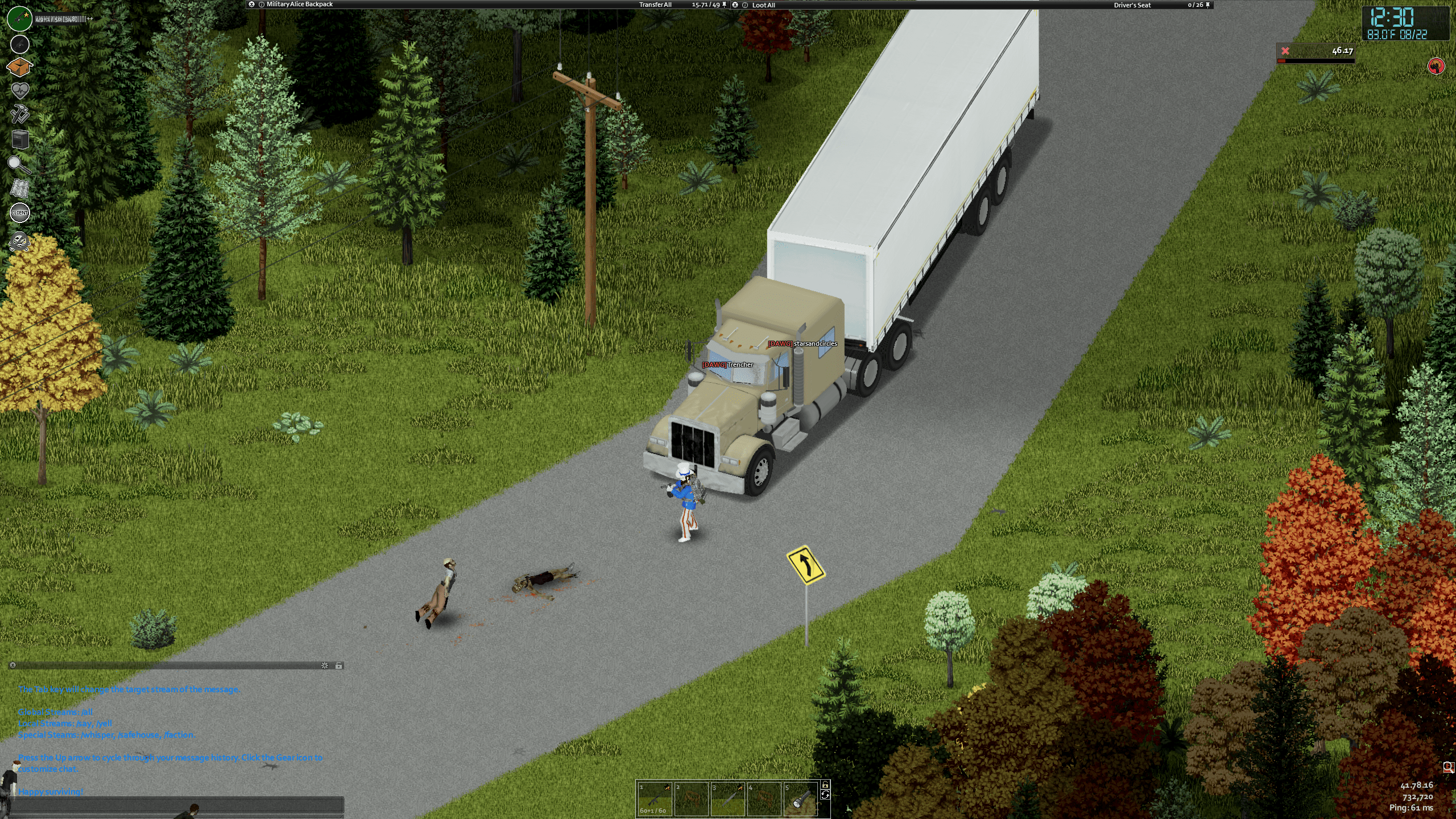
What Project Zomboid really succeeds at is the aforementioned sense of immersion. Somehow its highly interactive environments, numerous detailed functional systems, including some with a fair amount of depth, and the loop of scavenging in a world filled to the brim with useful junk (which I’ve mentioned before on the blog, triggers something in me) really does suck you in quite effectively after you’ve overcome the rest of the game’s idiosyncrasies. All these months later I still have vivid memories of driving our convoy of multiple vehicles around desolate city streets, panicking as a car gets stuck and the horde closes in around us, clearing out nearby towns to stock up on ammo at the local police station, raiding grocery stores for food, hunting down bandits, etc. It doesn’t hurt that the isometric view, ability to pick up and interact with almost everything, and the flexible skill based system reminds me of one of my favorite MMORPGs, Ultima Online.

Chilling in the kitchen of our stronghold.
“Chilling in the kitchen of our stronghold.”

In the end, after something like 50 hours played, we moved on simply because we kind of ran out of things to do. Like a lot of these types of games, once you overcome the basic survival mechanics and “figure out” a lot of the other gameplay systems, there’s not much to do except continuing to live in your virtual world. Sure, you can continue to improve skills and get better and better gear, and maybe build the ultimate stronghold, but to what end? PVP is the answer to that question in a lot of more online oriented games (Rust, Scum, DayZ, etc.) but without some stronger late game content to compel you to keep playing, the loop can start to feel repetitive and stale. That’s not to say everyone will feel this way, as the person on our crew who loves Project Zomboid so much? 850 hours played! 😂

We followed Project Zomboid up with a game I’d been wanting to play since its release in late 2023, The Lord of the Rings: Return to Moria. Return to Moria had the misfortune of being another somewhat budget LoTR game, as one released earlier in the year that became a punching bag for every gaming related content creator out there, The Lord of the Rings: Gollum. While I don’t think Return to Moria was unfairly bashed because of the association, at least not widely, between that and its already niche genre, I do think that it was largely ignored by a lot of people who would have potentially really enjoyed it, as Return to Moria lands on my short list of favorite survival games that I’ve played as part of this series.

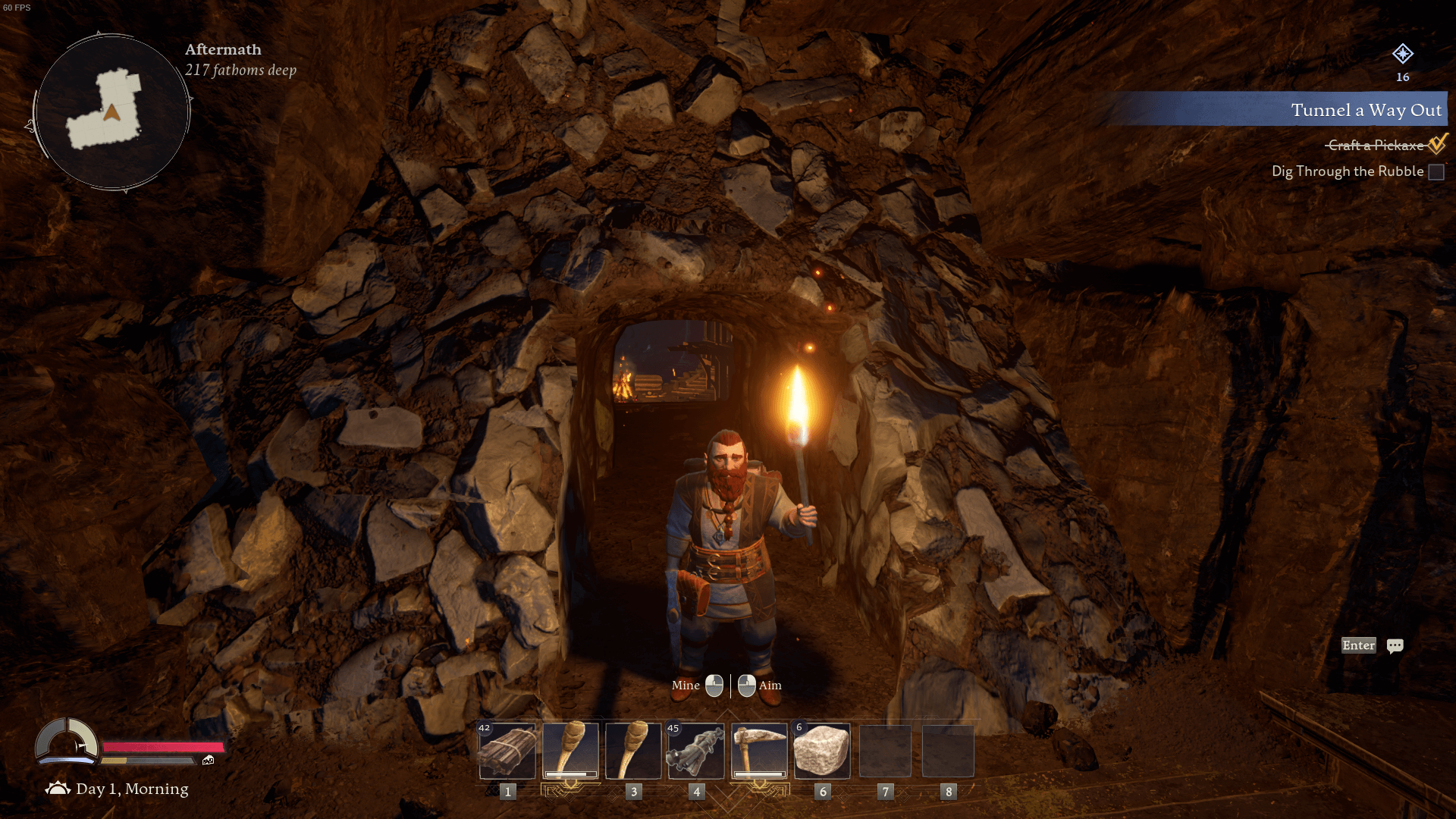
Proud of my very first tunnel...
“Proud of my very first tunnel…”

The basic premise of Return to Moria is that you’re one of Gimli’s company of dwarves seeking to reclaim the once great city of Khazad-dûm and its ancestral riches after the events of The Lord of the Rings and Sauron’s defeat. Yes boys, it’s time to start cranking out Mithril again! Unfortunately you (and if playing co-op, your companions) get stuck inside of Moria during the initial excavation, separated from the rest of the company. You’ll need to explore through the sprawling, ancient structure, which might have been creepy enough if it were simply abandoned, but of course, it’s filled with spiders, orcs, bats, and everything else you might suspect if you’d read the books or seen the movies. On top of that, this is a survival crafting game! You’ll need to build structures and workbenches to make better equipment, repair them after use, cook and brew buff-granting food and drink, etc.

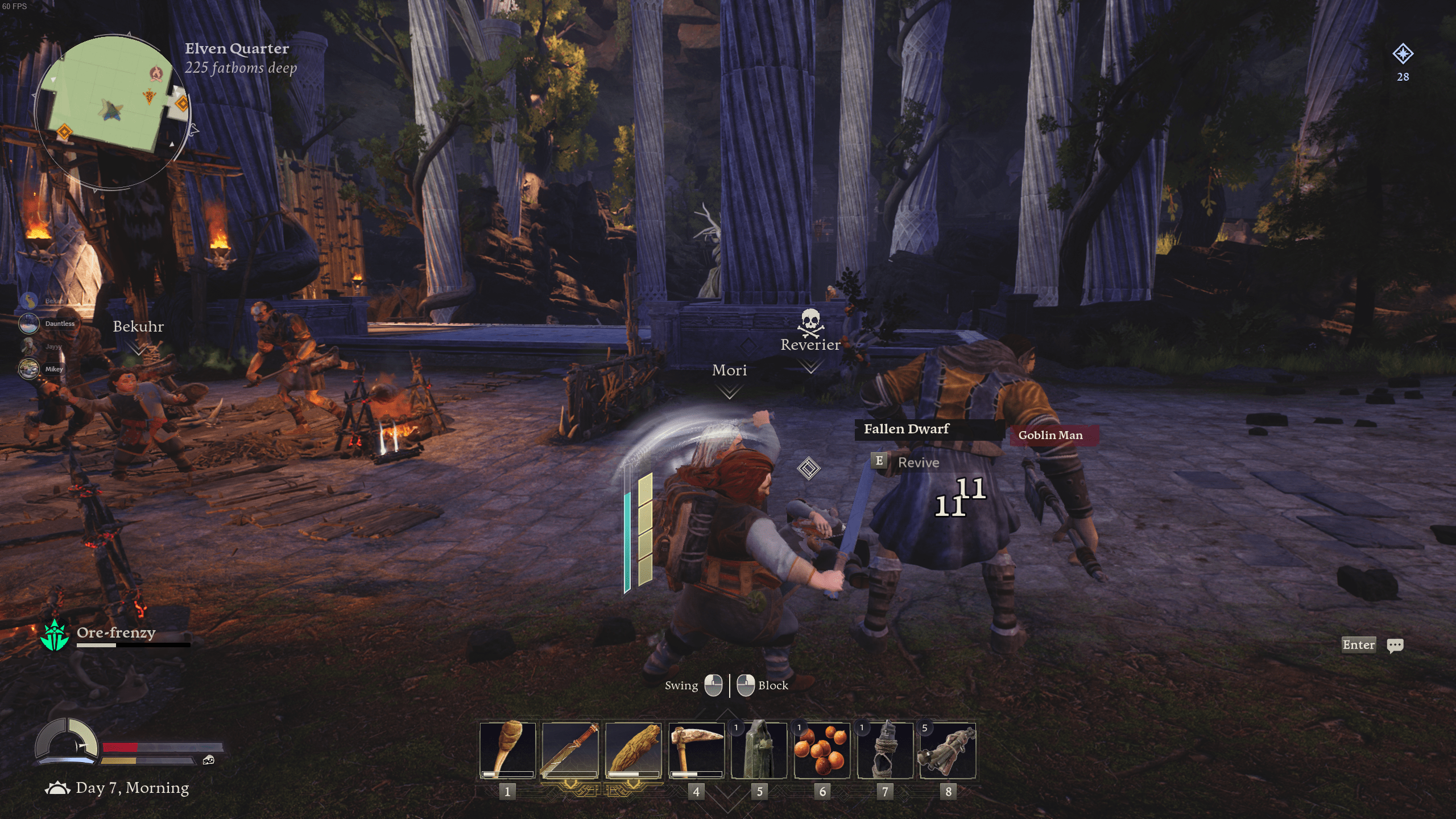
Fighting Goblin Men in the beautiful Elven Quarter.
“Fighting Goblin Men in the beautiful Elven Quarter.”

Right off of the bat, Return to Moria has a level of visual presentation and polish that is uncommon in these kinds of games. While its stylized graphics might not be to everyone’s tastes, it looks great overall. It sounds good too, even bringing John Rhys-Davies back from the movies to voice Gimli, even if that is a bit more like a cameo than any sort of lead role. Early reviewers often pointed out how your own character spoke here and there, and you can even select an all-dwarven dialect voice when creating your character. There’s a lot of nice little touches too, like your dwarves (optionally) singing when mining, which they can do together when playing with others – that never stopped being enjoyable!

Probably the main reason the game was such a success for us was that, not unlike something like Grounded or Abiotic Factor, while it was more or less an open world (with a little gating here and there to control jumps in difficulty) it has a guided, linear path through the story. In this case, as you can probably guess by the story setup I mentioned above, it guides you through various parts of Moria and eventually, with any luck, out of it. One downside is that, like Abiotic Factor, since it is guiding you all around, you might be naturally inclined to take a somewhat nomadic approach to base building, though also not unlike in Abiotic Factor, we built our final base in a place that was reasonably walkable to most mid-game areas, and by the late game we’d unlocked the ability to teleport between “Mapstones” which are static teleportation targets scattered around a small selection of notable places. Absolutely canon-destroying, but fast travel can be invaluable in these types of games. I’m glad we did, as the game also has base invasion events which, while not as intense as a game like 7 Days to Die, does at least give you a reason to fortify your base and think about your design a bit more.

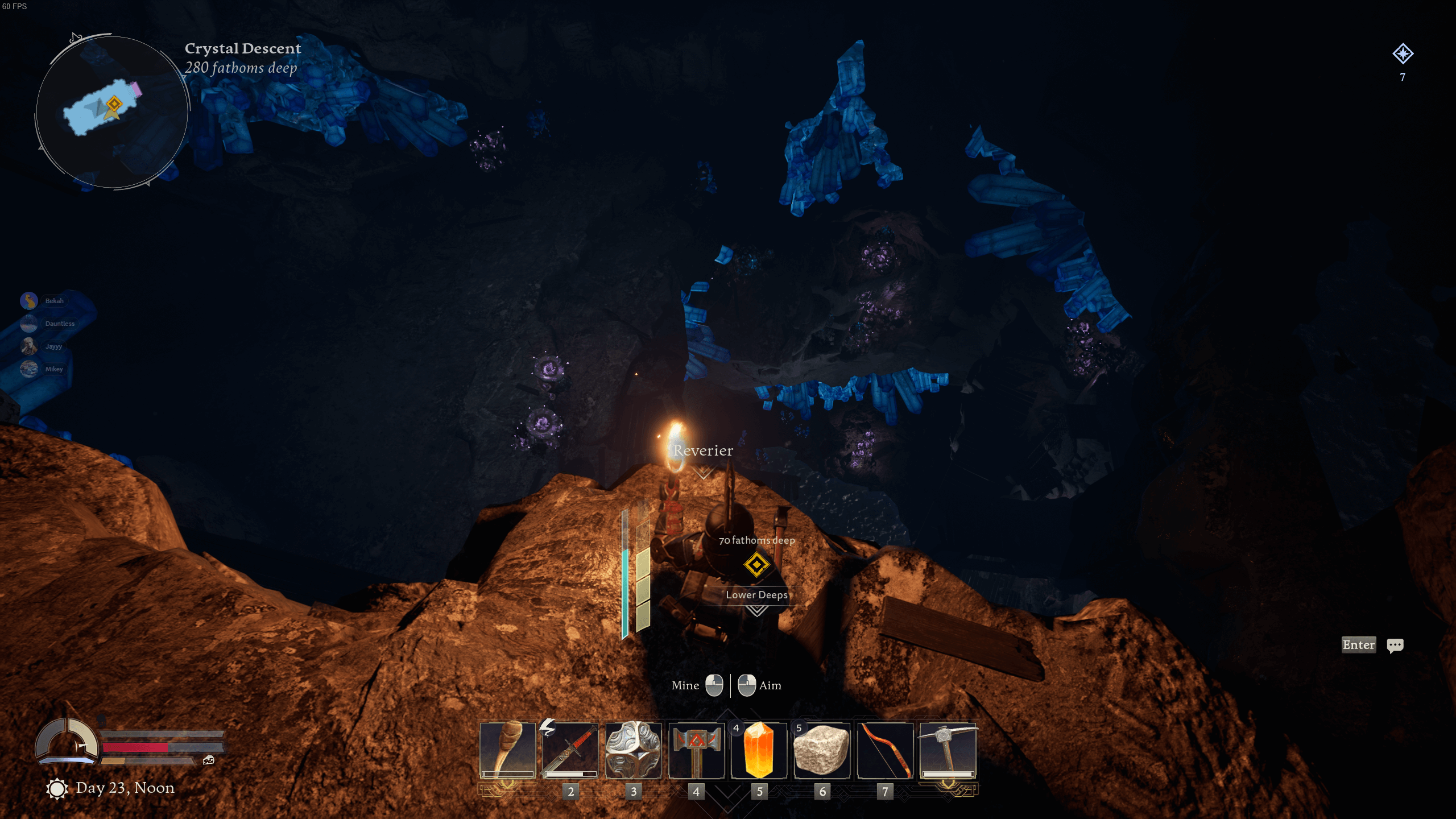
It's a long way down, and we need to climb it...
“It’s a long way down, and we need to climb it…”

Wandering through Moria, which ranges from dreary indoor corridors to massive underground cities, epic chasms, and wide open areas that almost feel like being outdoors, mining for ore and gathering materials, and slaying quite a lot of orcs along the way is pretty damn fun. Combat feels something like a very simplistic take on the now ubiquitous Dark Souls style combat – lots of blocking and rolling, but not much else. It’s a little tricky at first but you’ll likely get comfortable with it quite quickly. To be clear, it is definitely a bit more exploration and combat heavy than a lot of these kinds of games. It probably reminds me most of Enshrouded in that respect, but that’s definitely not a bad thing. Naturally, there’s a lot of verticality in exploring, and as implied, there’s quite a lot of variety here too. Also, I really love the very Norse inspired designs of the weapons and armor here. Oh, and while randomly dolling out compliments, and the lightning system is quite cool too.

There are some negatives, naturally. Some of the enemy designs definitely look a little off, though thankfully that’s not really an issue with the ones you’ll be running into most often, nor your dwarves. The in-game map UI? I fucking hate it. It chops up every major area (or zone) into a small block, and completely fails to give a clear idea of the scale nor any sort of detail, but only a vague idea of how these areas are connected. It looks more like something the designers would have used to show high level zone connectivity and flow than something useful to us players. These map issues compound another problem, which is that your next steps and/or how to achieve them aren’t always obvious. There were at least a couple of steps in the campaign which had us confused and discussing where to go and what to do next. While you could argue that figuring this out ourselves is part of the challenge, it didn’t feel like an intentional design decision, but rather a UX issue.

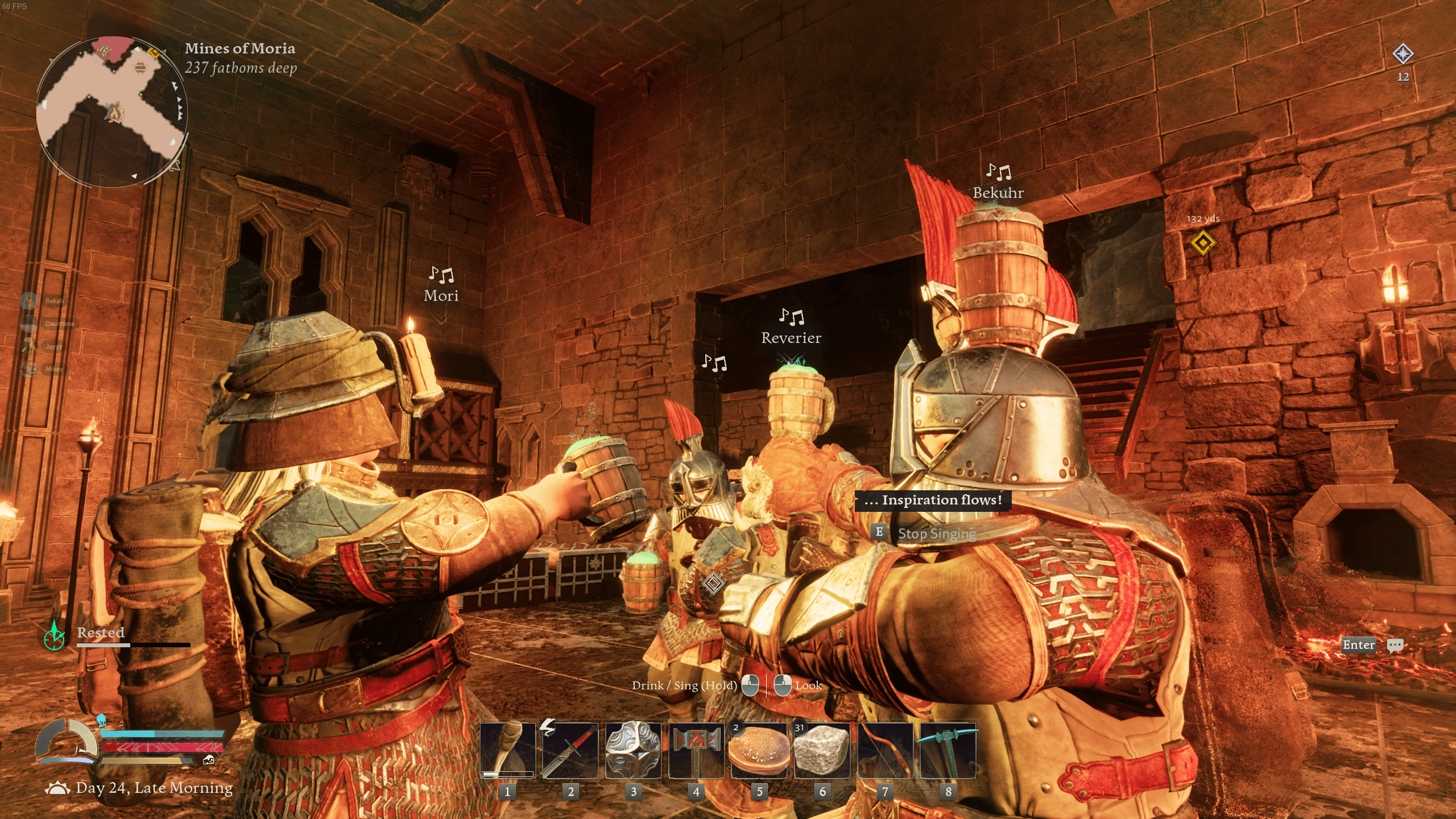
Frequent drinking breaks are mandatory!
“Frequent drinking breaks are mandatory!”

Another thing that I found annoying were the buffs. There are numerous ways to get your characters temporary buffs, most of which stack, so while it’s advisable to fully apply these effects to yourself before heading out on an expedition, I swear these things feel like they wear off a minute after you walk out of your front door. This issue is even more pronounced when using fast travel, which makes the whole system feel almost pointless. Seriously, why have these reasonable developed systems for us to invest in if they’re not actually useful? This feels like an odd balancing issue that would have been fixed ages ago if this were more of an MMO or live service game.

A much smaller gripe is that I wish there was more of, well, everything in the game – weapons, armor, utility items, enemies, etc. There are plenty, don’t get me wrong, but, especially when it comes to tiered weapons and armor, I’d love even more variety here, particularly when it comes to “masterwork” items which are legendary items that you’re only able to ever carry one of, and even have their own special slot. There are very few of these – some utility items, a couple of weapons, and a shield – but these are also tiered, and sometimes it’s hard to choose between them. I mean, would I rather have a permanent light source attached to my backpack, an amazing pick axe, or an awesome weapon? All three, please! You can take this one as more of a compliment though – I want more because I like what is there so much!

Well, it worked in The Hobbit!
“Well, it worked in The Hobbit!”

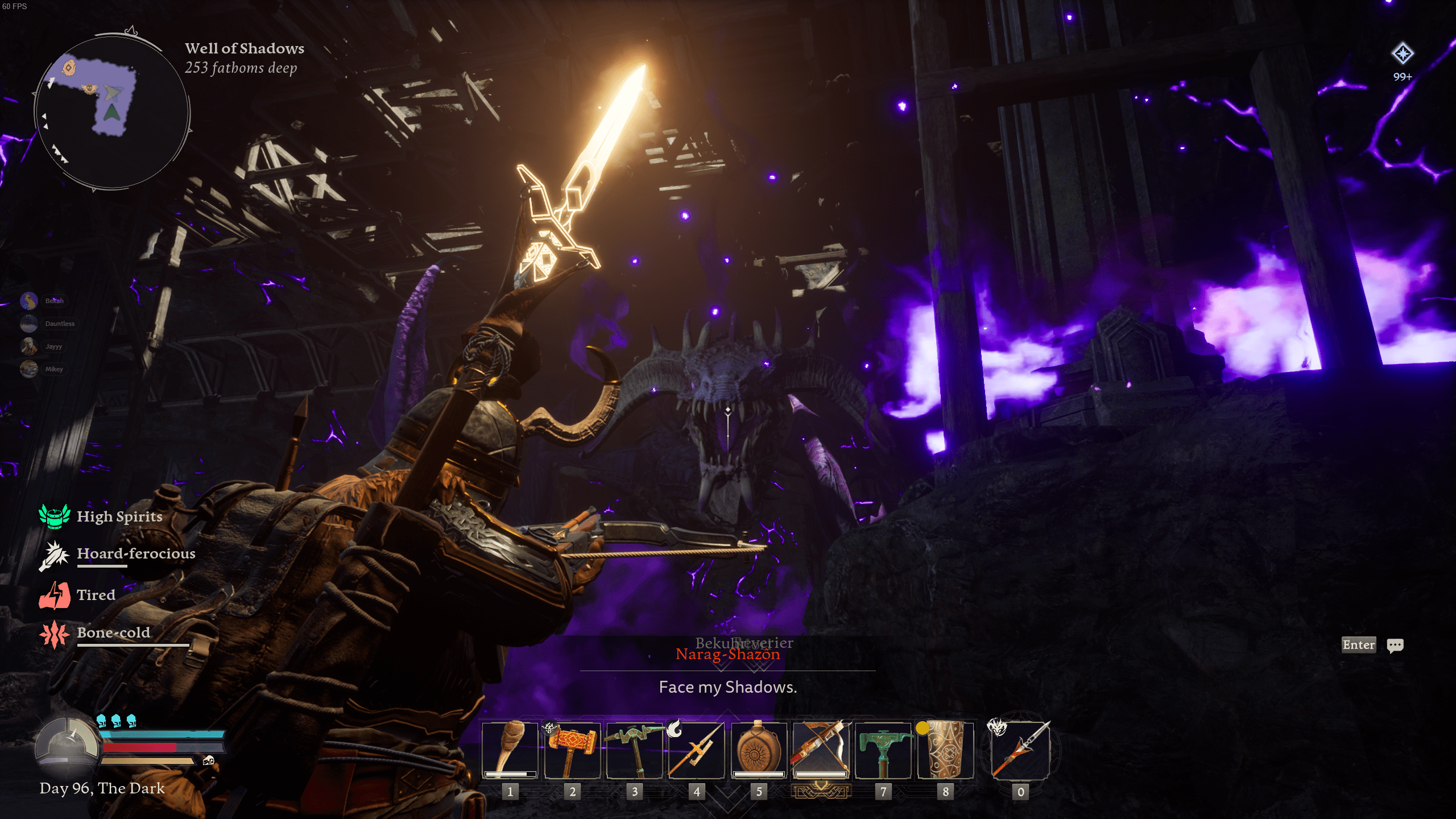
I can only nitpick about this game so much though. I loved it, and I think my group did as well, despite some confusing and/or challenging parts. I mean, we saw it through to the end, which is rare enough for this series, right? Like with Project Zomboid, I have some vivid memories of my time with Return to Moria, from challenging boss fights against an Orc Warchief that we were probably not quite ready to face, our first run in with a Troll, climbing down the Crystal Descent for the first time, and later, being confident enough to explore the Darkest Deep as a group all immediately come to mind. Unfortunately the linear structure of it means it’s unlikely that we’ll ever go back to it now that we’ve beaten it, though I could see myself returning to it solo in the future, or jumping in with a different group, certainly, especially since they’re apparently not done putting out content for it. Excellent game!

Apologies for the lack of good Icarus and Project Zomboid screenshots. I promise they’re more exciting than I made them look. With PZ in particular, I assume I was far too busy trying to not to get ripped apart limb from limb by the zombie hordes to get any good screenshots.

Surviving Survival Part 2

As I teased at the end of my original “Surviving Survival” article, Enshrouded was the next game on the menu. Seemingly along with a whole lot of others, previews of this game really caught my eye and I wasted no time jumping in by myself and exploring the world once it hit early access. While I liked what I played, I quickly decided to save it for a future cooperative playthrough, and it ended up being the next game my partner and I played after wrapping up Raft.

First Steps into Enshrouded's Embervale
“First Steps into Enshrouded’s Embervale”

Unfortunately, this is going to be a pretty quick synopsis, because she totally bounced off of this game. I shouldn’t have been surprised as Enshrouded tends to feel much more action RPG or action-adventure heavy than your typical “tree-puncher” game, while she’s particularly into the building and decorating, as well as the crafting and organizing aspects of these games, often leaving much of the combat, exploration, and gathering up to me. She also commented on how she wanted to play a game where building bases actually has a purpose. That is, in Enshrouded, like in so many survival games, your base is simply a place to store your stuff and do your crafting and, at least up to where we played, serves very little other purpose. She specifically mentioned preferring 7 Days to Die, in which it’s critical that your base also becomes a stronghold due to its “Blood Moon” events and the ever-present threat of wandering zombies.

In retrospect, I guess Enshrouded does feel a bit more like a hybrid between a very adventure-forward, RPG-light action RPG – something like the Fable series, for example – combined with a more stereotypical voxel-based, open world crafting/survival game. I mean, don’t get me wrong, that sounds utterly fantastic to me, but I suppose I’m still trying to figure out exactly what really grabs her about the genre. Still, she’s played through Breath of the Wild and similar games, so I thought she might still find a lot to like in Enshrouded. Sadly, after a couple of sessions, she pretty much lost all interest. Personally, I know that Enshrouded has had something like 4 major patches since I first picked it up in February, so I’m sure it’s only continuing to get more content and develop its already fairly polished systems, and I enjoyed the 10 or so hours I’ve put into it so far, so I think I’ll be going back to it at some point. Whether I go back by myself, with her, or with our larger co-op group, who knows?

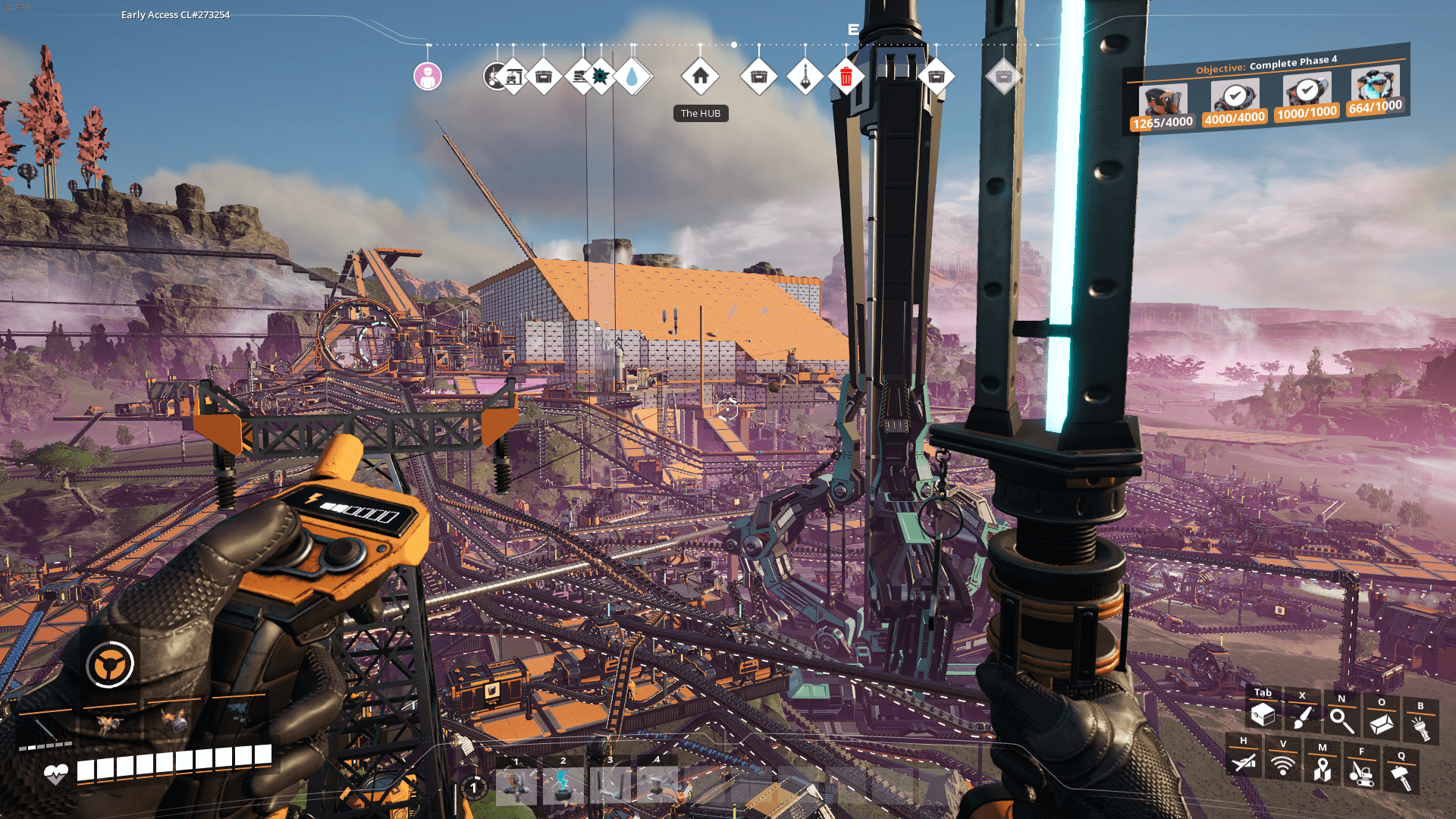
A chaotic sprawl is practically unavoidable in late-game Satisfactory...
“A chaotic sprawl is practically unavoidable in late-game Satisfactory…”

Speaking of our larger group, after wrapping up Grounded, we decided to go for something a little different, and played through an entire run of Satisfactory. I’d never played Satisfactory, nor similar manufacturing focused games like Factorio, so this was all new to me. It’s perhaps a bit of a stretch to toss these types of games into the open world survival category, though there’s certainly a common lineage in my mind. That is, if Astroneer perfected the mindlessly enjoyable mining/gathering aspect of Minecraft’s survival mode, Satisfactory and its ilk are doing the same with late game large-scale crafting and automation, and personally, I fucking loved it!

Dropped onto a planet with practically nothing, the game generously drip feeds you your first string of goals, and soon you’ll have a base of operations and have extracted your first few types of resources. Very quickly, you’ll be installing automatic extractors and the means to power them, and automating getting those resources to your processing and manufacturing devices and/or storage containers… and that, well, that’s basically the whole game!

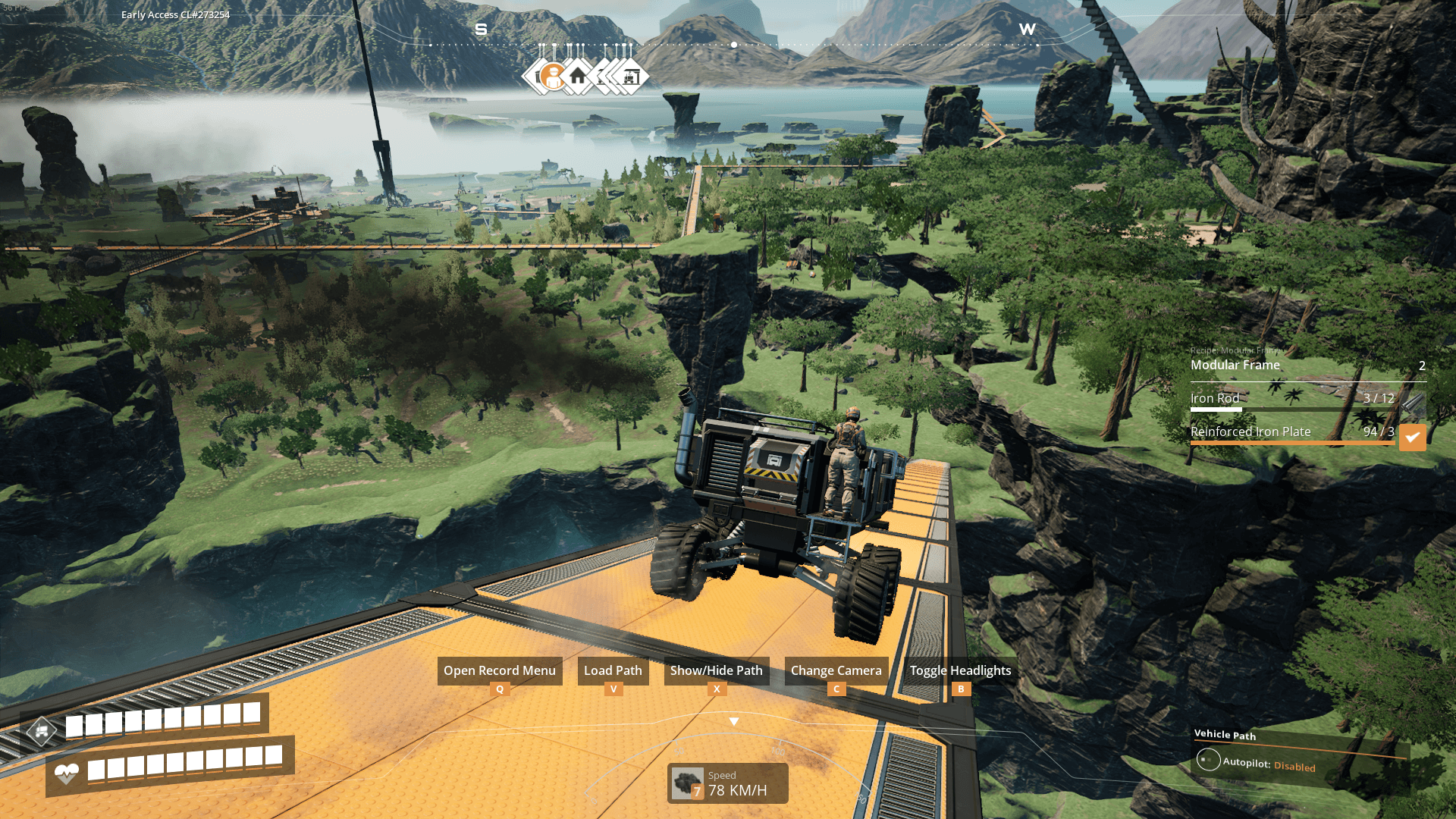
Satisfactory could very easily cut the umbilical right there and let you figure out how to move up the tech tree on your own, but instead it continues to push you forward via a series of milestones in which specific numbers of certain finished resources are shot up a space elevator in exchange for unlocking new recipes for new and upgraded machines and other gear to help you in your efforts to, of course, meet the next, even more demanding requirements. This progresses until the final couple of tiers have you manufacturing parts used to manufacture parts used to manufacture parts (and so on…) for end products that require multiple of sets of such complex components, turning your once humble factory footprint into a massive sprawl of extraction units, automated assembly, manufacturing machines, mazes of twisting conveyor belts, nuclear power plants belching waste, and delivery drones, trucks, and even trains darting about, blighting the once pristine landscape, while you keep focus on growing and especially optimizing every aspect of your operations.

Have ramps, will travel.
“Have ramps, will travel.”

There’s also an exploration component of the gameplay, as the players have to explore to seek out more and more natural resources as the demands increase, and find special power-ups hidden throughout the world to increase your output. There’s also a slightly more free-form research component to go along with the milestone system which ties directly into that. Playing cooperatively provides the benefit of letting one or two people go on these scouting runs while others continue to focus on meeting the manufacturing tasks at hand. Building utterly ridiculous transportation systems to bring materials (or even finished components) from extremely remote harvesting sites and exploring some treacherous new biome looking for more cleverly hidden Power Slugs were some of my favorite parts of the game, in fact.

We ended up completing Satisfactory not long before the 1.0 patch was released, which would have added finished versions of some exploration related systems we only had placeholders for, and would likely make the final milestone tier a little less insane than what we went through (which eventually saw us just leaving our server up for a few days while as, close to as large and fully automated as we could will ourselves to get it, we let our collective factory run for hours and hours on end.) Apart from a few annoying bugs (like the often incredibly janky Hypertubes) the game felt finished enough, but had we known it was coming, I think we’d all have preferred to wait until the game was actually finished to do this play through. As it is, I think we’ll be back at some point to see what the actual ending looks like, and what other new goodies the developers add between now and then. All told though, I really enjoyed Satisfactory.

*Cues Immigrant Song*
“*Cues Immigrant Song*”

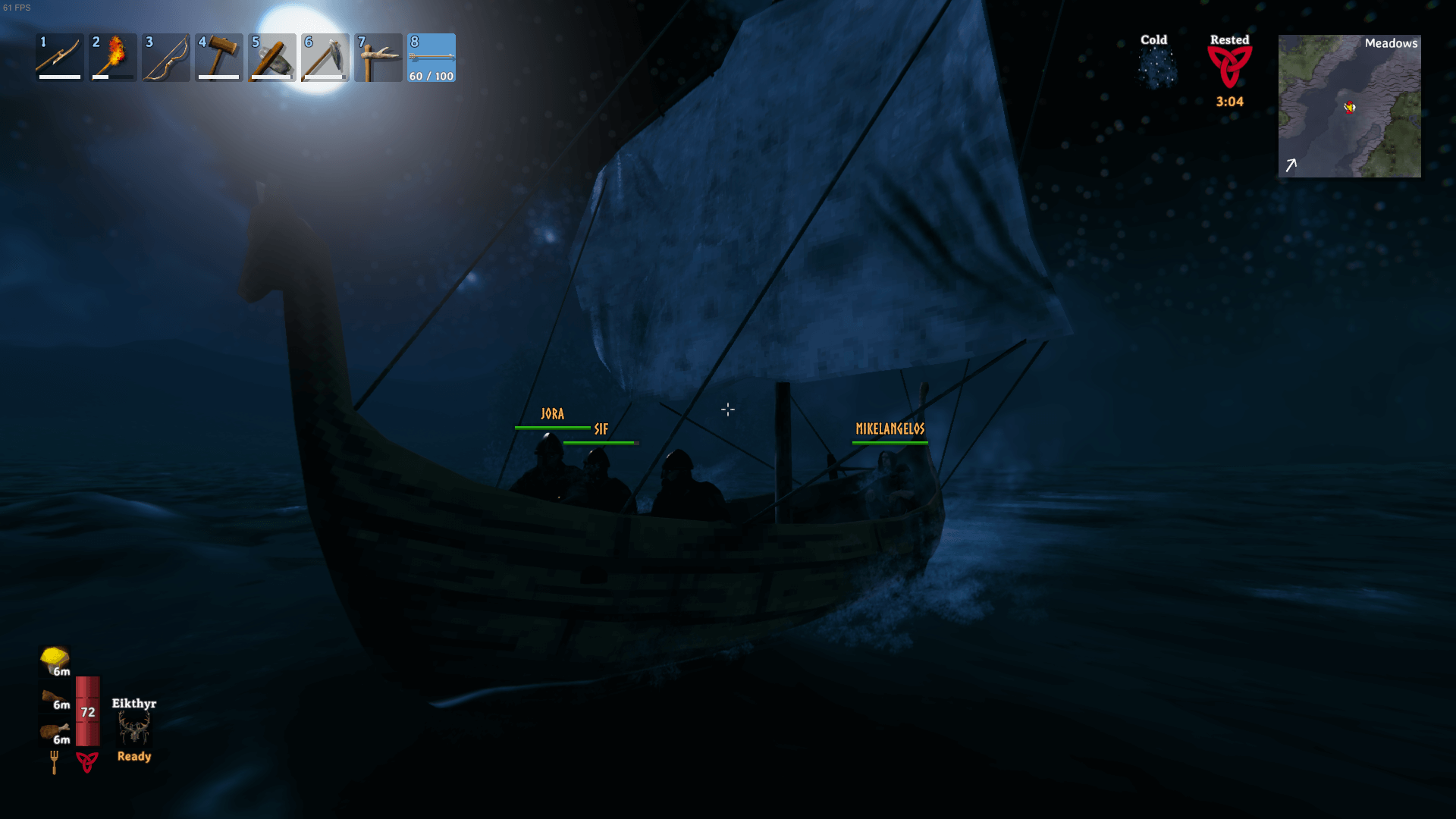
After that, we decided to move back to more traditional territory, and headed to beautiful sunny grasslands and dark forests of Valheim. I talked a fair bit about Valheim in my first Surviving Survival post, though that playthrough was with a group of work friends rather than my normal weekly co-op group, so this was new territory for us. One of the other members of the group had played it before, though closer to its original early access release, and he and I dove right in with building a small village and exploring our surroundings. I think the other two members of our group, including my partner, struggled a little bit with the combat until we got a round or two of gear upgrades under our belts, but overall it seemed like everyone was getting to grips with the gameplay well enough.

Despite being ideally placed for the start of the game – that is, right on the sea and very close to big chunks of black forest and mountain biomes – the randomness of the map found us having to go on epic sea voyages to visit the swamps. Of course, we quickly established a forward base complete with a portal back to our village, but between that, and that biome’s less than friendly inhabitants (we were almost wiped by a Wraith at night more than once, and chased around the entire area by Abominations on several occasions) our group’s enjoyment of the game started to wane considerably, culminating in a group Sunken Crypt clear that went a little sideways, causing one of the party to need to make a seemingly impossible to solo corpse run multiple times, coming perilously close to resulting in a rage quit.

As with Enshrouded, it really wasn’t just the combat or the difficulty, but more something to do with the overall balance of combat, exploration, crafting, and base building (and I suppose how grindy all of the above feels, which can be a bit of an issue in Valheim) that didn’t sit quite well with my partner in particular. Specific complaints centered around the relatively unguided, sandboxy approach to game’s progression goals, and while I ultimately disagree, I can see where those complaints come from. I was disappointed, but it seems Valheim wasn’t quite the game for her either. Like Enshrouded, I would like to get back to Valheim again in the future, but it likely won’t be until the last big content patch is released, and perhaps even on a modded server as well.

Green Hell? This doesn't look so bad!
“Green Hell? This doesn’t look so bad!”

It’s ironic then, after just mentioning potential struggles with difficulty, that my partner chose Green Hell as our next duo game. She’s been interested in Green Hell, as well as the similarly themed and probably better known The Forest, for quite some time, and that whole time I’d been a little worried about how much of a brutal exercise in survival it might be, as gleaned from various reviews. It turns out that my concern was warranted. While it wasn’t quite as unbearably difficult as it sounded, we definitely found it falling more on the side of frustrating than fun.

In Green Hell the players are thrown into the middle of the Amazonian rainforest. As is typical with these games, you’ll need to gather material to build tools and structures, hunt, fish, and forage for food, and deal with the sometimes less than friend wildlife. In Green Hell, we can add some rather aggressive native tribesmen, both real and imagined, to the list too. What I mean by “imagined” is that native attacks are often one of the end results of the kind of cool sanity system the game employs. That is, certain actions and conditions affect your sanity, making it, along with food and hydration, one of the basic stats you’ll need to keep track of in this game’s simulated version of survival. I mean that literally too, as even imagined native attacks will kill you. In fact, rather a lot of things in Green Hell will kill you. Just about everything you do, from sustaining a minor injury to simply picking up a rock or a log, or hell, even just moving around the environment, can result in some sort of negative status effect which, if not addressed, mostly by means of crafted healing items, can lead to a very bad time.

At first we decided to play the campaign, which does a fair job of justifying why in the hell you’re in the Amazon in the first place, as well as making the Waraha Tribe more than just an lazy depiction of native stereotypes, but after struggling with navigating the campaign’s tasks while dealing with the constant distraction of basic survival for a session or two, we opted to start over in sandbox mode so we could have more opportunity to learn the mechanics without the added pressures of the campaign’s objectives. Early on, we were fortunate enough to locate an abandoned camp relatively close to a river, and started rebuilding it, making it our base of operations as we got to grips with the basics. Soon, we’d learned to get enough fresh water and nutritious food for it to no longer be a massive burden and developed tools to be more and more efficient at gathering. Even after this new level of progress, things like the aforementioned negative effects could still feel like an annoyance at best.

Never mind...
“Never mind…”

Funnily, I think I was the one who was more frustrated this time around. While I would usually get into the game, at least for the first couple of hours of a session, I didn’t look forward to the prospect of playing it again, and at some point all of the struggles and random-feeling deaths started to just feel absurd. She finally came around when, feeling like we had things around our camp reasonably figured out, we decided to venture out, knowing that we’d yet to encounter some of the resources that would be required to continue to tech-up. We quickly ran into new, even more challenging wildlife, and found ourselves having to run back to our base to lick our wounds. Even after over 20 hours of gameplay, we kind of felt like failures.

To be clear, I’m not calling Green Hell a bad game. In fact, I’d hazard to guess that a harsher take on the survival genre was one of Creepy Jar’s goals here. I do think, however, that overcoming some of these challenges felt less rewarding, not to mention more ephemeral, than many of its contemporaries, which, personally, just didn’t provide the dopamine hit I needed to flip the switch from the gameplay loop feeling like a chore to being entertaining. With this genre, that’s probably a thinner line for most of us than we might think. That all said, even after all of this, I’d still really like to go back to the campaign and try to complete it. Unfortunately, by the time we reached that point, my partner was fully ready to move on.

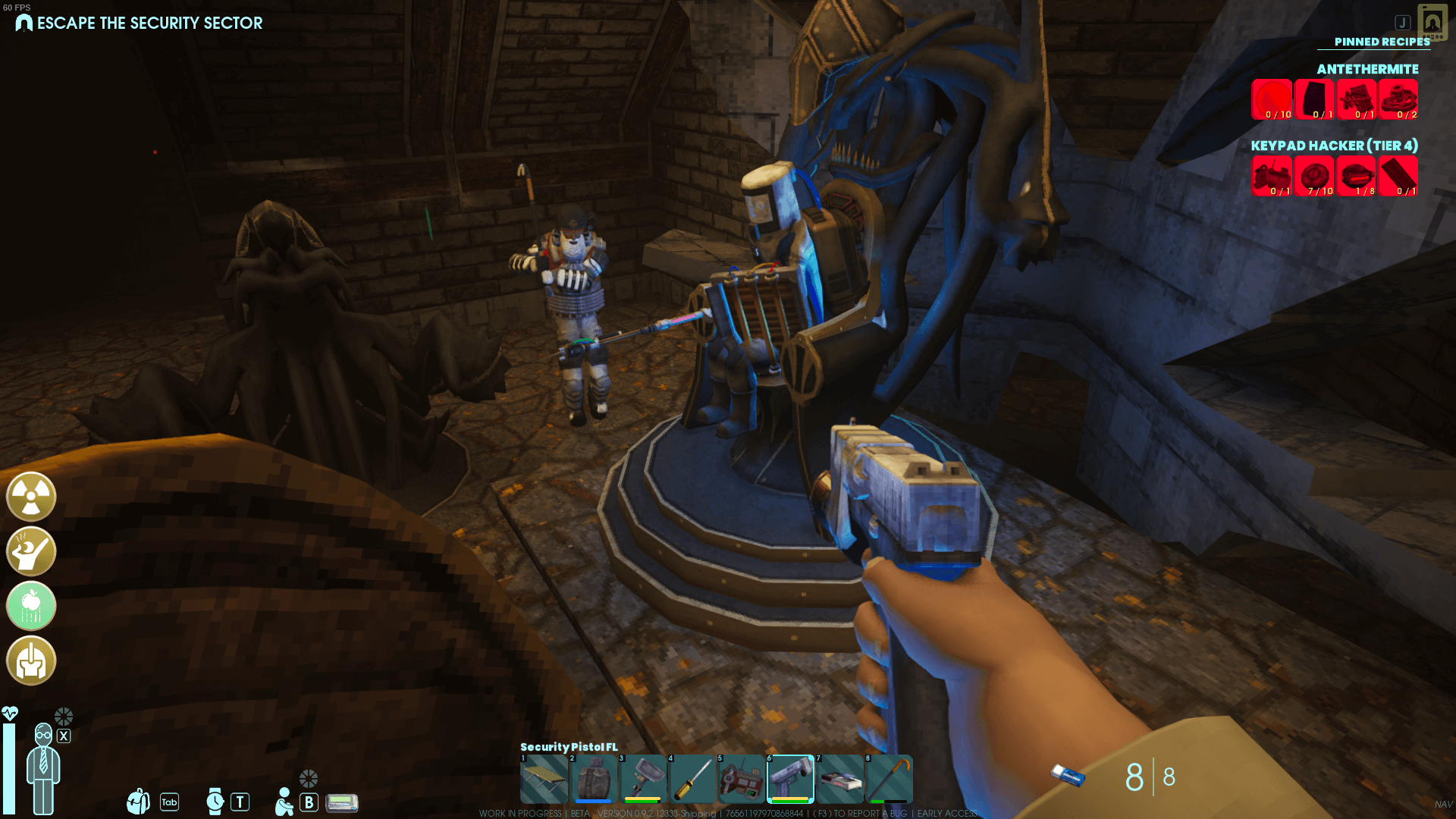
Sitting on the throne in Abiotic Factor more often means something very different.
“Sitting on the throne in Abiotic Factor more often means something very different.”

The next game our larger group played was Abiotic Factor. This was one I was entirely unfamiliar with, but everyone else seemed to think it looked fun. Personally, from the trailers I watched and the little bit I read, I really didn’t know what to expect. Scientists living in an underground bunker, having to craft new experimental devices to survive? I don’t know, I was getting some major Fallout and Silo vibes, though mixed with the primitive graphical style and odd mix of multiplayer scares and zaniness of Lethal Company. Okay…

Now that I’ve played it though, the premise of Abiotic Factor is easy enough to convey. You play as a random worker in a massive underground research facility that is researching… let’s just say, some very exotic things. You know, inter-dimensional portals and the new and lifeforms inhabiting them, that kind of thing. It’s your first day of work and, thanks to some impeccable timing, a major catastrophe occurs and you’re trapped inside as the facility goes into lock down. With almost everyone dead or evacuated and the facility in shambles, your objective is to survive long enough to find a way out. Now, if you’re getting Half Life vibes from this description, you’re right on the money. It seems like the first Half Life was a huge influence here, although, as implied by the comparison to Lethal Company, the whole thing is done in a decidedly less than serious way.

The writing is fun, from humorous voice lines to the fact that at times the size and scope of the facility almost feels more like parody than homage. This is also conveyed by some of the mechanics, like the fact that regular bathroom breaks, complete with a minigame to “ease the passage” are one of the survival elements you’ll need to manage. It’s also present in the graphics, which, particularly when it comes to human characters, border on being preposterous, which I’m fairly sure was intentional. For me, this quickly fell away, as the enemies and environments looked nice enough, and I found myself so immersed in the seriousness of the situation that we, as players, found ourselves in, that I forgot all about that aspect outside of the occasional moment of playful downtime back at our base.

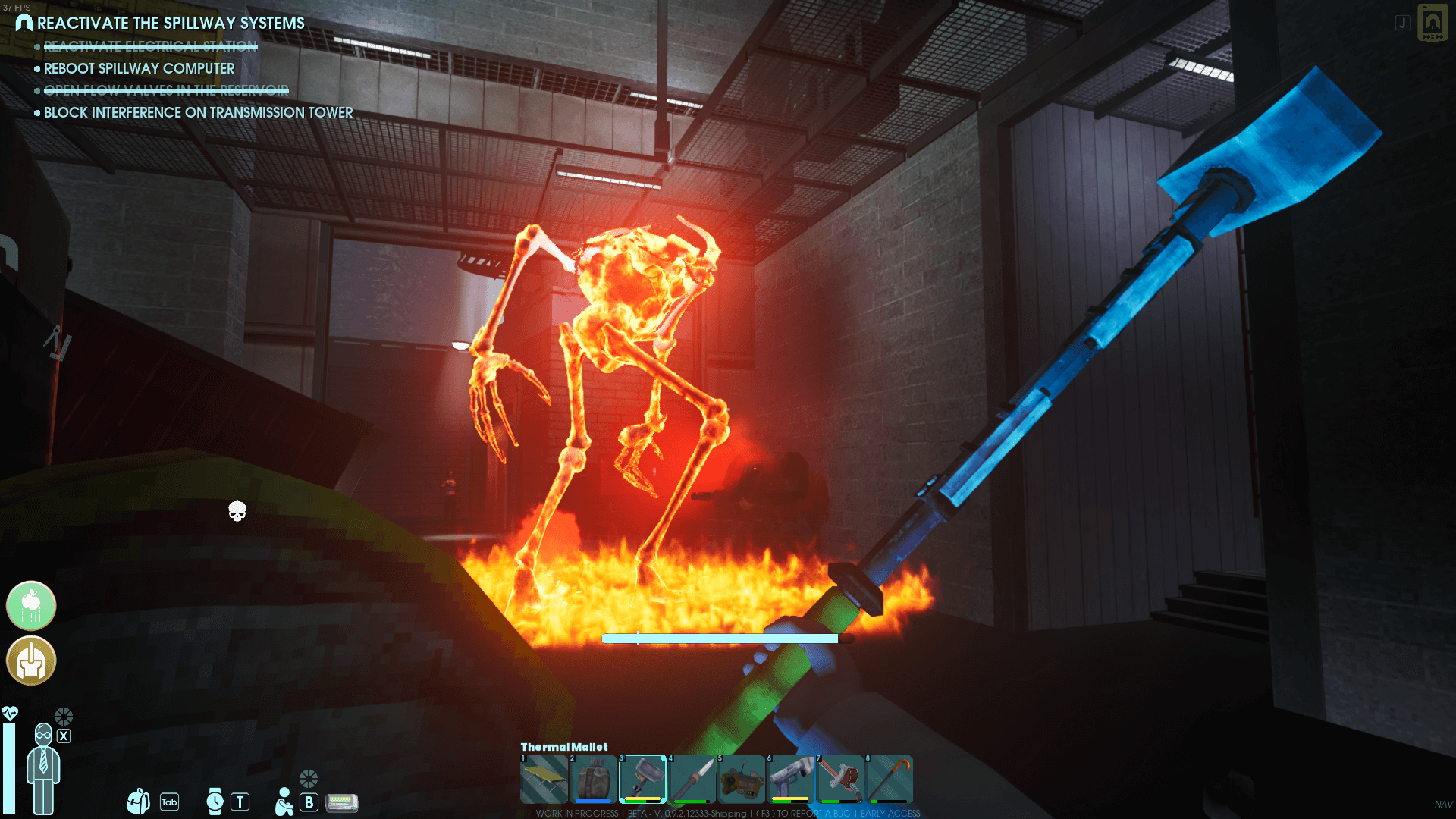
A Defense Robot versus a Composer?! *Grabs popcorn*
“A Defense Robot versus a Composer?! *Grabs popcorn*”

Initially, the game had us exploring abandoned offices, looting anything we could find, tiptoeing around the alien creatures roaming the darkened facility corridors, and hiding for our lives wherever we could barricade ourselves in when night came. These early areas were fun, and definitely got us on the hook. From there, the temporary base we’d established was relocated to a better location and greatly expanded, and the breadcrumbs the narrative dropped for us to head to our next objectives were more than enough to keep us entertained. Despite these objectives quickly devolving into a treadmill of “Go here, no, sorry, go there instead!” like encounters, they led to some unexpected places, including some challenging navigational puzzles, very dangerous enemies, and some memorably tense and scary moments. Of those, Flathill, particularly the library, the damnable Hydroplant, and the deep-dive to the Neutrino Detector, immediately come to mind.

Mechanically, the game is more or less your typical open world crafting/survival game, though some of the decisions in how those pieces are assembled make Abiotic Factor feel like a fresh take to me. New recipes are learned when acquiring new materials, and then researched via a simple minigame where the player attempts to deduce which other components are required to craft the item. This is used quite cleverly to advance the narrative – a new material and/or recipe is introduced which will then require the players to seek out the other required components, which leads to having to explore new areas which in turn means overcoming new puzzles and enemies. Of course, the more exotic the materials you encounter, the crazier some of the items our team of mad scientists can cobble together become – this is not a game where you spend ages progressing from wooden spears to bronze spears to iron spears. In fact, in some ways, the item progression feels a bit more horizontal. It’s not all perfect – ammo for guns is scarce, perhaps being one of the few things you’d ever need to grind, and unless you’ve purposely built your character to use them, shooting them isn’t a whole lot of fun either. Similarly, many of the other items you get along the way feel like they’re of questionable use, though I’m sure this improves considerably with subsequent playthroughs.

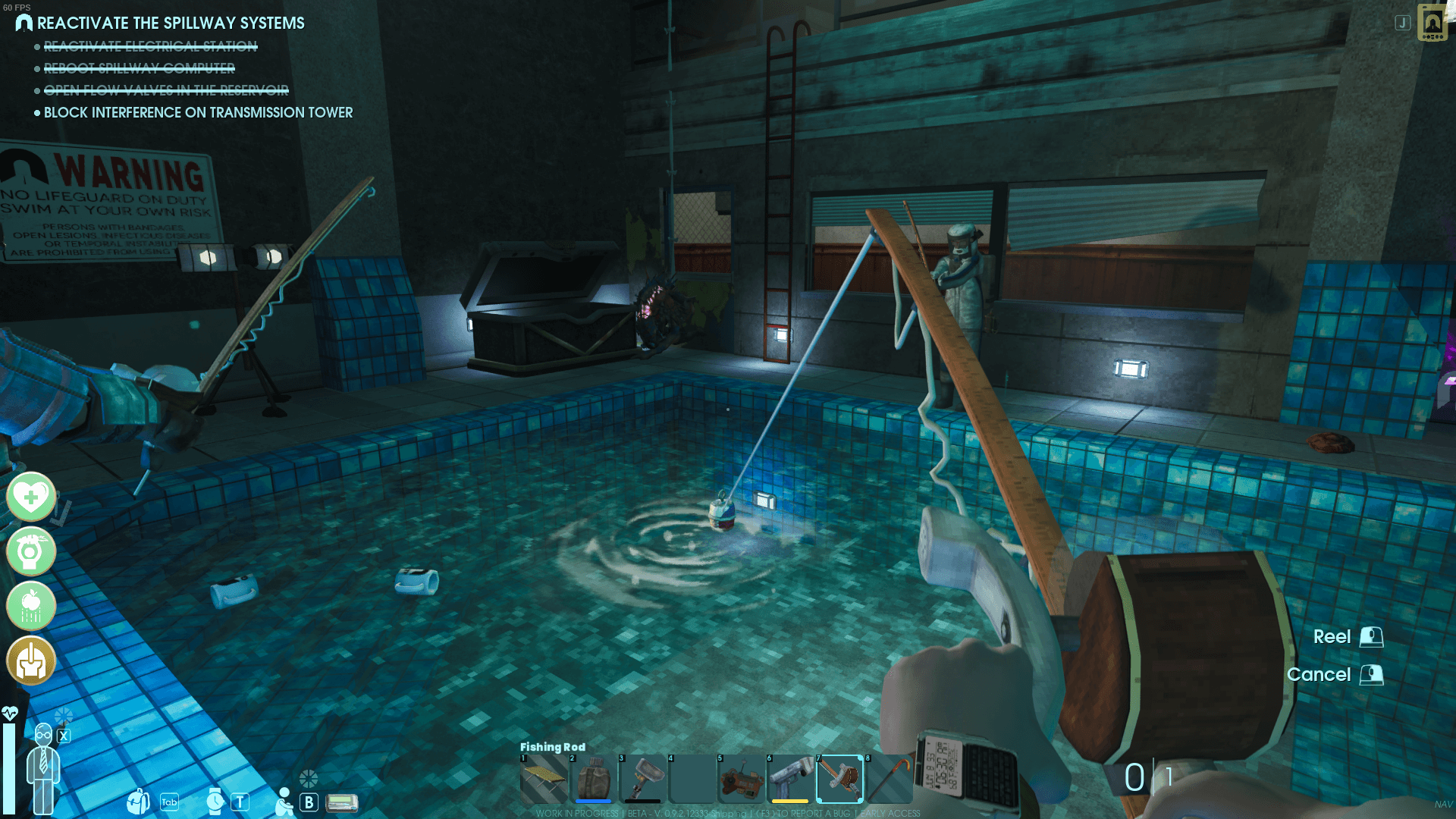
If your swimming pool yields unlimited fish it's time to call a pool cleaner.
“If your swimming pool yields unlimited fish it’s time to call a pool cleaner.”

Exploring is a big part of the gameplay. Thanks to being so in-step with the narrative, you’re always focusing on new parts of the sprawling facility. While travel time isn’t a huge issue (these areas are connected via a tram system to a central hub area) navigating some of these areas, between confusingly complex layouts and a less than generous in-game map, coupled with situationally respawning enemies can be, so it might make sense to build new, smaller bases in each area as you progress, leading to the more nomadic style of base-building that some other games in the genre, like Return to Moria, employ. For our playthrough, we ended up building our base so close to that central hub that we were able to just stick it out, making our excursions into other areas a major group event. It doesn’t seem like my partner, with her preference to hang back at base and work on building, crafting, and logistical matters, would be into this at all, but, thanks to an early agreement that we’d always try to stick close together when running missions, this really wasn’t an issue.

A lot of the other mechanics in the game are similar to other games in the genre too, of course. Besides your bathroom breaks, you need to manage your food and water, sleep/rest, and body temperature. The latter comes into play in some specific areas, where you may need to equip appropriate clothing to stay warm, or keep cool, but overall, none of these are too hard to manage. Food, for instance, feels like it is going to be a huge burden, but we quickly discovered how easy fishing was and, luckily, our base was situated right next to some water for extra convenience. Really, pretty much every challenge we ran into was soon met with some sort of solution to ease the burden, if not outright remove it. I’ve yet to play it myself, but I’ve seen many of the mechanics of this game compared to one of the early standouts of the genre, Project Zomboid, which it seems most people would consider high praise.

Hey Project Zomboid, we've got zombies too!
“Hey Project Zomboid, we’ve got zombies too!”

So, pretty much exceeding my expectations at every turn, the biggest negative about our experience with Abiotic Factor is actually how our playthrough ended. After struggling through the last area of the game, which definitely felt like a culmination of the gradual difficulty curve we’d felt up to then, the breadcrumbs just… stopped. You see, the game is still in early access, and not unlike Satisfactory, despite feeling reasonably polished the entire way through, simply wasn’t finished. The difference was that we knew we were reaching the end of Satisfactory, whereas Abiotic Factor just abruptly stops. We were left with no way forward and no conclusion to the story, our characters doomed to spend the rest of their lives trapped in the depths of the GATE Cascade Research Facility. That said, we definitely all enjoyed it enough to go back when there is more to do (one of our group, who plays a ton of games, even called it one of his games of the year) though I suspect we’ll be waiting for the game to exit early access before that happens.

That rounds up this game log, though naturally our group has already moved on, and we’re currently exploring the lush planet of Olympus in Icarus. Next time!

A few of these screenshots were swiped from the Steam Community, as I shamefully didn’t take enough good screenshots of my own. I need to get better at that. New Year’s Resolution?