Like a lot of people my age, Tetris was first introduced to me via the venerable Game Boy version that so many of us got as a pack-in at the time, although certainly plenty of people fell in love with ports on other systems as well. Indeed, Tetris is one of those games that has been ported absolutely everywhere. Attempts to make sequels and spin-offs never managed to enter the zeitgeist in the way these late 80s – early 90s versions did, even if a great many of them were positively received. That hasn’t stopped attempts to keep remaking and iterating on the game, and some of the more recent releases were actually pretty successful. The original VR-oriented Tetris Effect and Tetris 99 both come to mind.
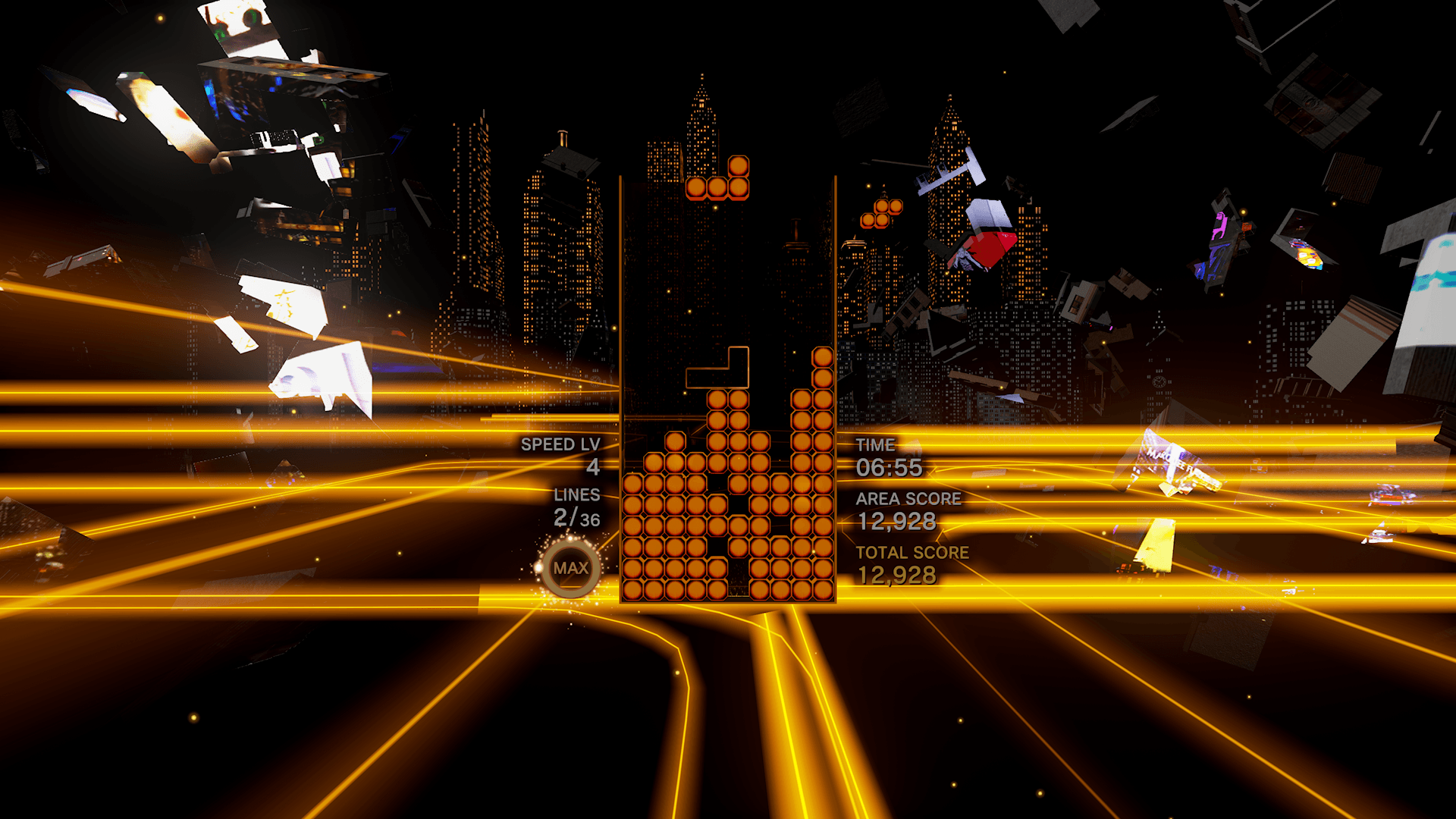
“Just one of the many themes in Tetris Effect: Connected.”
Tetris Effect: Connected is a version of that PlayStation VR version ported to other consoles and given some additional online features. It’s one of two games I picked up on Game Pass at around the same time, played a bunch, and then put down for a while before noticing they dropped off of Game Pass before I could finish them. Doh! Still, Tetris Effect was the one that was easy enough to keep picking up, playing a bit, and putting back down again no matter how long had passed since the last time, and that’s exactly how I played it. I did eventually beat the “Journey Mode” campaign on Normal difficulty after abandoning my initial goal to get at least a B rating on every level. The verdict? I loved it.
Tetris Effect combines classic Tetris gameplay with some trippy visualization and a dynamic, rhythmic soundtrack to create an amazing audio visual experience and, moreover, a really cool vibe. I’m sure it is an absolute blast in VR but even without a VR headset, it’s still fantastic. Gameplay-wise, it’s a fine version of the Tetris experience we all know and love. While there are some tweaks, notably the “Hold” queue, which lets you swap out the falling piece for the one in your holding area on-demand, and the “In The Zone” feature that, after building up, lets you hit something of a panic button to pause gravity temporarily, alleviating the death rain of tetrominoes and hopefully allowing you to maneuver yourself out of trouble, its mostly just good ol’ Tetris. I somehow missed the existence of both of these features and never purposely used them a single time during my entire playthrough, by the way, so it really was just classic Tetris for me. Maybe now that I know about those features I can go back an improve my scores, eh? 😅
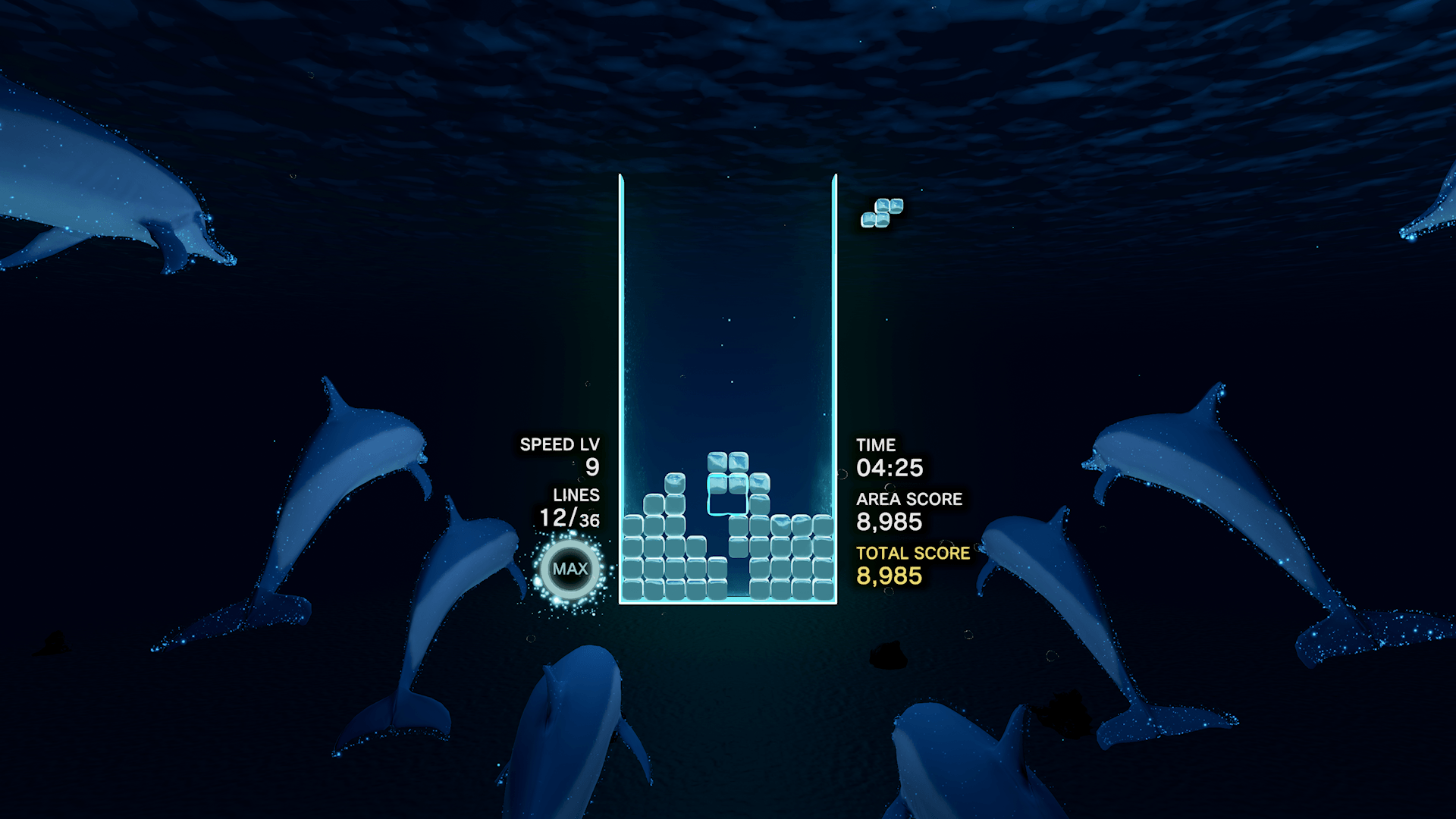
“Dolphin attack!”
Between the classic gameplay and the awesome presentation, it’s just a great game to lose yourself in, and in that way, it’s quite relaxing, at least up into the point where it suddenly becomes a desperate panic, which is no doubt part of the core Tetris experience. Overall, the main thing Tetris Effect proves to me is that Tetris itself is literally a timeless classic; it’s just a great game at its core. To that end, I’m really curious about the recent Tetris Forever, which is something of a combination of a historical archive, including a documentary and a tour through many of those classic versions of the game. Once I can get it at a generous discount, you’ll probably see it here.
As an aside, while this is much less well known than its Tetris counterpart, another beloved puzzle classic, Lumines, actually got the similar Tetric Effect treatment from the same team in 2025 with Lumines Arise. Nice!
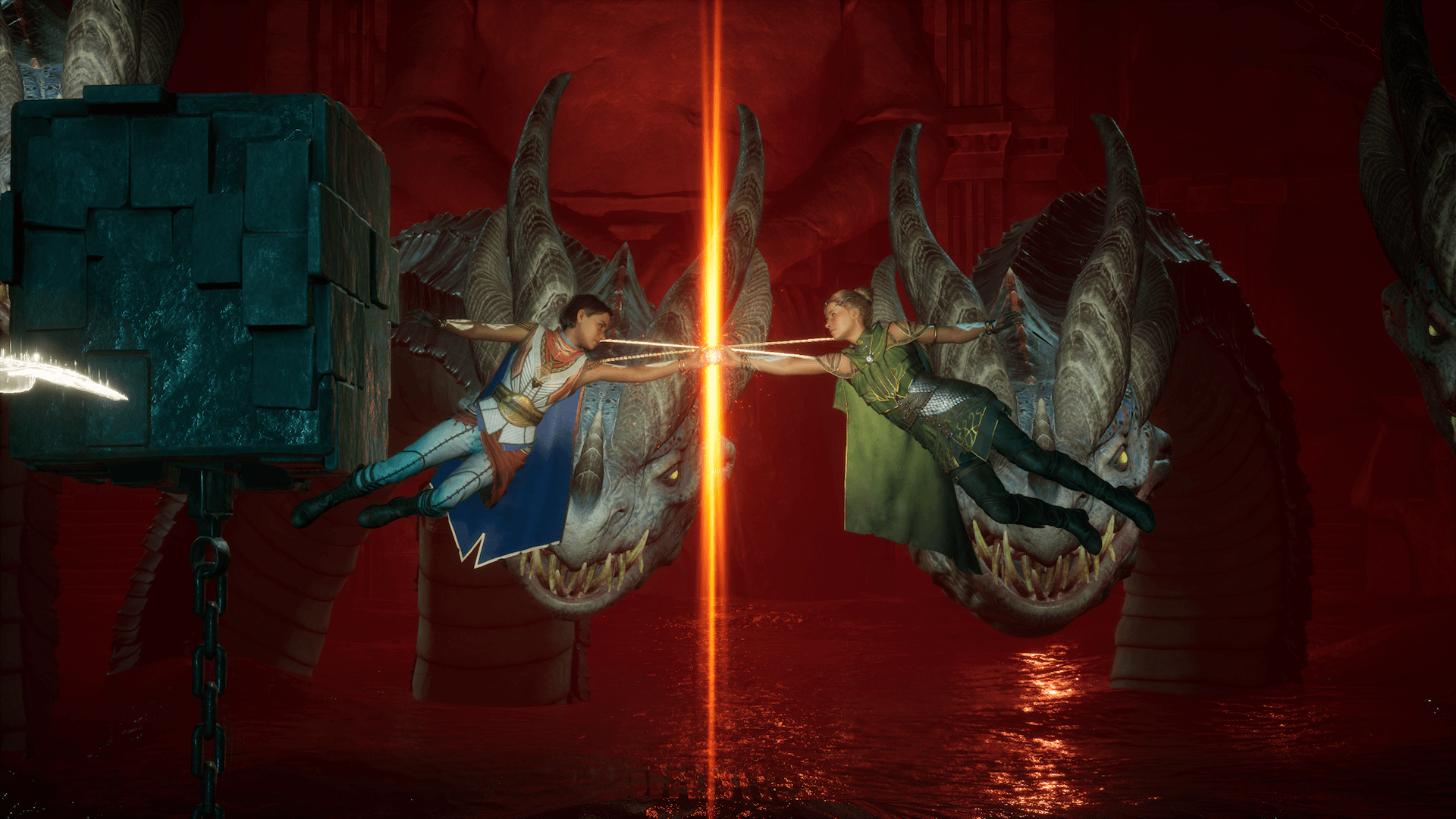
“Mio and Zoe, combining their powers… or something.”
Shifting gears completely, after enjoying A Way Out and loving It Takes Two, Hazelight’s similarly co-op focused Split Fiction ended up on my wishlist the second I got a good look at it. While we didn’t dive into it right away, my girlfriend and I eventually played through the game via couch co-op on our Xbox Series X. Unfortunately, it took us a few months of random sessions instead of being hooked enough to push through the game in a week or two as you might expect. Let me take a step back a bit first…
Split Fiction has each player playing one of the two protagonists of the story, Mio and Zoe. Mio and Zoe are both writers looking for their big break who, along with others, get invited to a big publishing company to pen deals to sell some stories, but are instead invited to participate in a new experimental virtual reality program which will apparently let them experience a sort of immersive virtual reality simulation of their own stories. Things don’t quite go as planned, and Mio ends up in Zoe’s simulation with her. Stuck in this corrupted virtual world built from the minds of both authors, the two must journey together through their stories and try to find a way to escape.
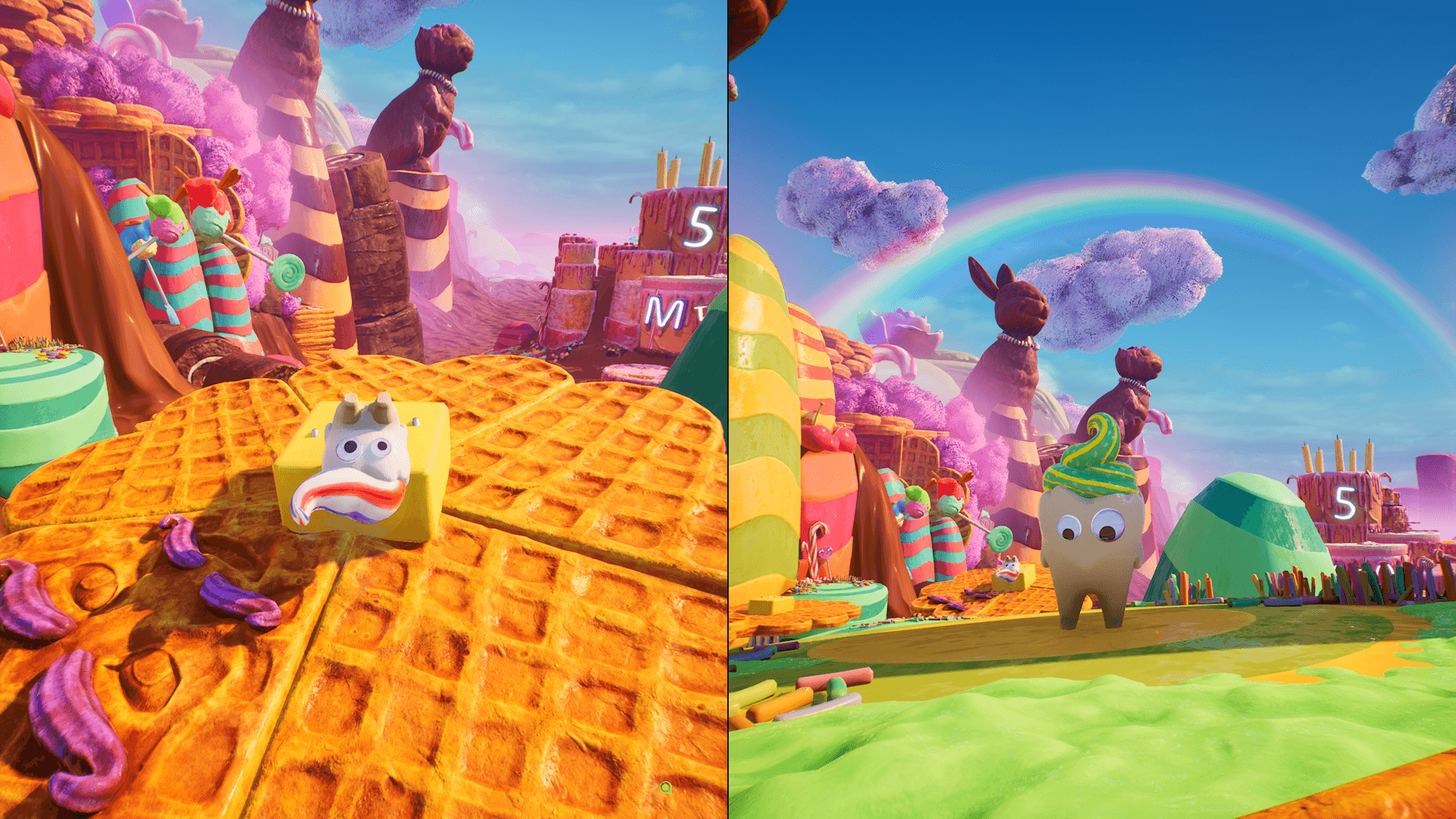
“One of the more WTF?! inducing side-stories.”
Honestly, the game’s first impressions weren’t that great, as I found the character models and scenery in the introduction where Mio and Zoe first visit Rader Publishing in the “real world” to look just a little too generic, almost bordering on the uncanny valley. Thankfully, once the game starts in earnest, it’s actually quite nice looking, and at times absolutely beautiful. Given the setup of the game, if they somehow dropped the ball on realizing these sci-fi and fantasy inspired worlds, it would have been hard to get passed. Sound design is also great, and I have no complaints with Mio and Zoe’s voice actors, which is good, because they talk a lot.
It’s hard not to compare Split Fiction with It Takes Two, and the biggest difference between the two besides the obvious plot differences, is in their gameplay. While It Takes Two felt inspired by the type of early 3D platformers that were all over the Nintendo 64 and PlayStation with their semi-open, more exploration based gameplay, Split Fiction feels more inspired by 2D platformers in that it has much tighter controls, much more action, much more linear level design, and is much more challenging overall. I wouldn’t say Split Fiction is necessary a “hard” game, but it definitely felt like there was a lot more friction than we felt in It Takes Two. I think we collectively died far more times than in It Takes Two, though I could be wrong and I just don’t remember dying often in It Takes Two because it was just so much more forgiving. In either case, at the end of the day Split Fiction felt a bit more intense and at times aggravating, and as a consequence, a little less fun than It Takes Two.
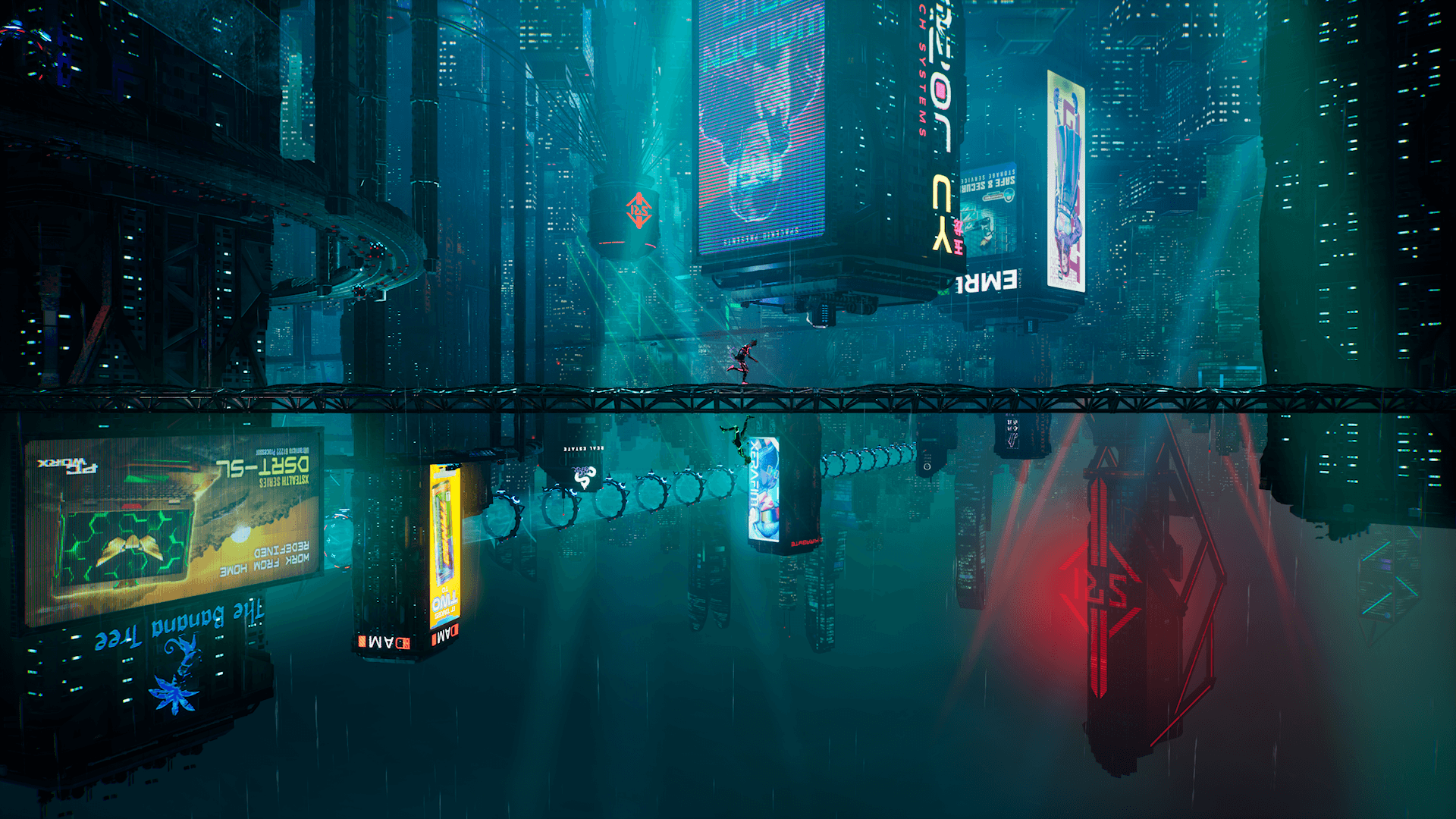
“2D platforming, mirrored!”
It’s hard to quantify and that is no doubt entirely subjective, because despite this, the game is still absolutely brilliant. As with It Takes Two, there’s a huge variety in gameplay, level design, and themes and almost all of it is competently executed. Split Fiction tends to mix up the gameplay mechanics per level rather than in sub-sections, and even the mini-games found throughout It Takes Two were replaced with “Side Stories” which are themselves differently themed smaller levels. While there’s nothing wrong with that, in fact, I’d argue that most of these side stories were more interesting than the mini-games found in It Takes Two, it does contribute to that more linear feeling. I also think the style of cooperative gameplay is a little different, with Split Fiction focusing more on scenarios where each character has different abilities which they use in parallel, and sometimes in together, rather than being forced to work together through mechanics that require being used in combination as was often the case with It Takes Two.
Like the game, I want to end on a more positive note, and while I don’t want to spoil anything, Split Fiction really ups the ante with its last level, which twists the concept of split screen co-op in some really creative, often mindbending ways. Saving these antics for the last level kept them from overstaying their welcome and felt like a great send off.
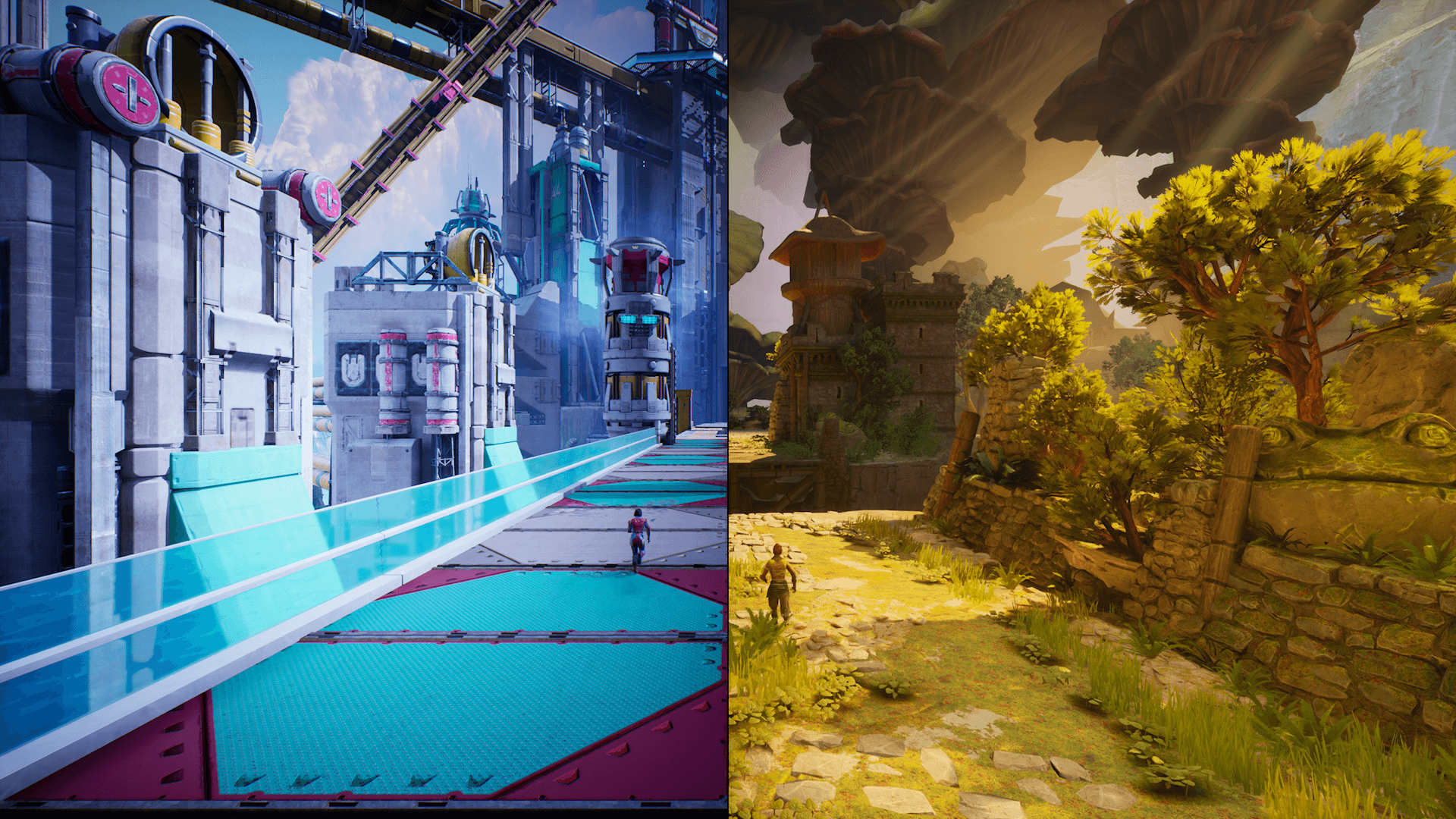
“Q: Are you in my world, or am I in yours? A: Yes!”
Overall, while I’d highly recommend Split Fiction for those looking for a solid two player co-op experience, I’d recommend It Takes Two first. While I’m sure some people will prefer Split Fiction, it seems that the popular consensus is with me on this one.
You know, I really should play Brothers: A Tale of Two Sons one of these days to complete my tour of Josef Fares’s work… 🤔