Tag Archives: Xbox 360

A (Personal) Battlefield Retrospective

Fresh off of somehow managing to dump 8 or 9 hours into the recent Battlefield 6 open beta, with all of the claims of it being something of a “return to form” after the lackluster performance of the last two games, I started to wonder exactly what that “form” is, or at least what people really mean when they say that sort of thing. While it may mean something similar to a majority of people, it’s totally subjective, I’m sure, and that conclusion has led me to reflecting a lot on my own time with the Battlefield series.
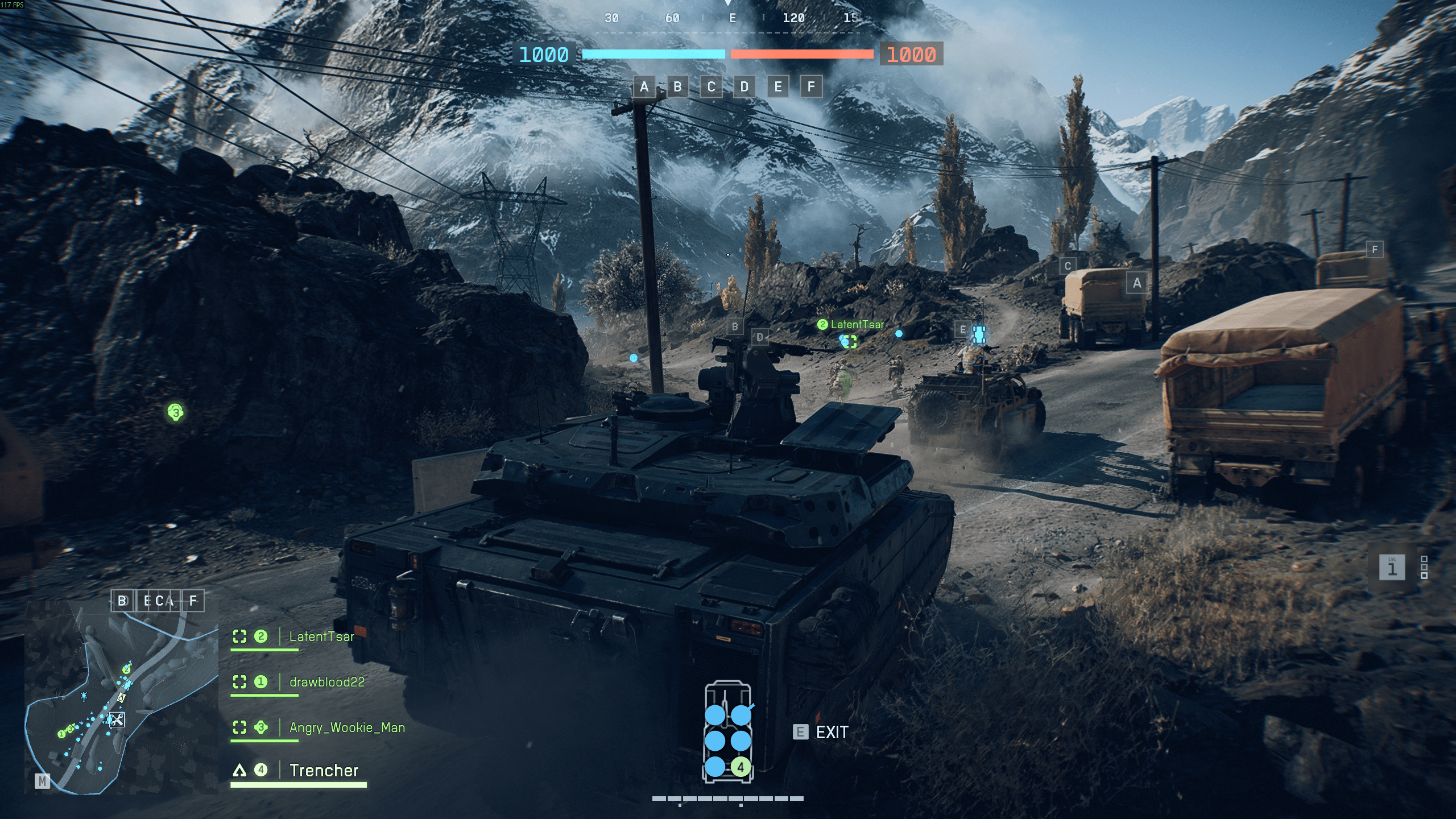
Hitching a ride to the frontline in the BF6 open beta.
“Hitchting a ride to the frontline in the BF6 open beta.”

While I’ve mentioned it once or twice here over the years, I’ve never gone into my absolute adoration for Battlefield 1942. One fateful day a co-worker who I occasionally ran into, and probably the only gamer I knew of at that place, was telling me all about how he’d just started playing this new “Battlefield” game and was talking about how you could do anything from crew a tank, fly a plane, or even captain a battleship in these massive, crazy online battles. This sounded a lot like World War II Online, which I’d been intrigued by but was always intimidated by due to its reputation for having clunky, simulation-like controls, but he assured me that it played more like a typical first person shooter. I was skeptical but curious. After doing a bit research I concluded that I just had to try it out, and picked up the game in something around November 2002. It was apparently a good recommendation, as I put an unspeakable amount of time into its multiplayer between 2002 and 2003, and even recruited a lot of other friends and co-workers to the cause. While I played a ton of mostly asynchronous “door” games like Legend of the Red Dragon on dial-up BBSes, Doom modem to modem, and Quake on the Internet in the 90s, apart from the very different Ultima Online, BF1942 was the first online game I was utterly obsessed with.

I was partial to infantry roles and focused on *gasp* playing the objectives, which in its default Conquest game mode, was kind of the point. I’m not a total dork though – I always enjoyed abusing tanks when one happened to be available too, of course. I also remember going out and buying a new flight stick so I could better handle the game’s relatively simple but fun to fly aircraft, and while I was never the best pilot out there (to this day, there are some people that have legitimately scary levels of skill when it comes to flying in these games) I more or less mastered the bonus Coral Sea map and would consistently clean house on it. F4U Corsairs and Zeros winding around those hilly islands is a core gaming memory for me, and I even made my own dog fighting map, filled end to end with huge mountains and massive valleys to make those kinds of pursuits even more fun. It also inspired me to take one of my first stabs at video editing, putting together a video of me dog fighting on Coral Sea in the pre-YouTube days. Unfortunately I’d have to strip out the sick Iron Maiden soundtrack if I were to upload it anywhere, plus the video quality is likely beyond abysmal by today’s standards.
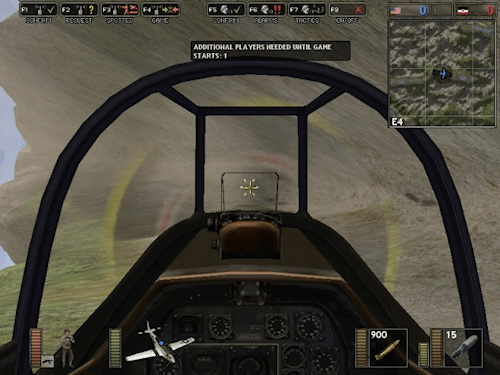
Flying through a canyon (sideways) in my crappy BF1942 map.
“Flying through a canyon (sideways) in my crappy BF1942 map.”

Probably reading about it on a Battlefield forum or a gaming news site, I ended up joining a semi-private tournament community called Battle for Europe. The basic idea behind BFE (and the other communities I’m about to mention) was actually kind of simple – add a persistent, progressive campaign around Battlefield 1942’s already huge battles. The fact that the game included maps representing battles all around World War II and players could pick from axis and allied forces meant all you’d need to do is organize regular matches, keep track of losses and victories, and tie it all together with a Risk-like campaign map. It was a great idea, though it might sound quaint these days since persistent player progression is now fairly standard, and while the Battlefield series may not have any sort of long term campaign progression, other games like Foxhole and the aforementioned World War II Online have done this to varying degrees too. (Editor’s note: For posterity, it’s worth noting that BFE was probably better known for applying this concept to other World War II games released around that time such as Day of Defeat and Call of Duty, and ran for several years after this.)

The battles themselves were absolutely epic! We filled out the 64 player slots on our server, plus extra observers, and had a ton of people on standby. How did we account for having more than 64 people in the community who wanted to play? Easy! We made the matches last as long as possible and ran these battles all day. Literally hours on end, with the idea that players could tag in and out, ultimately supporting a lot more players, and across multiple timezones to boot. As a whole our player base represented a wide variety of skill levels, though of course most of the types of people who’d join a dedicated community like this were at least above average, and the battles would be correspondingly vicious. While not quite a “milsim” or realism community of the sort that would later become popular with a variety of military shooters, we also had a player ranking system in which players could advance, as well as take on particular roles which, given the limited number of vehicles and need for a well balanced roster, was also a must. Leadership was especially vital if your side actually wanted to win, and I soon found myself being promoted to a squad leader, and then to an NCO role where I was in charge of something like 50 players. Speaking of, strategy was an interesting aspect of these long matches, as unlike a typical clan versus clan league or tournament match, there was way more than enough time for the other side to figure out exactly what you were doing and adjust to it, which made active leadership all that more important.

Creeping up to an enemy spawn in a BF1942 WGO match.
“Creeping up to an enemy spawn in a BF1942 WGO match.”

The reasons were a bit hazy at the time, never mind today, but there was a growing air of discontent around much of the BFE BF1942 community leadership, and as is often the case, there were people who had their own ideas of how they could do the whole thing better waiting in the wings. Several of the more vocal community members banded together to leave BFE and “roll their own” calling it War Games Online. With many of those involved being people I liked and respected, I was asked and accepted to come along for the ride, thus becoming one of the founders and administrators of this new community. I also signed up to help with the development of our new site which we had some pretty cool ideas for, such as an interactive campaign map. While this would take some time, we went ahead and launched our first campaign as something of a proof-of-concept. I still have fairly visceral memories of at least one intense and chaotic match on one of the semi-asymmetrical Road to Rome maps, which were new at the time. Sadly the whole thing went a bit pear shaped pretty quickly due to the head of our new community suddenly stepping down. As he wanted to maintain the WGO name, the rest of the leadership council spun it off into yet another new community called Global Conflict. I was starting to play Battlefield 1942 less and less by this point thanks to other distractions (namely Planetside) and I bowed out very early into GC’s life. While I ultimately had very little influence on what Global Conflict would become, it lived on through various games and is still around in some form today, which is very cool to see.

All that, and I didn’t even mention the fantastic Desert Combat. Desert Combat was a massive total conversion mod that introduced a ton of new weapons, vehicles, and maps to the game, shifting its focus from World War II to a now very familiar modern setting. While I never played it in any organized way, I spent a huge amount of time with it, and have especially fond memories of huge, immersive tank battles in desert maps, and there was absolutely nothing like hunting ground targets in an A-10 or SU-25 on the classic BF1942 map El Alamein. (Editor’s Note: Like many old games and mods, even ones as popular as Desert Combat was, there’s little detail online about it, though I stumbled upon this excellent series of posts about the game that I can’t help but to share – Part 1, Part 2, Part 3, Part 4)
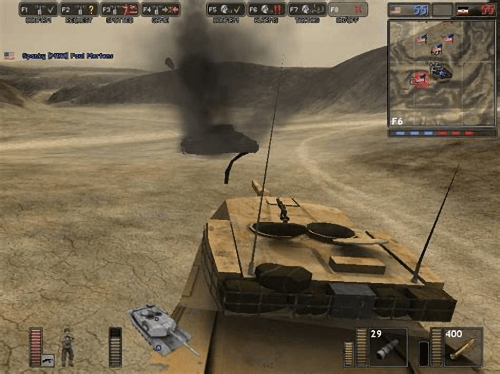
I loved tank battles in BF1942 but there was nothing like Desert Combat.
“I loved tank battles in BF1942 but there was nothing like Desert Combat.”

Another reason that Battlefield 1942 (and Desert Combat) is important to me is that it is a rare example of my dad really getting into a game. My dad’s taste in games has always been totally enigmatic to me. Simply put, certain seemingly random games over the years have really grabbed him, but attempts to understand his tastes and turn him onto other, similar games has usually been met with a lukewarm response at best. He’d always been a World War II nerd, and as I was still living with my parents at the time, I showed him BF1942. Not only did he think it looked cool, but he watched me play round after round, eventually asking me to let him play, which then became a regular thing. This was kicked into overdrive when I showed him Desert Combat, and one evening coming home from work to find him on my PC playing a match. My dad barely touched computers, so the fact that he figured out how to get online, start up Battlefield, and get into a match all by himself was kind of shocking to me. Some time later I built a new computer for my brother which came with the added bonus of enabling my dad and I to play together. With one of us driving/piloting and one of us gunning DC’s various helicopters, planes, and tanks, mowing down endless hordes of bots was a hell of a lot of fun.

Around the time my excitement for Battlefield 1942 started to wane Planetside came into my life and in most ways supplanted it, though there was a brief time some months later when I got a little burnt out on Planetside and decided to go back to Battlefield 1942, even trying out for a semi-sweaty clan called The Devil’s Brigade. They had kind of a template for how they’d assess potential new recruits, running me through various exercises that involved things like attacking a small bunker with multiple clan members defending it, and inversely, attempting to defend solo as they relentlessly attacked it. While my skills probably peaked before quitting to play Planetside, I was still pretty decent at the game, and it was actually kind of a thrill to be tested like that. I recall doing so-so overall, though I wasn’t exactly sure how well I was supposed to do in these scenarios, and I got quite a few kills against other members of the clan that I thought would be sure to impress, and sure enough, I was accepted. They seemed like a cool group of guys and I was really looking forward to playing with them, but I also felt like I owed my loyalty to my existing friends in my Planetside outfit, The Praetorian Guard, more than any potential new ones there, resulting in having a change of heart and regretfully bowing out of TDB before putting much time in with them at all.
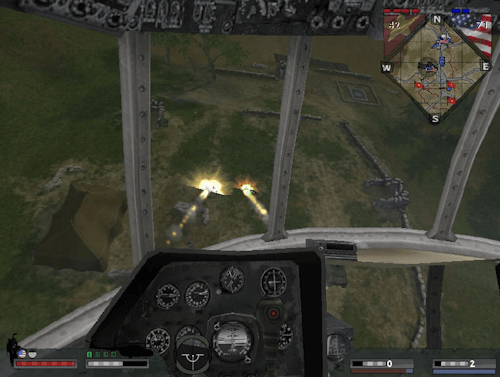
Choppers were freakin' everywhere in Battlefield Vietnam.
“Choppers were freakin’ everywhere in Battlefield Vietnam.”

After TPG’s original stint as a Planetside outfit slowed down, we were constantly dabbling in various other games together, sometimes in a fairly organized way, but often times we’d just all just squad up and hop into public games, not really employing all that much teamwork or anything. When Battlefield Vietnam was released in 2004 I and several others in the clan were hyped enough for it to pre-order it or otherwise grab it on launch day, and we played it together as a semi-disorganized group quite a bit. Unfortunately there was something about Battlefield Vietnam that just didn’t gel right for me. I don’t know what it was – the map designs, the asymmetrical armies, the particular combination of vehicles and weapons, the helicopter controls when compared against DC’s, subtle changes to the engine, or maybe some odd mix of all of those? Of course, I know it’s one of the more fondly remembered older titles in the series so I’m not claiming to be in the right here, but I really only kept playing it to play with my friends, with a dwindling hope that maybe something would eventually click.
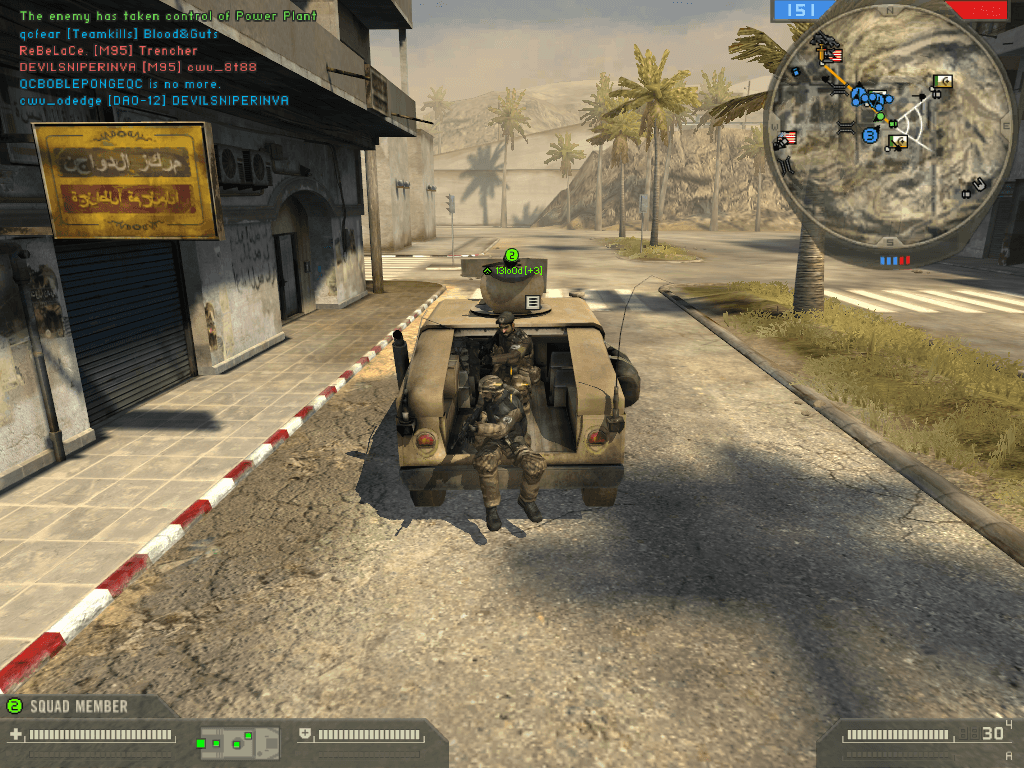
Hitching a ride with my old TPG buddy Blood in BF2.
“Hitching a ride with my old TPG buddy Blood in BF2.”

It’s a similar story with Battlefield 2. I was extremely hyped for an official DICE take on what we got earlier with Desert Combat, especially since the guys who made DC would be helping out, and there were a lot of undeniably cool enhancements to the engine and the gameplay in general, including a new squad system, persistent player progression (which would be a staple of the series from that point on) and the introduction of the RTS-like commander mode that saw one person on each team giving orders, dropping supplies, and otherwise attempting to direct and assist the fight from afar. When the Battlefield 2 demo built around the Gulf of Oman map dropped, a few of us played it like absolute madmen and really, really dug it. When the full game was released, most of the core members of TPG dove in as well, though it ended up not hooking me to anywhere close to the level I expected it to. Looking back now, I honestly don’t remember why that was – perhaps it was a similar situation as with Battlefield Vietnam, though I also have some vague recollections of having some technical issues with the game that might have kept me from playing as much as I wanted to. As an aside, I did briefly return to BF2 years later to play with some of its bigger mods, as mentioned here.
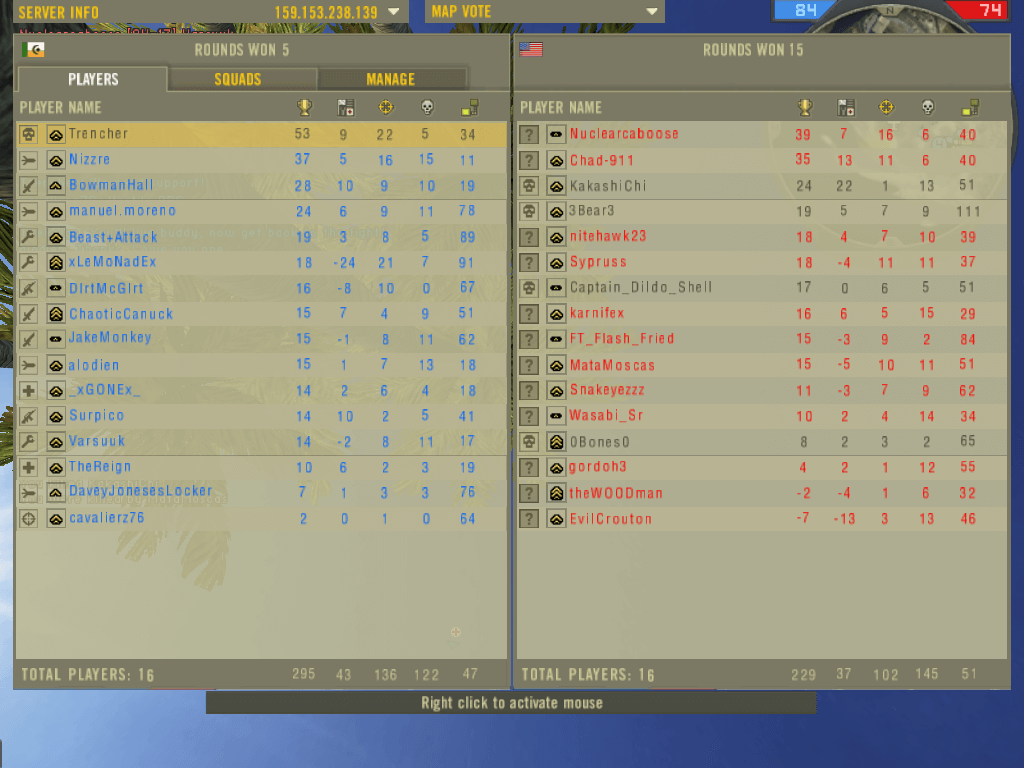
Look, proof that I didn't totally suck at Battlefield 2!
“Look, proof that I didn’t totally suck at Battlefield 2!”

I skipped the BF2 follow-up/spin-off Battlefield 2142, despite the fact that, given my love of the similarly sci-fi heavy Planetside, you’d think I would have been all over it. In fact, to this day I’ve still never played it. Not long after this, I started cutting way back on PC gaming and focused a lot more on console gaming, particularly single player games. I’d played the demo of Battlefield 2: Modern Combat on my Xbox 360 after watching a friend play it and thinking it looked pretty cool, but skeptical of Battlefield’s place on console, it wasn’t until Battlefield: Bad Company’s single player campaign that I gave it a fair shake. I dabbled with its multiplayer as well as its Xbox Live Arcade spin-off Battlefield 1943, as mentioned here, but I was a little late to the party on that one, and my Battlefield 1942 skills didn’t survive the transition to being played on a controller in any case. I fully intended to play through BC’s sequel’s campaign as well, though it wasn’t until I found out that it had become the flavor of the month online game for a lot of my old TPG friends that I picked it up on PC and joined in.

Battlefield: Bad Company 2 felt like something of a return home for me. The maps were smaller and less chaotic, with smaller player counts, yet perfectly balanced the map sizes, player counts, available vehicles, and all kinds of nifty new counters. It also focused on the more linear Rush mode over the series staple Conquest, which worked really well with that particular formula. Throw in a simple player progression and weapon unlocks system, and the awesome Destruction 2.0 and, man, it was a ton of fun. While BC2 was much more of a fun diversion for me than an obsession like with Battlefield 1942, I racked up a good 20 hours or so of multiplayer and have a lot of fond memories of playing it. I do still need to go back and play that campaign one of these days, though! As a quick aside, I recall being intrigued by the launch of Battlefield Heroes, a title that often gets left out of these kinds of retrospectives, but alas, I never actually got around to trying it. I thought it looked kind of neat though.
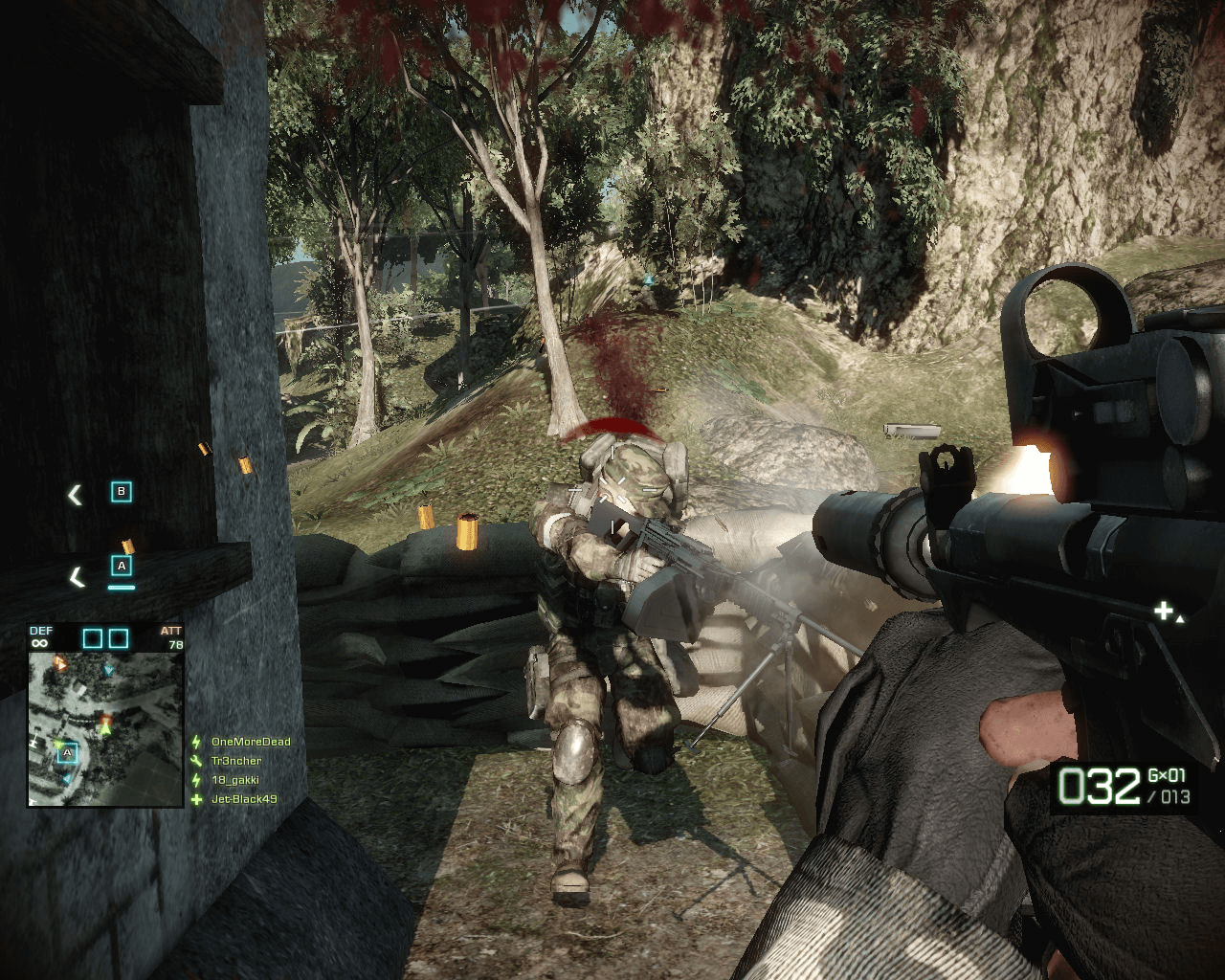
Man, I miss Bad Company 2. This dude was too close to miss, though!
“Man, I miss Bad Company 2. This dude was too close to miss, though!”

Somehow, the impressive looking Battlefield 3 with its more realistic models and animations, added cinematic flare, and a post-Call of Duty 4: Modern Warfare overhaul of infantry movement and gunplay didn’t reel me in when it was released a few years later. I think this is chiefly because I wasn’t gaming that much at the time, and when I was it was still usually focused on more single-player experiences on console. That, coupled with a lot of highly publicized technical issues at launch and that few if any of my friends were playing it, meant I gave it a miss entirely. The story is exactly the same for Battlefield 4 and the odd cops and robbers spin-off Battlefield Hardline. I thought all of these games looked cool, but I was increasingly feeling like the Battlefield series was no longer for me. Looking back, I can’t help but wonder what I might have missed by skipping those games, especially since 3 and 4 are always mentioned as points of comparison when discussing the series these days – I’ll probably at least go back and play through their campaigns one of these days.

Battlefield 1, however, really caught my attention, and it just so happened that I’d built a new PC around the same time as its pending release and was itching to do some legitimate PC gaming, and a lot of my old TPG friends were jumping into it too. Between that, and the fact that the game was actually really good, it was the first Battlefield game since BC2 that I spent any quality time with. It wasn’t perfect – I’d have preferred another World War II title to a Battlefield set in World War I when everyone is anachronistically running around with automatic weapons, and I generally didn’t love the weapons and vehicles as a result. Still, it had more than its fair share of uniquely awesome Battlefield series moments. Similarly to BC2, I wasn’t crazy addicted to it, but it did become my random pick up and play online game for a while there, temporarily unseating Planetside 2 from my rotation.
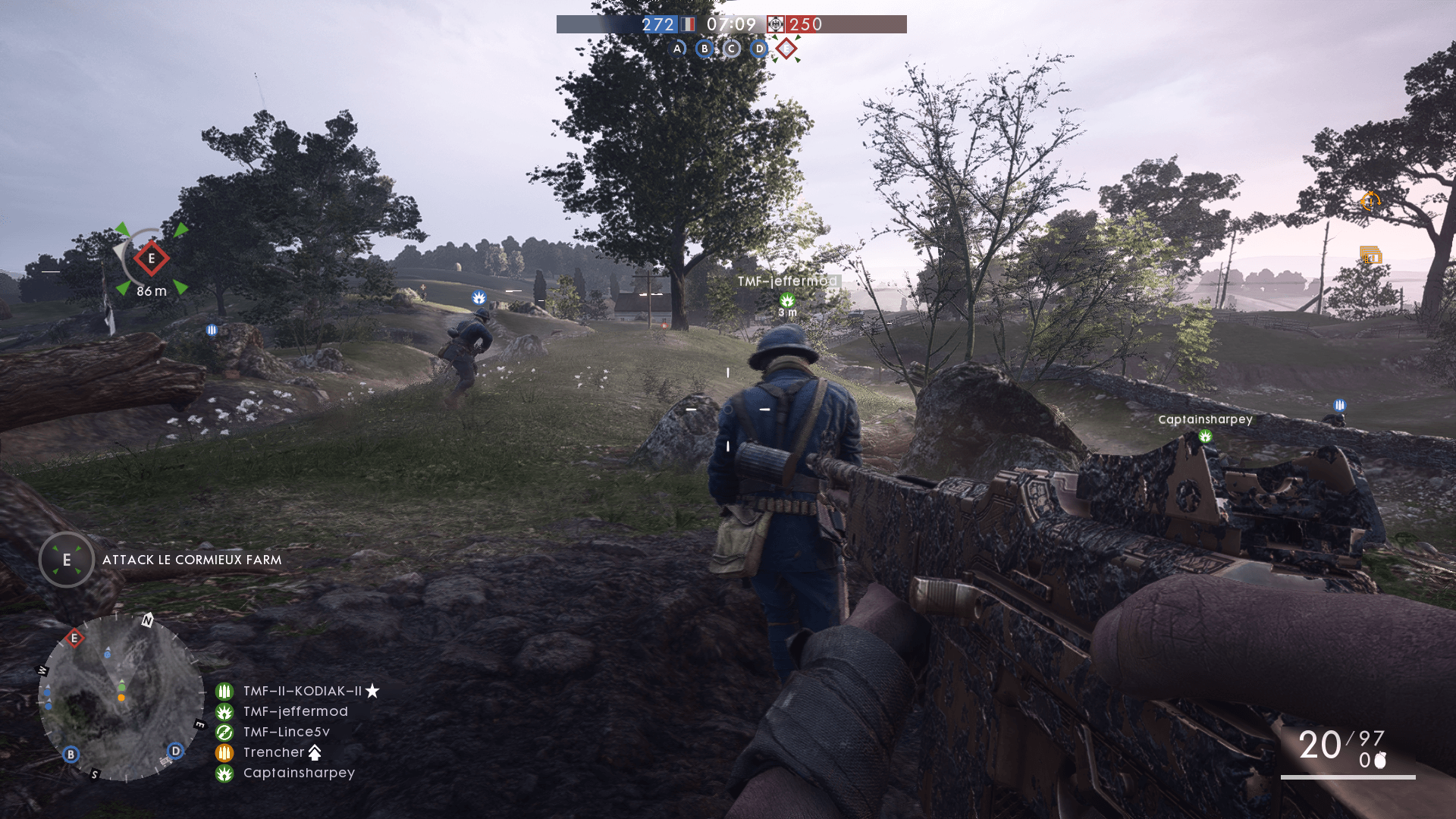
Over the top, boys! Probably seconds away from death in Battlefield 1.
“Over the top, boys! Probably seconds away from death in Battlefield 1.”

Like a lot of people, I was initially very excited for Battlefield V’s long overdue return to World War II, but then very concerned when EA released the reveal trailer featuring a mismatched squad of resistance fighters rather than your typical uniformed grunts, and graphics so bright and colorful that were, compared to Battlefield 1’s often dreary environments, absolutely retina scorching. That, and the marketing of the game focused on a female sniper from the group with what looked (at a glance) to be a bionic arm, which left me scratching my head. No, I’m not going to cry about female characters and minorities like a lot of Battlefield V detractors, but it did make me question what tone DICE were going for with V. It was feeling like it might be more of a less serious, perhaps even alternative history take on World War II, and combined with the news that it would include a Battle Royale mode and some of the other details coming out, such as “Elite classes” hinting at a more hero oriented system versus the generic classes of old, it really made me skeptical of the entire game.

Randomly feeling the urge to play some Battlefield, I actually ended up picking up Battlefield V super cheap during a Steam sale just last year. I played a couple of single player campaign missions as well as put a few hours into multiplayer, and I surprisingly really enjoyed what I played. Mind you, this was after years of patches to fix the game’s issues and dial back a lot of the more controversial changes, but I can’t help but think that this game was mostly a victim of a now seemingly misguided marketing push to make the game more attractive to Fortnite Battle Royale players coupled with the ensuing hate campaign made up of gamers all too happy to leap onto the bandwagon to trash the next big EA game. I’d always intended to go back and finish the campaign and play some more multiplayer before writing about the game, and hopefully I still will one of these days.
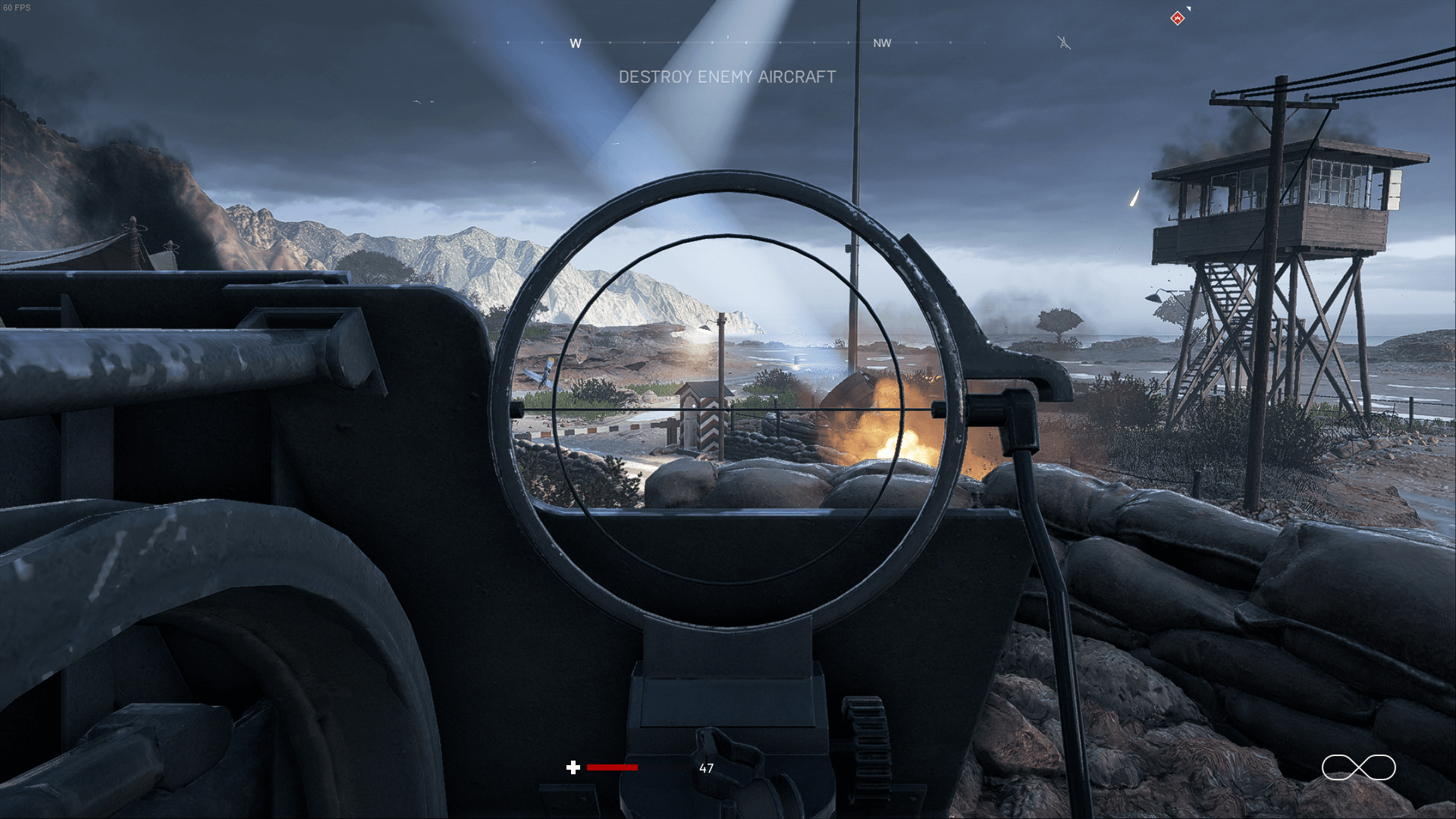
About to mess up some Messerschmitts in Battlefield V's campaign.
“About to mess up some Messerschmitts in Battlefield V’s campaign.”

Somehow even more depressingly, Battlefield 2042 went right over my radar upon its release in 2021. After the somewhat troubled release of Battlefield V and a rather rocky initial reception due to a number of technical, marketing, and gameplay fumbles, including going even further down the hero shooter class rabbit hole with its new “Specialists”, it never really appeared on my radar either. At least, not until it had been patched and expanded so much that opinions on the game finally started to gradually shift, though as mentioned above, that just ended up resulting in me buying Battlefield V instead. Given that it didn’t have any sort of campaign, it’s likely that I’ll never check it out, but never say never!

So that brings us to August 2025, when rumors about Battlefield 6 started to appear, and then early but very positive sneak peak impressions and preview event impressions started to build up in short order, culminating in the announcement of an open beta. I couldn’t really ignore the hype any longer, and I decided to check out the beta, but more on that much later, when I’m hopefully talking about the game we eventually get at retail!

Believe it or not, most of these screenshots, even the really ancient ones, are mine. Apparently I don’t delete things enough!
Halo Fest 2020 – Spartan Ops

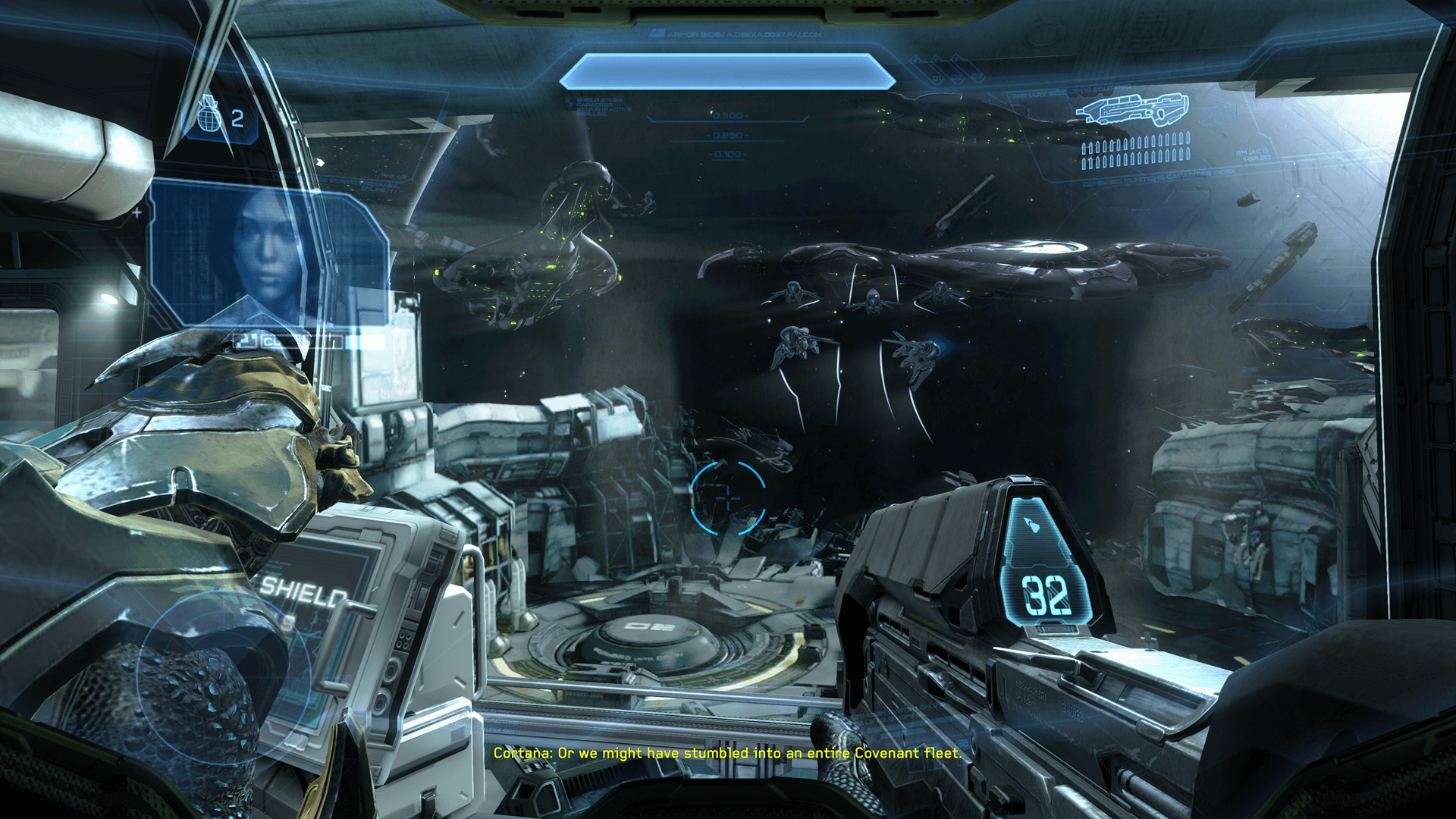
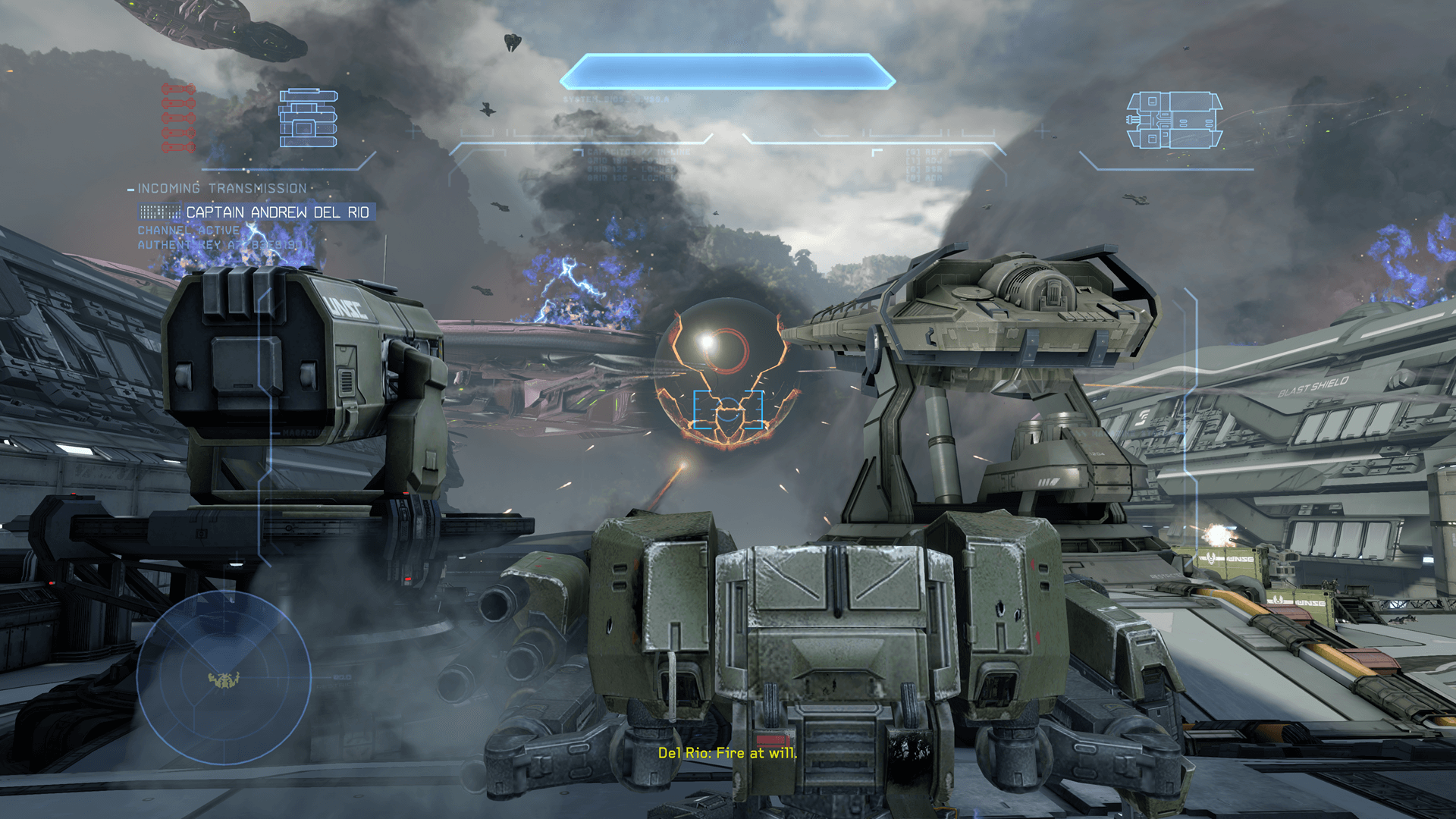
The Story So Far: Adrift for over 4 years, the crippled UNSC frigate Forward Unto Dawn is pulled towards a mysterious object. Cortana wakes the Master Chief from cryosleep and the pair discover that they’re being attacked by a splinter fleet of Covenant loyalists led by the Sangeili Jul’Mdama. Without warning the object opens and violently pulls all nearby ships into it. Crashing onto the interior surface of what they learn is the Forerunner Shield World Requiem, Cortana picks up a faint signal from another UNSC ship, the supercarrier Infinity. Attempting to warn the Infinity of Requiem’s gravity well, the pair unwittingly release an ancient Forerunner warrior leader, the Didact, from stasis. The Didact resumes control of his army of defensive constructs, the Prometheans, with Jul’Mdama’s faction also falling into his ranks. Barely escaping, Master Chief and Cortana reach Infinity’s crash site where Master Chief rallies the UNSC defense, forcing the Didact into retreat. Aboard the Infinity Captain Del Rio dispatches a force to disable Requiem’s gravity generators so that the Infinity can escape. In the process the Master Chief is lured to a Forerunner facility where he’s contacted by the AI imprint of an ancient Forerunner called the Librarian. Explaining that the Didact intends to use a device called the Composer which had been used to digitally conscript living beings, including humans, into Prometheans to fight against the Flood, she insists that he must be stopped. Upon returning to the Infinity, Captain Del Rio observes Cortana’s instability and orders Master Chief to surrender her, ordering his arrest when he refuses. Instead, the Infinity’s executive officer, Commander Lasky, aids the Chief by procuring Pelican gunship for him. The Didact departs Requiem aboard his flagship, the Mantle’s Approach, though the Chief and Cortana make it just in time to stowaway on an accompanying Covenant dropship. Later hijacking the ship, the pair head to Ivanoff Station, a research facility where the Composer has been relocated. They find the station already under assault and attempt to sabotage the Composer before the Didact can reclaim it. Failing, they witness the Didact unleash the Composer on the station to devastating effect. Master Chief and Cortana then arm a Broadsword fighter with a HAVOK nuclear missile and pursue the Mantle’s Approach as it heads for Earth. Crashing into the ship’s interior, Master Chief takes the warhead and continues to fight his way to the Didact on foot. Confronting him, Cortana distracts the Didact for long enough for the Chief to manually arm the warhead. Cortana is able to teleport the Chief safely off of the ship but sacrifices herself in the process. Master Chief is later found and brought back aboard the Infinity where he quietly mourns the loss of Cortana.

Oh goody, more Knights...
“Oh goody, more Knights…”

Replacing the popular Firefight wave survival mode first introduced with Halo 3: ODST and iterated on with Halo: Reach, Halo 4 included a separate episodic co-op oriented campaign called “Spartan Ops”. 343 Industries might have opted to do this as part of an effort to canonize Halo 4’s multiplayer (AKA “Halo: Infinity”) with competitive modes being presented as war games conducted aboard the UNSC Infinity. Similarly, and the reason I wanted to cover Spartan Ops despite not talking too much about multiplayer during my Halo Fest posts is that, unlike Firefight, the Spartan Ops campaign actually includes a full story, taking place just after the events of Halo 4.

Back in the day I had started to work my way through Spartan Ops by myself on “Heroic” difficulty but quickly discovered that it was definitely tuned for 4 person cooperative play. Between this and that it still retained much of Firefight’s wave survival gameplay (and you were fighting damned Prometheans a lot of the time to boot) it was quite the slog. I think I made it as far as episode 2 before burning out, and I believe this is a huge reason for that negative impression of Halo 4 I’d been carrying around for almost a decade now. Going back to the campaign in 2021, I decided that cranking my difficulty down to “Easy” would probably be a solid first step in meeting my goal of making it all the way through this time.

What can I say? The Warthog never gets old!
“What can I say? The Warthog never gets old!”

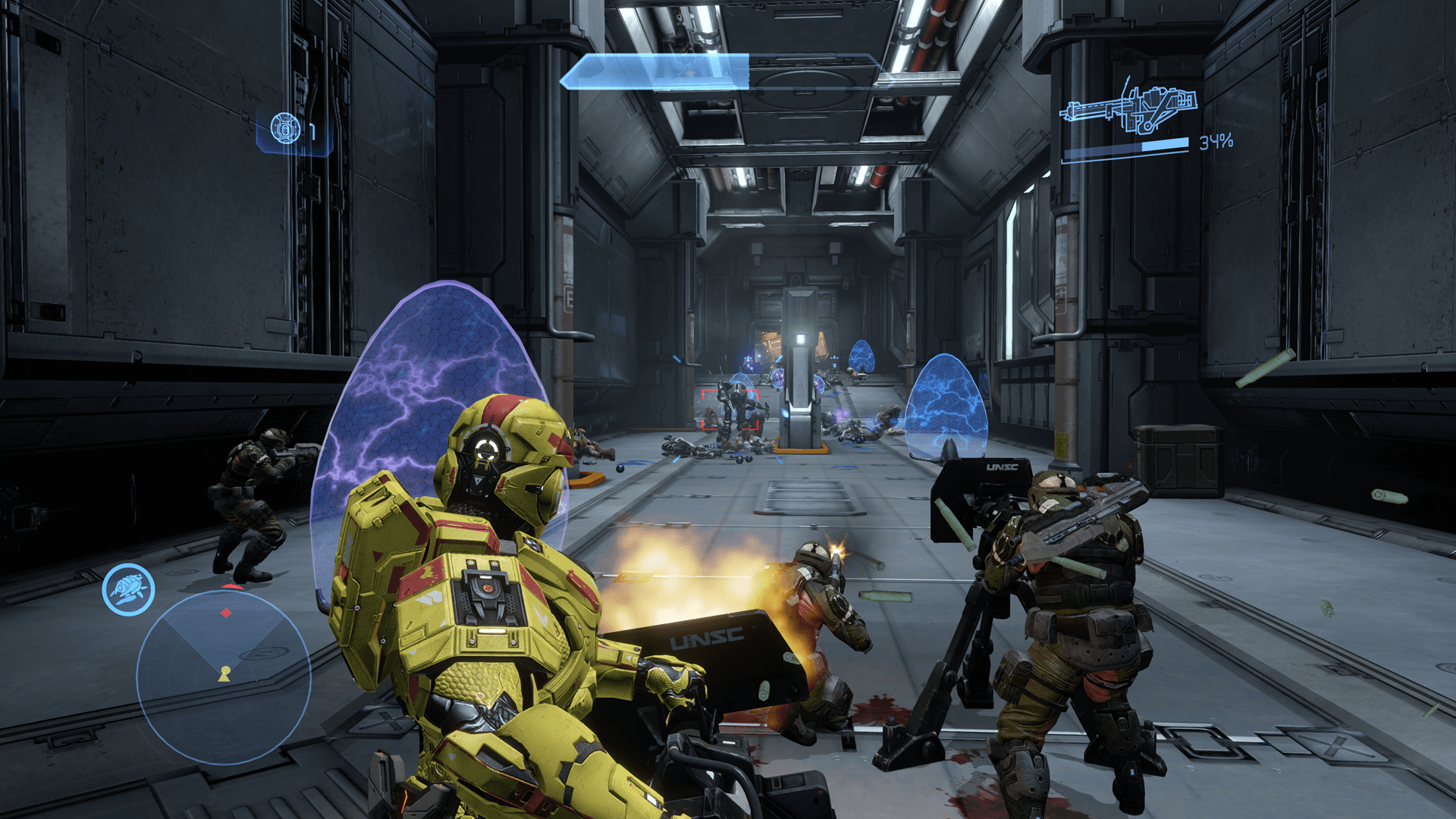
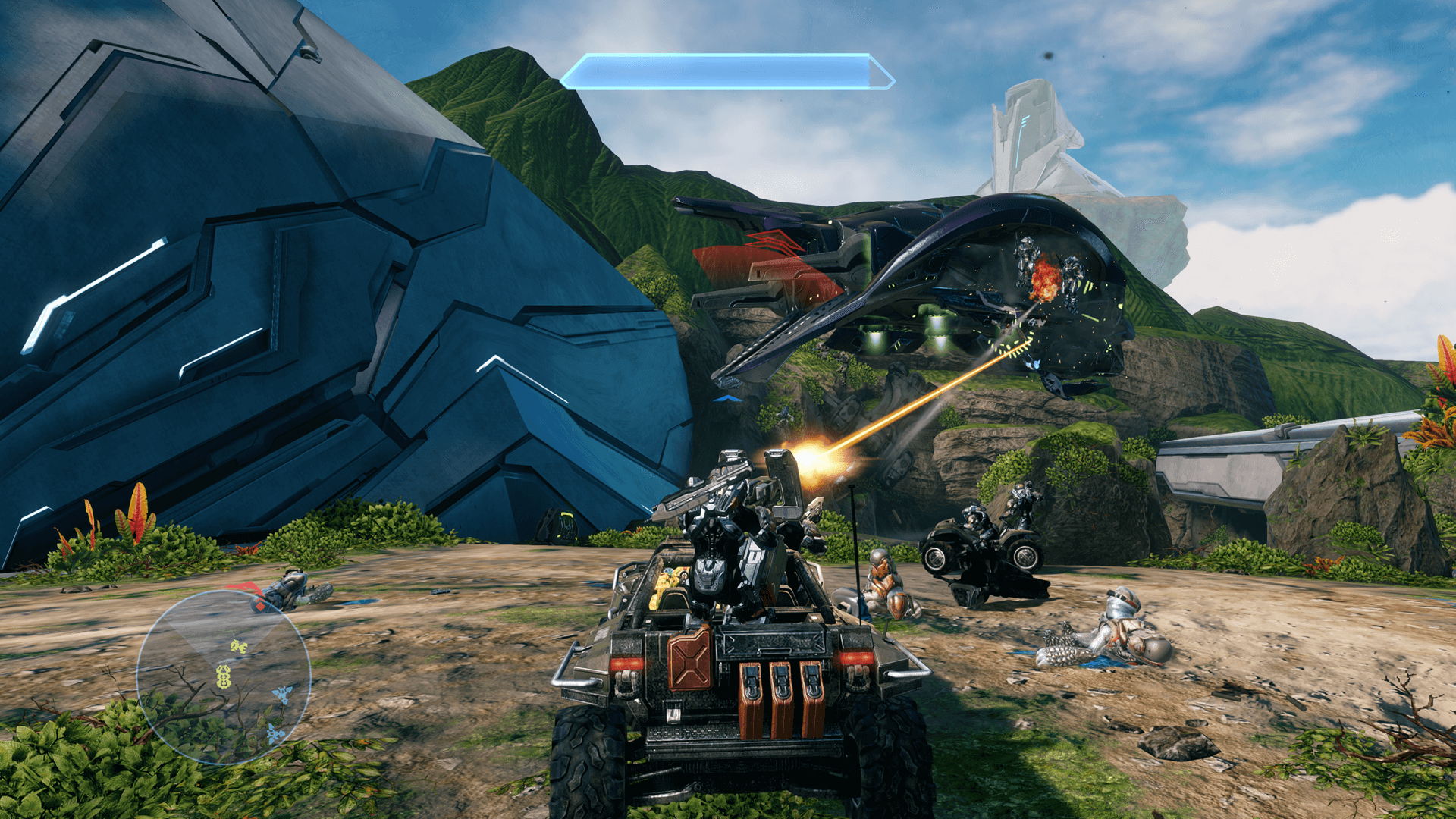
While still not a total cakewalk, there were a few things unique to Spartan Ops that made it a bit more tolerable. For one, weapon racks and ammo crates are generously placed throughout each map. Sure, you may still need to grab a Covenant or Promethean weapon from time to time, but you’ll have the option of using UNSC weapons without worrying about running out of ammo much more often than in Halo 4 proper. There are also special ordnance drops that are given to you during many missions, usually when there’s a particular reason you might need a special weapon; rocket launchers being dropped for you just before a pair (or multiple pairs) of Hunters show up is a common example. You also get to use your multiplayer loadouts which means access to your choice of basic weapons and grenades, equipment, and special “tactical packages” and “support upgrades”. Finally, being multiplayer oriented, you simply respawn if you die rather than having to jump back to your last checkpoint. Nice!

Gameplay wise, your fireteam is dropped into an area and issued a linear string of objectives, coming one at a time to appear more dynamic. For instance, you might be sent to a waypoint, then told to activate a McGuffin, then told to defend the area against a few waves of enemies, then told to reach the extraction point and… oh no, reinforcements! Better defeat a few more waves so you can extract! You get the point. In the first 5 episodes this gets very formulaic and very repetitive very quickly. Even more so when you consider that the same 8 maps are featured multiple times in those 25 levels, and many of them are based on sections from the main Halo 4 campaign or are straight up taken from multiplayer in the first place.

Episodes 6 through 10 greatly improve things by introducing a new batch of maps which feel purposely crafted to be used this way. They also do a better job of varying the gameplay, though the tradeoff is that some chapters end up feeling more like single player campaign missions than Firefight-like scenarios. That said, all 10 episodes have some cool moments, including some awesome vehicle-centric sections. It should also be noted that Spartan Ops doesn’t suffer from the issue of having confined, linear levels that I mentioned in my Halo 4 post. Even some of the small maps feel very open which is refreshing when coming straight from the main campaign.

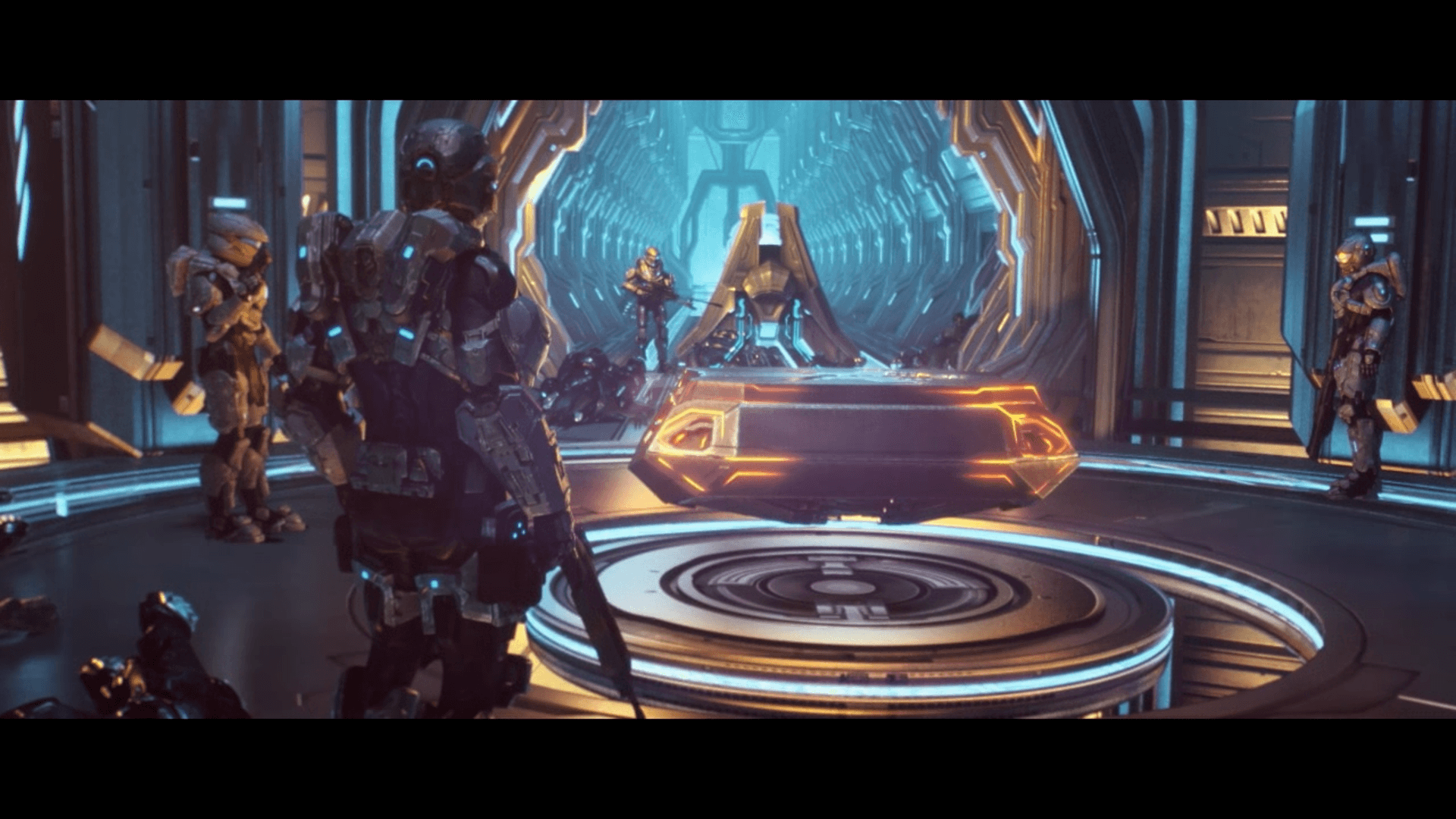
Palmer and Majestic capture another Forerunner artifact.
“Palmer and Majestic capture another Forerunner artifact.”

Presentation is another story. Individual chapters start and end with short in-game cutscenes and there are numerous radio communications from your mission handlers about your objectives throughout. Most notably, the biggest story beats are told via lengthy, beautiful rendered cutscenes created by Axis Animation that kick off every new episode and focus on a core cast of characters, many of whom you’ve already met in Halo 4. Honestly, say what you will about Halo 4, but these cutscenes are peak Halo awesomeness in my opinion and I’d love an entire series done this way.

The story itself is quite good too. Untangled from the legacy of Master Chief’s story and the perceived lore complexities of introducing the Didact and the Librarian, I’d suggest perhaps better than Halo 4’s. I definitely got pretty into it in any case. For one, I know he didn’t originate with Halo 4, but I thought Jul’Mdama was a great, more grounded antagonist. I also like getting some insight into the SPARTAN-IVs and the idea of Dr. Halsey feeling somewhat left behind as more advancements are made without her (which I feel is a more realistic narrative than making her cartoonish traitor.) Hell, I even started to like Sarah Palmer by the end of the campaign thanks in large part to the way her relationship with Lasky is depicted. The 10 episode story arc has a satisfying enough conclusion while also leaving some major developments wide open and begging for a sequel. I don’t know if one was actually planned or not, but sadly, a second season of Spartan Ops would never arrive, leaving the story to need to be fully resolved elsewhere.

Fun times in the corridors of the Infinity.
“Fun times in the corridors of the Infinity.”

All in all, Spartan Ops is a pretty damn cool batch of bonus content that I doubt a lot of Halo fans have experienced. While I’m not sure I can heartily recommend it to solo players, there were numerous chapters that stuck out to me as likely being incredibly fun when played cooperatively while I was playing through. That said, in the exceedingly likely event that you’re unable to convince even a single buddy to play through this huge 50 mission campaign with you, watching a compilation of its awesome cutscenes is still an absolutely worthy investment of your time and that, at least, gets that my recommendation.

Next up, something completely different…

Halo Fest 2020 – Halo 4

The original Halo trilogy had been wrapped up for over 5 years and Bungie’s last two Halo releases, excellent as they were, were side stories. Now with Halo 4 we were getting an actual sequel, but the first crafted entirely by 343 Industries. Could they execute at anywhere close to Bungie’s level? What new ideas would they have to push the series forward? Most importantly to many fans, what would become of our beloved Master Chief?

As with the last several games, I’d really only played through Halo 4’s campaign once, at launch, though unlike those games I didn’t come away with an extremely positive impression of it. Instead, as I alluded to in my original brief mention of it here, I mostly appreciated it for simply allowing me to revisit a franchise I loved. While I did a fair amount of random matchmaking early on, the days of spending countless hours playing splitscreen and LAN games with family and friends were ancient history. Without those kinds of more enduring memories, Halo 4 is where the series stopped feeling quite so special to me. On top of that, for years now whenever I thought about its campaign I’d often remember it as a bit of a tedious slog. Oof!

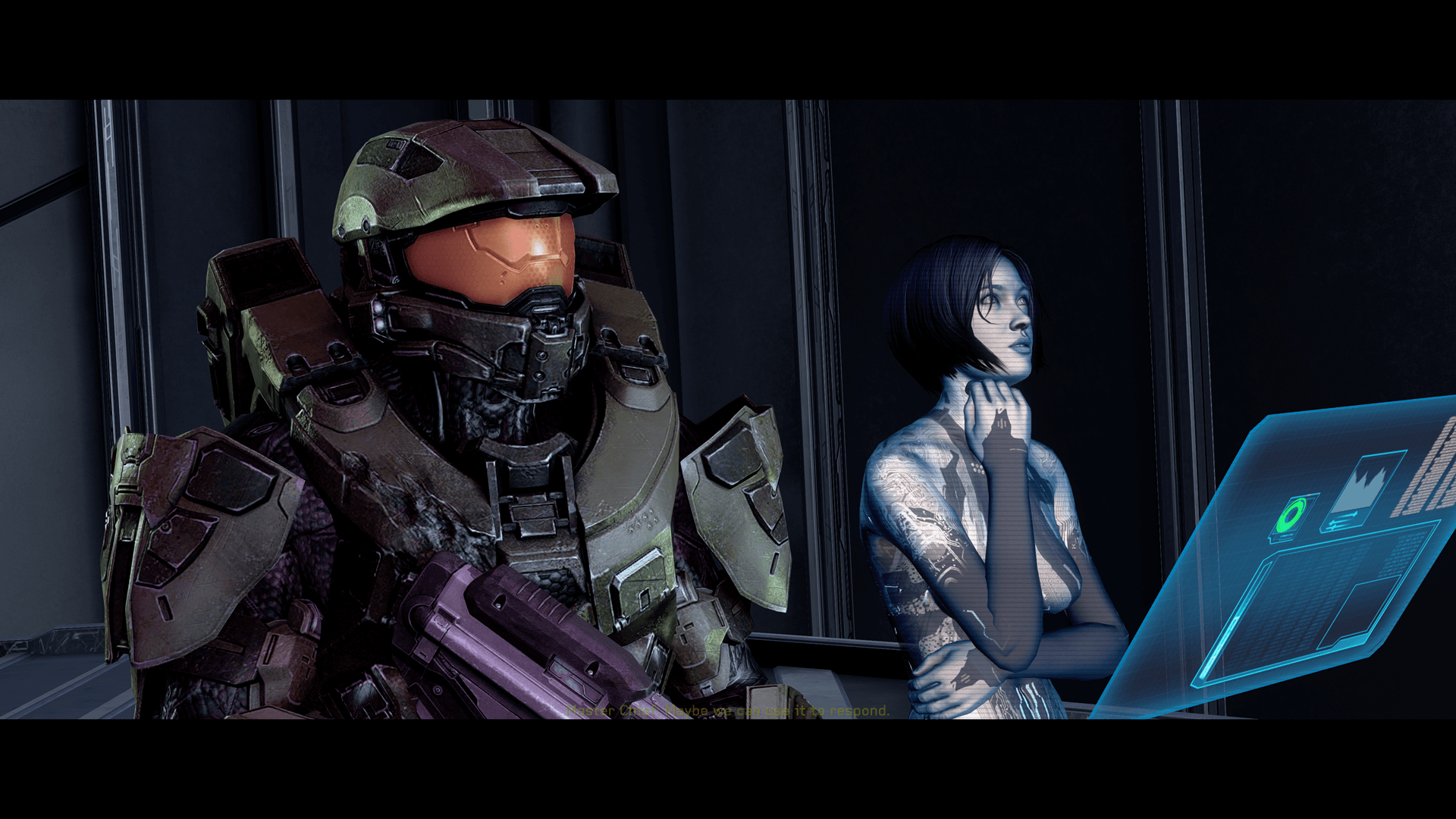
Master Chief and Cortana, 2012 style.
“Master Chief and Cortana, 2012 style.”

As with almost everything else I’ve covered as part of Halo Fest 2020 up to this point, I replayed Halo 4 on “Heroic” difficulty as part of the Xbox One’s Master Chief Collection on my Series X. The MCC version of the game doesn’t receive much of an upgrade but, as with Halo: Reach, Halo 4 was already an incredible looking game in the first place. In fact, I’d commented that Reach might have been one of the Xbox 360’s best looking games, and while I think I still favor it artistically, Halo 4 surpasses it.

While Halo 4’s graphics might have been a technical feat, some major aesthetic shifts were less positively received. Bungie tweaked their designs with almost every iteration of the series but 343 took it a lot further. Front and center, Master Chief’s iconic armor was given a major facelift, with a far more futuristic design yet a more gritty and realistic texture and a darker color scheme. Cortana’s new design was particularly jarring, with her model looking far more voluptuous and, well, straight up nude. While I wouldn’t go as far as to say that I dislike her new look, I can’t help but find the choice just a bit questionable. On the sound design front we no longer have Marty O’Donnell working on the soundtrack for the first time in a mainline Halo game. That’s not to say the new soundtrack, which goes in some very different directions, is anywhere close to being bad, but it feels entirely underutilized and nowhere near as notable a part of the whole experience as it did in, say, Halo 3 for example.

Not really what you want to see first thing after waking up...
“Not really what you want to see first thing after waking up…”

As with Halo: Reach, the campaign features a nice variety of different environments and of course, per Halo tradition, multiple vehicle-centric sections including a couple featuring the new Mantis mech suit. There’s also a level that feels very similar to the Falcon level from Reach where you instead pilot a Pelican gunship, and in a similar throwback to Reach, one that feels like a Star Fox level in which you fly a Broadsword fighter. There’s also a section featuring something of a super-sized Elephant from Halo 3’s Sandtrap multiplayer map called a Mammoth.

One issue with Halo 4’s level design is that there is a major lack of large open areas, especially problematic in those vehicle dominant sections. Really, as a whole the campaign’s levels are rather linear, complete with invisible walls and out-of-bounds kill timers. If you don’t attempt to explore or get too creative you may not even notice, but those hardcore Halo players who like to wring every last drop of gameplay out of each game will definitely be turned off by this. I was also surprised to see some QTE-like interactions very early in the campaign. These don’t make a reappearance until the final boss fight, and while QTEs don’t particularly offend me, having a game that doesn’t really rely on them end with one did feel a little anticlimactic.

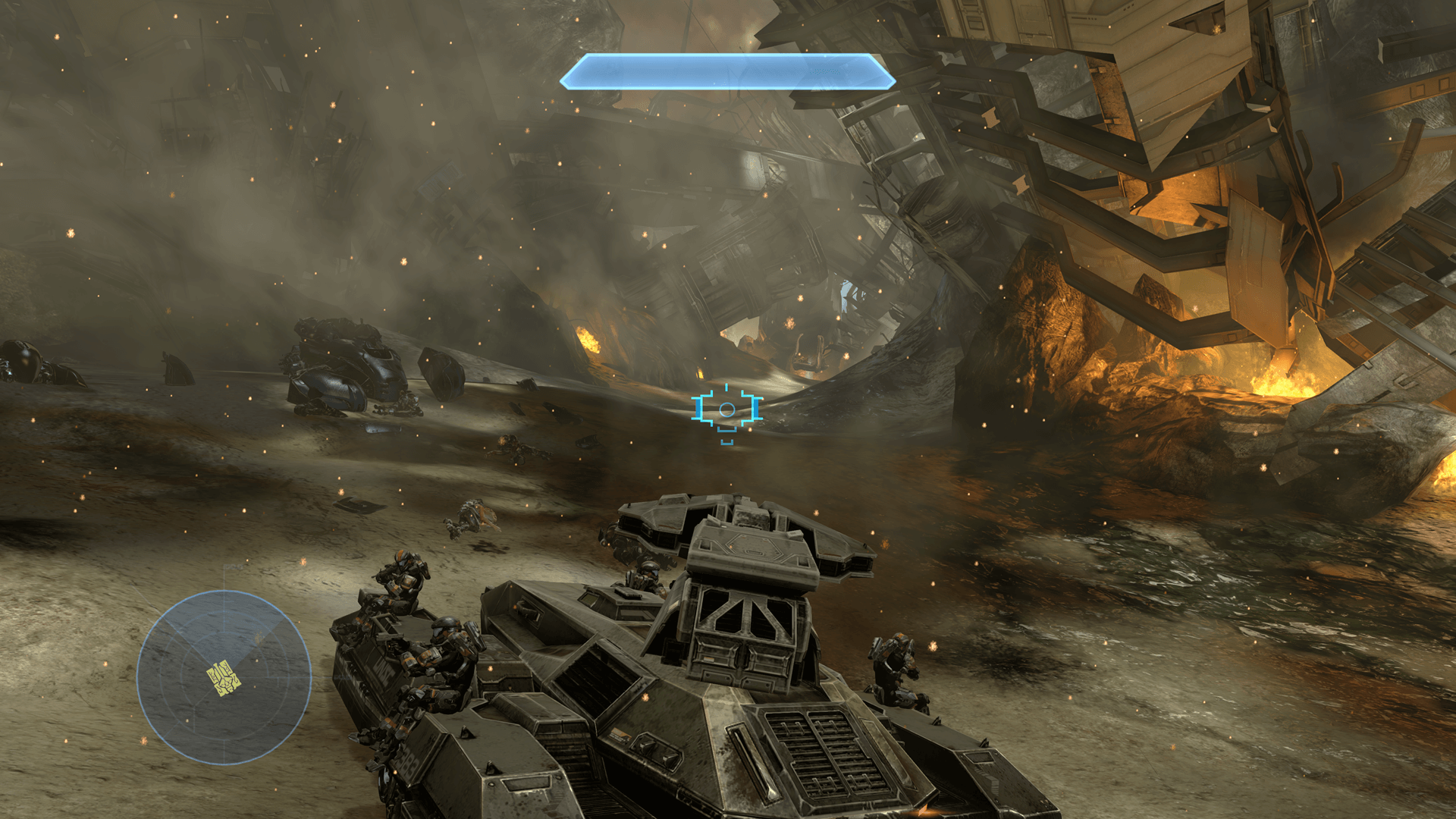
The only thing better than a tank is a tank filled with Spartans.
“The only thing better than a tank is a tank filled with Spartans.”

I already mentioned the Mantis and the Broadsword, so yes, Halo 4 absolutely continues the trend of featuring a variety of new and updated vehicles and weapons. In fact, it goes even further than previous games by making changes to practically every piece of equipment at your disposal. They’ve also been renamed to designate that, canonically, they’re supposed to be different, newer versions of the classics we know and love. There’s also some new additions, like the Covenant Storm Rifle, the UNSC SAW, and the UNSC Railgun. More notably, there’s the huge addition of a whole arsenal of Promethean weapons. For the most part, these feel like counterparts to UNSC and/or Covenant weapons, but given that ammo can be fairly scarce and you’ll be fighting Prometheans most of the time, you’ll likely end up using them whether you want to or not, and you may not, as several of them are fairly lackluster. I’m looking at you, Pulse Grenade!

Halo 4’s equipment system has also seen some changes. While it works more or less the same as Reach’s Armor Abilities, it now includes several totally new abilities like the Autosentry, Hardlight Shield, Thrusters, and Promethean Vision, in addition to some Reach favorites like my beloved jetpack. The ever controversial Armor Lock is gone, while Sprint is now a standard ability anyone can do.

The new Mantis is badass, thouh not badass enough to shoot down the Cryptum, unfortunately.
“The new Mantis is badass, though not badass enough to shoot down the Cryptum, unfortunately.”

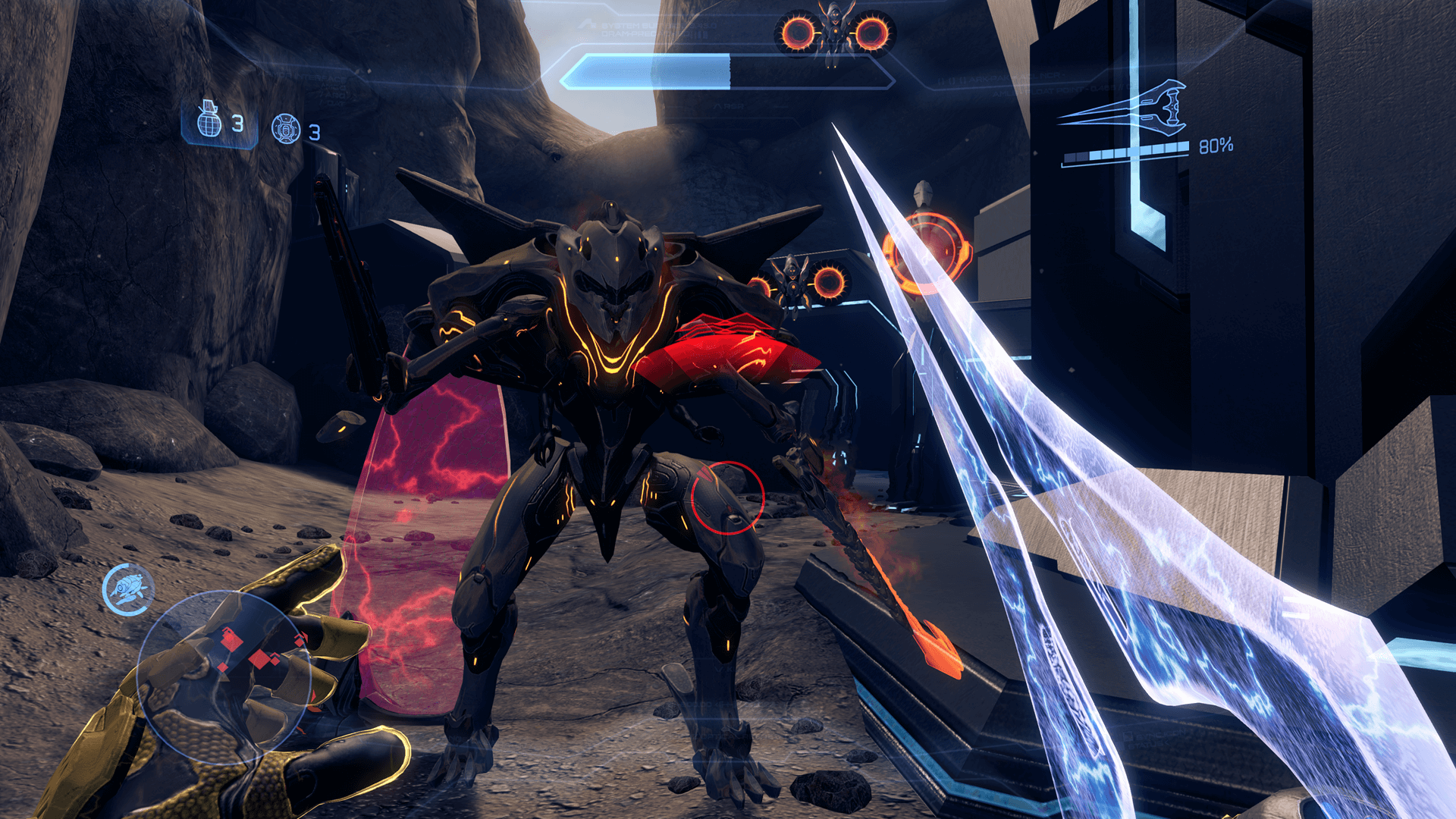
If you’ve not played Halo 4, you’re probably wondering what in the hell a “Promethean” is. In short, they’re a new variety of enemy that you’ll be fighting along with our old Covenant pals. There are three main varieties of Promethean. Crawlers, canine-like cannon fodder enemies that sometimes appear in pretty large groups. Watchers, which are flying Sentinel-like enemies that aren’t a huge source of damage but project shields onto their allies and can even resurrect other dead Prometheans. They also annoyingly love to dodge and dart away before you’ve managed to finish them off. Finally, there’s Promethean Knights. An Elite or Brute-level enemy, these assholes are bullet sponges who can wield a variety of weapons, including some high damage ones. They also love to dodge and even teleport away mid-fight, recharging their shields, which is goddamn annoying when you’re trying to finish one off. More frustratingly, these guys almost always have Watchers around them and can even spawn them themselves, which means extra shields you have to contend with and the possibility of coming back to life after you’ve killed them. Argh!

Prometheans are, in short, not fun. I feel like 343 was trying to capture the more interesting aspects of fighting the Flood, yet missed the mark. Knights might be fine if they only made rare appearances, but in some sections they’re absolutely everywhere. Eventually towards the end of my playthrough I’d developed the reckless but effective tactic of charging them with a high rate of fire weapon and trying to empty a magazine directly into their faces before they could teleport away. Those types of weapons tend to burn through ammo though, and, as mentioned, ammo for UNSC weapons is fairly scarce which makes the best candidate for this the Promethean Suppressor. Much more importantly, the shielding and resurrection abilities of the Watchers means they’re always going to be your priority target, and that leads to favoring mid to long range so you can pick them off from safety, which is, yeah, not the Suppressor’s strength. Beyond these issues, I wouldn’t say Halo 4 isn’t overly difficult, but when you add in the fact that so many areas are, yet again, set up like Firefight style wave defense arenas it can be damn tedious.

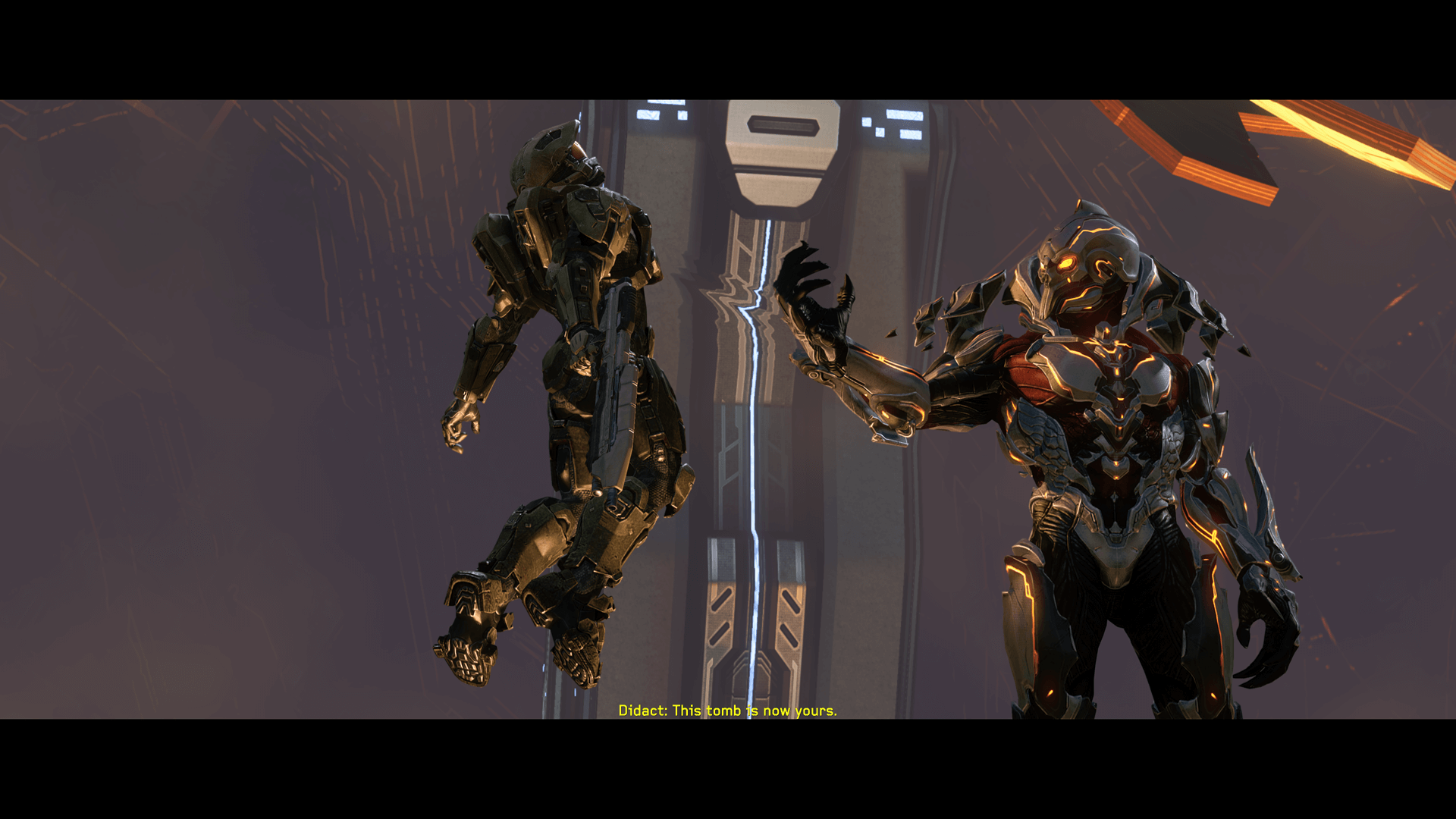
100,000 years of self-reflection and yet, still a dick.
“100,000 years of self-reflection and yet, still a dick.”

While Halo 4’s story is probably better than most Halo fans give it credit for, I personally don’t love the direction they took it in. First we have the new antagonist, the Didact. My problem with this plotline is that it totally kills the enigmatic nature of the Forerunners and their murky relationship with humanity (at least, as presented in-game.) With that, 343 Industries has had to really complicate the story to work this all in. Backstory that lived mostly in other media is now vital to the games and, worse yet, is clumsily presented, with the bulk being explained in a single, absolute lore-dump of a cutscene. Finding the hidden terminals on every level and watching their associated cutscenes is practically required to really understand what in the hell is going on, at least if you haven’t been keeping up with the books and the comics.

Hinted at in Halo 3, the other piece of the story is Cortana’s emerging rampancy. It’s a minor part of Halo 4’s plot overall, but it definitely affects how the Chief and Cortana are characterized. Beyond being more chatty than ever before, their flirty quips take on an almost awkward tone, as if 343 is suddenly trying to present their relationship as somehow… romantic?! Still, despite the risk of Master Chief developing a personality, I don’t feel like anything he says is out of character. He’s still the same stoic man of action. His actions, on the other hand? It didn’t occur to me until I wrote up the plot summary for Halo 4 for my next post, but he and Cortana fail constantly in this game. Practically every major story beat involves them utterly fucking up. Well, I guess that’s one approach to humanizing a character!

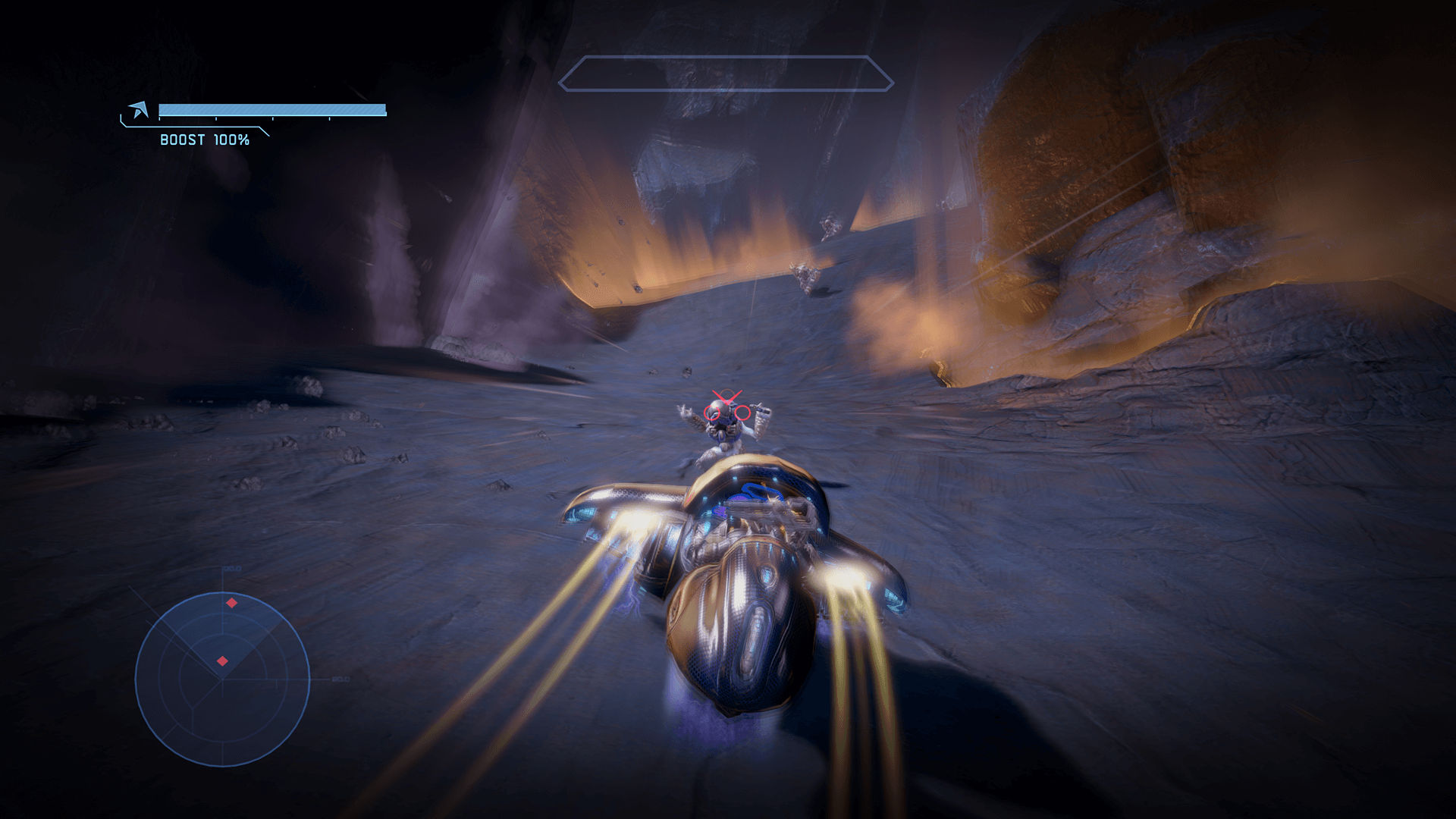
Warthog run? Nah, how about a Ghost run? Bop!
“Warthog run? Nah, how about a Ghost run? Bop!”

If it’s not obvious by this point, Halo 4 is a divisive game. A lot of the Halo fanbase considers it to be utter trash. As with Halo: Reach, some of that comes from the multiplayer community, who felt like things like custom loadouts and ordinance drops were desperate attempts to chase the Call of Duty crowd. While there is no shortage of genuine criticism of the game to be made, there’s also a lot of silly toxicity around the 343 Industries handoff that muddies the water. The ironic part is that much of what fans bash 343 over in Halo 4 is them continuing exactly where Bungie left off with Halo: Reach. Personally, replaying it again, I enjoyed it a lot more than I’d remembered. In fact, I suspect it was Spartan Ops, not the Halo 4 campaign itself, that soured my impressions of the game so much. I’ll be talking about that in my next post.

Bonus live-action media time! “Scanned” is a trailer for Halo 4 released just after Forward Unto Dawn started being released, also on Halo Waypoint. It depicts Master Chief being restrained by some sort of field and being scanned by what we’ll come to find out is the Didact. As the scan probes his mind, it zooms into scenes showing John as a child being abducted by ONI, his later SPARTAN-II augmentation, and being suited with his Mjolnir armor. It then fast forwards to Master Chief engaging a group of Promethean Knights before being subdued. This one is definitely very cool!