Tag Archives: Xbox 360

Halo Fest 2020 – Halo 4

The original Halo trilogy had been wrapped up for over 5 years and Bungie’s last two Halo releases, excellent as they were, were side stories. Now with Halo 4 we were getting an actual sequel, but the first crafted entirely by 343 Industries. Could they execute at anywhere close to Bungie’s level? What new ideas would they have to push the series forward? Most importantly to many fans, what would become of our beloved Master Chief?

As with the last several games, I’d really only played through Halo 4’s campaign once, at launch, though unlike those games I didn’t come away with an extremely positive impression of it. Instead, as I alluded to in my original brief mention of it here, I mostly appreciated it for simply allowing me to revisit a franchise I loved. While I did a fair amount of random matchmaking early on, the days of spending countless hours playing splitscreen and LAN games with family and friends were ancient history. Without those kinds of more enduring memories, Halo 4 is where the series stopped feeling quite so special to me. On top of that, for years now whenever I thought about its campaign I’d often remember it as a bit of a tedious slog. Oof!

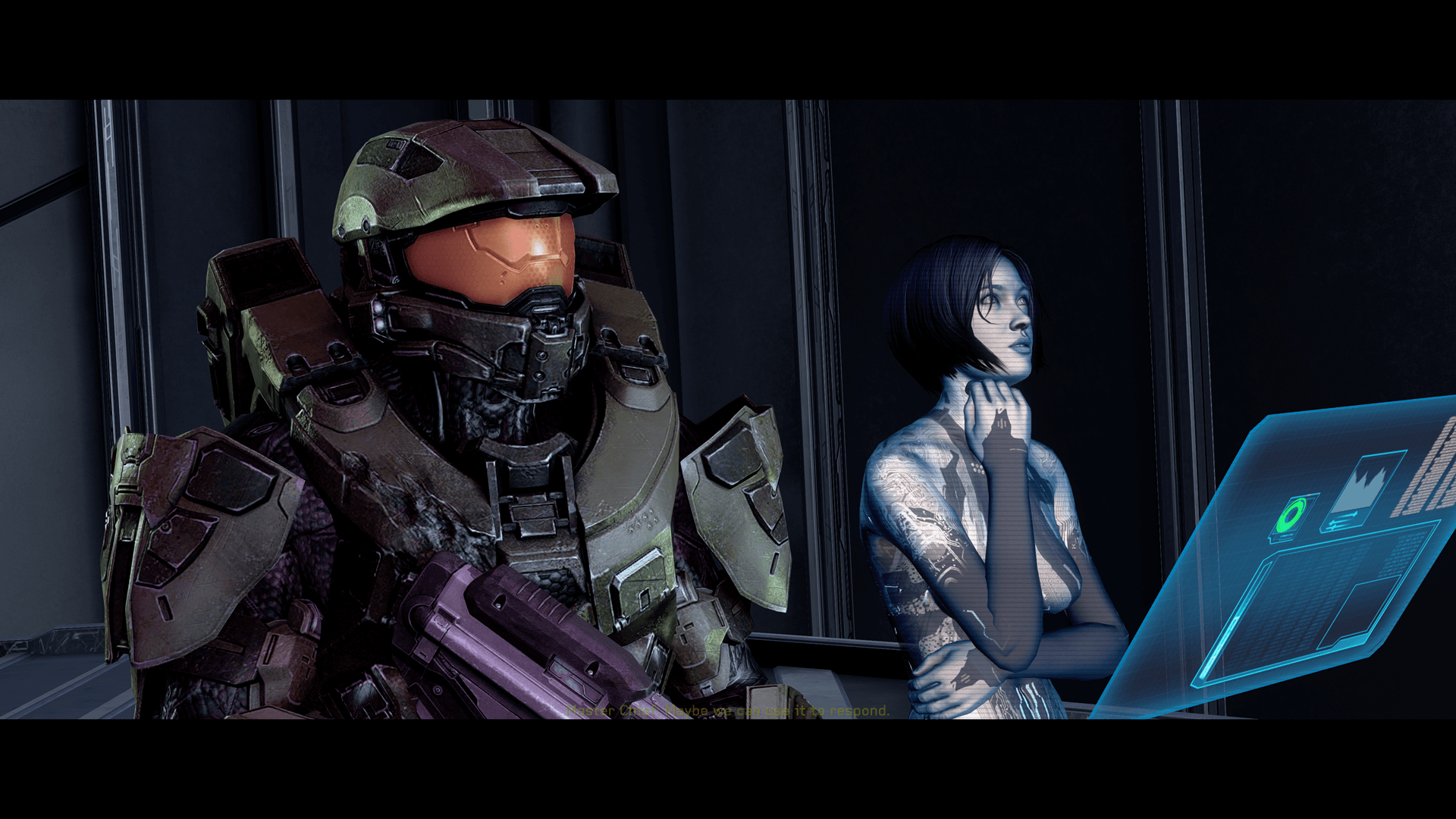
Master Chief and Cortana, 2012 style.
“Master Chief and Cortana, 2012 style.”

As with almost everything else I’ve covered as part of Halo Fest 2020 up to this point, I replayed Halo 4 on “Heroic” difficulty as part of the Xbox One’s Master Chief Collection on my Series X. The MCC version of the game doesn’t receive much of an upgrade but, as with Halo: Reach, Halo 4 was already an incredible looking game in the first place. In fact, I’d commented that Reach might have been one of the Xbox 360’s best looking games, and while I think I still favor it artistically, Halo 4 surpasses it.

While Halo 4’s graphics might have been a technical feat, some major aesthetic shifts were less positively received. Bungie tweaked their designs with almost every iteration of the series but 343 took it a lot further. Front and center, Master Chief’s iconic armor was given a major facelift, with a far more futuristic design yet a more gritty and realistic texture and a darker color scheme. Cortana’s new design was particularly jarring, with her model looking far more voluptuous and, well, straight up nude. While I wouldn’t go as far as to say that I dislike her new look, I can’t help but find the choice just a bit questionable. On the sound design front we no longer have Marty O’Donnell working on the soundtrack for the first time in a mainline Halo game. That’s not to say the new soundtrack, which goes in some very different directions, is anywhere close to being bad, but it feels entirely underutilized and nowhere near as notable a part of the whole experience as it did in, say, Halo 3 for example.

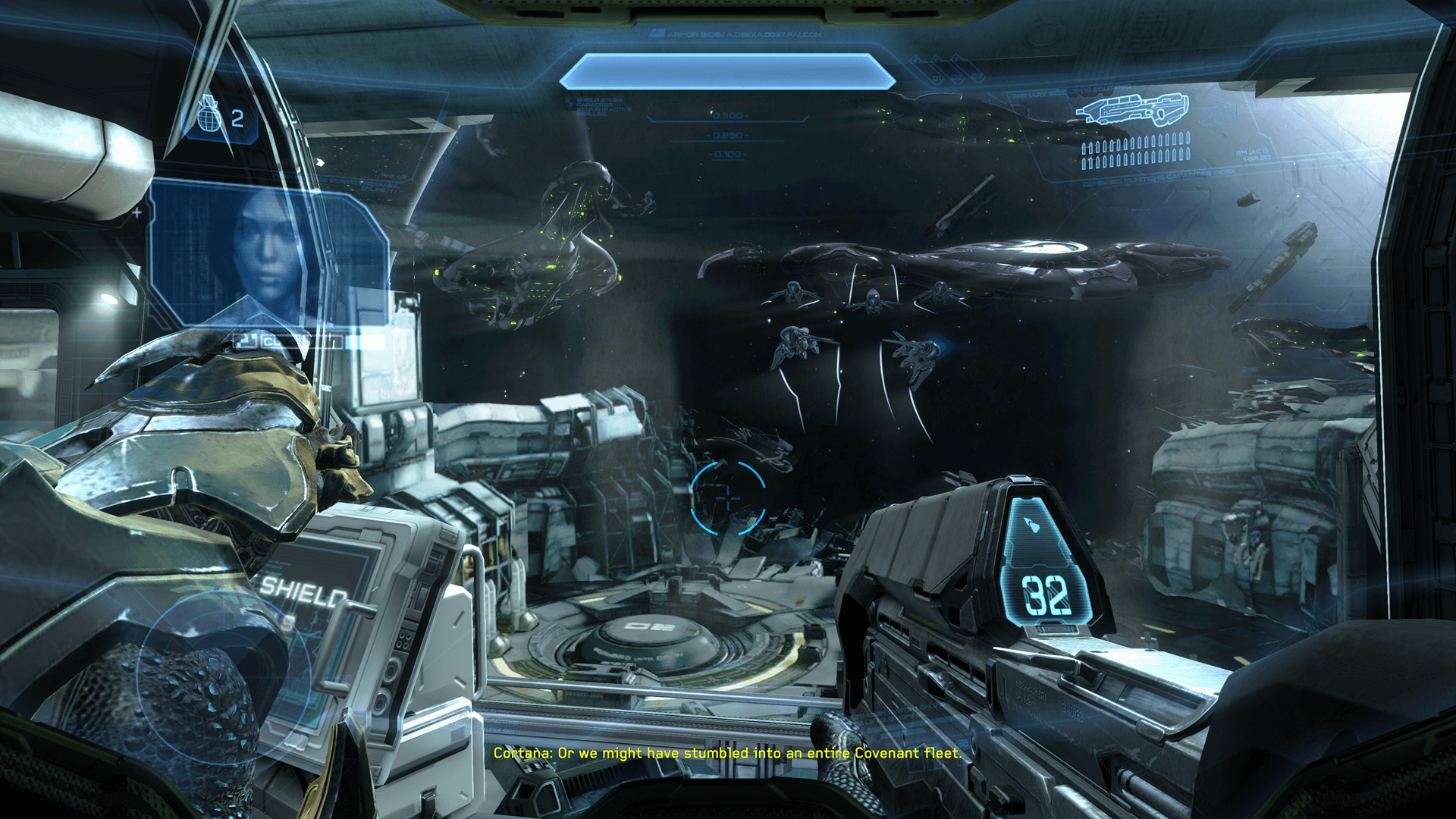
Not really what you want to see first thing after waking up...
“Not really what you want to see first thing after waking up…”

As with Halo: Reach, the campaign features a nice variety of different environments and of course, per Halo tradition, multiple vehicle-centric sections including a couple featuring the new Mantis mech suit. There’s also a level that feels very similar to the Falcon level from Reach where you instead pilot a Pelican gunship, and in a similar throwback to Reach, one that feels like a Star Fox level in which you fly a Broadsword fighter. There’s also a section featuring something of a super-sized Elephant from Halo 3’s Sandtrap multiplayer map called a Mammoth.

One issue with Halo 4’s level design is that there is a major lack of large open areas, especially problematic in those vehicle dominant sections. Really, as a whole the campaign’s levels are rather linear, complete with invisible walls and out-of-bounds kill timers. If you don’t attempt to explore or get too creative you may not even notice, but those hardcore Halo players who like to wring every last drop of gameplay out of each game will definitely be turned off by this. I was also surprised to see some QTE-like interactions very early in the campaign. These don’t make a reappearance until the final boss fight, and while QTEs don’t particularly offend me, having a game that doesn’t really rely on them end with one did feel a little anticlimactic.

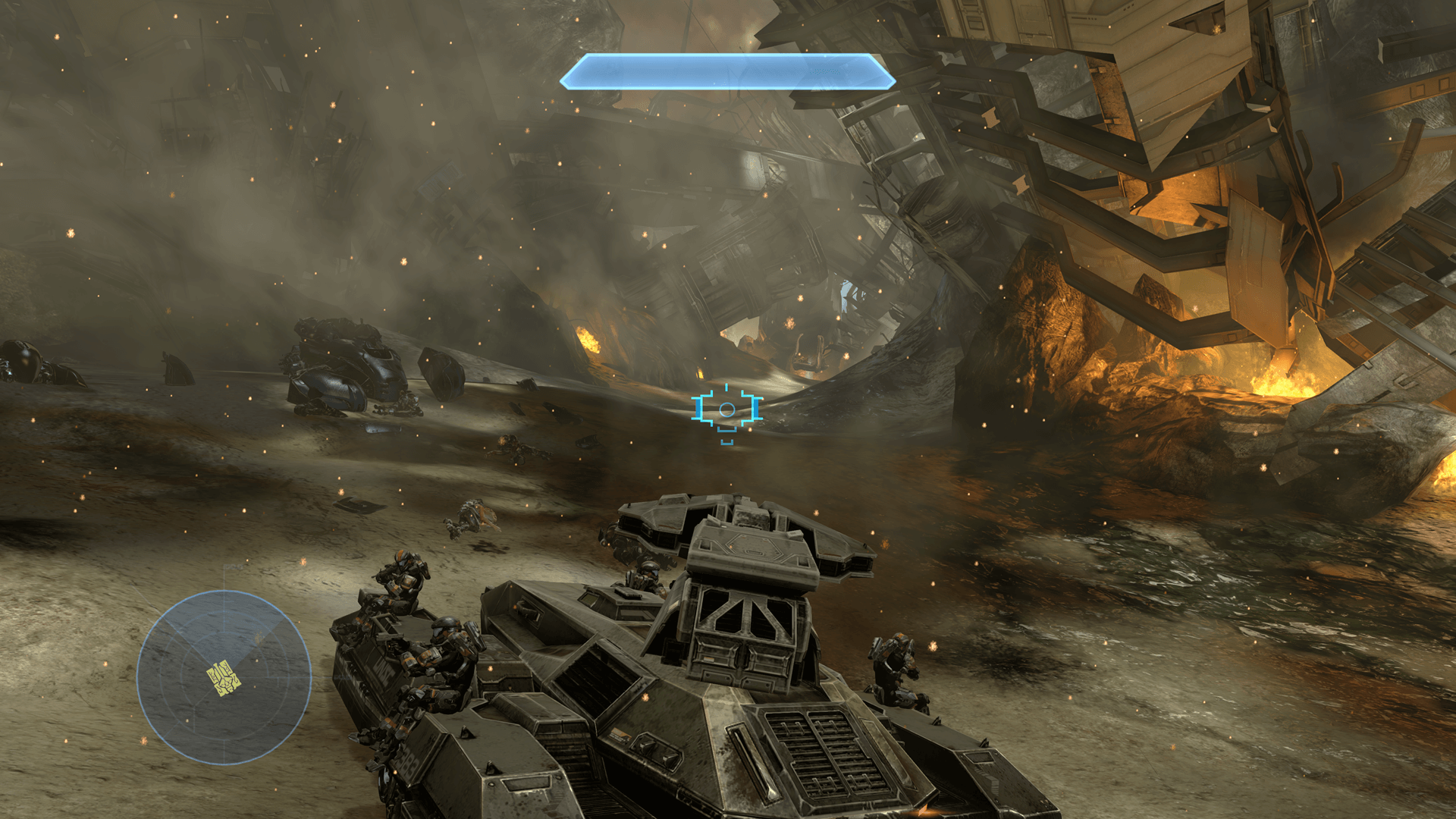
The only thing better than a tank is a tank filled with Spartans.
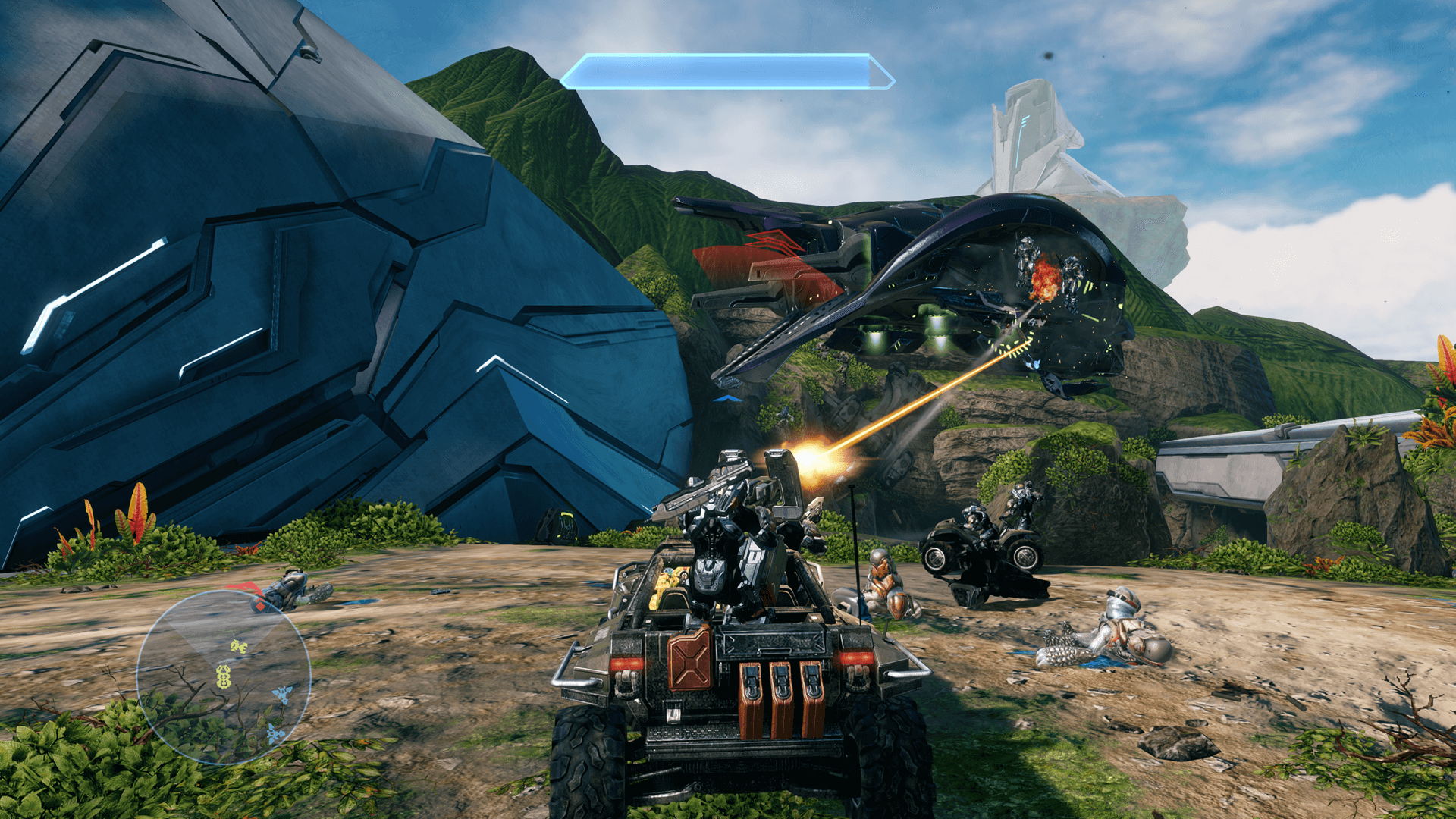
“The only thing better than a tank is a tank filled with Spartans.”

I already mentioned the Mantis and the Broadsword, so yes, Halo 4 absolutely continues the trend of featuring a variety of new and updated vehicles and weapons. In fact, it goes even further than previous games by making changes to practically every piece of equipment at your disposal. They’ve also been renamed to designate that, canonically, they’re supposed to be different, newer versions of the classics we know and love. There’s also some new additions, like the Covenant Storm Rifle, the UNSC SAW, and the UNSC Railgun. More notably, there’s the huge addition of a whole arsenal of Promethean weapons. For the most part, these feel like counterparts to UNSC and/or Covenant weapons, but given that ammo can be fairly scarce and you’ll be fighting Prometheans most of the time, you’ll likely end up using them whether you want to or not, and you may not, as several of them are fairly lackluster. I’m looking at you, Pulse Grenade!

Halo 4’s equipment system has also seen some changes. While it works more or less the same as Reach’s Armor Abilities, it now includes several totally new abilities like the Autosentry, Hardlight Shield, Thrusters, and Promethean Vision, in addition to some Reach favorites like my beloved jetpack. The ever controversial Armor Lock is gone, while Sprint is now a standard ability anyone can do.

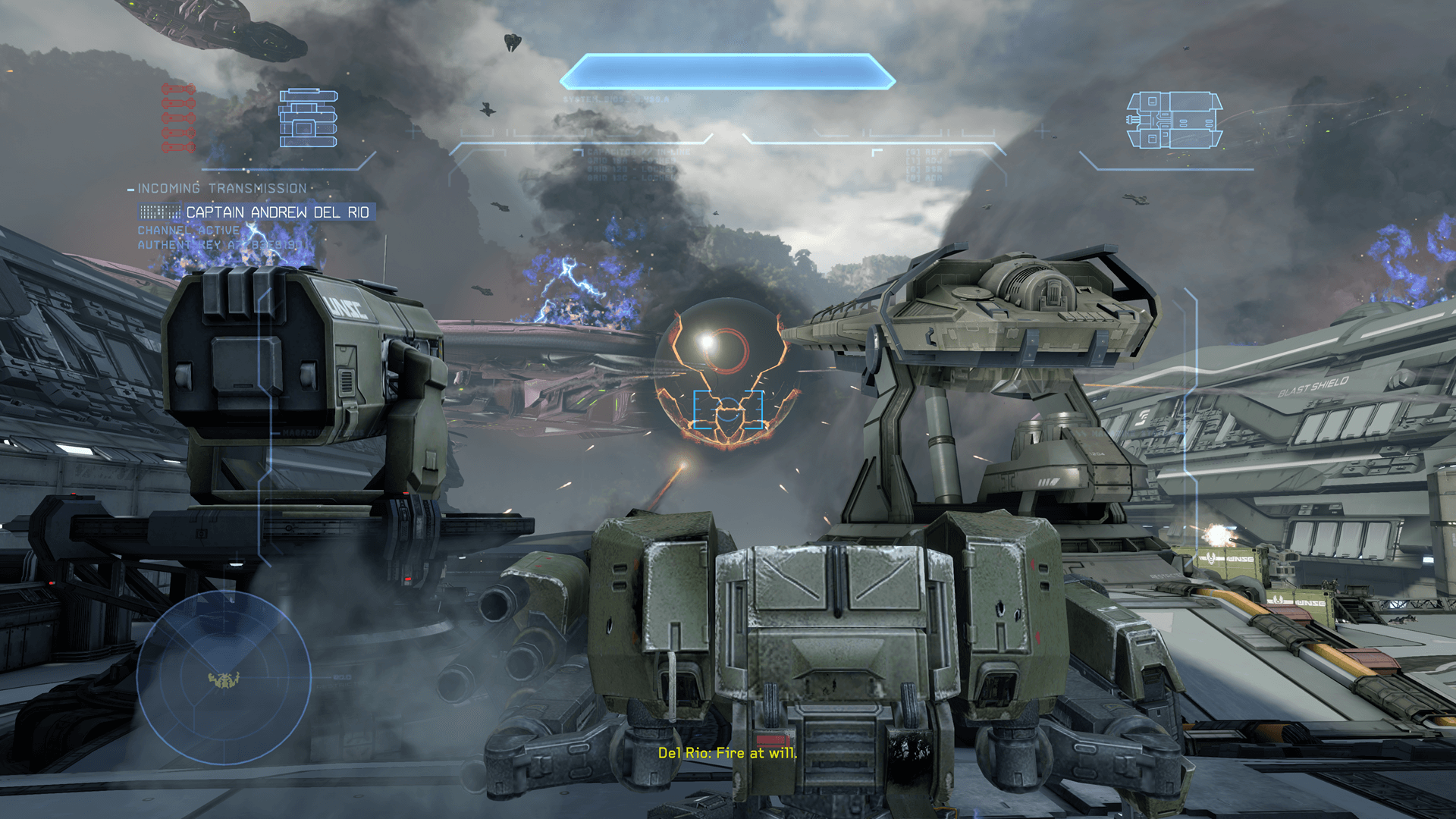
The new Mantis is badass, thouh not badass enough to shoot down the Cryptum, unfortunately.
“The new Mantis is badass, though not badass enough to shoot down the Cryptum, unfortunately.”

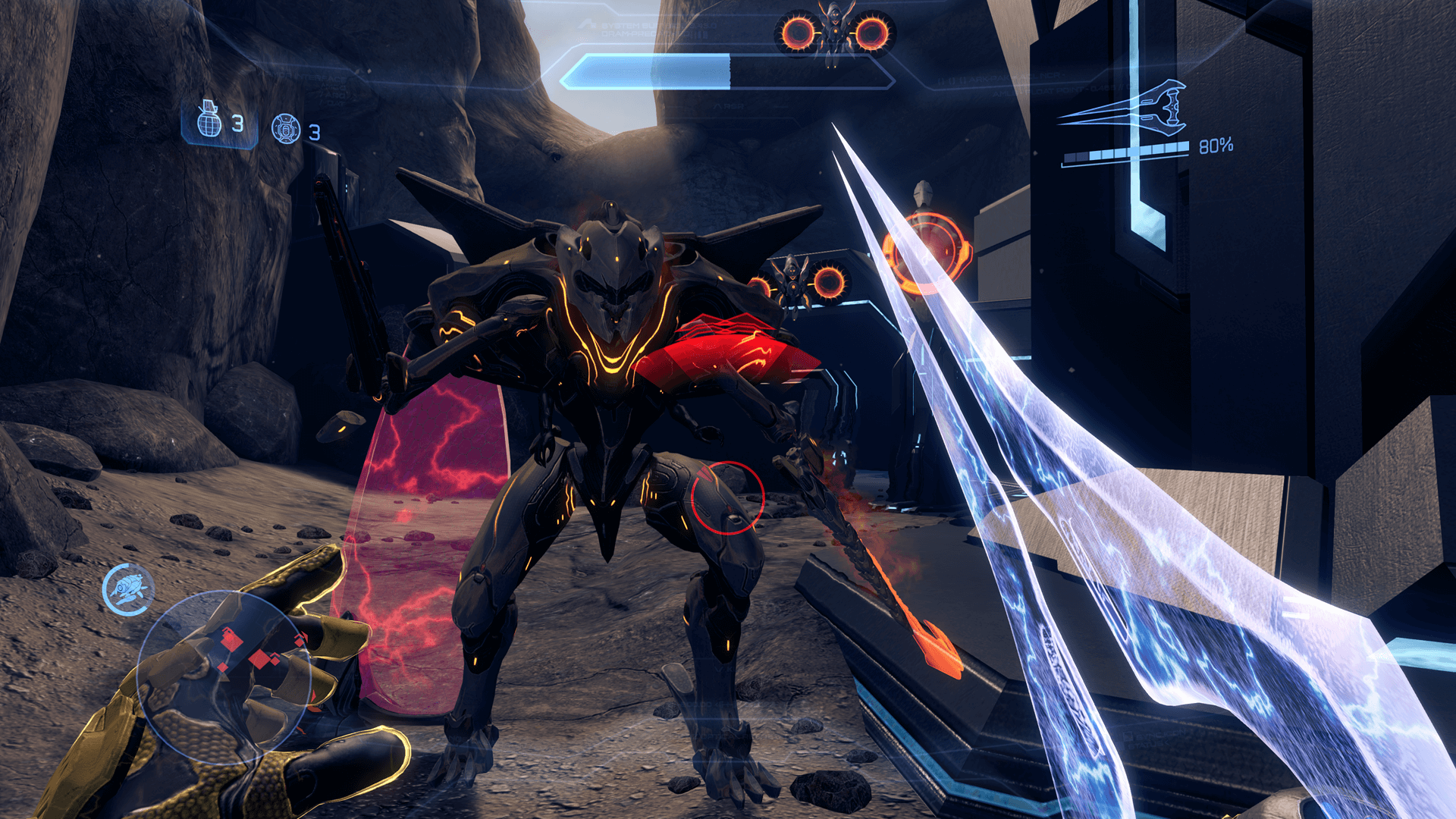
If you’ve not played Halo 4, you’re probably wondering what in the hell a “Promethean” is. In short, they’re a new variety of enemy that you’ll be fighting along with our old Covenant pals. There are three main varieties of Promethean. Crawlers, canine-like cannon fodder enemies that sometimes appear in pretty large groups. Watchers, which are flying Sentinel-like enemies that aren’t a huge source of damage but project shields onto their allies and can even resurrect other dead Prometheans. They also annoyingly love to dodge and dart away before you’ve managed to finish them off. Finally, there’s Promethean Knights. An Elite or Brute-level enemy, these assholes are bullet sponges who can wield a variety of weapons, including some high damage ones. They also love to dodge and even teleport away mid-fight, recharging their shields, which is goddamn annoying when you’re trying to finish one off. More frustratingly, these guys almost always have Watchers around them and can even spawn them themselves, which means extra shields you have to contend with and the possibility of coming back to life after you’ve killed them. Argh!

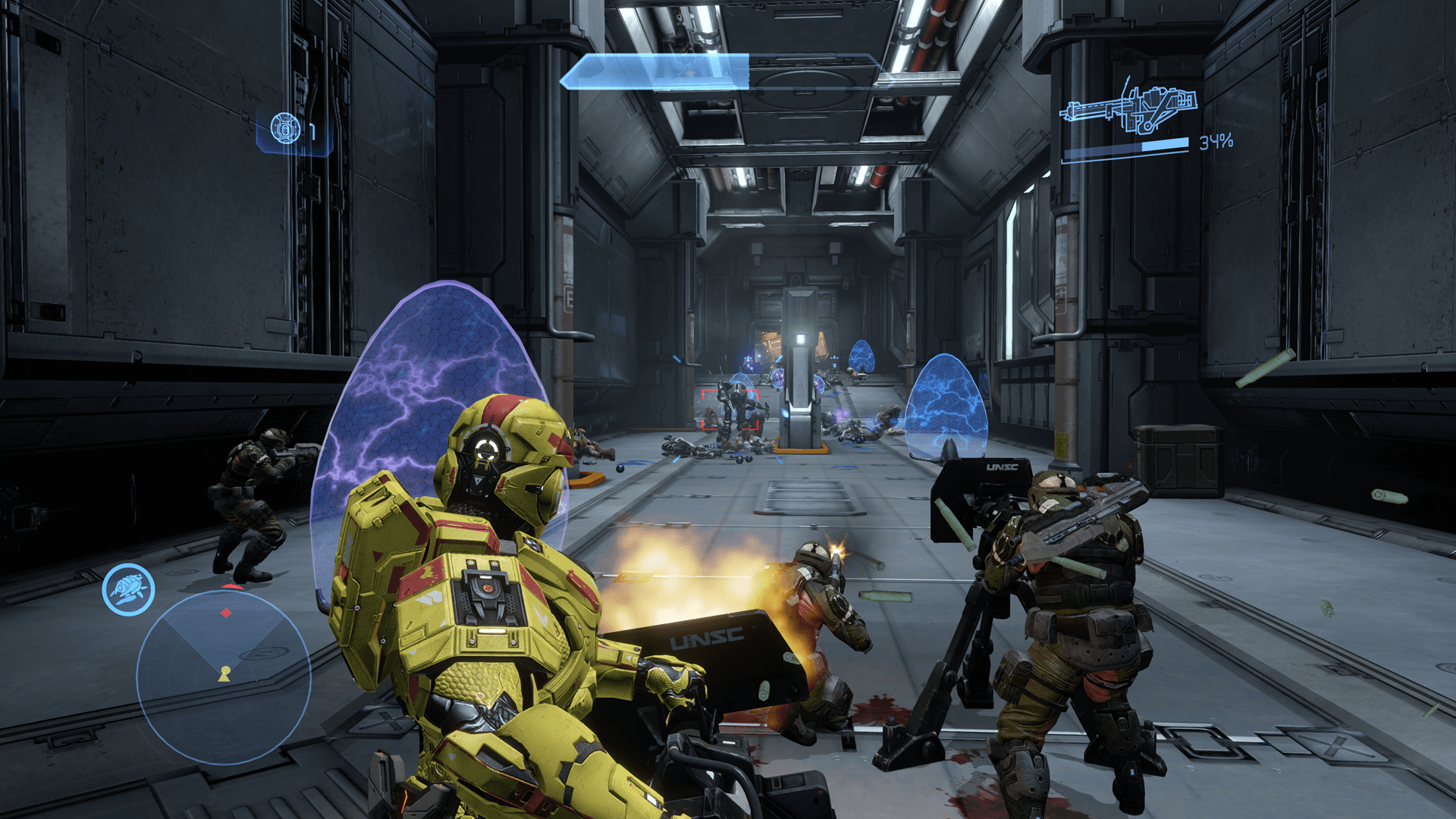
Prometheans are, in short, not fun. I feel like 343 was trying to capture the more interesting aspects of fighting the Flood, yet missed the mark. Knights might be fine if they only made rare appearances, but in some sections they’re absolutely everywhere. Eventually towards the end of my playthrough I’d developed the reckless but effective tactic of charging them with a high rate of fire weapon and trying to empty a magazine directly into their faces before they could teleport away. Those types of weapons tend to burn through ammo though, and, as mentioned, ammo for UNSC weapons is fairly scarce which makes the best candidate for this the Promethean Suppressor. Much more importantly, the shielding and resurrection abilities of the Watchers means they’re always going to be your priority target, and that leads to favoring mid to long range so you can pick them off from safety, which is, yeah, not the Suppressor’s strength. Beyond these issues, I wouldn’t say Halo 4 isn’t overly difficult, but when you add in the fact that so many areas are, yet again, set up like Firefight style wave defense arenas it can be damn tedious.

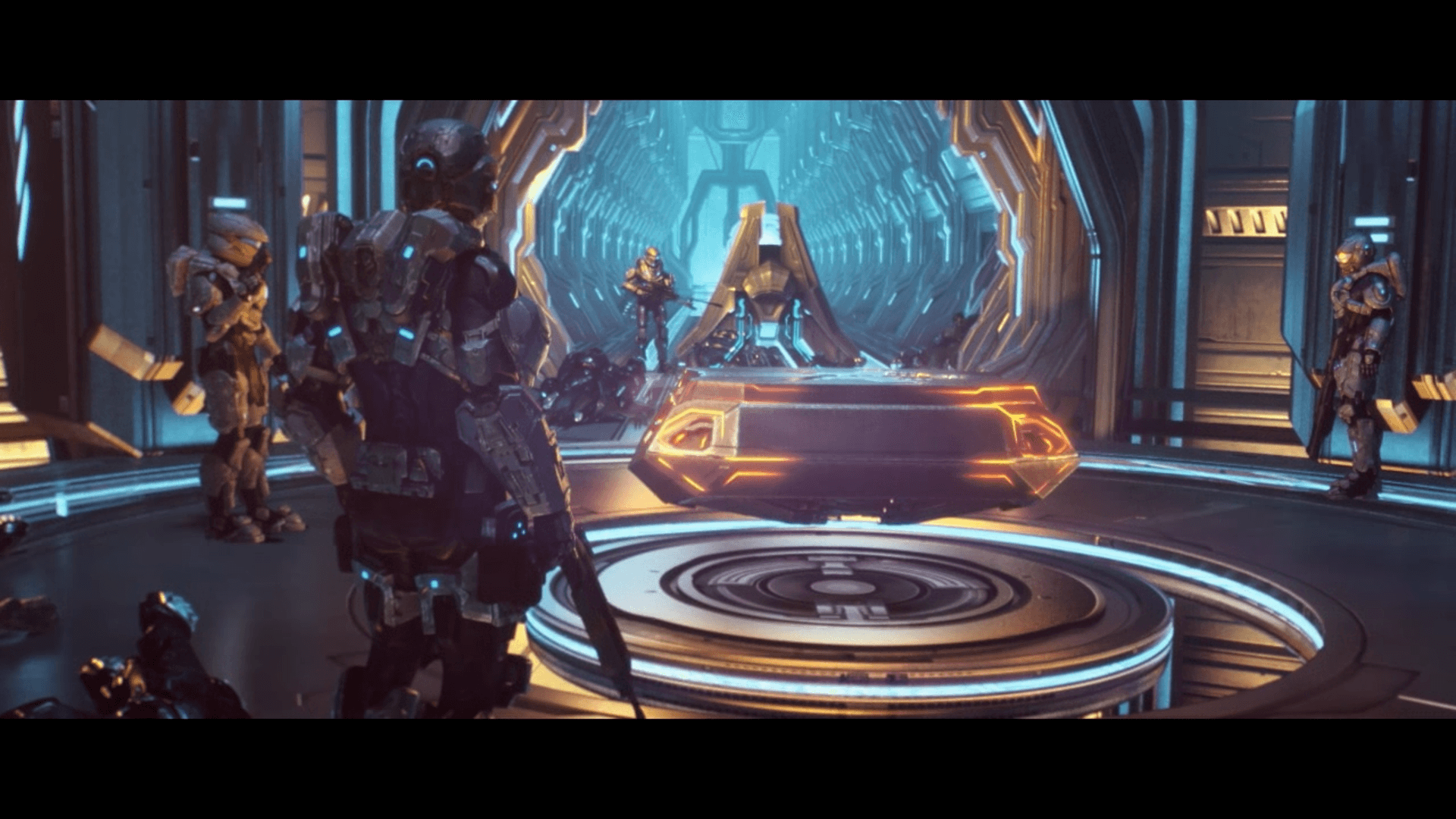
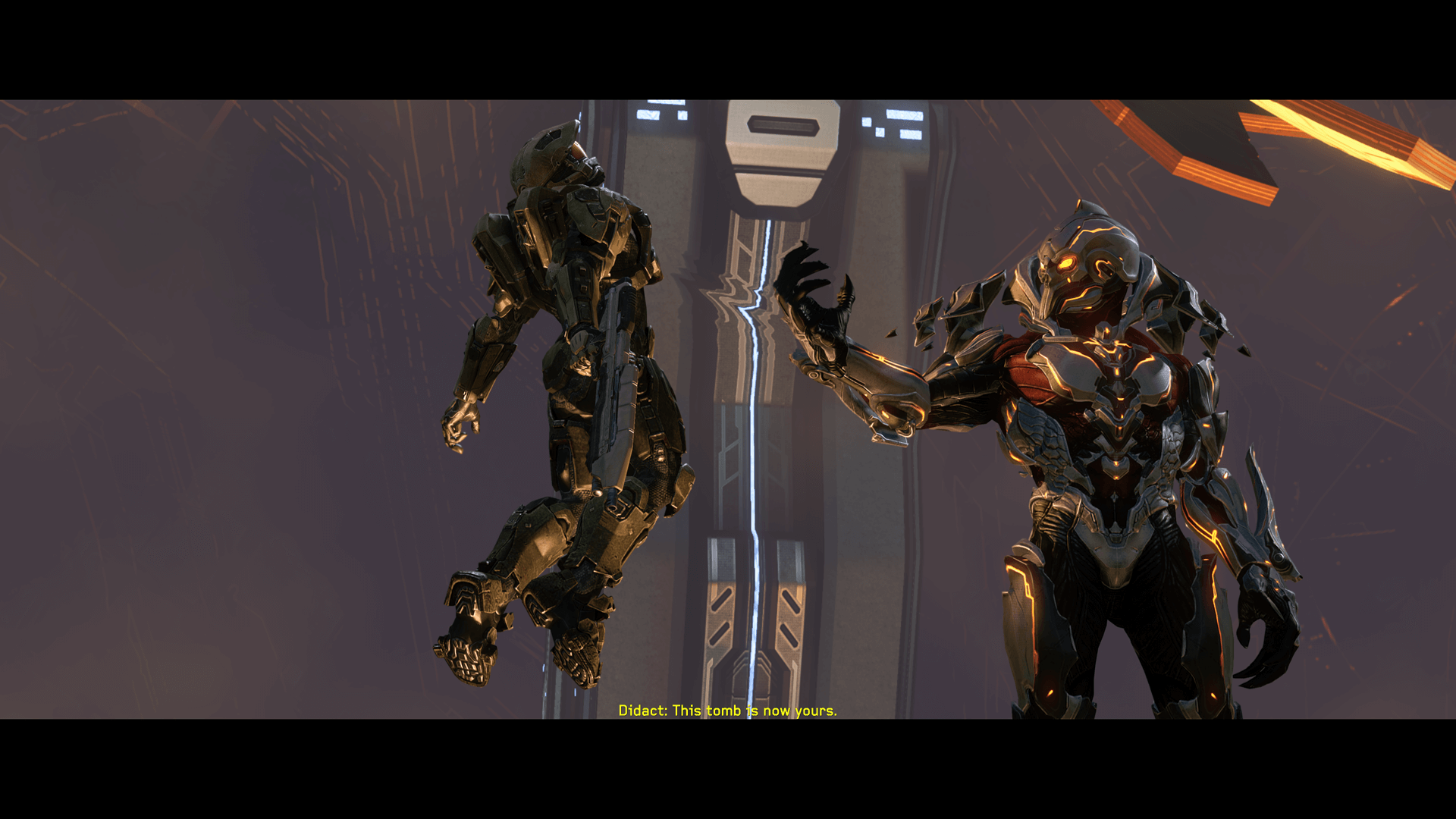
100,000 years of self-reflection and yet, still a dick.
“100,000 years of self-reflection and yet, still a dick.”

While Halo 4’s story is probably better than most Halo fans give it credit for, I personally don’t love the direction they took it in. First we have the new antagonist, the Didact. My problem with this plotline is that it totally kills the enigmatic nature of the Forerunners and their murky relationship with humanity (at least, as presented in-game.) With that, 343 Industries has had to really complicate the story to work this all in. Backstory that lived mostly in other media is now vital to the games and, worse yet, is clumsily presented, with the bulk being explained in a single, absolute lore-dump of a cutscene. Finding the hidden terminals on every level and watching their associated cutscenes is practically required to really understand what in the hell is going on, at least if you haven’t been keeping up with the books and the comics.

Hinted at in Halo 3, the other piece of the story is Cortana’s emerging rampancy. It’s a minor part of Halo 4’s plot overall, but it definitely affects how the Chief and Cortana are characterized. Beyond being more chatty than ever before, their flirty quips take on an almost awkward tone, as if 343 is suddenly trying to present their relationship as somehow… romantic?! Still, despite the risk of Master Chief developing a personality, I don’t feel like anything he says is out of character. He’s still the same stoic man of action. His actions, on the other hand? It didn’t occur to me until I wrote up the plot summary for Halo 4 for my next post, but he and Cortana fail constantly in this game. Practically every major story beat involves them utterly fucking up. Well, I guess that’s one approach to humanizing a character!

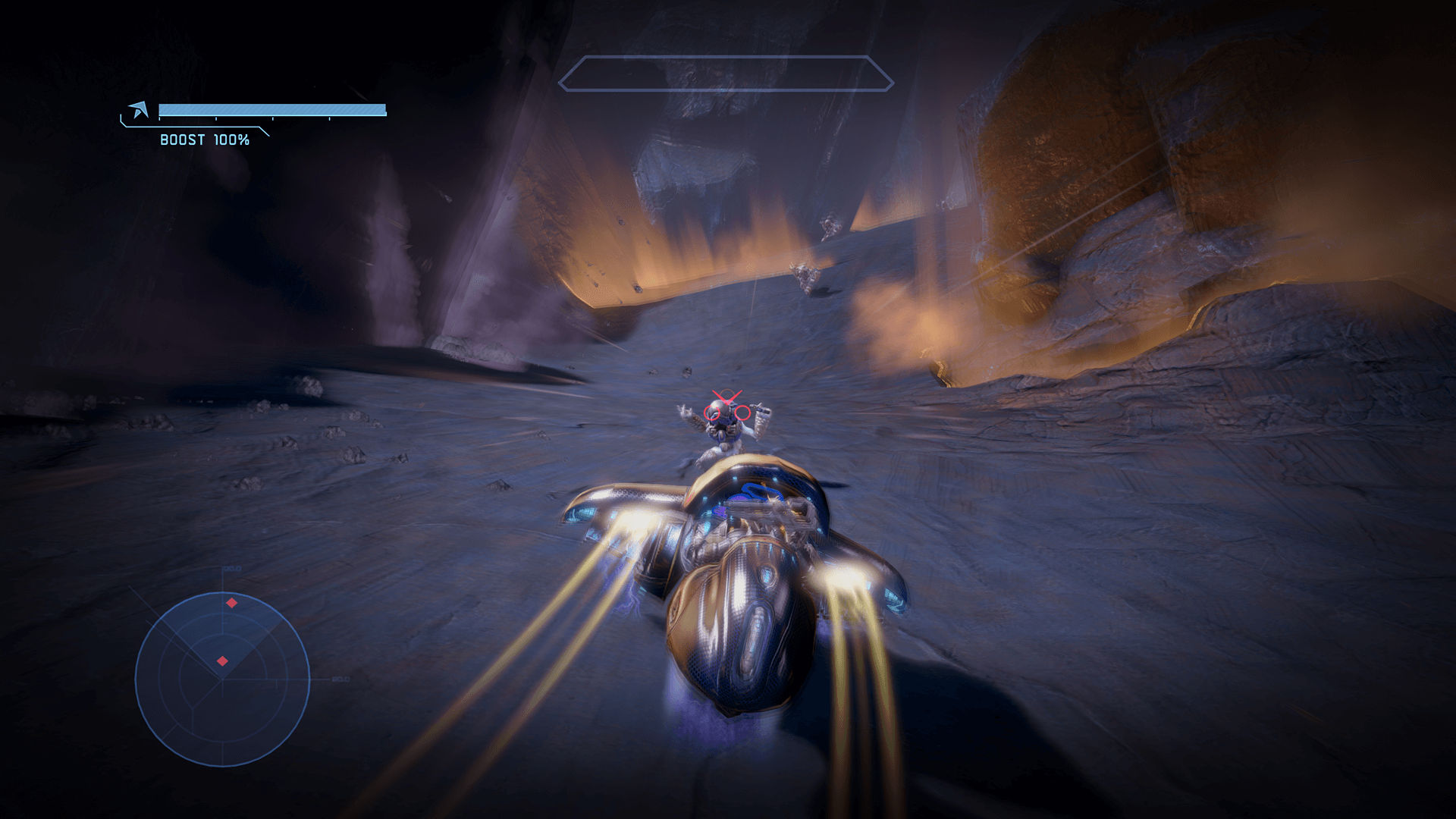
Warthog run? Nah, how about a Ghost run? Bop!
“Warthog run? Nah, how about a Ghost run? Bop!”

If it’s not obvious by this point, Halo 4 is a divisive game. A lot of the Halo fanbase considers it to be utter trash. As with Halo: Reach, some of that comes from the multiplayer community, who felt like things like custom loadouts and ordinance drops were desperate attempts to chase the Call of Duty crowd. While there is no shortage of genuine criticism of the game to be made, there’s also a lot of silly toxicity around the 343 Industries handoff that muddies the water. The ironic part is that much of what fans bash 343 over in Halo 4 is them continuing exactly where Bungie left off with Halo: Reach. Personally, replaying it again, I enjoyed it a lot more than I’d remembered. In fact, I suspect it was Spartan Ops, not the Halo 4 campaign itself, that soured my impressions of the game so much. I’ll be talking about that in my next post.

Bonus live-action media time! “Scanned” is a trailer for Halo 4 released just after Forward Unto Dawn started being released, also on Halo Waypoint. It depicts Master Chief being restrained by some sort of field and being scanned by what we’ll come to find out is the Didact. As the scan probes his mind, it zooms into scenes showing John as a child being abducted by ONI, his later SPARTAN-II augmentation, and being suited with his Mjolnir armor. It then fast forwards to Master Chief engaging a group of Promethean Knights before being subdued. This one is definitely very cool!

Halo Fest 2020 – Halo Wars

Now for a complete change of pace from the original Halo trilogy, we have Halo Wars. Despite the fact that Halo actually started life as an real time strategy game, it still strikes me as incredibly unlikely that Microsoft would have ever greenlit this. I guess they figured a console RTS had more of a chance of success with the Halo brand behind it than without, and they were probably right. Still, I didn’t know many Halo fans who were all that excited about the prospect at the time, and console FPS fans and RTS fans were mostly two different breeds. Regardless, this badass trailer produced by Blur did a lot to get the Halo fans pumped up and RTS fans (well, the ones who would condescend to play an RTS on a console) would be placated by knowing that Ensemble Studios, responsible for the Age of Empires and Age of Mythology series, utter classics of the genre, would be at the helm.

The badass cutscenes were also produced by Blur.
“The badass cutscenes were also produced by Blur.”

Me? Well, as both a Halo fan and an RTS fan (and admittedly, not a hardcore one) and having played my fair share of Age of Empires II, I was probably about as close to their target demographic as you could get. Despite this, I wasn’t all that hyped up for it, and while I did play through the demo (which I briefly talk about here, though I somehow have no recollection of) I never got around to playing the full game. While it was pretty well received by fans and critics alike, it’s reasonable to assume that a similar level of disinterest (along with numerous internal factors) would lead to Ensemble closing its doors, sadly making Halo Wars their very last game.

For this playthrough I played the Xbox One Halo Wars: Definitive Edition on my Series X. The “Definitive Edition” is a remaster of the original game released alongside Halo Wars 2. With higher resolution textures and improvements to lighting and particle effects but not a lot else, it’s essentially just a re-release. While this means it’s not going to blow you away with contrast between the versions like the first two Halo games I covered, it is, at least, very faithful to the original. The game has aged pretty well, so that’s not a problem.

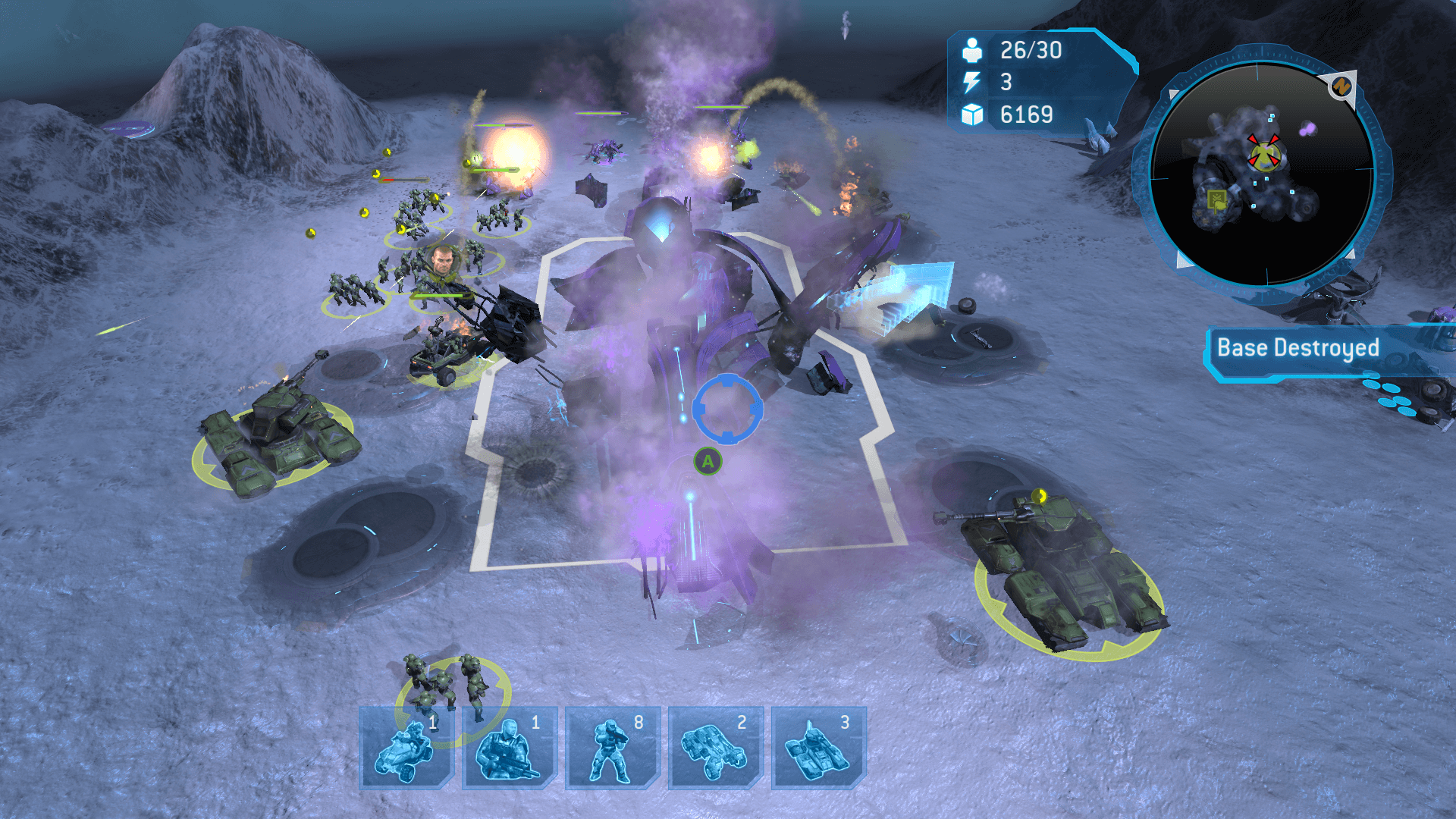
Well, it certainly LOOKS like an RTS...
“Well, it certainly LOOKS like an RTS…”

I’d actually started my playthrough on “Heroic” just as I did with the first three Halo games, but I found that the effort to beat some of these missions on Heroic simply wasn’t worth it – I could beat them, sure, but it took longer due to losing units more easily, and that sapped a lot of the fun out of the experience. Lowering the difficulty one notch to “Normal” was a big improvement for me. I suppose I enjoy overcoming bumps in difficulty in FPSes a lot more than I do in RTSes, where my builds and priorities are the biggest differences in how I play from session to session rather than toying too much with tactics. That, and the kinds of scenarios you encounter in a single player campaign like this so often constrain your options for the sake of variety, not doing a great job of reflecting the full array of options present in a pure skirmish match as a result.

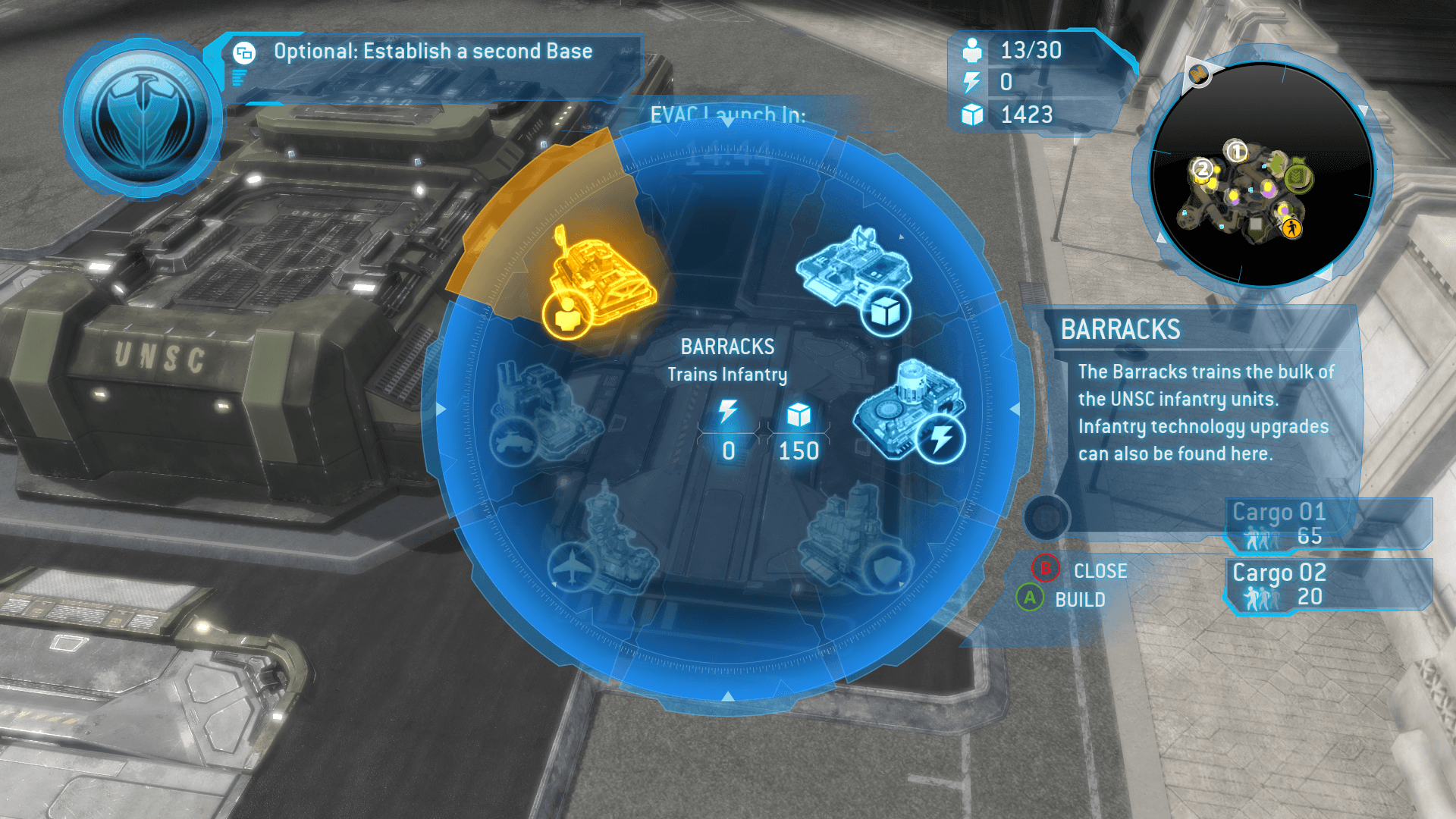
The console control scheme makes excellent use of radial menus.
“The console control scheme makes excellent use of radial menus.”

I think another issue was the controls. Don’t get me wrong, I think Ensemble did a fine job with translating the RTS to the console, and from other console strategy game experiences I’ve had, I think the idea that strategy games don’t quite work on consoles is total bunk – there are plenty of examples of at least passable RTSes on console. Still, I have a lot of hours playing of RTSes on PC under my belt and playing them with a mouse and keyboard is in-grained at this point. For one, I found my ability to appropriately micromanage my units lacking. Halo Wars lets you select all of your units, all of your units on the screen, and all of the units of only a particular type in either case, which is just enough to allow you to do most anything you’d want to do with a little creativity. Still, that pales in comparison to being able to quickly make groupings of specific units of mixed unit types and assign them to hot keys for later use. Interestingly, I made the same complaint over 10 years ago when I played the demo. I definitely did feel slightly hobbled by this in some of my busier missions though, and this led me to coming up with numerous cheesy strategies of deploying tons of the same unit – masses of fully upgraded Warthogs being a particular favorite of mine, being both cheap to replace when they inevitably get blown away, and hilarious to watch bound haphazardly across the map.

Continuing the trend I started with my re-play of Halo: CE, I unlocked every skull and black box collectible on each map, though chasing them down really wasn’t all that enjoyable as it was in the previous games. Some don’t appear on the map until certain challenge conditions are met, making finding them more naturally impossible, and resulting in them being a bit of a distraction from the actual goals of the mission. More importantly, the reward for unlocking them is a let down. Skulls function similarly to previous Halo games, but in the case of the black boxes, each one unlocks a single entry on a giant timeline of the events around the game. This glorious lore dump is no doubt cool for fans of the franchise, but they’re just short text blurbs – no cutscenes, not even voiceovers. A little on the weak side.

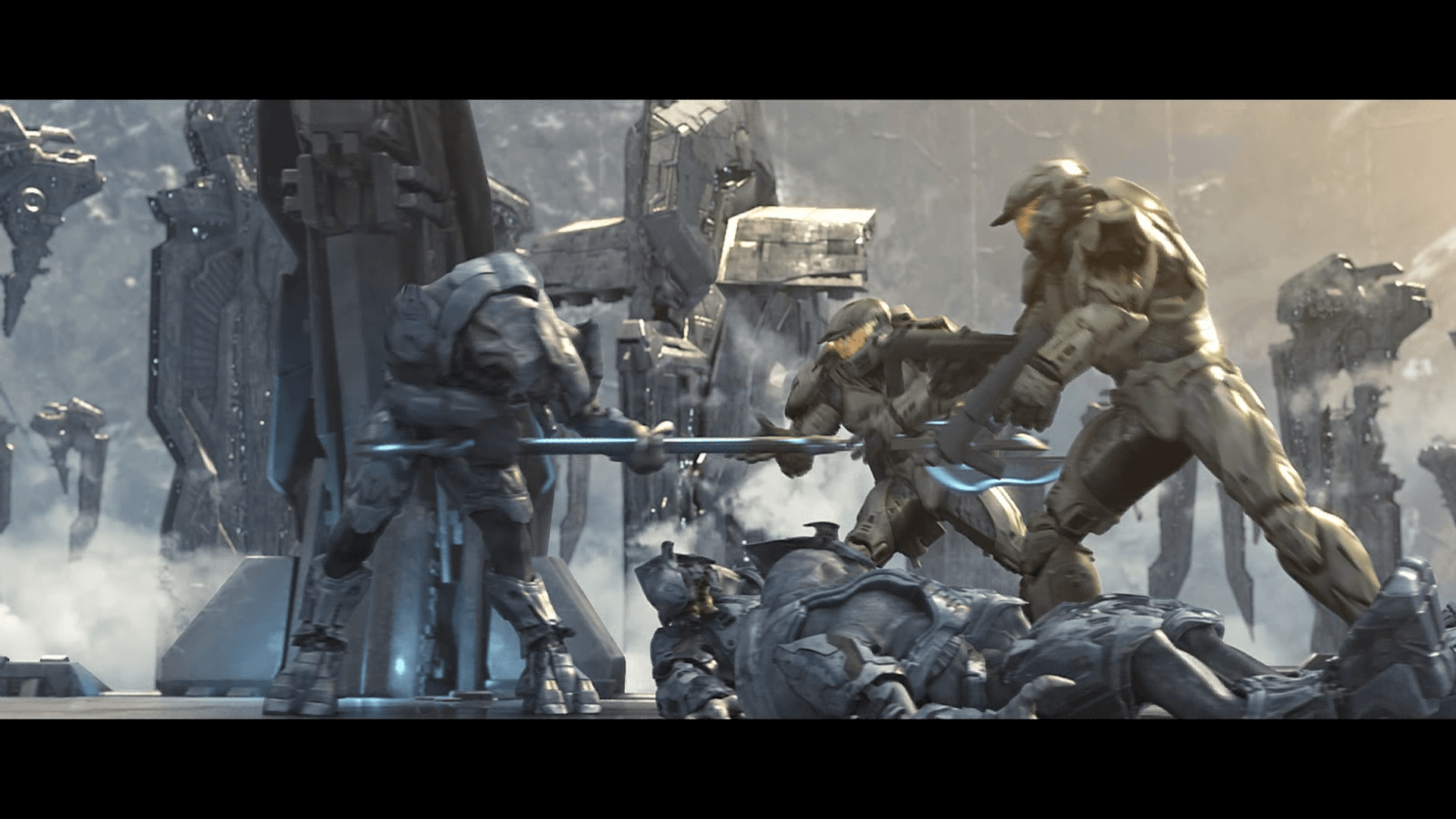
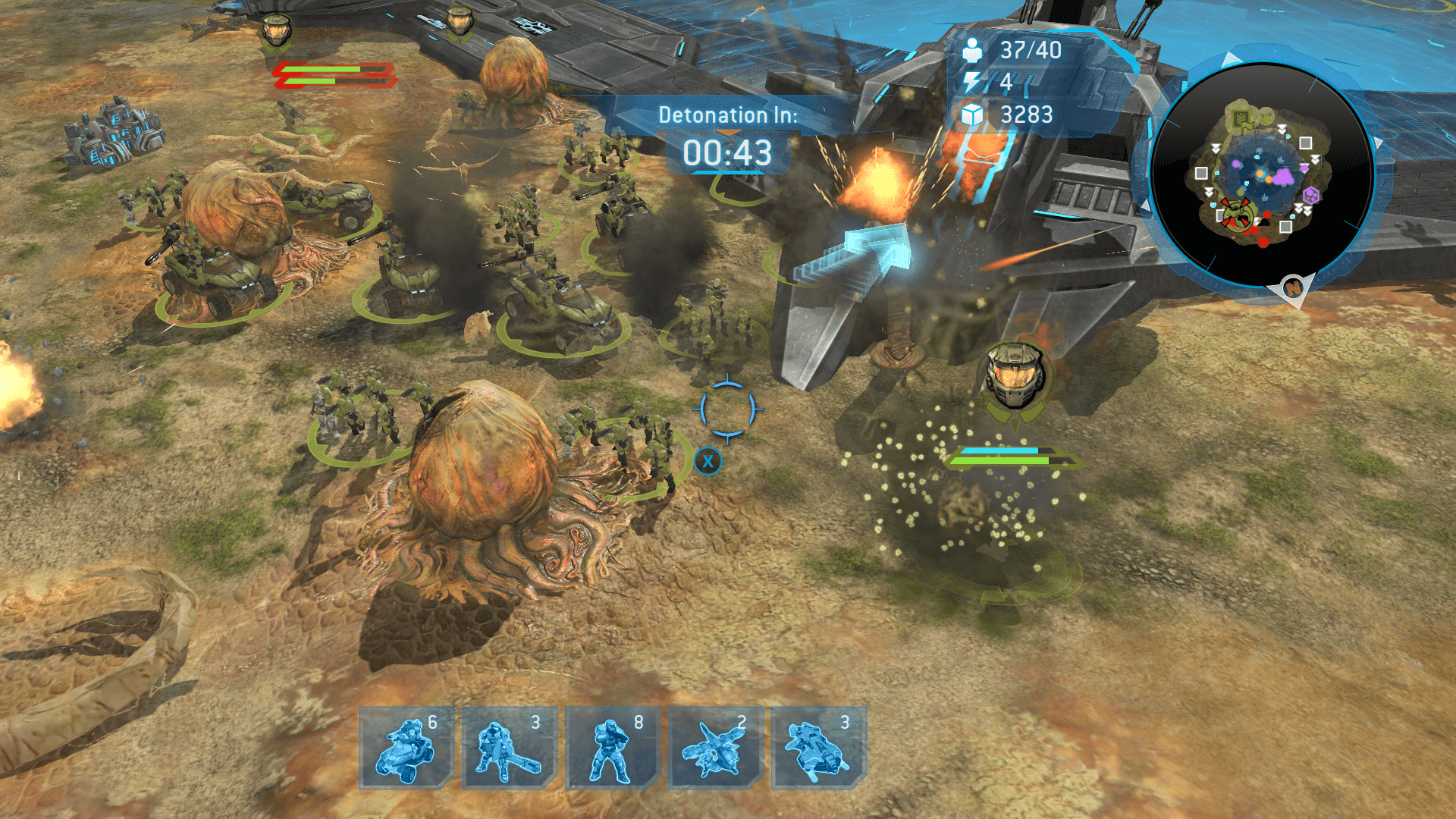
Marines clearing out a nasty Flood infestation.
“Marines clearing out a nasty Flood infestation.”

While I’m being negative, I also encountered a few bugs and other oddities during my playthrough. Probably an artifact leftover from the remaster, but in-engine cutscenes seem to run at a reduced, stuttery looking framerate, I had at least one total system crash during a mission, and on another occasion (on the same mission!) I lost the ability to control a special vehicle which made winning the scenario impossible and caused me to have to reload and lose a bunch of progress. I wouldn’t say these issues were numerous enough to ruin my experience, however, but there were enough of them to take note. That said, I didn’t have any real issue with unit pathing, which is a common complaint I’ve seen online.

There’s also the story. As this is a side story taking place out of chronological order and well before the main series, I’ll go ahead and recap its plot right here. While I’m fairly vague in these plot summaries they absolutely do still contain spoilers, so skip the next paragraph if you don’t want the plot to be spoiled!

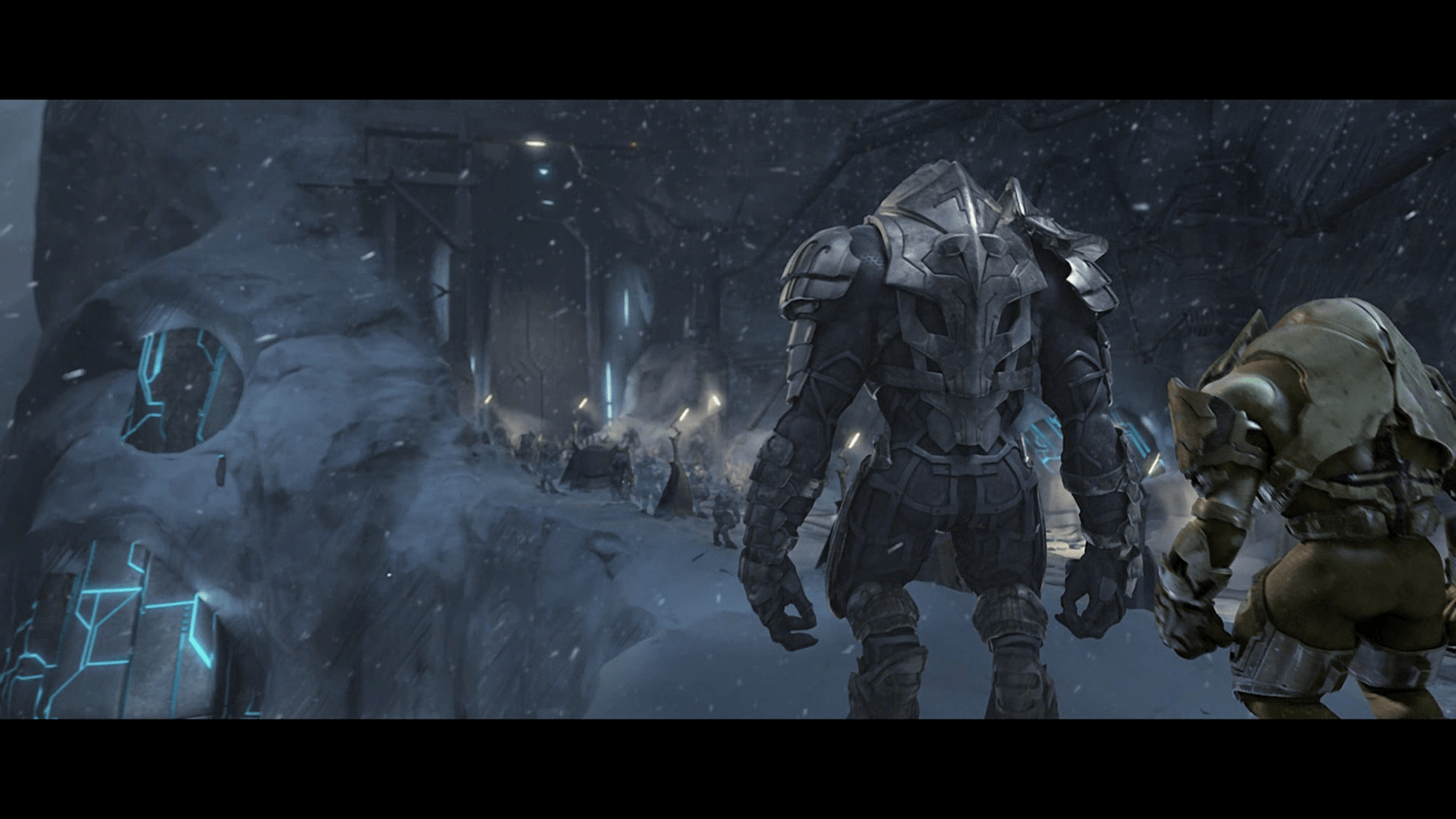
The Arbiter is back! Only this is a different one, and he has zero personality.
“The Arbiter is back! Only this is a different one, and he has zero personality.”

The Story: As part of the Harvest Campaign, an effort to retake the planet of Harvest, having the unfortunate distinction of being the first human colonized world decimated by the Covenant, marines of the UNSC colony ship “Spirit of Fire” discover a newly excavated Forerunner facility containing an interstellar map. Using the map, Professor Anders, a researcher aboard the Spirit of Fire, identifies another human colony world, Arcadia, as being a point of interest for the Covenant. Arriving too late, the Spirit of Fire finds Harvest’s defenses breached and the colony already under siege by Covenant forces. Linking up with local defenses, including Spartan Red Team, Arcadia City is evacuated. Efforts to further repel the Covenant eventually lead the UNSC to locate concentrated Covenant activity around yet more Forerunner ruins. The UNSC push the Covenant out, though the victory is short-lived as the Arbiter abducts Professor Anders and flees Arcadia. In pursuit, the Spirit of Fire arrives at an uncharted planet being overrun by Flood, which they quickly learn is actually a Forerunner Shield World. Professor Anders manages to escape, revealing that the Arbiter planned to use her to activate a fleet of powerful Forerunner warships to help the Covenant decisively win the war. Captain Cutter approves a risky plan to use the Spirit of Fire’s faster-than-light drives to destroy the entire Shield World, keeping the Forerunner fleet out of the hands of the Covenant. Successful but now without faster-than-light capability, the Spirit of Fire’s crew goes into cryogenic storage while the ship begins the long journey home.

It all feels, eh, a little generic. I say this having already played almost all of the other games in the series, so perhaps I wouldn’t have felt that way at all if I played it at the time. It might have been utterly groundbreaking for all I know. Either way, this isn’t helped by the fact that the characters were all just a little flat. I really couldn’t convince myself to care all that about Sgt. Forge, Captain Cutter, or Professor Anders. Hell, I probably liked the Spirit of Fire’s AI, Serina, more than the lot of them. Everyone just came across as low effort archetypes to me, and I think I would have felt the same back in 2009.

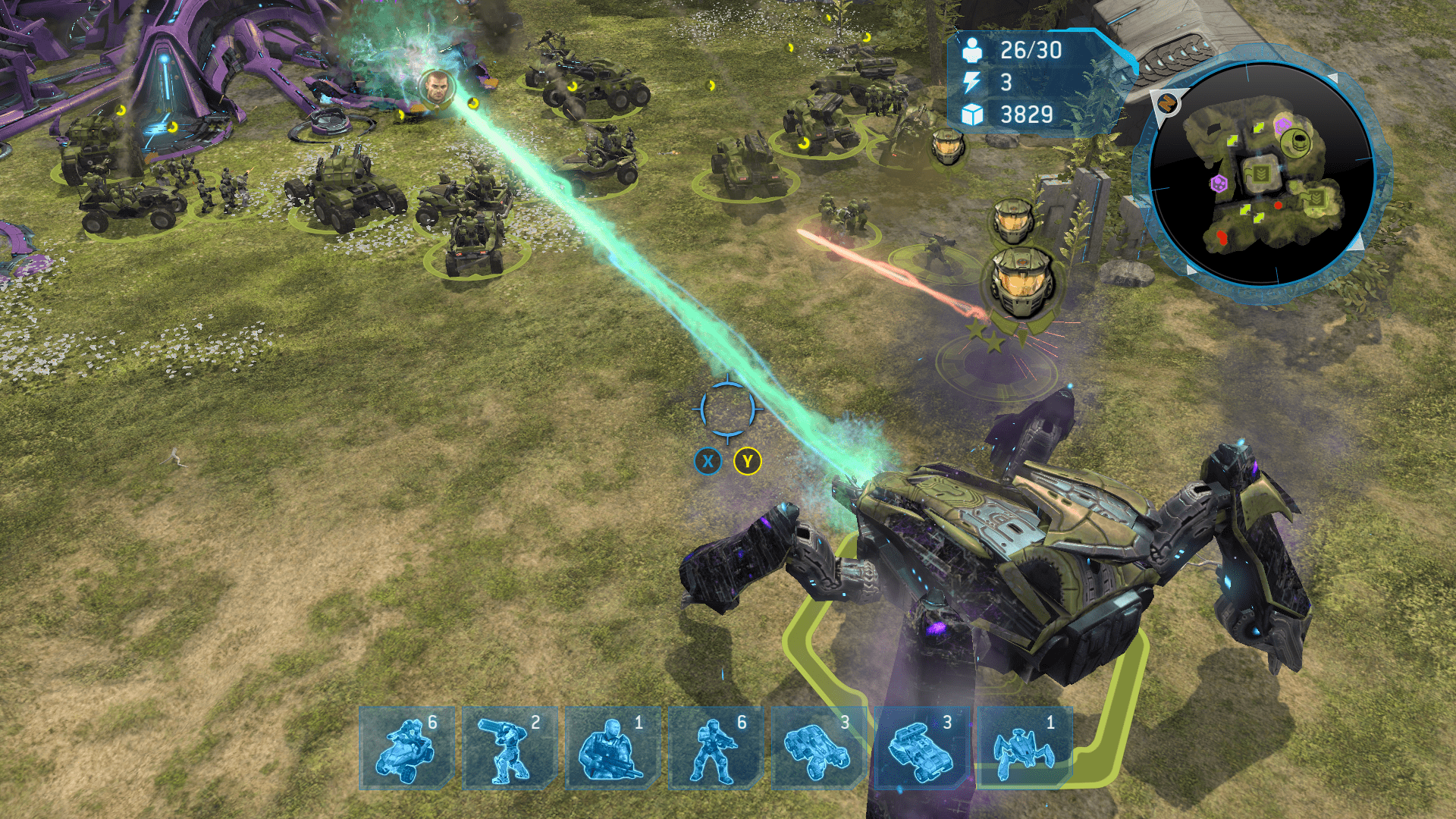
One of my Spartans jacked a Scarab. Ridin' in style!
“One of my Spartans jacked a Scarab. Ridin’ in style!”

While that all sounded more than a little sour, no, I didn’t dislike the game. In fact, I felt like Ensemble did a great job representing the Halo universe. The presentation is faithful to the original games and quite skillfully executed, with the new units added doing a lot to make both the Covenant and the UNSC feel more like actual military forces than what was represented in the previous Halo games. The soundtrack is great. The cutscenes, awesome! It also definitely succeeds as a RTS, with some interesting units, tech trees, a decent amount of variety in the scenarios you’re thrown into in the campaign, and an interesting take on the classic formula, with simplified resource gathering and some other concessions seemingly made around the platform. I think one of the bigger compliments I could give the game is that I had been feeling the urge to play some classic RTS games lately and Halo Wars managed to thoroughly scratch that itch. Once completing the campaign, I dove into several skirmish matches against AI which were a ton of fun and sealed my overall positive impression of the game.

I’d say if you’re a Halo fan, you should definitely give it a chance. If you don’t have any RTS (or other strategy game) experience you absolutely might bounce right off of the game. Then again, it might also end up being one of your favorite Halo games, and your gateway into a whole new genre. Now, back to Bungie

Big Robots and Bigger Grinds

As mentioned when I wrote about Iron Brigade originally, I bought the game’s DLC expansion, Rise of the Martian Bear, shortly after completing the main campaign. I didn’t immediately dive into it and actually ended up taking an even longer break than originally planned. In fact, it had been so long that I considered not even playing through it since I’d surely lost whatever skills I’d managed to build up over the course of the original campaign, and I’d read that the expansion was notably harder than the original campaign to boot. Alas, despite some reservations, I finally talked myself into it.

Back in the trenches again!
“Back in the trenches again!”

When I finally got around to playing it I discovered that the game had been pulled from Game Pass, popping up a licensing error when I went to launch it. Not entirely unexpected. What was unexpected was my inability to actually purchase the damn thing! When I went to the game’s store page I received a weird message that the game was only purchasable on Xbox 360 or on xbox.com. Ok? At first I thought maybe this was an odd side effect of having already had the game installed, so I went ahead and uninstalled it and tried again. No dice. I begrudgingly went to my PC and pulled up the Microsoft Store webpage. Oddly, I got the same error there. Finally I had to resort to booting up my old Xbox 360 and buying the game there, at which point it worked normally on my Xbox One once again. This whole thing was absolutely bizarre and I have no idea what the issue actually was – I could buy some other Xbox 360 games on my Xbox One, just not Iron Brigade. Perhaps this is some sort of licensing issue but that’d be even weirder since Double Fine is owned my Microsoft these days.

Anyway, onto the game. First, if you’ve read my original blurb on Iron Brigade, Rise of the Martian Bear doesn’t really change anything I had to say about the game back then. Instead, it adds a 5 mission sort-of epilogue to the original campaign and expands the level cap, adding a fairly large amount of new, higher level loot to compensate. The new maps are, of course, playable cooperatively as well as in Survival mode. And that’s about it! That was plenty for me though, and just like with the original campaign I replayed every level until I managed to get a gold rating on it.

Fuck. This. Map.
“Fuck. This. Map.”

Getting gold on these maps was no easy feat given how rusty I was at that game. In fact, I was stuck on the DLC’s third level, Settlement, for quite a long time, trying a mind boggling number of variations in strategy and loadout before I finally nailed it. Things got so desperate that I even briefly dipped into Survival mode to try to score of the game’s more exotic, mode exclusive rewards to buff my damage output. Eventually I succeeded and brought my time with Iron Brigade to an end. For the record, a combination of carefully placed sniper turrets, a few machine guns turrets to help mop up Knobs, and aggressively running my dual Muerte Fiesta Numero 6’d engineering trench around the map to do as much of the actual Tube elimination legwork as possible myself was the key.

Rise of the Martian Bear doesn’t really do anything significantly interesting and the ridiculous story is perhaps even more throwaway than the original campaign, but it’s basically just a content pack, so if you really liked the base game (or absolutely loved it in my case) the expansion pack isn’t a hard sell. If you didn’t, well then there’s absolutely nothing redeeming for you here.

Besides that, the other game taking up a lot of my time lately is, of all things, World of Warcraft Classic.

Checking out the original Dwarf model. D'aww!
“Checking out the original Dwarf model. D’aww!”

During a long and tedious build up that seemingly started from the moment the game was first patched and continued with consistent nostalgic whinging about “the good old days” of so-called vanilla WoW (and increasingly, the Burning Crusade expansion and even later eras) on every relevant forum out there and culminating with Blizzard finally caving and announcing WoW Classic, I never really owned that particular pair of rose colored glasses. Sure, I had some great memories of the early days of WoW and yes, some of the changes subsequent patches and expansions made were debatably negative, but there were also innumerable improvements, some quite major, along the way too. As I saw it, I was fine with the glory days of World of Warcraft remaining confined to exaggerated “back in my day” anecdotes and as an effortless yardstick to compare other, newer MMORPGs against.

In the summer of 2018 I changed jobs, going from working in IT departments consisting of just a couple of dozen people at best to working alongside literally thousands of fellow geeks. As the launch of Classic approached we ended up with more than a dozen people on my team alone signed on to play and I figured jumping on the bandwagon could be a lot of fun. When Classic finally launched and I joined my co-workers on Discord, I was surprised to discover that a lot of the members of my original World of Warcraft guild from back in vanilla along with numerous other friends I’d known over the years also logged in fighting the same launch day queues as we were. Remarkably, it seems like almost every last one of my online gaming buddies was drawn back into the fold. How long most of them stuck it out, I can’t say, but despite most of the gaming media I follow dismissing Classic, it seemed like it was actually a fairly big deal in my circles.

I accidentally screenshotted hitting level 2. Also, sorry boars...
“I accidentally screenshotted hitting level 2. Also, sorry boars…”

After a lot of internal debate I decided to fully embrace my nostalgia, creating a character absolutely identical to the character I “mained” in vanilla – the same race and overall appearance, the same class, and I even managed to score the same name despite it coming from the in-game name generator. Gulmorok the orcish rogue was reborn (the original having since been converted into a dwarf and moved between servers multiple times in WoW proper, as discussed before.)

Personally, jumping back into what seems to be a pretty damn solid recreation of original World of Warcraft has been an absolute trip. It’s amazing how well I remember the zones, the enemies and the particulars of many of the quests, and even the idiosyncrasies of various mechanics. The original 2004 era graphics and sounds still hold up incredibly well too, which surprised me after long since getting used to the newer character models. What doesn’t hold up quite as well is the actual gameplay. In 2004 the design, a fairly shameless mass market friendly iteration on the EverQuest style of theme park MMORPG, felt pretty damn great if you were in to those types of games back then. Having long since moved on to successors like The Old Republic, Elder Scrolls Online, hell, even newer World of Warcraft expansions, the design of vanilla WoW certainly feels as dated as it sounds to describe it like that. It’s not so much “hard” as it feels like it’s been designed to just utterly disrespect the player’s time – tedious, grinding quests, huge amounts of travel between different areas, a poorly structured quest content flow, and of course the ever present joy of constantly bumping up against the poverty line, are all things probably best left in the past.

Much, much later, grinding in the Alterac Mountains.
“Much, much later, grinding in the Alterac Mountains.”

Case in point, in my mid 30s, I’m having to constantly bounce between zones to do quests that are actually level appropriate (a luxury largely enabled by third party addons and data dump websites, by the way) and I know that, just like in 2004, I’m quickly approaching the level range where a lack of ANY appropriate quests becomes the problem, requiring grinding dungeons or mobs to stay properly leveled and geared. Adding to that, I’m playing on a PVP server for the first time in years and Blizzard just turned on the honor system, meaning that people’s willingness to go out of their way to gank you while you’re busy trying to complete a quest or otherwise mind your own business is at a peak. Of course as a rogue I’m uniquely equipped to deal with these assholes, or at least take opportunistic revenge on them, but it’s still annoying. Fun times!

While I have been tempted more than a few times to jump off the treadmill and devote my limited free time to playing through more single player games, I’d be lying if I said I wasn’t having fun. The Azeroth that Blizzard built with World of Warcraft remains still somehow compelling to me, and looking forward to when PVP battlegrounds are finally launched and my co-workers and I can put together some “premade” groups is keeping a lot of us going for now.

In the meantime, Blizzard just announced yet another World of Warcraft expansion and Diablo-fucking-4, both of which have my attention. Despite being increasingly clear that they’re no longer the same company I fell in love with, Blizzard is still somehow managing to make a case for its relevance in my gaming life.

Settlement map screenshot taken from from misc. places on the Interwebz. The in game shot is actually mine though. An original Xbox 360 screenshot on here? Is this the end of an era?! Probably not!